



Second Chance For Super Eagles As Russia Proposes Alternative 2026 World Cup for
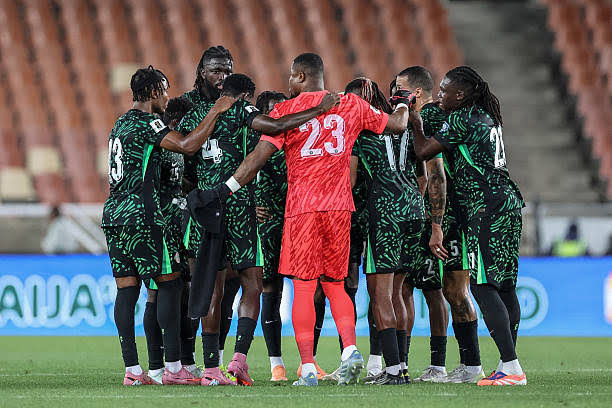
After a disappointing and uninspiring 2026 World Cup Qualifier campaign that saw the nation get knocked out by the Democratic Republic of Congo over the weekend in the final of the play-offs on Sunday, Nigeria’s desire to play at the global showpiece may receive a second chance but this time around in an alternative World Cup.
According to reports, Russia is mulling the idea of organising and hosting an alternative global flagship football competition. The top and Bigtime footballing nations that did not qualify for the 2026 FIFA World Cup will take part in the tournament.
Though there is no official confirmation of the proposal from the Russian government or its football federation, the proposal has become football’s top subject of discourse and debate this week.
A Parallel Tournament for Non-Qualifiers
Reports in the media claim that Russia is exploring the possibility of staging a summer competition in 2026 involving national teams that did not make it to the World Cup to be jointly hosted by the United States, Mexico, and Canada. The event would feature countries from different confederations that had dispiriting and woeful qualifying campaigns.
There is no official list of teams expected to be at the parallel World Cup. However, football fans, pundits and analysts have floated names such as Serbia, Greece, Italy, Chile, Peru, Venezuela, Nigeria, Cameroon, Benin Republic, China and other footballing nations with clout and pedigree but without tickets to North America.
In concept, the event would be a global convergence of strong teams that failed to clinch a spot for the World Cup in North America, offering fans an alternative mouthwatering experience and colourful spectacle as they relish the prospect of seeing their nations in action.
For Russia, the significance of the proposed showpiece goes far beyond sport. Since 2022, Russian teams have been suspended from FIFA and UEFA competitions, weakening their relevance in global football. This has forced it to search for avenues to revive international relevance.
Analysts highlight motivations behind the proposal:
Restoring international visibility: With the national team ostracised, hosting an international event of World Cup magnitude would reopen the door for Russia and reconnect it to the global football community.
Maintaining competitive edge: Without World Cup qualifiers, the Nations League, or European tournaments, Russia is seeking ways to maintain intense and high-level competition.
Political gamesmanship: Some observers opined that the proposed tourney could be to reassert itself and exert its influence on the global stage as it seeks to burnish its reputation and image that have been significantly sullied by the war with Ukraine.
They also argue that it is a subtle challenge to FIFA, showing Russia’s ability to attract teams and organise large-scale events outside the official system.
Re-engaging supporters: A summer tournament featuring well-known national teams would boost fan interest at home.
An Ambitious Idea With Significant Challenges
Despite the pervasive pleasant and fascinating reactions that have greeted the proposal, the project remains in the realms of speculation and marred by uncertainty and impediments.
Russian authorities have not officially confirmed the development, offering neither a formal announcement nor full details. There is also concern over legitimacy as any matches during the parallel World Cup would fall outside FIFA’s purview, raising questions about player availability and federation involvement. Countries may also be unwilling to participate in such a tournament that is coloured by politics and geopolitical schemings, especially as it coincides with the official World Cup.
There is also the issue of scheduling, media coverage and broadcasting. The timing of the tournament will clash with the June and July 2026 timeline of the main World Cup, meaning broadcasters, sponsors, and clubs may prioritise the official tournament.
Is the Tournament Feasible?
While an elaborate and comprehensive alternative World Cup seems like a pipe dream owing to political and logistical hindrances, analysts suggest a mini invitational tournament or friendly cup is more probable. Russia’s extensive infrastructure from previous major events, including the 2018 World Cup, remains intact.
Regardless of whether the idea comes to fruition or not, the conversation and debate it has engendered underscore a crucial moment in global football. Political tensions, expanded competitions, and shifting alliances are reshaping the sport’s future.
If Russia succeeds in bringing several nations together and pulls off an alternative World Cup, fans could witness something unprecedented: a gathering of proud football teams with something to prove, competing outside FIFA’s spotlight part curiosity, part political statement, and part football experiment
Discussion about this post