


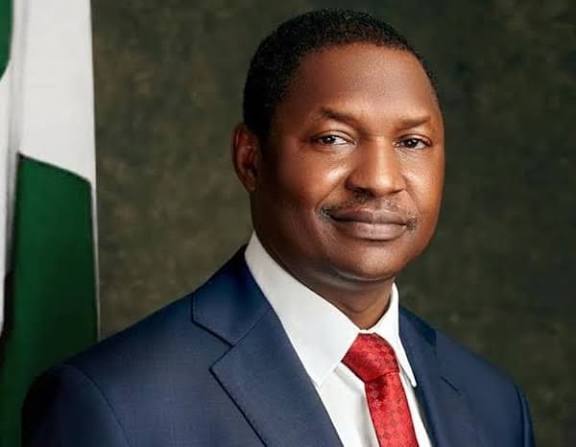

The truth is that Malami is a product of a system that destroys itself and harms the vulnerable members of the society it is meant to protect, just so that a handful of people can benefit from the chaos and ruin, creating a dysfunction and perversion that is exceedingly hard to reverse.
According to a report by Virtus Interpress, published in the Journal of Governance and Regulation, Nigerian leaders have allegedly stolen over $400 billion in public funds since the 1980s, with a significant portion stashed in wealthy countries whose legal systems make it practically impossible to recover. Nigeria is not the only country in the world plagued by corruption. Every nation in the world, including China, where corruption and the theft of public funds are viewed as an immortal sin, grapples with the scourge. The only difference between many of these countries and Nigeria is that their leaders know not to let their personal interests and greed get in the way of national interest. Despite their shady and corrupt dealings, they are still largely altruistic and have some sense of noblesse oblige.
In Nigeria, the case is quite different. Corruption has not only been normalised but institutionalised and to not partake in corruption or anything that largely undermines the social cohesion of the society and stunts the growth of the nation is to be seen as an outcast and be ostracised by the deluge of reprobates who are to ready sell the country just to be able to brag about the wealth they have dubiously and diabolically acquired. The principle of noblesse oblige is unfamiliar to Nigerian elites and the political class, as they don’t view their position as one that should be used to create better and more tremendous socio-economic conditions for their people.
Another jarring aspect of corruption in Nigeria is not just how it undermines the nation’s development, but also how it erodes and destroys the profound ideals and characteristics essential for the growth and survival of any society. It debases individual characteristics that engender a peaceful, progressive and successful society. Recently, the news has been dominated by the larcenous act of another popular and influential politician who was a key and leading figure in the last administration. The embattled politician is the former Attorney General of the Federation, Abubakar Malami.
The arrest and prosecution of Malami by the Economic and Financial Crimes Commission (EFCC) do not come as a surprise to many. Even passive and casual followers of happenings and events in government circles during the late former president, Muhammad Buhari’s administration, are well aware of the mind-numbing perversion and depravity that Malami used his position to perpetrate.
Before his appointment in 2015, Malami was a man of modest means who was eking a living as an unremarkable legal practitioner. On Tuesday the EFCC disclosed that it has traced 41 properties worth N212 billion to Malami. The list and value of these properties put the loot and plunder of Vikings in medieval Europe to shame. How a lowly and relatively unknown lawyer acquired so much wealth in a relatively short period of time is anyone’s guess. But Malami is just a microcosm of the average Nigerian politician and a reflection of how the majority of them are socially conditioned to act once they find themselves in a position of authority, which is to steal with abandon, loot without compunction and rule like an emperor.
Malami’s cancerous grand larceny is a feature of the Nigerian system and not a bug. To rob the nation blind whenever you find yourself in a position of power has become a national characteristic that has outlived successive regimes. Malami’s egregious abuse of office and flagrant betrayal of the public only underscores the systemic rot and institutional decay in the country. His arrest by the EFCC does not in any way address the real issue which is the weak institutions. The furore and hysteria over Malami’s ordeal is tantamount to closing the stable after the horse had bolted.
If the systems, institutions etc can’t spot and stop a government official from stealing tens to hundreds of billions of naira, then it is a weak, impotent, ineffectual and useless system as conditions that make it possible for politicians and government officials to corruptly enrich themselves at the expense of the people they serve are created. In Malami’s case, the EFCC’s newfound vigour and determination are not necessarily the attributes of an independent anti-graft agency but a reflection of everything that is wrong with our government agencies and public institutions. There are more Malamis in the present administration.
For his unconscionable actions and abominable deeds when he served as the AGF, Malami’s comeuppance is long overdue and probably deserves whatever the EFCC is putting him through. The truth is that Malami is a product of a system that destroys itself and harms the vulnerable members of the society it is meant to protect, just so that a handful of people can benefit from the chaos and ruin, creating a dysfunction and perversion that is exceedingly hard to reverse.
Discussion about this post