


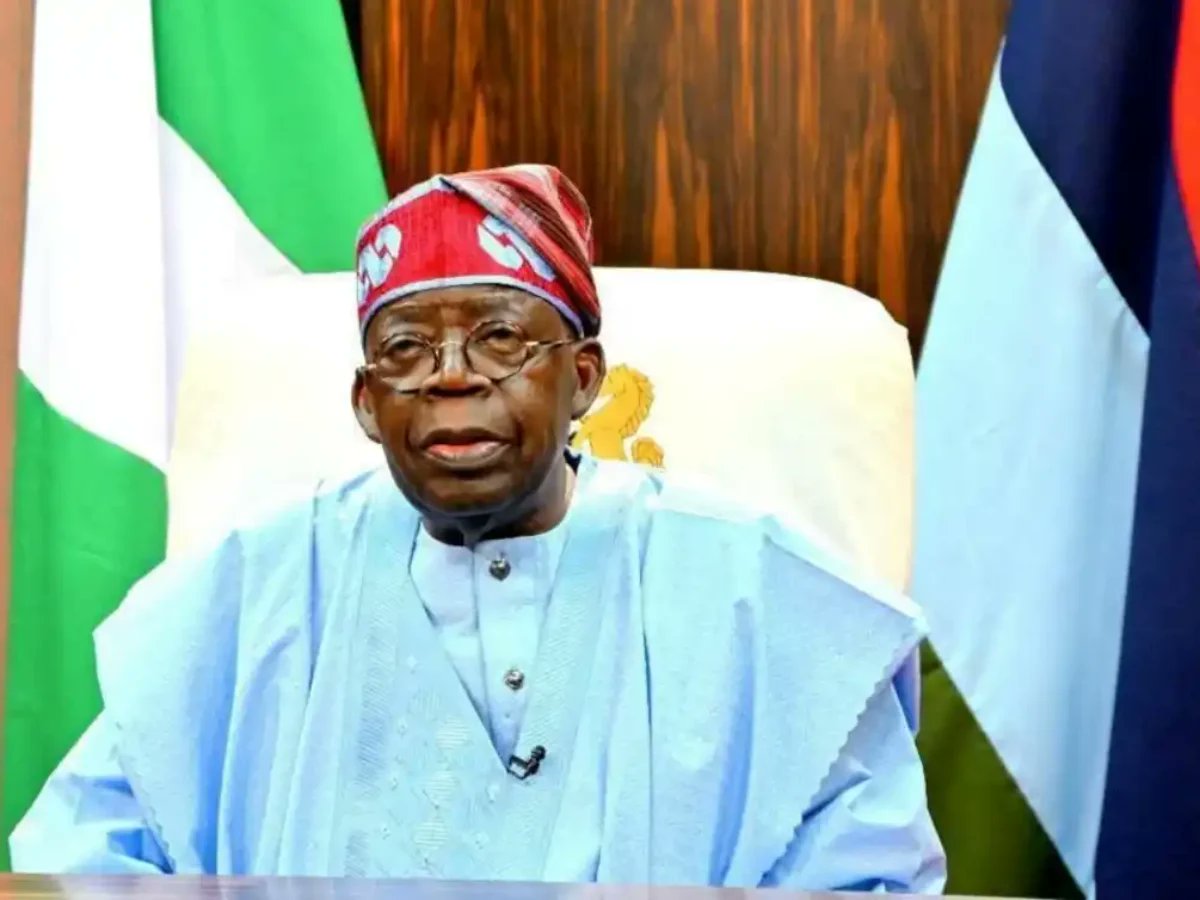

On Thursday the presidency announced the signing of Order 9 of 2026 by President Bola Tinubu. The executive order stripped the NNPCL of its overwhelming power to collect oil and revenues on behalf of the Nigerian government, determine the revenue and profit-sharing formula, and make deductions as it deemed fit, without taking into account the socio-economic realities of Nigerians and the government’s fiscal responsibility. The executive order will now see all revenues from oil and gas go straight to the Federation Account in line with the Section 44(3) of the Constitution, which vests ownership, control, and derivative rights in all minerals, mineral oils, and natural gas in, under, and upon any land in Nigeria, including its territorial waters and Exclusive Economic Zone, in the Government of the Federation.
The executive order will synchronise oil and gas revenues with constitutional provisions and hand over control, management, and oversight of how Nigeria’s revenues are generated and spent to the government. With the executive order signing, excessive deductions, duplicative charges and structural misalignment in the sector, which were further deepened by the Petroleum Industry Act of 2021 will become a thing of the past. This unjustifiably lopsided revenue and profit sharing framework has denied governments across all levels the needed funds to finance critical programmes, projects and infrastructure that drive growth, development and economic prosperity.
Under the current PIA framework, structural and legal avenues were created through which the government loses considerable amounts of revenue to deductions and sundry charges. Under the current arrangement, the current arrangement and modality, NNPC Limited retains 30 per cent of the Federation’s oil revenues as a management fee on Profit Oil and Profit Gas derived from Production Sharing Contracts, Profit Sharing Contracts, and Risk Service Contracts.
In addition, the company keeps 20 per cent of its profits to cover working capital and future investments. NNPC Limited also retains another 30% of its oil and gas profit under the production sharing, profit sharing, and risk service contracts, as the Frontier Exploration Fund under sections 9(4) and (5) of the PIA. According to the presidency, a fund of this size, being allocated to speculative exploration, risks accumulating large idle cash balances, which would encourage arbitrary and inefficient exploration spending.
By and large, the removal of NNPC as the sole collector of revenues that accrue from oil and gas transactions and the return of such responsibility to the federal government is expected to unlock huge hitherto unremitted funds to the government and tremendously increase the size of its revenue. According to a report, allocation to the three tiers of government, federal, state and local, may increase by ₦15 trillion.
Based on estimates from 2025 remittances to the Federation Allocation Accounts Committee, the Nigerian National Petroleum Company is projected remit about N906.91bn in management fees and frontier exploration funds, while oil and gas royalties totalling N7.55tn and gas flaring penalties of N611.42bn collected by the Nigerian Upstream Petroleum Regulatory Commission will now be remitted directly to the Federation Account.
The Nigeria Revenue Service will also lose the authority to collect Petroleum Profits Tax and Hydrocarbon Tax, which generated N4.905tn in 2025, while the Midstream and Downstream Gas Infrastructure Fund recorded N596.61bn in the same period, bringing the total affected revenue streams to about N14.57tn.
With the massive increment in allocation, the expectation will be that this will translate to improved quality of llifefor Nigerians as these funds will be channelled to core national priorities, including security, education, healthcare, and energy transition investments. But this will likely not be the case because in Nigeria more money in the hands of elected public officials does not usually amount to investment in human capital development and betterment for the people. It only creates an avenue for politicians and public officers to fulfil their fantasies and revel in their vanities.
In Nigeria, an increase in allocation for all tiers of government, which is what is expected to happen with the remittance of all oil and gas revenues to the Federation Account, does not inculcate a sense of fiscal responsibility in the president, governors or even local government chairmen. This elected official who, by virtue of their plum and coveted position, has the protection and leeway the constitution affords them, should use the social leverage, economic heft and financial muscle they have to build an economically vibrant and socially prosperous nation where everyone lives a decent, purposeful and fulfilled life. What Nigerians usually get whenever there is an incredible windfall to the three tiers of government is at best a series of white hasty, poorly thought-out and shoddily executed white elephant projects or a welfare programme that becomes a conduit pipe for embezzlement and at worst explicit and unabashed allocation of this windfall to spending and activities that fuel wastefulness, profligacy and fiscal indiscipline
We’ve seen this with the removal subsidy, when president Tinubu haphazardly and arbitrarily removed petrol subsidy, claiming it drains government’s resources and government cannot continue pay for it because the money is simply not available, he and many other proponents of subsidy removal had claimed that removing subsidy free up funds to be spent on other critical areas of the economy and, in turn, herald a new era of economic prosperity. It is worth mentioning that as corrupted and bastardised as they claim the fuel subsidy arrangement was, it is practically the only form of government subsidy scheme that has a positive multiplier trickle-down effect on the Nigerians and the nation’s economy. It would be recalled that the president also removed subsidies on foreign exchange, leading to the devaluation of the naira which worsened the inflation triggered by fuel subsidy removal.
After the removal of petrol subsidy, the popular and somewhat acceptable narrative is that the funds that will accrue to the government from not subsidising petrol for the people again would increase athethe amountallocations distributable to the three tiers of government and it will be spent on other important projects and programmes that will cushion the inflationary effect of subsidy removal on Nigerians. However, this is not the case, what we’ve seen since 2023 when it comes to appropriation bill and budgetary allocations is a troubling disregard for citizens’ needs and a seeming lack of desire to channel the windfall from fuel subsidy removal to critical areas of nation-building like health, education, housing and transport. What we get instead is a troubling fixation on frivolities and vanities that benefits and serves the iinterestsof no one other than the vacuous and unimaginative political class.
A cursory look at the budget of the federal government and many states across the Federation will reveal a galling indifference to public good and anything that drives growth and development. In many states, funds allocated to spiritual exercises like pilgrimage to Mecca and Jerusalem, the changing of cars of elected public officials, needless foreign travels, accommodation and wardrobe allowance alone exceedingly dwarf spending on education, healthcare, transport, housing and social intervention schemes for the residents of these states. This utter fiscal indiscipline and irresponsibility have only compounded the woes and struggles of average citizens who are already grappling with galloping inflation and an unprecedented cost-of-living crisis occasioned by the hike in prices of basic goods and staple household commodities which went up by more than 200% or even higher in some cases following the removal of subsidies.
The massive increase in allocation to the federal government and subnational after executive order takes effect and remittances from oil and gas o straight to the Federation Account will not suddenly change the primitive and damaging spending habit our political class, it will only make it worse and more brazen, they won’t suddenly become altruistic and reasonable in handling public funds, they won’t suddenly become fiscally disciplined, judicious or prudent with resources at their disposal, if anything what they will see is a huge cauldron of free money they can spend anyhow and embezzle with reckless abandon.
The only way to ensure that what happened to the fuel subsidy removal windfall for governors, where such increase in allocation is used to fund the ostentatious lifestyle of those in power and no material improvement in the lives of Nigerians is recorded, will not become the fate of oil and gas remittances windfall is for the federal government to ringfence and tie the funds to specific projects and programmes that directly positively impact the lives of largely impoverished and much-tried Nigerians.
But the problem with this suggestion is that the federal government itself has not shown itself to be capable of being judicious, prudent, frugal and altruistic with the management of funds and resources at its disposal. You cannot give what you do not have. In fact, the reckless spending and unsettling expenditure of many state governments is a reflection of what goes on at the federal level. If the federal government that should lead by example by showing act with tact, restrain, vision and purpose with how it spends public funds is known for being wasteful and extravagant, then there is no incentive for the subnationals to be fiscally disciplined or altruistic in how they manage their enclaves, especially in an environment when the leaders of these subnationals are disturbingly corrupt and vacuous. In an overly centralised system like ours, it will be difficult to demand fiscal discipline and judicious use of public resources from the governors and council chairmen when the federal government they are under is opaque, not transparent or accountable and is as fiscally irresponsible as they come.
Discussion about this post