


Suppose you love keeping up with the latest and greatest in construction tech. Well, get ready because, in this article, I’ll walk you through 8 advanced construction equipment that you must know about and their various functions. Whether you’re a seasoned construction pro or just someone who geeks out over big machines, you’re sure to discover some new cutting-edge tools that will blow your mind.
What is Construction Equipment?
Construction equipment refers to heavy-duty vehicles and machinery used for construction works. These include things like cranes, bulldozers, excavators, wheel loaders, etc. These machines help move large quantities of earth, lift and transport heavy materials, and generally make construction projects possible.
With advanced construction equipment, builders today can achieve far more in less time. These powerful machines allow massive and complex construction projects to be completed efficiently and economically. Modern equipment utilizes hydraulics, electronics, and precision engineering, representing the peak of mechanical achievement.
8 Advanced Construction Equipment that You Must Know
Have you ever wondered about the big machines and equipment utilized at construction sites? Construction equipment has evolved over time with advanced technologies to help complete projects safer and more efficiently.
Hydraulic Excavators
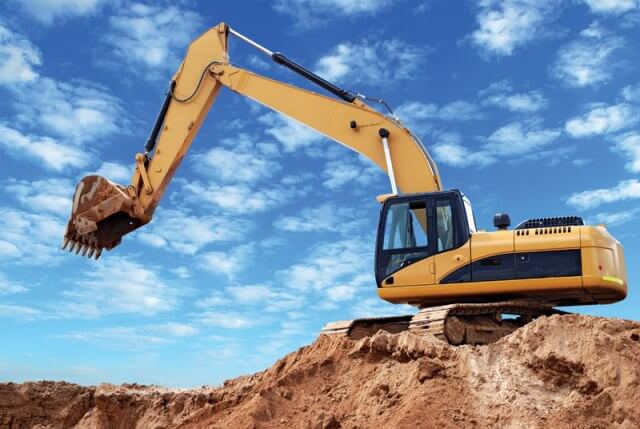
Hydraulic excavators, also known as diggers, are heavy construction equipment used for excavation and demolition. A hydraulic excavator is a multipurpose earthmoving machine that can perform many duties in the field, such as mining, digging earth, loading, well-digging, quarrying, material handling, etc.,
They consist of a rotating platform, boom, stick, and bucket. The platform spins on a central pivot, allowing the boom, stick, and bucket to move in all directions.
The boom attaches to the platform and moves the stick and bucket. The stick controls the bucket, allowing it to dig below and dump above the ground. The excavator bucket scoops and transports soil, rocks, and debris. Operated by a driver in a cab, excavators are versatile, powerful, and efficient, ideal for digging trenches, foundations, and mining.
Cranes
Cranes are large machines used in construction and manufacturing to lift and transport heavy materials. Cranes make it possible to lift and move heavy loads that would otherwise be nearly impossible to relocate. They have a long arm attached to a rotating platform. The long arm can swing and lift loads up high and move them horizontally. Cranes are valuable for constructing large buildings and bridges.
There are many types of cranes, including tower cranes, mobile cranes, gantry cranes, jib cranes, and loader cranes. Tower cranes are the tallest cranes attached to the ground on a concrete foundation. They are excellent for constructing tall buildings. Mobile cranes are mounted on a wheeled platform, allowing them to transport materials over long distances. Gantry cranes consist of a beam suspended between two tall posts spanning over the area of operation. Jib cranes feature a horizontal beam attached to a vertical mast, which is used for lighter loads. Loader cranes are mounted on tractors or trucks designed to load and unload heavy cargo.
The primary purpose of all cranes is to lift heavy loads and move them over large open areas where other equipment cannot access. Cranes transport construction materials, machinery, and other cargo that standard equipment cannot handle due to size and weight. Their ability to lift massive weights to extreme heights is invaluable for constructing skyscrapers and other large structures.
Motor Graders
Motor Graders, also known as graders, blades, and road graders, are heavy-duty machines used to create flat surfaces for roads. They have a long blade that can be adjusted to different angles. The blade is positioned between the front and rear axles. By adjusting the blade, the motor grader can cut and spread material like dirt, gravel, and asphalt.
The primary function of a motor grader is to move material and spread it smoothly and evenly over a surface. They are typically used to prepare roads before the asphalt is put down. The angled blade cuts into the soil and pushes it to the side, creating an even and sloped surface. The blade can then be reversed to move the material back onto the road surface. By angling and raising the blade, the motor grader controls the depth and spread of the material.
Motor graders are a crucial piece of equipment for road construction and maintenance. Their ability to cut, spread, and level materials allows crews to prepare roadbeds and surfaces quickly and efficiently.
Bulldozers
Bulldozers are large, powerful tractors equipped with a blade in front that can push around large amounts of soil and debris. The blade is mounted on the front and can be raised and lowered for scooping and pushing. Bulldozers are typically wheeled or tracked vehicles that provide exceptional stability and mobility over rough terrain.
Bulldozers are used for major earthmoving tasks such as:
- Pushing large piles of dirt or sand
- Leveling and clearing land
- Digging trenches
- Ripping out tree stumps and boulders
- Pushing demolition debris from sites
The power and stability of bulldozers make them well-suited for large construction projects where significant amounts of earth need to be pushed around and shaped. Their robust build allows them to operate in challenging environments like dense forests, steep hills, and rocky terrain.
Concrete Grinder
A concrete grinder is a versatile tool used to grind and polish concrete floors. Concrete grinders are commonly used to level off a slab and remove epoxies, paint, stains, and other coatings from concrete in order to prepare for new floor coverings and to polish concrete surfaces to perfection. It uses circular diamond blades to level, smooth, and clean the top layer of concrete slabs.
The concrete grinder can be used for a variety of purposes, including:
- Smoothing an uneven concrete surface
- Preparing concrete floors for epoxy coatings or floor coverings
- Removing stubborn stains or paint
- Grinding down concrete high spots
- Creating decorative swirl patterns and exposing aggregate
The diamond blades come in a range of grits, from coarse to fine. Starting with a coarse blade to aggressively cut into the concrete, you then progress to finer and finer grits to produce a smooth, polished finish. The blades attach to a motorized base unit, which can be walk-behind or ride-on style, depending on the size of the job.
For residential DIYers, a small walk-behind concrete grinder can tackle most garage floors and patios. For commercial work, consider a high-powered ride-on grinder to quickly grind and polish large warehouse floors or commercial spaces. With some practice, a concrete grinder can transform your dull concrete into an attractive, durable surface.
Backhoes
A backhoe, also known as a rear actor or back actor, is a versatile piece of heavy equipment used for excavation and construction. It has a hydraulic arm with a bucket attachment that can dig into the ground. The bucket lifts and moves materials such as dirt, gravel, and debris.
Backhoes are highly useful on construction sites due to their ability to dig trenches, excavate foundations, move heavy loads, and handle a variety of tasks. The articulating arm allows the operator to dig at different angles and depths. The bucket can then lift, move, and unload the materials with precision.
Some common uses of a backhoe include:
- Digging trenches for utility installation like water lines or sewer pipes
- Excavating foundations for buildings
- Landscaping and grading
- Demolishing structures by breaking up concrete and asphalt
- Lifting and moving heavy pipes, logs, or boulders
The combination of a front loader and articulated backhoe gives this piece of equipment a high level of flexibility and functionality for operators. It allows them to take on a wide range of jobs that would otherwise require multiple types of heavy equipment.
Wheel Loaders
Wheel loaders, also known as front-end loaders, are four-wheel drive articulated trucks with a front-mounted bucket connected to the end of two booms. The bucket can be raised and lowered for loading, carrying, and unloading materials.
Wheel loaders are highly versatile and are used in a variety of applications, from commercial construction to mining and agriculture. The articulated steering provides maneuverability, allowing the loader to navigate tight spaces and uneven terrain. The bucket at the end of the two booms can lift heavy loads high and stack them with precision.
Some of the main functions and uses of wheel loaders are:
- Loading and unloading materials like dirt, gravel, and demolition debris at construction sites.
- Stockpiling and stacking materials. The high lift capacity and articulated steering provide maneuverability for stacking materials high and neatly.
- Transporting materials around work sites, farms, or mines. The large bucket can carry a sizable amount of material to where it’s needed.
- Feeding materials into processing equipment like crushers, grinders, or sorters.
- Lifting and placing heavy pipes, beams, or other components during construction.
- Pushing materials and snow in some models. Some wheel loaders have optional push plates and snow blades for moving materials.
Wheel loaders are powerful, versatile machines useful for material handling in all areas of construction, mining, agriculture, and forestry. Their articulated design provides maneuverability for working in tight spaces, while the front loader bucket allows them to lift and move heavy loads with ease.
Power Sander
The power sander is an indispensable power tool used to quickly and efficiently sand and smooth wood and other surfaces. Power sanders employ electric motors to spin abrasive discs, called sanding discs or sandpaper, at high speeds. The spinning sanding discs smooth and polish the surface.
There are several types of power sanders:
- Orbital sanders move in small circular orbits, which is effective for general-purpose sanding.
- Random orbit sanders also spin in small orbits but with overlapping, random patterns for very fine finishing work.
- Belt sanders feature a spinning belt of sandpaper for aggressively sanding large, flat surfaces.
- Palm or finish sanders are compact for sanding tight areas and corners.
Power sanders allow you to complete jobs that would take hours of tedious hand sanding in a fraction of the time with minimal effort. They provide consistent results and a smooth finish for your woodworking and home improvement projects.
How to Choose the Right Construction Equipment
Choosing the right construction equipment for your project is crucial. Here are some steps to help you select the perfect machines:
First, determine the scope of your work. The size and complexity of the job will dictate what equipment you need. A small residential project will require different tools than a massive commercial build.
Next, consider which tasks need to be accomplished. Things like excavating, lifting, drilling, or demolition each call for specific equipment like backhoes, cranes, augers, or wrecking balls. Make a list of what needs to be done.
Figure out your budget and how much you can spend on renting or purchasing equipment. Costs can vary greatly depending on the type of machinery. Estimate how long you’ll need each tool to determine if renting or buying outright is more affordable.
Do some research on different brands and models to compare features and specs. Check reviews from other contractors to determine which options are high-quality, durable, and suited to your needs.
Finally, ensure you have properly trained operators for each piece of equipment. Complex machinery can be dangerous if used by inexperienced individuals. Operators should have certifications and a track record of safe operation.
Following these steps will help ensure you end up with the ideal equipment and machinery for your construction project. The right tools in the hands of skilled workers can make all the difference in keeping your site efficient, safe, and on schedule.
Conclusion
So there you have it, 8 of the most advanced pieces of construction equipment that are changing the game. These high-tech tools are transforming job sites around the world. The future of construction is here, and it’s pretty awesome.
Discussion about this post