


Have you ever wondered how to add variety and sophistication to your writing? Understanding compound sentences is key to elevating your prose.
As you craft essays, reports, or creative works, mastering this fundamental grammatical structure will empower you to express complex ideas with clarity and style.
In this article, you’ll discover what defines a compound sentence, how to construct one effectively, and why incorporating them can transform your writing. Whether you’re a student, professional, or aspiring author, grasping the nuances of compound sentences will equip you with a valuable tool to enhance your communication skills and captivate your readers.
Understanding the Basics: What is a Compound Sentence?
A compound sentence is a sentence that combines two or more independent clauses. These clauses are complete thoughts that can stand alone as separate sentences, but they’re joined together to create a more complex and interesting statement.
To truly understand what a compound sentence is, you need to know its essential parts:
- Independent clauses: These are the building blocks of compound sentences. Each clause has a subject and a verb and can express a complete thought on its own.
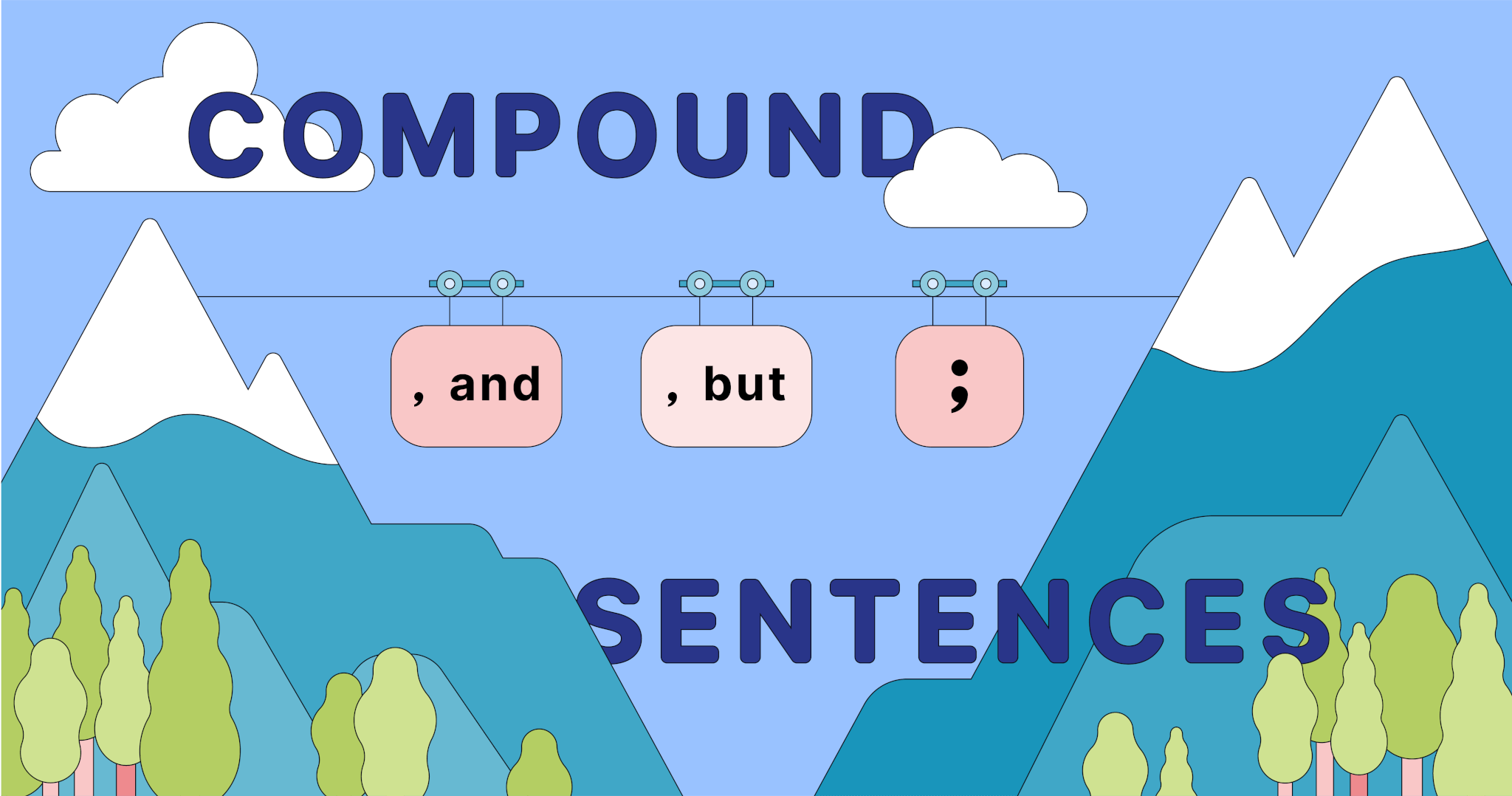
- Coordinating conjunctions: These are the glue that holds the independent clauses together. The most common ones are “and,” “but,” “or,” “nor,” “for,” “so,” and “yet.”
- Semicolons: Sometimes, instead of using a conjunction, you can use a semicolon to join two related independent clauses.
Compound sentences add variety to your writing and help you express more complex ideas. They allow you to show relationships between thoughts and can make your writing more engaging and dynamic. By mastering compound sentences, you’ll elevate your writing skills and communicate more effectively.
The Anatomy of a Compound Sentence
A compound sentence at its core is a grammatical structure that combines two or more independent clauses. Let’s break it down:
Independent Clauses: The Building Blocks
A compound sentence consists of at least two independent clauses. These are complete thoughts that can stand alone as sentences. For example:
- “I love coffee.”
- “She prefers tea.”
When you join these, you get: “I love coffee, but she prefers tea.”
Coordinating Conjunctions: The Glue
To connect independent clauses, we use coordinating conjunctions. The most common are:
- For
- And
- Nor
- But
- Or
- Yet
- So
Remember the acronym FANBOYS to recall these easily.
Punctuation: The Final Touch
In a compound sentence, you’ll typically see a comma before the coordinating conjunction. However, if the clauses are short, you might omit it.
Understanding what a compound sentence is and how to construct one will significantly improve your writing. It allows you to express complex ideas more fluently and adds variety to your sentence structure. So, next time you’re crafting a piece, try mixing in some compound sentences to spice things up!
Identifying Compound Sentences
Spotting a compound sentence isn’t as tricky as you might think. But how do you identify one?
Look for Coordinating Conjunctions
The easiest way to spot a compound sentence is to look for coordinating conjunctions. These include words like: For, And, Nor, But, Or, Yet, So. When you see one of these little words connecting two complete thoughts, you’ve likely found a compound sentence.
Check for Semicolons
Sometimes, writers get fancy and ditch the conjunction altogether. In these cases, you’ll often see a semicolon joining two independent clauses. This punctuation mark acts as a silent conjunction, telling you that what’s a compound sentence is right before your eyes.
Multiple Subjects and Verbs
Another clue is the presence of multiple subjects and verbs. If you can identify more than one subject-verb pair in a sentence, chances are you’re dealing with a compound sentence. Just remember, both parts need to be able to stand alone for it to truly qualify.
By keeping these tips in mind, you’ll become a pro at spotting compound sentences in no time.
Coordinating Conjunctions: The Building Blocks of Compound Sentences
When it comes to coordinating conjunctions, there are seven you need to know: for, and, nor, but, or, yet, and so. You might remember them by the acronym FANBOYS. These powerhouses are essential in creating compound sentences, allowing you to join two complete thoughts seamlessly.
How They Work Their Magic
Coordinating conjunctions work by linking two independent clauses that could stand alone as separate sentences. For example: “I love pizza, but I’m trying to eat healthier.” Here, “but” connects two complete thoughts, creating a compound sentence that flows naturally. By using these conjunctions, you can express complex ideas more efficiently and add variety to your writing.
Punctuation Matters
When using coordinating conjunctions in compound sentences, don’t forget about punctuation! A comma usually precedes the conjunction, helping readers understand the relationship between the clauses. Remember, mastering these building blocks will elevate your writing and help you express your thoughts more effectively.
Punctuating Compound Sentences Correctly
Knowing what is a compound sentence is one thing, but punctuating it correctly is another crucial skill. When you’re dealing with compound sentences, proper punctuation is key to maintaining clarity and flow in your writing.
The Mighty Comma and Semicolon
The most common way to punctuate a compound sentence is with a comma followed by a coordinating conjunction For example:
“I love pizza, and I enjoy pasta.”
Sometimes, you might want to use a semicolon instead:
“I love pizza; I also enjoy pasta.”
This works well when you want to emphasize the connection between two independent clauses without using a conjunction.
Watch Out for Comma Splices
A common mistake when punctuating compound sentences is the dreaded comma splice. This happens when you join two independent clauses with just a comma:
“I love pizza, I enjoy pasta.”
This is incorrect! To fix it, you can add a coordinating conjunction after the comma, use a semicolon, or split it into two sentences.
Remember, mastering the punctuation of compound sentences will significantly improve your writing.
Crafting Effective Compound Sentences
Compound sentences are powerful tools that can add variety and flow to your writing. By combining two or more independent clauses, you can create more complex and engaging sentences that keep your readers hooked.
Balance and Clarity
When crafting compound sentences, aim for balance. Each independent clause should carry equal weight, contributing to the overall meaning. Remember, clarity is key. Don’t overload your sentence with too many ideas. Instead, focus on connecting related thoughts that enhance each other.
Choosing the Right Connector
The secret to a great compound sentence lies in selecting the appropriate conjunction or punctuation. Coordinating conjunctions (and, but, or, nor, for, yet, so) work wonders, but don’t forget about semicolons and colons. Mix it up to keep your writing fresh and engaging.
Practice Makes Perfect
The more you practice, the better you’ll become at crafting compound sentences. Try rewriting simple sentences as compound ones. Experiment with different connectors and structures. Soon, you’ll be weaving complex ideas together with ease, making your writing more dynamic and compelling.
Common Mistakes to Avoid When Using Compound Sentences
A compound sentence is a powerful tool in your writing arsenal, but it can be tricky to use correctly. Here are some common pitfalls to watch out for:
Comma Splice Confusion
One of the most frequent errors is the dreaded comma splice. This happens when you join two independent clauses with just a comma. Remember, a compound sentence needs more than that!
Semicolon Neglect
On the flip side, some writers forget about the trusty semicolon. It’s perfect for linking closely related independent clauses without a conjunction.
Overuse of Coordinating Conjunctions
While “and,” “but,” and “or” are handy, don’t overdo it. Variety is the spice of life, and good writing!
Imbalanced Clauses
Make sure your independent clauses are roughly equal in importance and length. Lopsided compound sentences can throw off your rhythm.
Forgetting the Comma
When using a coordinating conjunction, don’t forget that crucial comma before it. It’s small but mighty important.
Mismatched Subjects
Keep your subjects consistent across clauses. Switching gears mid-sentence can confuse readers.
Redundancy Trap
Avoid repeating information across clauses. Each part of your compound sentence should bring something new to the table.
Punctuation Overload
While compound sentences are versatile, don’t go overboard. Sometimes, simpler is better. Break things up if your sentence starts to feel like a run-on marathon.
Enhancing Your Writing with Compound Sentences
A compound sentence is a powerful tool that can elevate your writing from basic to brilliant. By combining two or more independent clauses, you’re not just stringing words together, you’re crafting a more sophisticated narrative.
Adding Depth and Variety
Compound sentences allow you to express complex ideas with greater fluency. Instead of short, choppy sentences, you can create a smooth flow that keeps your readers engaged. For example:
“I love coffee. It keeps me awake.” becomes “I love coffee because it keeps me awake.”
Creating Rhythm and Balance
A compound sentence brings rhythm to your writing. By varying sentence structure, you create a natural cadence that’s pleasing to the ear and eye. This rhythm can help emphasize key points and make your writing more memorable.
Showing Relationships Between Ideas
Compound sentences are excellent for demonstrating connections between thoughts. They allow you to compare, contrast, or show cause and effect within a single sentence. This ability to link ideas concisely can make your arguments more persuasive and your descriptions more vivid.
By mastering compound sentences, you’ll add a new dimension to your writing, making it more dynamic and engaging for your audience.
The Difference Between Simple, Compound, and Complex Sentences
How does a compound sentence differs from other sentence types. Let’s break it down:
Simple Sentences
A simple sentence contains just one independent clause. It expresses a complete thought with a subject and a verb. For example: “The cat sleeps.”
Compound Sentences
A compound sentence is a sentence that combines two or more independent clauses using coordinating conjunctions (like “and,” “but,” or “or”) or semicolons. For instance: “The cat sleeps, and the dog plays.”
Complex Sentences
Complex sentences contain one independent clause and at least one dependent clause. They use subordinating conjunctions like “because,” “although,” or “when.” Example: “While the cat sleeps, the dog plays.”
The key difference lies in how these sentences connect ideas. Simple sentences express one thought, compound sentences join equal ideas, and complex sentences show relationships between unequal ideas. Mastering these structures will elevate your writing, allowing you to vary your style and convey ideas more effectively.
Frequently Asked Questions
These are some frequently asked questions and answers about a compound sentence.
How can I identify a compound sentence?
To identify a compound sentence, look for:
- Two or more complete thoughts (independent clauses)
- A coordinating conjunction connecting the clauses
- A semicolon between clauses (in some cases)
Remember, each clause in a compound sentence must be able to stand alone as a complete sentence.
Why are compound sentences important?
Compound sentences add variety to writing and help convey complex ideas. They allow writers to:
- Connect related thoughts
- Show contrast between ideas
- Provide options or alternatives
By mastering compound sentences, you can enhance your writing style and express more sophisticated concepts.
Can I use compound sentences in formal writing?
Yes, compound sentences are appropriate for formal writing. They can make your prose more engaging and help you avoid choppy, repetitive sentence structures. However, be careful not to overuse them, as this can lead to run-on sentences or unclear meaning.
Conclusion
In mastering compound sentences, you’ve gained a powerful tool for enhancing your writing. By joining independent clauses, you can create more sophisticated and varied sentence structures that engage readers and convey complex ideas. Remember to use coordinating conjunctions or semicolons appropriately to connect related thoughts.
As you practice, you’ll develop an intuitive sense for when compound sentences can elevate your prose. Whether you’re crafting an essay, report, or creative piece, skillful use of compound sentences will make your writing more dynamic and professional.
Discussion about this post