

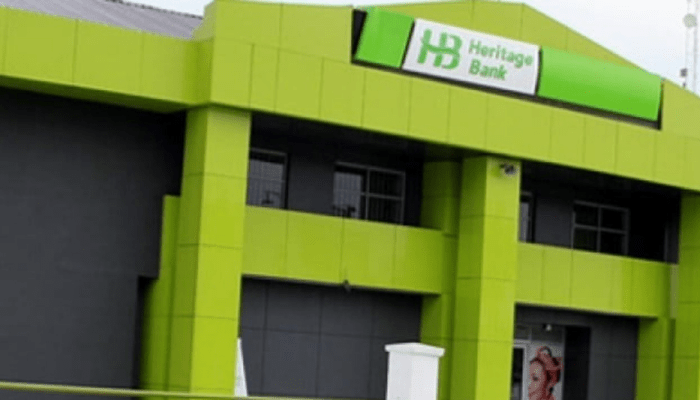

Heritage Bank Nigeria was a dynamic financial institution that had made significant strides in Nigeria’s banking sector since its inception. As one of the country’s former leading commercial banks, Heritage Bank Nigeria offered a comprehensive suite of financial services tailored to meet the diverse needs of individuals, businesses, and corporations.
This overview explores the legacy, pioneering services, and ultimate demise of Heritage Bank, whose banking license was revoked, marking the end of its operations.
About Heritage Bank Nigeria

Heritage Bank, a Nigerian financial institution, provided a range of services including retail, corporate, online, investment banking, and asset management. Licensed by the Central Bank of Nigeria, the bank operated nationally from its headquarters in Lagos. However, its banking license was revoked on June 3rd, 2024.
Founded on a rich heritage of financial expertise, Heritage Bank Nigeria had positioned itself as a forward-thinking institution committed to driving economic growth and fostering financial inclusion. The bank’s innovative approach to banking had earned it a reputation for reliability and customer-centricity in the Nigerian market.
Heritage Bank Nigeria provided a wide array of banking products and services, including:
- Personal and corporate accounts
- Loans and credit facilities
- Investment and wealth management services
- Digital banking platforms
- International banking services
At the forefront of digital transformation, Heritage Bank Nigeria had embraced cutting-edge technology to enhance customer experience and streamline banking operations. The bank’s robust online and mobile banking platforms had offered clients convenient access to their accounts and financial services 24/7.
The History of Heritage Bank
Heritage Bank Nigeria has a rich and storied past that reflects the dynamic nature of Nigeria’s financial sector. Established in 2012, this institution emerged from the ashes of the former Societe Generale Bank of Nigeria (SGBN), which had been closed by regulators in 2005.
The transformation from SGBN to Heritage Bank was more than just a name change. It represented a complete overhaul of the bank’s operations, management, and vision. The new Heritage Bank Nigeria embarked on a mission to create, preserve, and transfer wealth across generations.
The origins of the bank date back to the 1970s, when Societe Generale Bank (Nigeria) was established by the renowned Dr. Olusola Saraki. However, in 2006, the institution faced a major setback when the Central Bank revoked its operating license due to non-compliance with the newly introduced minimum capital requirement of $155 million. Following a successful court appeal, Societe Generale’s banking license was reinstated in 2012, albeit with a regional banking scope.
Under new ownership, the bank underwent a rebranding exercise and emerged as Heritage Banking Company Limited, commencing operations on March 4, 2013. The institution achieved another milestone in 2014 by meeting the requisite criteria set by the Asset Management Corporation of Nigeria (AMCON) and the Central Bank. Consequently, Heritage Bank Plc acquired 100% ownership of Enterprise Bank Ltd, with the official transfer of ownership taking place on January 27, 2015.
Headquartered in Lagos, Nigeria, Heritage Bank Plc had 127 branches and 202 automated banking centers with over 350 ATMs in all states of the federation and the Federal Capital Territory.
Key Products and Services Offered by Heritage Bank
Heritage Bank Nigeria offered a diverse array of financial products and services tailored to meet the needs of individuals, businesses, and corporations. From innovative savings solutions to cutting-edge digital banking platforms, the bank strived to provide comprehensive financial support to its customers.
Personal Banking Solutions
Heritage Bank Nigeria provided a range of personal banking products designed to help individuals manage their finances effectively. These included savings accounts, current accounts, and fixed deposit accounts. The bank also offered specialized accounts, such as the Heritage Bank Children’s Account, which encouraged early savings habits among young Nigerians.
Business and Corporate Banking
For businesses and corporations, Heritage Bank Nigeria delivered tailored financial solutions to support growth and expansion. Services included business loans, trade finance, and cash management solutions. The bank’s corporate banking division worked closely with clients to understand their unique needs and provided customized financial strategies.
Digital Banking Innovations
Embracing technological advancements, Heritage Bank Nigeria invested heavily in digital banking solutions. Customers could access their accounts, perform transactions, and manage their finances through the bank’s user-friendly mobile app and online banking platform. These digital tools enhanced convenience and accessibility for Heritage Bank Nigeria’s diverse clientele.
Investment and Wealth Management
Heritage Bank Nigeria also offered investment and wealth management services, helping clients grow and preserve their wealth. From mutual funds to portfolio management, the bank’s team of financial experts provided guidance and personalized investment strategies to meet individual financial goals.
Ownership
Heritage Bank Nigeria operated as a private financial institution, with its ownership structure reflecting a blend of individual and corporate stakeholders.
The bank’s ownership model played a crucial role in shaping its strategic direction and operational philosophy. Heritage Bank Nigeria’s shareholding was distributed among a diverse group of investors. While the exact percentages may have fluctuated, the bank maintained a balanced ownership structure that included both local and international stakeholders. This diverse ownership base contributed to the bank’s stability and helped it navigate the complex Nigerian financial landscape.
As of September 2013, the bank’s stock was publicly owned by the following corporate entities and individuals.
| Rank | Name of owner | Percentage ownership |
|---|---|---|
| 1 | Heritage Investment Services Limited | 80.0 |
| 2 | Priority shareholders | 9.0 |
| 3 | Other minority shareholders | 11.0 |
| Total | 100.00 |
This approach allowed Heritage Bank Nigeria to maintain its commitment to providing tailored financial solutions to its diverse clientele.
Governance
At the helm of Heritage Bank Nigeria’s governance framework was its Board of Directors. This diverse group of experienced professionals provided strategic direction and oversight for the bank’s operations. The board was composed of both executive and non-executive directors, bringing a balance of internal expertise and external perspectives to decision-making processes.
Jani Ibrahim FNSE, FAEng., OON, MNI, a non-executive director, served as the acting chairman of the seven-person board of directors. The managing director and chief executive officer was Akinola George-Taylor.
Acquiring Enterprise Bank
The acquisition of Enterprise Bank by Heritage Bank Nigeria in 2014 marked a significant milestone in the institution’s growth trajectory. This strategic move not only expanded Heritage Bank’s operational footprint but also solidified its position in the Nigerian banking sector.
In 2014, Heritage Bank successfully acquired the entirety of Enterprise Bank Limited’s shares. At the time, Enterprise Bank was a nationalized financial institution boasting an impressive network of over 160 branches and assets valued at $1.6 billion. The acquisition was facilitated by Heritage Bank’s payment of $340 million to AMCON. Notably, Heritage Investment Services Limited emerged as the winning bidder among 24 local and international competitors vying for the acquisition.
Through this acquisition, Heritage Bank Nigeria substantially increased its branch network across the country. The merger brought in Enterprise Bank’s extensive infrastructure, including numerous branches and ATM locations. This expansion allowed Heritage Bank to reach a wider customer base, particularly in regions where it previously had limited presence.
Operating License Revoked
In a surprising turn of events, Heritage Bank Nigeria faced a significant setback in its operations. The Central Bank of Nigeria (CBN) took decisive action against the financial institution, revoking its operating license due to concerns about its financial stability and regulatory compliance.
Central Bank of Nigeria (CBN) withdrew Heritage Bank’s operational license in June 2024. This decisive action was prompted by the bank’s inability to adhere to established operational standards. Consequently, the Nigeria Deposit Insurance Corporation (NDIC) was designated as the bank’s liquidator, in accordance with Section 12 (2) of the Banks and Other Financial Institutions Act (BOFIA) of 2020.
Reasons for Revocation
The CBN cited several factors that led to this drastic measure:
- Financial performance: The bank was unable to improve its financial performance, which threatened financial stability.
- Reasonable prospects of recovery: The bank did not show any reasonable prospects of recovery.
- Breach of BOFIA: The bank violated Section 12 (1) of the Banks and Other Financial Institutions Act (BOFIA) 2020.
Impact on Stakeholders
The revocation of Heritage Bank Nigeria’s license sent shockwaves through the financial sector and affected various stakeholders:
- Customers: Account holders faced uncertainty about the safety of their deposits and the continuity of banking services.
- Employees: Staff members found themselves in a precarious position, with job security suddenly at risk.
- Investors: Shareholders saw the value of their investments plummet as news of the license revocation spread.
Next Steps
Following the license revocation, the CBN outlined a roadmap for the orderly winding down of Heritage Bank Nigeria’s operations. This process included the appointment of a liquidator to oversee the bank’s assets and liabilities, ensuring a fair distribution to creditors and depositors.
Conclusion
Heritage Bank Nigeria’s tenure in the financial sector was marked by its efforts to innovate and provide customer-centric services. Prior to its license revocation, the bank had been a notable presence in the industry, offering a range of products and solutions tailored to the diverse needs of Nigerian individuals and businesses. The bank’s demise serves as a cautionary tale about the importance of regulatory adherence and adaptability in a rapidly evolving financial landscape.
Discussion about this post