

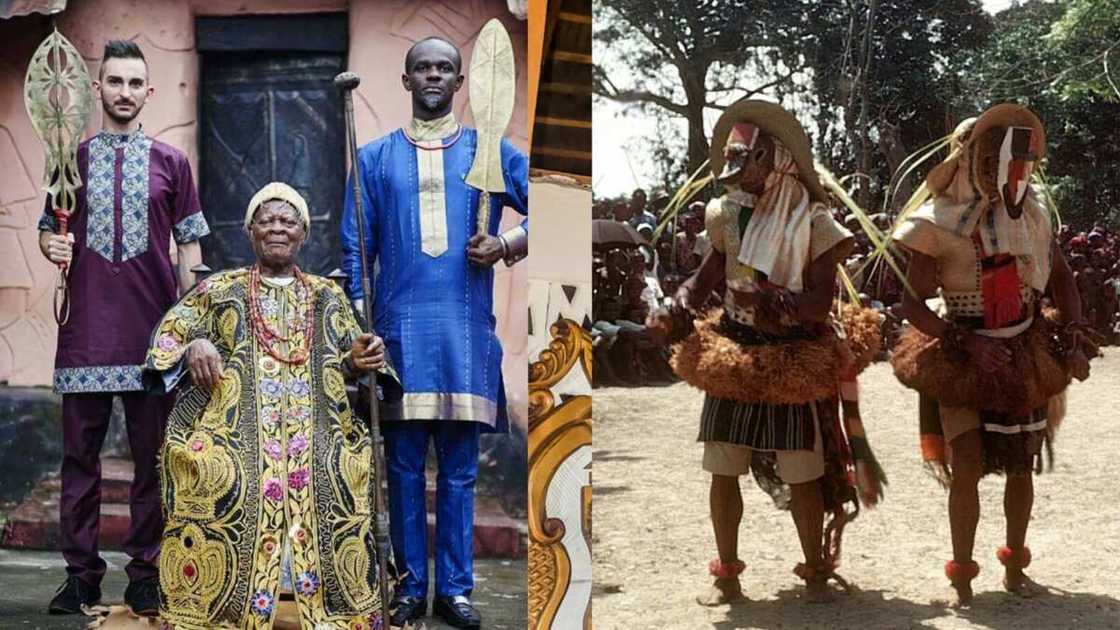

Have you ever wondered about the origins of one of Africa’s most prominent ethnic groups? The Igbo people, with their rich cultural heritage and significant contributions to Nigerian society, have a history shrouded in mystery and debate.
As you delve into the question of where the Igbo originated, you’ll encounter a fascinating tapestry of oral traditions, archaeological evidence, and scholarly theories. This exploration will take you on a journey through time, from ancient migrations to the establishment of complex societies in southeastern Nigeria. Prepare to uncover the compelling story of the Origin of Igbo tribe, their ancestral roots and their enduring legacy in the modern world.
Understanding the Igbo Ethnic Group
The origin of Igbo tribe is a fascinating subject that reveals the rich cultural tapestry of Nigeria. As one of the largest ethnic groups in Africa, the Igbo people have a long and complex history that has shaped their unique identity.
The Igbo primarily inhabit southeastern Nigeria, with a significant presence in states like Abia, Anambra, Ebonyi, Enugu, and Imo. However, their influence extends far beyond these regions, with Igbo communities found throughout Nigeria and across the globe. The Igbo population in Nigeria is estimated to be around 35 million people, which is about 15.2% of the country’s total population.
The Igbo language, part of the Niger-Congo language family, is as diverse as the people who speak it. With numerous dialects, it reflects the rich linguistic heritage of the Igbo people. This linguistic diversity is mirrored in the varied cultural practices and traditions that define Igbo society.
Igbo society is known for its egalitarian structure, emphasizing individual achievement and community involvement. The concept of “Umunna” (extended family) plays a crucial role in social organization, fostering a strong sense of kinship and collective responsibility.
Traditionally known for their agricultural prowess, the Igbo have evolved into a highly educated and commercially oriented group. You’ll notice that many Igbo people are involved in trade, academia, and various professional fields, contributing significantly to Nigeria’s economy and intellectual landscape.
Understanding the Igbo ethnic group requires appreciating their resilience, entrepreneurial spirit, and commitment to education. These qualities have enabled the Igbo to thrive and contribute significantly to Nigeria’s development, despite historical challenges.
Origin of Igbo Tribe
The origin of Igbo tribe is a subject of fascination for historians and anthropologists alike. While definitive answers remain elusive, scholars have pieced together a compelling narrative of the Igbo people’s ancient roots.
Archaeological findings suggest that the Igbo have inhabited their current homeland in southeastern Nigeria for thousands of years. Excavations have unearthed pottery and tools dating back to the 9th century BCE, indicating a long-standing presence in the region. These artifacts provide tangible links to the ancestors of today’s Igbo people.
Language offers another window into the origin of Igbo tribe. Igbo belongs to the Niger-Congo language family, specifically the Volta-Niger branch. This linguistic classification hints at possible connections to other West African ethnic groups and suggests a complex history of migration and cultural exchange.
According to historical records and oral traditions, the Igbo people originated from the region between the Niger and Cross rivers in southeastern Nigeria. Their ancestors were part of the ancient Nok civilization, which flourished around 1000 BCE. The Igbo people’s migration to their current homeland is shrouded in myth and legend. One popular account tells of a great migration led by the legendary Eri, who is said to have founded the Igbo kingdom of Aguleri around 900 CE.
As noted by historian Elizabeth Isichei, “The Igbo people have a strong tradition of oral history, which has been passed down through generations.” This rich cultural heritage provides valuable insights into the Igbo people’s origins, values, and customs.
These stories, passed down through generations, speak of migrations from various directions, including the north and east. While not always historically verifiable, these narratives offer valuable insights into the Igbo people’s collective memory and cultural identity.
History
The Igbo tribe, one of the three main ethnic groups in Nigeria, have a rich and complex history that spans over a thousand years. As we delve into their history, it’s essential to acknowledge the diversity and nuance of their experiences.
The earliest recorded history of the Igbo people dates back to the 9th century, with the emergence of the Nri Kingdom. This ancient kingdom, located in present-day Anambra State, is considered the cradle of Igbo civilization. According to historian Elizabeth Isichei, “The Nri Kingdom was a complex, highly organized society with a strong emphasis on ritual and spirituality.”
As the Igbo people migrated and expanded their territories, they developed a unique cultural identity shaped by their experiences, traditions, and environment. Their society was organized into clans and lineages, with a strong emphasis on community, social justice, and individual achievement. This expansion led to the development of distinct Igbo subgroups, each with its own dialects and cultural nuances. Despite these differences, the Igbo maintained a strong sense of shared identity and cultural practices.
The Igbo people’s encounter with European colonizers in the late 19th century had a profound impact on their history. The British colonial administration imposed its own systems of governance, economy, and culture, which often conflicted with Igbo traditions and values. The British colonial administration’s indirect rule system disrupted traditional Igbo governance structures. However, the Igbo demonstrated remarkable resilience, preserving their cultural identity and resisting colonial oppression through various means, including the famous Aba Women’s Riot of 1929.
As noted by Chinua Achebe, one of Nigeria’s most celebrated writers, “The Igbo people’s experience with colonialism was a traumatic one, marked by violence, displacement, and cultural disruption.”
Despite these challenges, the Igbo people continued to adapt, innovate, and thrive. They played a significant role in Nigeria’s struggle for independence and have made substantial contributions to the country’s economic, cultural, and intellectual development.
Today, the Igbo people continue to face new challenges and opportunities in a rapidly changing world. As they navigate the complexities of modernity, they remain deeply connected to their heritage and traditions.
Igbo Ancestral Homeland and Migration Theories
As you delve into the ancestral roots of this vibrant ethnic group, you’ll discover a tapestry of theories and legends that paint a complex picture of their origins.
The Nri Kingdom Connection
Many scholars believe the Igbo people’s ancestral homeland is linked to the ancient Nri Kingdom. This civilization, dating back to around 900 AD, is often considered the cradle of Igbo culture. The Nri were known for their intricate bronze artwork and sophisticated political system, which may have laid the foundation for Igbo social structures we see today.
Migration Theories
While the exact origin of Igbo tribe remains debated, several migration theories have gained traction:
- The Niger-Benue Confluence Theory suggests that Igbo ancestors migrated from the meeting point of these two major rivers.
- Some researchers propose a North African Origin, citing linguistic similarities with certain North African languages.
- The Egyptian Migration Theory posits that the Igbo people may have ancestral ties to ancient Egypt, based on cultural and linguistic parallels.
Kwa Theory
Another theory is the “Kwa” theory, which proposes that the Igbo people migrated from the Kwa region of West Africa, which encompasses present-day Ghana, Togo, and Benin. This theory is based on linguistic and cultural similarities between the Igbo people and other Kwa-speaking groups.
As you explore these theories, remember that the Igbo people’s rich history is likely a blend of various influences and migrations over thousands of years. The quest to uncover the true origin of Igbo tribe continues to captivate researchers and Igbo people alike, adding depth to their already fascinating cultural narrative.
Igbo Language and Cultural Traditions
As you explore the Igbo heritage, you’ll discover a vibrant tapestry of customs that have been passed down through generations.
Igbo, the primary language of the tribe, is more than just a means of communication. It’s a living testament to the tribe’s history and values. With its tonal nature and complex grammatical structure, Igbo reflects the depth and nuance of Igbo thought. You’ll find that many Igbo proverbs and sayings encapsulate centuries of wisdom, offering insights into the tribe’s worldview.
Igbo has many dialects, including Central Igbo, which is the most widely understood. Igbo is written in the Latin alphabet, but before European contact, Igbo people used a system of ideograms called Nsibidi.
Celebrating Life Through Festivals
Igbo cultural traditions come alive through colorful festivals and ceremonies. The New Yam Festival, for instance, is a joyous celebration of the harvest season. As you participate, you’ll witness intricate masquerade dances, hear traditional music, and taste delicious yam dishes. These festivals not only entertain but also reinforce community bonds and cultural identity.
Art and Craftsmanship
The Igbo people’s artistic expressions are another window into their cultural heritage. From intricately carved masks to beautiful textiles, Igbo art showcases the tribe’s creativity and skill. You’ll find that each piece often tells a story or holds symbolic meaning, reflecting the origin of Igbo tribe and its enduring legacy.
Igbo Diaspora and Dispersal Across the Globe
You’ll find vibrant Igbo communities in countries like the United States, United Kingdom, and Canada, where they’ve made significant contributions to their adopted homes.
The Igbo diaspora began long before modern times, with early traders and explorers venturing to distant lands. However, the most significant waves of migration occurred in the 20th century. You might be surprised to learn that many Igbo people left Nigeria during the colonial era for education and economic opportunities abroad.
Despite being far from their ancestral homeland, Igbo communities worldwide have maintained strong ties to their roots. You’ll often see cultural festivals, language schools, and community organizations dedicated to preserving Igbo traditions. This commitment to heritage has played a crucial role in keeping the origin of Igbo tribe alive in the hearts of diaspora members.
Igbo people have made their mark in various fields, from academia to entertainment. You’ve probably heard of Chimamanda Ngozi Adichie, the acclaimed author, and Chimamanda Ngozi Adichie, both proud members of the Igbo diaspora. Their success stories serve as inspiration and highlight the global reach of Igbo culture and talent.
Igbo Contributions to Nigerian History and Society
As one of the largest ethnic groups in the country, the Igbo have made significant contributions to Nigerian history and society. Let’s explore some of their most notable impacts.
Cultural and Artistic Influence
You’ll find Igbo influence woven throughout Nigerian art and literature. From the intricate bronze castings of Igbo-Ukwu to the compelling narratives of authors like Chinua Achebe, Igbo creativity has shaped the nation’s cultural landscape. Their traditional masquerade performances and colorful festivals continue to captivate both locals and tourists alike.
Economic Powerhouse
When it comes to commerce, the Igbo are often regarded as Nigeria’s entrepreneurial backbone. Their business acumen and trading networks have played a crucial role in developing the country’s economy. From small-scale enterprises to large corporations, Igbo businesspeople have left an indelible mark on Nigeria’s economic growth.
Political and Social Progress
The Igbo have also been at the forefront of political and social movements in Nigeria. They’ve produced influential leaders and thinkers who have shaped the nation’s trajectory. The Igbo’s emphasis on education and individual achievement has contributed to their prominence in various professional fields, from medicine to law and academia.
By understanding the origin of Igbo tribe and their contributions, you gain insight into the diverse forces that have shaped modern Nigeria.
Challenges and Controversies in Igbo Identity
The Igbo tribe has several challenges and controversies surrounding their identity. Here are some of the key issues:
Historical Ambiguity
The lack of comprehensive written records before colonial times makes tracing the exact origin of Igbo tribe difficult. This gap in historical documentation has led to various competing theories and interpretations.
Linguistic Diversity
The Igbo language has numerous dialects, sometimes differing significantly between regions. This diversity can complicate efforts to establish a unified Igbo identity and trace linguistic origins.
Cultural Variations
Despite sharing core traditions, Igbo communities exhibit notable cultural differences. These variations can challenge the notion of a homogeneous Igbo identity.
Migration Theories
Conflicting theories about Igbo migration patterns and ancestral homelands have sparked debates among historians and anthropologists. Some argue for an autochthonous origin, while others propose various migration routes.
Colonial Influence
The impact of colonialism on Igbo society has raised questions about the authenticity of certain cultural practices and their role in defining Igbo identity.
Religious Tensions
The interplay between traditional Igbo religion, Christianity, and Islam has created complex dynamics within Igbo communities, affecting perceptions of cultural identity.
Political Divisions
Historical and contemporary political conflicts have sometimes led to divisions within the Igbo community, challenging the concept of a unified Igbo identity.
Diaspora Perspectives
The large Igbo diaspora has introduced new dimensions to Igbo identity, sometimes clashing with more traditional views held in the homeland.
Prominent Igbo Figures and Their Legacies
The Igbo tribe has produced many influential figures who’ve left indelible marks on history. Let’s explore some of the prominent Igbo personalities and their enduring legacies:
Nnamdi Azikiwe: Father of Nigerian Nationalism
Known as “Zik,” Nnamdi Azikiwe was Nigeria’s first president and a key figure in the country’s independence movement. His legacy includes founding the University of Nigeria, Nsukka, and championing pan-Africanism.
Chinua Achebe: Literary Giant
Achebe’s novel “Things Fall Apart” is a cornerstone of African literature. He brought Igbo culture to the global stage, challenging Western narratives about Africa.
Chimamanda Ngozi Adichie: Contemporary Voice
This acclaimed author has become a leading voice on feminism and African identity. Her works, including “Half of a Yellow Sun,” explore Igbo history and culture in a modern context.
Olaudah Equiano: Abolitionist Pioneer
An 18th-century writer and abolitionist, Equiano’s autobiography provided a rare first-hand account of the slave trade, influencing the anti-slavery movement in Britain.
Emeka Anyaoku: Global Diplomat
As Secretary-General of the Commonwealth, Anyaoku played a crucial role in international diplomacy, promoting democracy and human rights worldwide.
These figures, among others, have significantly shaped the perception and influence of Igbo culture globally, showcasing the rich heritage and contributions of this vibrant ethnic group.
Frequently Asked Questions
Here are some of the frequently asked questions and answers about the origin of the Igbo tribe.
Where did the Igbo people originate from?
The Igbo people believed to have originated in the area where the Benue River flows into the Niger River in modern-day Nigeria
When did the Igbo civilization begin?
The Igbo civilization is ancient, with some estimates dating it back to 3000 BCE. However, the earliest concrete evidence of Igbo culture dates to around the 9th century CE. The kingdom of Nri, considered the cradle of Igbo culture, is believed to have been established around this time.
What are the key theories about Igbo origins?
Several theories attempt to explain the origin of Igbo tribe:
- The Nri Theory: Suggests that all Igbo people descended from a man named Eri.
- The Niger-Benue Confluence Theory: Proposes that Igbos migrated from the confluence of the Niger and Benue rivers.
- The Oriental Theory: Hypothesizes that Igbos have ancestral ties to ancient Egyptians or Israelites.
These theories continue to be debated and researched by scholars studying Igbo history and culture.
What is the earliest recorded history of the Igbo people?
The earliest recorded history of the Igbo people dates back to the 9th century, with the emergence of the Nri Kingdom in present-day Anambra State.
Who are the ancestors of the Igbo people?
According to Igbo oral tradition, the ancestors of the Igbo people were the descendants of the legendary Eri, who is said to have founded the Igbo kingdom of Aguleri around 900 CE.
What is the significance of the Nri Kingdom in Igbo history?
The Nri Kingdom is considered the cradle of Igbo civilization and played a significant role in the development of Igbo culture and identity.
Are the Igbo people related to other ethnic groups in Nigeria?
Yes, the Igbo people are related to other ethnic groups in Nigeria, particularly the Yoruba and Hausa people, with whom they share cultural and linguistic similarities.
What is the role of migration in Igbo history?
Migration has played a significant role in Igbo history, with many Igbo people migrating to different parts of Nigeria and beyond in search of economic opportunities, education, and other benefits.
How has the Igbo people’s history been documented?
The Igbo people’s history has been documented through a combination of oral tradition, archaeological findings, and written records from European colonizers and other sources.
What is the significance of the Igbo people’s origin story?
The Igbo people’s origin story is significant because it provides a sense of identity, community, and shared history among the Igbo people, and helps to explain their cultural values and traditions.
Conclusion
As you’ve explored the rich history and origins of the Igbo people, you’ve gained insight into one of Africa’s most fascinating ethnic groups. While debates continue about their exact origins, the Igbo’s cultural impact and resilience are undeniable. Their language, traditions, and societal structures have withstood the test of time, adapting yet retaining their essence.
As you reflect on the Igbo’s journey from ancient times to the present day, consider how their story intertwines with the broader tapestry of human migration and cultural development. The Igbo’s legacy serves as a testament to the enduring nature of identity and the power of shared heritage in shaping communities across generations.
Discussion about this post