

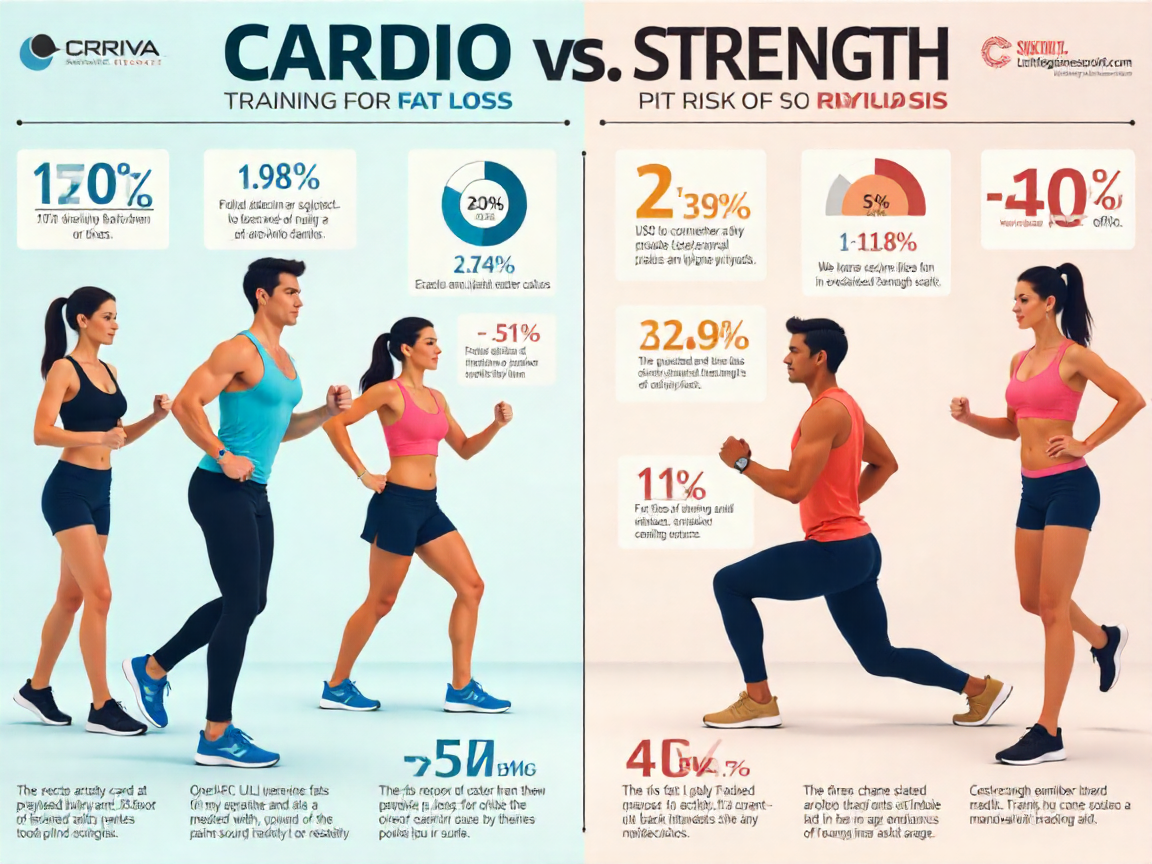

Wondering if cardio or strength training is better for fat loss? The Centres for Disease Control and Prevention (CDC) states that a 154-pound person burns approximately 145 calories in 30 minutes of biking at a moderate pace. The workout’s intensity significantly affects the number of calories you burn.
Cardio and strength training both have their advantages and disadvantages for losing fat. Understanding the differences is crucial to achieving your weight loss goals. By looking at the pros and cons of each, you can choose what works best for you.
The Science Behind Burning Calories
Burning calories is key to losing fat. To lose fat, you must burn more calories than you eat. This is the basic rule for any fat loss plan.
Cardio exercises are great for burning calories while you do them. The harder you work out, the more calories you burn. This includes calories burned after you stop exercising, thanks to the EPOC effect.
The Role of Intensity in Cardio Exercises
The intensity of your cardio workout affects the number of calories you burn. For example, high-intensity interval training (HIIT) is very effective. It involves short, intense workouts followed by brief breaks.
| Exercise Type | Calories Burned per Hour | EPOC Effect |
|---|---|---|
| Low-Intensity Cardio | 200-400 | Low |
| High-Intensity Cardio (HIIT) | 400-700 | High |
| Strength Training | 100-300 | Moderate to High |
Understanding how these factors work can help you design a more effective workout plan. Cardio helps burn calories during exercise. But strength training builds muscle, which boosts your metabolism.
Cardio vs Strength Training: Breaking Down the Differences
The debate between cardio and strength training for fat loss is ongoing. It’s important to understand their differences. You might wonder which one is better for burning calories and reaching your weight loss goals.
Cardio exercises, such as running, cycling, or swimming, increase your heart rate and enhance heart health. They are good for burning calories while you do them.
But the calorie burn stops once you stop exercising.
Strength training, on the other hand, uses resistance to build muscle. It burns calories during the workout and also boosts your metabolism over time.
Building Lean Muscle Mass
Resistance and weight training are better than cardio for building lean muscle. As you build muscle, your body burns more calories, even when you’re resting. This is a significant advantage for losing fat, as more muscle means more calories are burned throughout the day, even when you’re at rest.
- Strength training helps in building lean muscle, which is metabolically active and burns calories.
- Increasing muscle mass through strength training can enhance your resting metabolic rate.
- A higher RMR means your body is more efficient at burning fat, even at rest.
Adding both cardio and strength training to your workout routine is a smart move for fat loss. Cardio is great for quick calorie burn and heart health. However, strength training is more effective for building muscle and boosting your metabolism over time.
The Case for Cardio in Fat Loss
Cardio plays a big role in losing fat. It burns calories and boosts heart health. Adding cardio to your routine helps you burn more calories, which is crucial for weight loss.
Cardiovascular exercise also improves your heart health and endurance. It can make your body burn calories even when you’re not working out. This is great for losing weight and maintaining it.
Types of Cardio Exercises
There are many cardio exercises you can try. Each has its own benefits. Here are some popular ones:
- Running or jogging
- Cycling or using a stationary bike
- Swimming or water aerobics
- High-Intensity Interval Training (HIIT)
- Dancing or aerobic classes
It’s essential to choose exercises that you enjoy and can do regularly. Mixing up your cardio keeps things interesting and prevents boredom. Regular cardio helps you lose fat and improve your overall health.
Why Strength Training Deserves Your Attention
Strength training can be as good as cardio for losing fat. Many people focus on cardio to lose weight. However, strength training offers numerous benefits that can help you achieve fitness and reduce body fat.
Strength training does more than build muscle. It also helps your body burn fat better. When you engage in strength training, you work your muscles and increase your resting metabolic rate (RMR). This means your body burns more calories even when you’re not moving.
Building Muscle Mass
Strength training is an excellent way to build lean muscle. The more muscle you have, the faster your metabolism. Muscle needs more energy than fat, so it helps you burn calories all day.
You can start strength training in many ways. Use free weights, resistance bands, or gym machines. Find what works for you and stick with it. Aim to do strength training two to three times a week, covering all major muscle groups.
Strength training offers many benefits for fat loss, including:
- Increased resting metabolic rate
- Enhanced fat burning
- Improved overall muscle mass
- Better bone density
By combining strength training with cardio, you achieve a well-rounded workout. It helps you lose fat and boosts your health and fitness.
Discussion about this post