

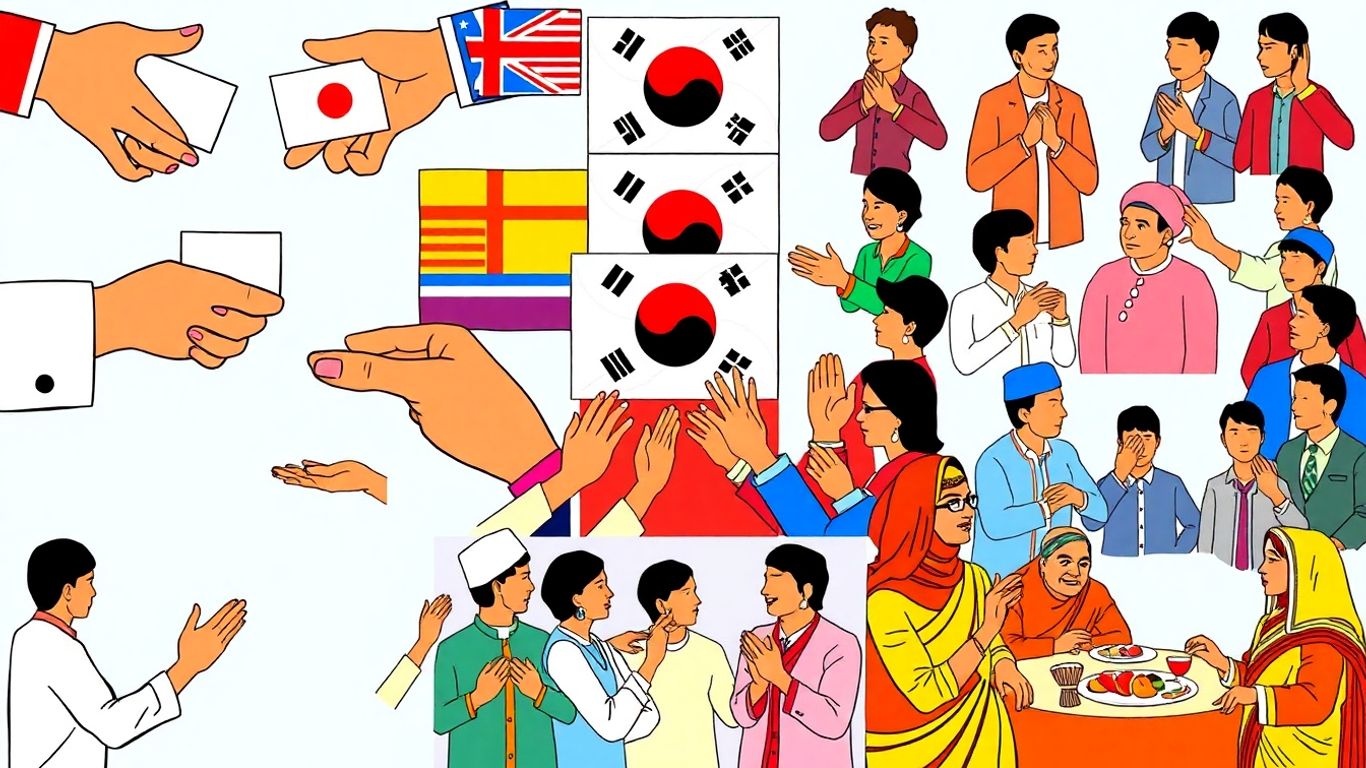

When you’re out exploring new places, it’s easy to get caught up in the sights and sounds. However, remember that you’re a guest, and showing a little respect for local customs goes a long way. Understanding global social norms can make your trip smoother and help you connect with the people you meet. It’s all about being mindful and adaptable, really. Think of it as learning a new dance – you watch the steps before you join in.
Greetings and Body Language
How you greet someone and how you carry yourself can convey different messages depending on the context. It’s not just about words; it’s about the whole package.
A simple nod might be fine in one place, while a formal handshake is expected in another. And don’t even get me started on hand gestures, what’s friendly here could be seriously offensive somewhere else. It’s worth doing a quick check before you go.
Here are a few things to keep in mind:
- Eye Contact: In some cultures, maintaining eye contact with someone shows honesty and respect. In others, it can be perceived as aggressive or disrespectful, especially towards the elderly. Try to mirror what the locals do.
- Physical Touch: In some societies, touch is very comfortable – a pat on the back or an arm around the shoulder might be common. In many places, though, it’s best to keep your hands to yourself unless the other person initiates contact. And definitely avoid touching someone’s head; it’s considered sacred in many parts of Asia.
- Gestures: That ‘thumbs up’ you give so freely? In places like Iran, it’s a major insult. Pointing with your finger can also be seen as rude. When in doubt, keep your hands relaxed at your sides or use an open palm to indicate direction.
- Personal Space: How close do people stand when they chat? In some South American countries, people stand quite close, which may feel a bit too intimate if you’re accustomed to more personal space. In other places, such as parts of Europe, people prefer a bit more space. Just go with the flow and try not to crowd anyone.
The Nuances of Gift-Giving Traditions
Bringing a small gift can be a lovely way to show appreciation, especially if you’re invited to someone’s home. But just like greetings, gift-giving has its own set of rules around the world. What’s a thoughtful present in one country might be a bit of a miss in another. It’s not about the price tag, but about showing you’ve put some thought into it.
Consider these points when choosing a gift:
- What to Avoid: In China and Japan, avoid gifts in sets of four, as the number four sounds like ‘death’ in their languages. Also, be careful with sharp objects like knives or scissors, as they can symbolize cutting ties.
- Appropriate Gifts: Flowers are often a safe bet in many Western cultures, but be aware that in some Middle Eastern countries, it is considered inauspicious to give red roses. Chocolates or sweets are usually well-received, but check if there are any dietary restrictions or strong preferences against them.
- Presentation Matters: How you give and receive a gift can be important. In many Asian cultures, gifts are presented and received with both hands. It’s also polite to refuse a gift a couple of times before accepting it, showing humility.
Doing a little homework on cross-cultural communication tips before you travel can really help you feel more confident when navigating foreign societies. It’s all part of the adventure!
Respecting Local Customs: Do’s and Don’ts Around the World
When you’re traveling abroad or engaging in international business customs, it’s easy to accidentally step on someone’s toes if you’re not careful. What’s perfectly normal in your hometown might be a big no-no somewhere else. So, before you pack your bags, let’s talk about some key do’s and don’ts to help you navigate different cultures with grace. It’s all about showing respect and making sure your traveling abroad manners are on point.
Dining Etiquette: Food for Thought
Food is a significant part of any culture, and how you eat can reveal a great deal. It’s not just about the flavors; it’s about the experience and the respect you show to your hosts and the food itself. Always try to observe what others are doing, especially if you’re unsure. It’s usually a safe bet to follow their lead.
- Do: Use the right hand for eating in many parts of Asia and Africa, as the left hand is often considered unclean. This is a simple but significant gesture of respect.
- Do: Leave a little food on your plate when dining in China. Finishing everything might signal that you weren’t given enough, which can be seen as impolite.
- Don’t: Assume tipping customs are the same everywhere. In Japan, for instance, tipping is generally not expected and can even be considered rude. In the US, however, it’s a standard part of the service industry.
- Don’t: Point your feet at people or place them on furniture in Thailand. Feet are considered the lowest and dirtiest part of the body, so this is a major sign of disrespect.
Here’s a quick look at tipping, because it really does vary:
| Country | Tipping Standard |
|---|---|
| United States | 15-20% in restaurants |
| Japan | No tipping; considered rude |
| Italy | Service charge often included |
Dress Codes: What to Wear Where
Your clothing choices can speak volumes before you even say a word. Being mindful of local dress codes shows respect for the culture and environment you’re in, whether it’s a place of worship or a casual social gathering. It’s about fitting in and showing consideration.
- Do: Dress modestly when visiting religious sites. This often means covering your shoulders and knees. In some mosques, you might also need to wear a headscarf.
- Do: Observe local styles and try to blend in, especially in more conservative areas. Wearing overly revealing or flashy clothing can draw unwanted attention and might be seen as disrespectful.
- Don’t: Forget that what’s acceptable beachwear might be completely inappropriate for a city street or a business meeting. Always err on the side of caution and dress more conservatively if you’re unsure.
- Don’t: Wear shoes inside homes or certain establishments in many Asian countries, like Japan and South Korea. Look for shoe racks or observe if others are removing their footwear.
Frequently Asked Questions
What’s the best way to greet someone in a new country?
Greetings can be tricky! In some places, a firm handshake is expected, while in others, a gentle bow or a nod is more appropriate. It’s a good idea to watch what locals do first. Sometimes, a simple smile and a polite ‘hello’ in their language can go a long way, even if you don’t know all the specific customs.
Are there any common mistakes I should avoid when giving gifts?
Gift-giving has its own set of rules! For example, in some Asian cultures, giving gifts in sets of four is a no-no because the number four can sound like the word for death. Also, be careful about the colours of the wrapping paper; what’s cheerful in one place might be unlucky in another. When in doubt, simplicity and thoughtfulness are usually best.
How should I behave when invited to someone’s home?
When you’re invited to someone’s house, it’s often polite to bring a small gift, such as flowers or sweets, but research to ensure it’s appropriate for that culture. You may also need to remove your shoes at the door, so it’s a good idea to check if there are shoe racks or slippers provided. Always try to be on time, or even a little early, as being late can be seen as disrespectful.
Discussion about this post