


Bringing a new pet home is thrilling, but it’s important to start house training right away. This ensures a peaceful living space for everyone.
Good potty training builds a strong bond with your pet and stops bad habits. This guide helps you train your dog or cat quickly and effectively.
House training is key to a happy, healthy pet relationship. Follow the tips in this guide to raise a well-behaved pet.
Your Pet’s Bathroom Needs
House training is easier when you know the differences in bathroom needs between puppies, kittens, and adult pets. This knowledge helps you tailor your training to meet your pet’s needs. It makes the process more efficient.
Puppies vs. Adult Dogs
Puppies have special bathroom needs compared to adult dogs. Their small bladders and limited control mean they need to go out more often. A three-month-old puppy can wait about three hours before needing to go.
Adult dogs, on the other hand, can wait longer between bathroom breaks. They have better bladder control.
Kittens also need more frequent bathroom breaks, similar to puppies. Their small bladders and developing bowel control require more attention to their litter box. As kittens grow into adult cats, they can hold their bladder and bowels better. This means less frequent litter box cleaning.
Knowing these differences is key to effective house training. By understanding your puppy or kitten’s needs, you can create a schedule that works for both you and your pet. This reduces accidents and stress for everyone.
Preparing Your Home for Successful House Training
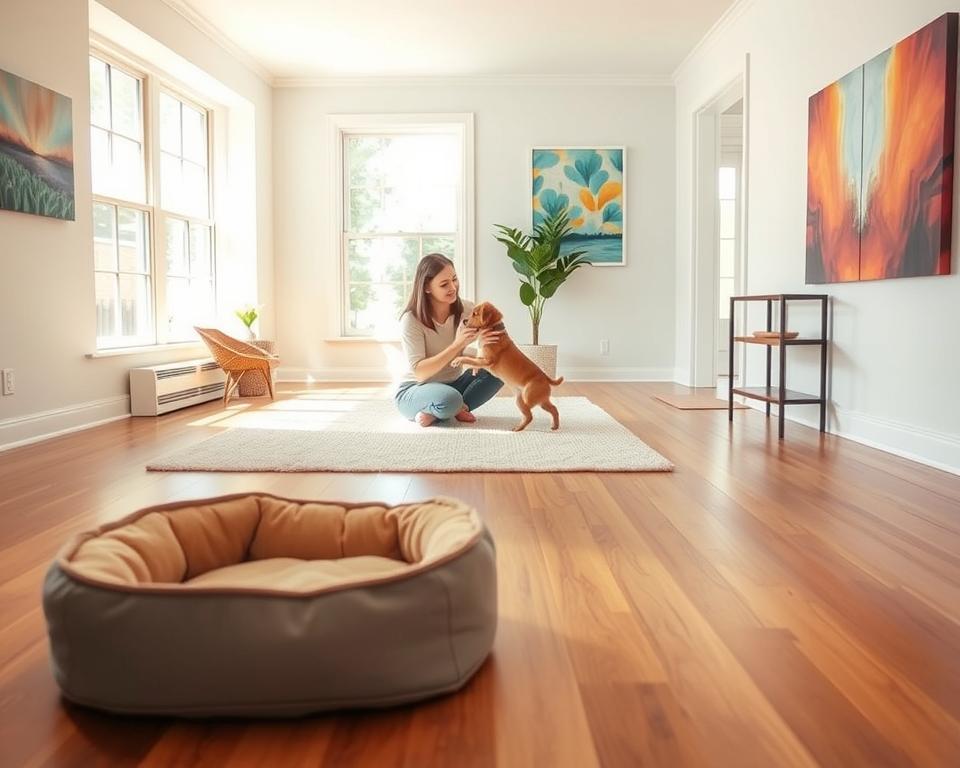
Before starting house training, prepare your home well. It’s not just about getting supplies. You need to create a safe, clean space that helps with training.
Crates and Barriers
Crates are key for housetraining. They use your pet’s instinct to keep their den clean. This lets your pet hold their bladder and bowels until you can take them out. Barriers also help by keeping your pet out of unwanted areas.
Accidents will happen, but the right cleaning products can help a lot. Products that get rid of odors are important. They remove accidents and stop your pet from going back to the same spot. This keeps your home clean and helps with training.
Getting your home ready with the right tools and space is important. With patience and consistency, your pet will learn quickly and well.
How to House Train Your New Pet: Step-by-Step Methods
House training is about knowing your pet’s needs and using the right tools. Crate training is a great method. It uses your pet’s instinct to keep its sleeping area clean.
Selecting the Right Crate Size
Choosing the right crate size is key to successful crate training. The crate should fit your pet so it can stand, turn, and lie down easily. A crate that’s too big can let your pet use one corner as a bathroom.
When picking a crate, think about your pet’s breed, age, and size. Puppies may need a crate that can grow with them. Many crates have dividers to adjust the space.
Establishing Positive Crate Association
After getting the right crate, make it a positive space. Start by adding bedding and treats. Call your pet’s name or use treats to encourage it to go in.
Start with short crate times, like when you’re home. Then, increase the time. Make sure the crate is a welcoming place, not a punishment. This way, your pet will love its crate and house training will be easier.
By following these steps, focusing on the right crate size and making crate training positive, you’ll house train your new pet successfully.
Handling Accidents and Setbacks
Accidents can happen when house training your pet. It’s important to handle them right to keep training moving forward.
When accidents occur, it’s key to tell if they’re medical or behavioral. Sometimes, accidents can mean a health issue like a urinary tract infection. If your pet is having accidents, check with a vet to see if there’s a health problem.
Medical Conditions That Affect House Training
Some health issues can make it hard for pets to be house trained. These include urinary tract infections, kidney stones, and stomach problems. If you think a health issue is causing accidents, a vet should check your pet.
Not all accidents are health-related; some are due to behavior. Issues like anxiety, lack of training, or changes in the environment can cause accidents. Knowing the cause helps fix the problem.
To solve behavioral issues, you need patience and consistent training. Rewarding good behavior and not punishing for accidents helps build good habits.
Understanding if the problem is health or behavior lets you take the right steps. This helps get your pet’s house training back on track.
Maintaining Consistency and Positive Reinforcement
Effective house training relies on being consistent and rewarding good behavior. You must create a routine and stick to it. This means taking your pet outside at the same times every day.
Being consistent helps your pet know what’s expected of them. By going out at the same times, you create a routine. This routine should include feeding, play, and sleep times, along with regular bathroom breaks.
Positive reinforcement is a key tool in house training. Reward your pet with treats and praise when they go potty correctly. This encourages them to keep up the good work and speeds up learning.
| House Training Tips | Benefits | Actions |
|---|---|---|
| Establish a Routine | Helps pet understand expectations | Take pet out at same times daily |
| Use Positive Reinforcement | Encourages good behavior | Reward with treats and praise |
| Avoid Punishment | Prevents negative associations | Stay calm during accidents |
By keeping up consistency and using positive reinforcement, you can house train your pet well. Remember, patience and persistence are essential for successful house training.
Discussion about this post