

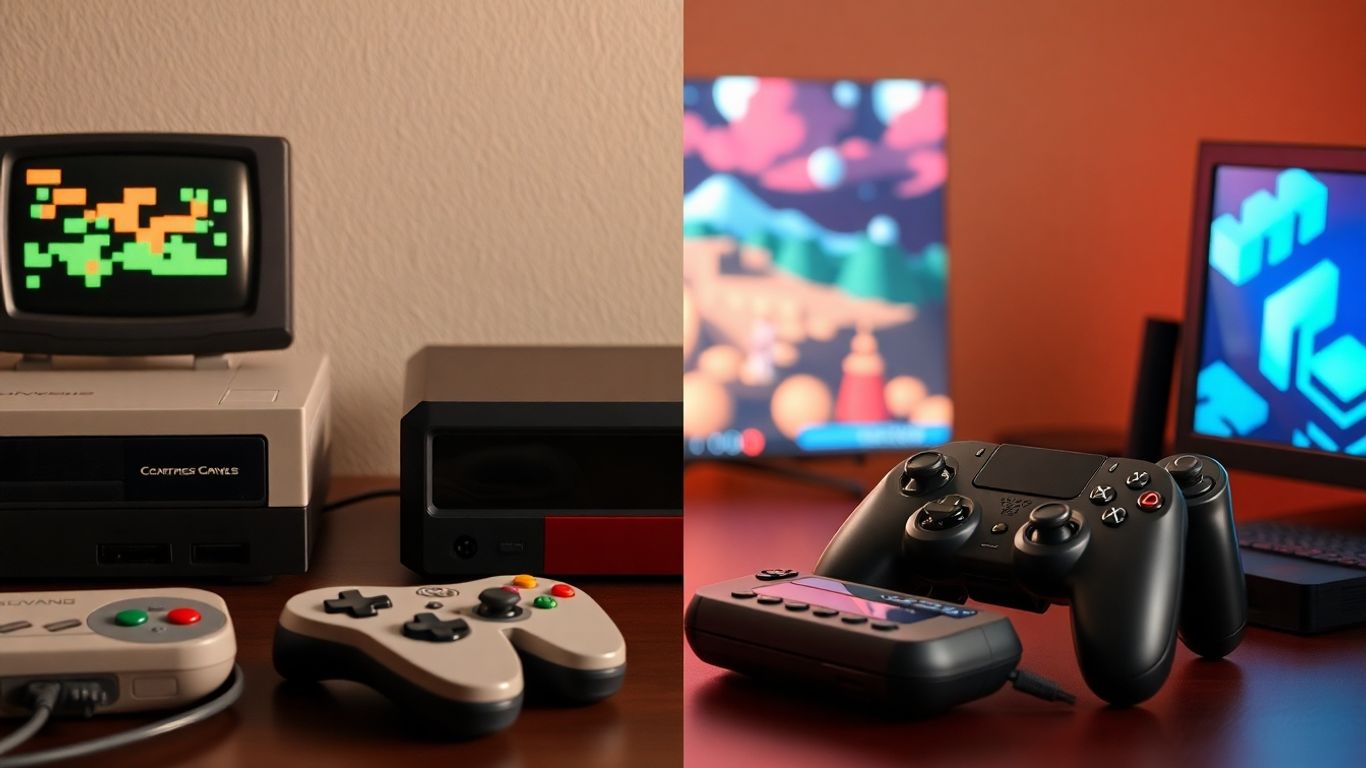

When you start thinking about classic gaming vs new gaming, the first thing that usually jumps out is how much things have changed, but it’s the community and shared nostalgia that often really sets old school games vs current games apart.
Some swear the best video game era was the time of arcade machines and game cartridges, while others can’t imagine gaming without online play and open-world adventures. The debate about gaming nostalgia vs innovation might get heated, but it always comes back to what keeps people connected, the bonds players form around games.
How Shared Experiences Built Bonds Across Generations
Back in the day, gaming was a face-to-face thing. Friends crowded around a TV, taking turns or teaming up against pixelated enemies.
Arcades were packed with people swapping tips, battling for high scores, and honestly, just hanging out. There was no Discord or Twitch. The only chat was whoever stood next to you at the cabinet.
A few signs of community in retro vs modern gaming:
- Local Multiplayer: Games like Mario Kart and Street Fighter let you plug in extra controllers and trash-talk in real time.
- High Score Battles: Beating a friend’s Pac-Man score was a badge of honor, often written in permanent marker on the side of a cabinet.
- Game Sharing: Old consoles had one game at a time, so people swapped cartridges at school or after dinner at a friend’s place.
Today, online gaming connects people from every corner of the world. It’s a different kind of bond — maybe broader, but sometimes less personal. Sharing nostalgia, though, still sparks conversations, even if you’re watching a streamer or posting in a forum.
Reviving Classic Culture Through Streaming and Online Platforms
Now, thanks to streaming and social media, classic culture is getting a new shot at life. Streamers on Twitch will play through old favorites, reconnecting with longtime fans and introducing classic titles to new audiences.
YouTube is full of playthroughs, retrospectives, and people trying to beat notoriously hard games from the past.
- Emulators and Re-Releases: It’s easier than ever to play and share old school games vs current games, whether on your phone, PC, or latest console.
- Online Events: Communities organize tournaments for games like Tetris or old-school shooters, keeping the spirit of retro alive.
- Cross-Generational Conversations: Parents who grew up with Mario or Sonic introduce those franchises to their kids, sometimes even playing together across remastered versions.
Let’s do a quick comparison between how communities formed around retro and modern games:
| Community Feature | Retro Gaming | Modern Gaming |
|---|---|---|
| Main Gathering Places | Arcades, Living rooms | Online lobbies, Streaming |
| Way to Compete/Connect | Local multiplayer, high scores | Global leaderboards, voice chat |
| Sharing Tips | Magazines, playground talk | Forums, video guides |
| Nostalgia Factor | Shared childhood activities | Remastered classics & indie tributes |
Whether you think the best video game era was the 80s, 90s, or now, there’s no denying the power of gaming communities. Comparing vintage and modern video games isn’t just about features or graphics — it’s about how they bring us together, from then to now.
Visuals, Technology, and Gameplay: The Core Differences
Technology in gaming has come a long way. It’s impossible to ignore just how much things have changed, not just visually, but also in how games are made and played. Below, I’ll get into the key areas where retro and modern games really stand apart—and sometimes clash.
Retro vs Modern Gaming Graphics and Immersion
Back in the day, game visuals were all about working within the system’s limits. Think chunky pixels and basic color palettes, sprites that looked more like blobs, but somehow became legends.
As tech improved, 3D models and better animations started showing up. Now, modern games try to look as real as possible, sometimes leaving you squinting to tell the difference between games and movies.
Here’s a quick side-by-side for how things stack up:
| Feature | Retro Games | Modern Games |
|---|---|---|
| Visual Style | 2D sprites, pixel art | High-res 3D, photorealism |
| Animation | Simple, few frames | Complex, fluid, motion-captured |
| Sound Effects | 8-bit/16-bit chiptunes | Realistic, surround sound |
| Hardware Needs | Minimal, inexpensive | Demands high-end devices |
The charm of older visuals comes from their simplicity, your imagination did a lot of the heavy lifting. But make no mistake, today’s graphical powerhouses pull you deep into worlds, often in ways that would have seemed impossible just a few decades ago.
Game Mechanics From Simplicity to Innovation
Gameplay is where you feel the divide the most. Old-school games were usually tough, focused, and stuck to one main idea. You had to master patterns, memorize moves, or just have quick reflexes. Modern games, on the other hand, usually give you a lot more options, open worlds, quests, skill trees, and multiplayer features all at once.
Let’s break down some key differences:
- Retro Mechanics:
- Modern Mechanics:
Modern games sometimes get flak for being overloaded—so many menus, so many things to collect. Meanwhile, some retro games get called out for being too simple or repetitive. It really depends what you’re in the mood for: blazing through quick, focused runs or sinking weeks into one massive experience.
So, which one’s better? That’s the big debate. It honestly comes down to what type of experience you want—classic simplicity or sprawling modern adventures.
Influences and Crossovers Shaping Today’s Gaming Scene
The line between old and new games gets a little blurrier every year. Retro gaming isn’t just about digging up old consoles from the attic. Its impact pops up pretty much everywhere now—from major game studios to indie projects, and even in online casinos. When you look around, it’s obvious how much gaming habits and designs are recycled, remixed, and reimagined.
The Lasting Legacy of Retro Hits on Modern Titles
Retro classics haven’t just stuck around for fun; they’ve set the foundation for what we see in today’s biggest titles. Here’s where their influence really shows:
- Design Simplicity: Most modern games still use the tight, easy-to-learn mechanics that made arcade and early console hits stand out. Think of Mario-style jumping or the smooth controls of classic fighters—those ideas never went away, they just got shinier.
- Difficulty and Reward: Remember how you had to practice a game to get good at it? Games today, especially platformers and roguelikes, take pride in being tough yet fair—an idea borrowed from the 80s and 90s.
- IP Revivals: Old franchises get a second life almost every big game season. Take “The Legend of Zelda” or “Street Fighter”—their new releases often sprinkle in retro references or even straight-up remasters.
Retro Market Stats
| Segment | Estimated Value (2023) | Projected Value (2030) |
|---|---|---|
| Arcade Gaming | $19 Billion | $21.2 Billion |
Retro games aren’t just nostalgia, they mean big business. New gamers keep finding these old favorites, and it fuels interest in the originals and remakes alike.
Retro Inspirations in Indie and Casino Gaming
If indie developers have a secret sauce, it’s their love for retro styles. Look at Steam’s top sellers like “Celeste” and “Shovel Knight”, both stick with pixel art and straightforward controls. They add fresh stories, but the core feels like something from a classic NES session.
Casino games followed the trend in a different way:
- Slots with Retro Themes: Lots of slots mimic old-school arcade visuals and sounds to pull in players who grew up in the 80s and 90s.
- Simple Mechanics: Just like early games, casino titles keep controls as basic as possible, making them easy for anyone to pick up.
- Cross-promotions: Collaborations with classic franchises or themed bonus rounds attract casual and veteran gamers alike.
On top of all that, older game aesthetics show up all over app stores. In fact, many mobile games today use chiptune music and pixelated visuals because people just can’t get enough of that familiar comfort.
So, when you scroll through digital stores or hit up a casino app, you’re likely standing at the crossroads of retro and modern.
These influences don’t just honor the past, they’re a huge part of what makes today’s gaming feel so welcoming, fun, and a little bit nostalgic, no matter when you started playing.
Discussion about this post