

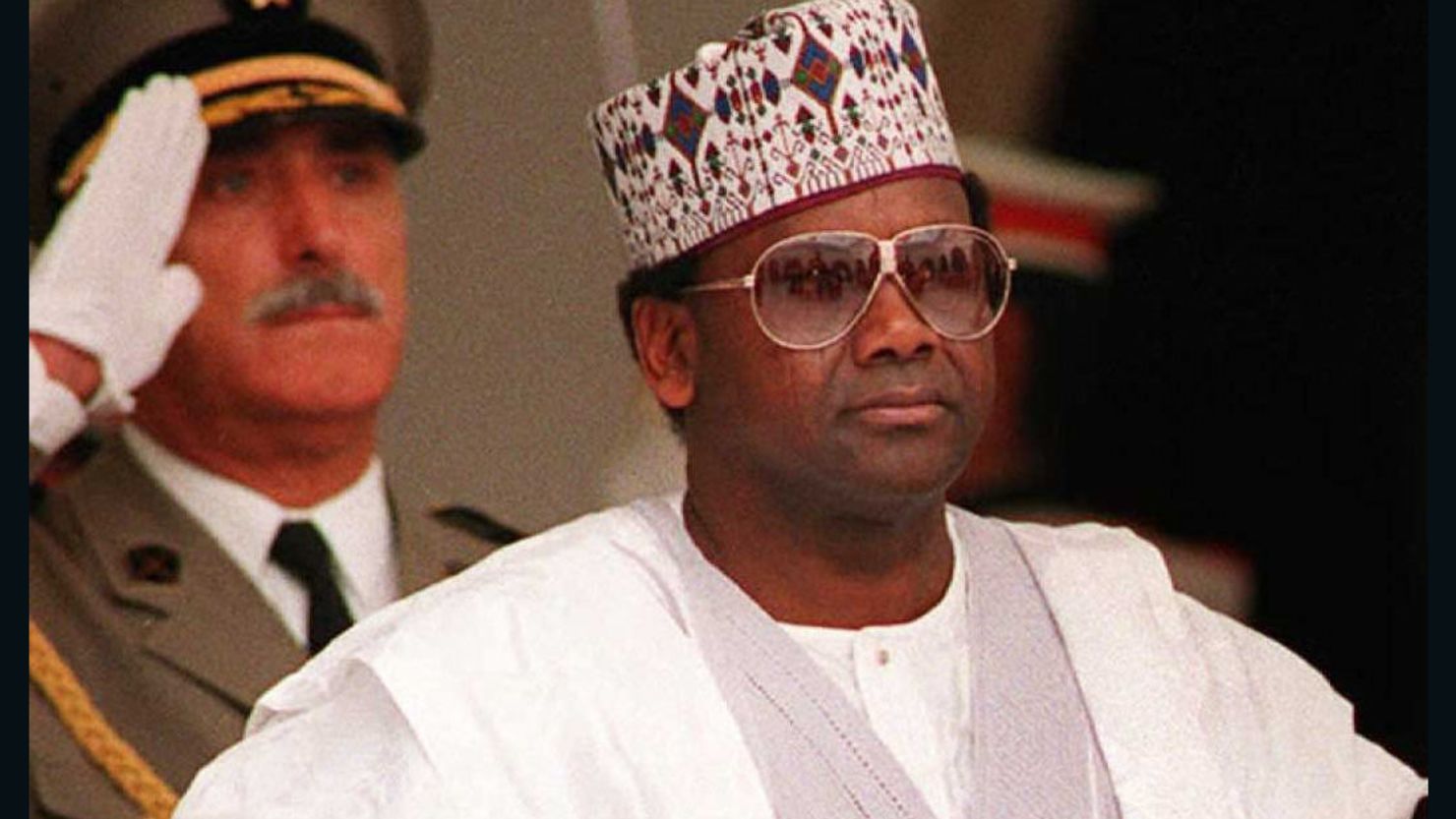

As you delve into the complex legacy of General Sani Abacha, you’ll uncover a controversial figure who shaped modern Nigeria. During his five-year military dictatorship from 1993 to 1998, Abacha wielded absolute power over Nigeria. You’ll discover how he rose through military ranks to seize control in a coup, ruling with an iron fist while amassing a vast personal fortune.
His regime was marked by human rights abuses and corruption on a staggering scale. Yet Abacha’s impact on Nigerian politics and society continues to reverberate decades after his sudden death. This examination of General Sani Abacha’s life reveals insights into a pivotal period of Nigerian history.
Who was General Sani Abacha?
General Sani Abacha was a prominent Nigerian military officer and politician who served as the de facto President of Nigeria from 1993 to 1998. His rise to power and subsequent rule left an indelible mark on Nigeria’s political landscape, characterized by both controversy and significant developments.
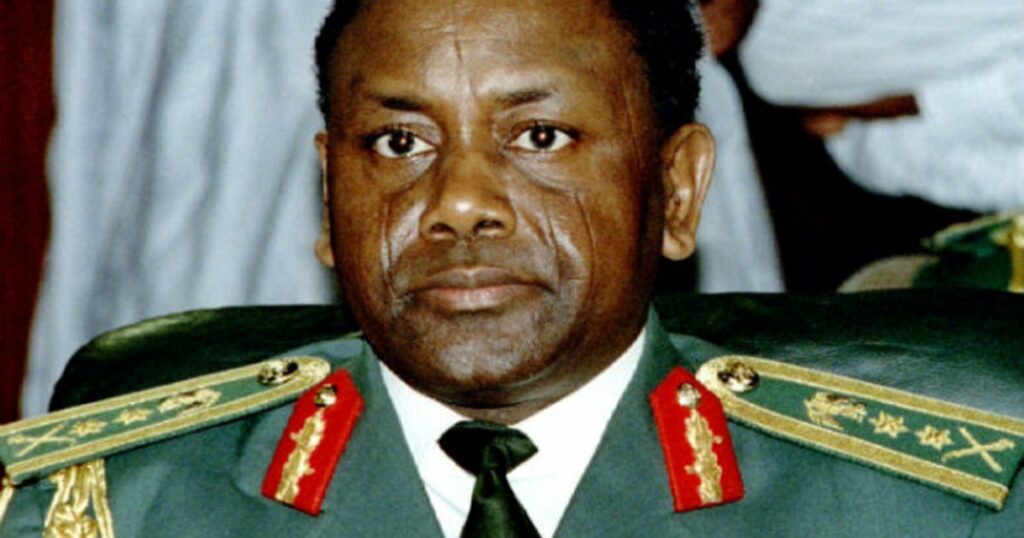
Abacha’s journey began in the Nigerian Army, where he steadily climbed the ranks. His military prowess and strategic acumen propelled him into key positions within Nigeria’s power structure. General Sani Abacha played pivotal roles in several military coups, solidifying his reputation as a formidable force in Nigerian politics.
As Nigeria’s head of state, Abacha implemented policies that drew both praise and criticism. His regime was known for its firm grip on power, often suppressing opposition and tightening control over various aspects of Nigerian society. However, some credit General Sani Abacha with certain economic reforms and infrastructure developments during his tenure.
Abacha’s rule remains a subject of intense debate in Nigerian history. While some view him as a strong leader who brought stability, others criticize his authoritarian methods and allegations of corruption. The complexities of his regime continue to influence discussions on governance and leadership in Nigeria to this day.
Early Life
General Sani Abacha, born on September 20, 1943, in Kano, Nigeria, came from modest origins. You might be surprised to learn that this future leader of Africa’s most populous nation started life as the son of an immigrant from neighboring Niger. Growing up in the bustling northern city of Kano, young Sani was exposed to a diverse mix of cultures and traditions that would shape his worldview.
His military training began at the Nigerian Military Training College in Kaduna. In 1963, he was commissioned after completing his studies at the prestigious Mons Officer Cadet School in Aldershot, England.
Military Career
General Sani Abacha’s rise through the ranks of Nigeria’s military was marked by ambition and strategic maneuvering. You might be surprised to learn that his career began in 1962 when he enlisted in the Nigerian Army. From there, Abacha quickly made a name for himself as a skilled tactician and leader.
Sani Abacha’s military career was marked by his involvement in several key events that shaped Nigeria’s history. He played a significant role in the country’s military coups, starting with the July 1966 Nigerian counter-coup, where he participated from the conceptual stage as a second lieutenant with the 3rd Battalion in Kaduna.
Abacha’s rise through the ranks was swift. In 1969, he fought during the Nigerian Civil War as a platoon and battalion commander. He later became commander of the 2nd Infantry Division in 1975. In 1983, Abacha was General Officer Commanding of the 2nd Mechanised Division and was appointed a member of the Supreme Military Council.
Abacha was instrumental in two significant coups: the 1983 Nigerian coup d’état that brought General Muhammadu Buhari to power and the 1985 Nigerian coup d’état that removed Buhari and installed General Ibrahim Babangida. When Babangida became President and Commander-in-Chief in 1985, Abacha was named Chief of Army Staff. He was later appointed Minister of Defence in 1990.
Abacha served as Chief of Army Staff from 1985 to 1990, as Chief of Defence Staff from 1990 to 1993, and as Minister of Defence. A notable achievement in Abacha’s career was becoming the first Nigerian Army officer to attain the rank of a full military general without skipping a single rank.
Throughout his career, General Sani Abacha held several pivotal positions:
- Chief of Army Staff (1985-1990)
- Chairman of the Joint Chiefs of Staff (1990-1993)
- Minister of Defence (1990-1993)
These roles not only showcased his military prowess but also positioned him as a key player in Nigeria’s political landscape. Abacha’s influence extended far beyond the barracks, setting the stage for his eventual seizure of power in 1993.
As you can see, Abacha’s military career was a crucial stepping stone to his later role as Nigeria’s head of state, shaping both his leadership style and his approach to governance.
Seizure of power
General Sani Abacha’s rise to power was as swift as it was controversial. In November 1993, Nigeria had a new leader seemingly overnight. That’s because General Sani Abacha, then the Defense Minister, orchestrated a bloodless coup that ousted the interim government of Ernest Shonekan. He portrayed the overthrow as an act of stability brought about by the socio-political uncertainties caused by the 1993 presidential election.
Abacha’s takeover wasn’t a spur-of-the-moment decision. He’d been a key player in previous military regimes and had carefully positioned himself for this moment. As Defense Minister, he controlled the armed forces, giving him the perfect launching pad for his power grab.
Once in power, General Sani Abacha wasted no time. He dissolved all democratic institutions, banned political parties, and replaced civilian governors with military administrators. His iron-fisted approach left no doubt about who was in charge.
Abacha’s seizure of power marked the beginning of a tumultuous era in Nigerian history. His regime would become known for its human rights abuses, corruption, and economic mismanagement. But at the moment of his takeover, few could have predicted the full impact of General Sani Abacha’s rule on Nigeria’s future.
Head of state
General Sani Abacha’s reign as Nigeria’s head of state was marked by controversy and iron-fisted control. When he seized power in a bloodless coup in November 1993, many Nigerians initially welcomed him, hoping for stability after years of political turmoil. However, their expectations were quickly dashed.
Sani Abacha’s rule as Head of State and Commander-in-Chief of Nigeria’s Armed Forces, from 1993 to 1998, was marked by a series of decrees that consolidated his power. In September 1994, he issued a decree that effectively placed his government above the law, giving him absolute authority. This was followed by another decree that granted him the power to detain individuals for up to three months without trial. Abacha also abolished Decree 691 of 1993, further solidifying his grip on power.
As head of state, General Sani Abacha swiftly consolidated his grip on power. He dissolved all democratic institutions, banned political parties, and silenced opposition voices. His regime was characterized by human rights abuses, including the imprisonment and execution of activists and critics.
Abacha’s economic policies were a mixed bag. While he initiated some infrastructure projects and reduced Nigeria’s foreign debt, his regime was also marred by widespread corruption. It’s estimated that General Sani Abacha and his family embezzled billions of dollars from the country’s coffers, much of which is still being recovered today.
During his rule, Abacha’s administration was characterized by human rights abuses, corruption, and a disregard for the rule of law. His regime was also marked by the execution of environmental activist Ken Saro-Wiwa, which drew international condemnation.
On the international stage, Abacha’s regime faced increasing isolation. His refusal to transition to civilian rule and his human rights record led to sanctions from Western countries. However, he maintained relationships with other African nations and sought to position Nigeria as a regional power.
The Mysterious Death of General Sani Abacha
General Sani Abacha’s sudden demise on Monday June 8, 1998, remains one of Nigeria’s most intriguing political mysteries. You might wonder how a man who held such tight control over the nation could meet such an unexpected end. In accordance with Muslim tradition, he was laid to rest on the same day, but the swift burial without an autopsy sparked controversies of a possible assassination.
The Official Story
According to reports, General Sani Abacha died of a heart attack in the presidential villa. But is that really what happened? Many Nigerians raised eyebrows at this explanation, given the circumstances surrounding his death.
Conspiracy Theories
As with many high-profile deaths, conspiracy theories abound. Some claim General Sani Abacha was poisoned by political rivals. Others suggest international intervention. The truth? It’s still shrouded in secrecy.
Sani Abacha’s chief security officer, Hamza al-Mustapha, suspected foul play in his boss’s death, believing Israeli operatives poisoned him while with Yasser Arafat.
Interestingly, Abacha was reportedly on the verge of handing over power to a civilian government in October 1998, a plan initially outlined in October 1995. However, his sudden death led to General Abdulsalami Abubakar taking the reins, paving the way for the Fourth Nigerian Republic.
Regardless of how he died, General Sani Abacha’s passing marked a turning point for Nigeria. The country transitioned to civilian rule, ending a dark chapter in its history. But the questions surrounding his death continue to fascinate and perplex Nigerians to this day.
While we may never know the full truth about General Sani Abacha’s demise, its impact on Nigeria’s political landscape is undeniable. It serves as a reminder of the often unpredictable nature of power and politics in Africa’s most populous nation.
The Aftermath of Abacha’s Rule: Nigeria’s Transition to Democracy
The death of General Sani Abacha in 1998 marked a turning point in Nigeria’s history. As you might imagine, the end of his authoritarian regime left a power vacuum that needed to be filled. But what happened next? Let’s dive into the aftermath and see how Nigeria navigated its way towards democracy.
A New Dawn
With Abacha’s sudden demise, Nigeria found itself at a crossroads. The military, which had ruled for years, faced mounting pressure to hand over power to civilians. You’d be surprised how quickly things moved after that. Within a year, Nigeria held its first democratic elections in nearly two decades.
Challenges and Progress
Of course, the transition wasn’t without its bumps. Corruption, a legacy of General Sani Abacha’s rule, remained a persistent issue. But here’s the silver lining: each subsequent election saw improvements in transparency and fairness. It’s like watching a young democracy finding its feet, step by step.
Recovering Looted Funds
Remember those billions that disappeared during Abacha’s reign? Well, the story didn’t end there. Successive governments have worked tirelessly to recover what’s now known as the “Abacha loot.” It’s a slow process, but every recovered dollar represents a small victory for Nigeria’s future.
Abacha’s Legacy: Controversies and Debates
Sani Abacha’s presidency, which spanned from 1993 to 1998, was a pivotal period in Nigeria’s history. His legacy is a subject of intense debate among scholars, politicians, and the general public. While some view him as a strong leader who brought stability to the country, others see him as a ruthless dictator responsible for numerous human rights abuses.
day.
One of the most significant controversies surrounding Abacha’s legacy is his handling of the economy. On one hand, his administration implemented policies that led to an increase in foreign exchange reserves and a reduction in external debt. However, critics argue that these gains were overshadowed by widespread corruption and mismanagement of state funds.
As noted by Professor Wale Adebanwi, a renowned expert on Nigerian politics, “Abacha’s economic policies were a classic case of ‘crony capitalism,’ where a select few benefited at the expense of the broader population.” This criticism is echoed by many Nigerians who feel that Abacha’s policies exacerbated income inequality and poverty.
Another contentious aspect of Abacha’s legacy is his human rights record. His administration was responsible for the execution of Ken Saro-Wiwa, a prominent environmental activist, and several other Ogoni leaders. This incident sparked international outrage and led to Nigeria’s suspension from Commonwealth.
In the words of Hauwa Ibrahim, a human rights lawyer, “Abacha’s regime was marked by a culture of impunity, where security forces acted with reckless abandon, disregarding the rights and dignity of citizens.” This sentiment is shared by many who view Abacha’s human rights record as a dark stain on Nigeria’s history.
Despite these controversies, some Nigerians still view Abacha as a strong leader who brought stability to the country. His supporters argue that he took bold steps to address the country’s economic and security challenges, even if his methods were sometimes heavy-handed.
As observed by Dr. John Campbell, a former US Ambassador to Nigeria, “Abacha’s presidency was a complex and multifaceted period in Nigerian history. While he made significant mistakes, he also took steps to strengthen the country’s institutions and promote economic growth.”
In conclusion, Sani Abacha’s legacy is a complex and contested issue. While some view him as a strong leader who brought stability to Nigeria, others see him as a ruthless dictator responsible for numerous human rights abuses. As Nigerians continue to debate and reflect on his presidency, it is clear that Abacha’s legacy will remain a subject of intense controversy and debate for years to come.
Personal Life
Sani Abacha was a devoted family man, married to Maryam Abacha, and blessed with a large family of 10 children, consisting of seven sons and three daughters. A distinctive feature of Abacha’s appearance was the tribal markings on his face, a testament to his cultural heritage.
Dates of Rank
| Year | Insignia | Rank |
|---|---|---|
| 1963 |  |
Second lieutenant (Commissioned) |
| 1966 |  |
Lieutenant |
| 1967 |  |
Captain |
| 1969 |  |
Major |
| 1972 |  |
Lieutenant colonel |
| 1975 |  |
Colonel |
| 1980 |  |
Brigadier general |
| 1984 |  |
Major general |
| 1987 |  |
Lieutenant general |
| October 1990 |  |
General |
Frequently Asked Questions
Here are some frequently asked questions and answers about General Sani Abacha.
What is General Sani Abacha most known for?
General Sani Abacha is notorious for his authoritarian rule and the widespread corruption during his regime. He is particularly infamous for embezzling billions of dollars from Nigeria’s oil revenues, much of which has been recovered by subsequent governments in what is now known as the “Abacha loot.”
How did General Sani Abacha’s rule impact Nigeria?
Abacha’s rule was marked by human rights abuses, suppression of political opposition, and economic mismanagement. However, he also oversaw some infrastructure developments and maintained relative stability in certain regions. The legacy of General Sani Abacha continues to influence Nigerian politics and discussions about governance to this day.
Conclusion
As you reflect on the life and legacy of General Sani Abacha, it’s clear his rule left an indelible mark on Nigeria’s history. While his authoritarian regime was marked by human rights abuses and corruption, it also saw periods of economic stability.
Your understanding of this complex figure is crucial for grasping Nigeria’s political evolution. Abacha’s impact continues to reverberate through Nigerian society today, influencing current governance and public discourse. By examining his era critically, you gain valuable insights into the challenges and opportunities facing Nigeria as it strives to strengthen its democracy and institutions in the 21st century.
Discussion about this post