


The global agricultural sector is facing big challenges. These include climate change, limited resources, and a lack of workers. These issues make it hard to feed a growing world population.
Advanced technologies, such as IoT and AI, are transforming farming. They make farming more precise and efficient. This helps farmers manage their crops and animals more effectively.
These technologies help the agricultural industry meet global food needs. They also make farming more sustainable for the future.
The Agricultural Revolution: From Traditional to Digital Farming
Digital technologies have revolutionised farming, paving the way for smart farming. Early farming was a demanding task, requiring considerable human effort and basic tools. Farm machinery, such as the seed drill, emerged in the 18th and 19th centuries. It made farming easier and more productive.
In the 20th century, gas-powered tractors and other machines significantly improved farming. Precision agriculture started in the early 1980s. It used data to help farmers grow more food and waste less.
Now, digital tools like GPS and automated equipment are changing farming again. IoT in agriculture helps farmers manage their land better. This makes farming more efficient and sustainable.
“The use of precision agriculture and IoT technologies allows farmers to make data-driven decisions, reducing the environmental impact of farming while increasing efficiency and productivity.”
This change in farming has many benefits. It makes farming more efficient, grows more food, and is better for the planet. As the world’s population grows, using agritech solutions will be key to feeding everyone.
| Technological Advancement | Impact on Farming |
|---|---|
| Mechanization (18th-19th centuries) | Reduced physical labor, increased productivity |
| Precision Agriculture (1980s) | Improved crop yields, reduced waste |
| IoT and Digital Technologies ( Late 20th century – present) | Enhanced monitoring, optimized resources, improved sustainability |
Understanding Smart Farming Technologies
IoT and sensor technologies lead the way in smart farming. They help farmers make better decisions and boost farm productivity. These tools enable farmers to monitor soil moisture, temperature, and crop health in real-time.
IoT and Sensor Technologies
IoT devices and sensors bring detailed data to agriculture. They track soil conditions, weather, and crop health. This info is key for better irrigation, predicting yields, and spotting problems early.
Soil moisture sensors accurately measure the exact amount of water crops need. This reduces waste and ensures plants receive the right amount of water. Temperature sensors watch soil and air temps, guiding farmers on when to plant and harvest.
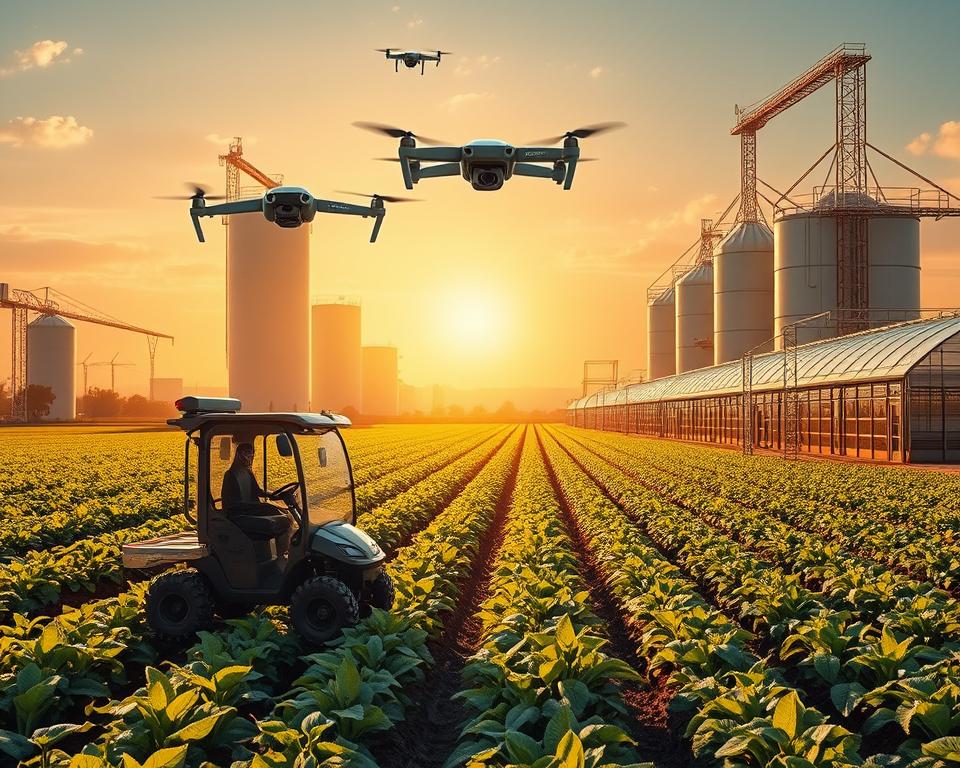
Remote sensing, including the use of drones and satellites, is also vital. It helps monitor big areas of land. It provides insights into crop health, growth, and issues such as pests or nutrient deficiencies.
By using IoT, sensors, and remote sensing, farming becomes more precise and efficient. This leads to improved crop yields and reduced environmental harm.
Precision Agriculture: The Core of Smart Farming
Smart farming’s heart is precision agriculture. It utilises IoT and AI to enhance farming practices. This method changes old farming ways, making them more efficient and productive.
Precision agriculture utilises new technology for improved field management. It includes precise irrigation, targeted fertilizers, and pest control. IoT devices and AI help make these possible by analyzing data. For example, sensors check soil moisture and crop health, helping farmers use water and fertilizers wisely.
Precision agriculture offers numerous benefits. It helps farmers utilise resources more efficiently, thereby reducing waste and environmental harm. It also leads to higher crop yields and better quality food. Studies show it can save farmers money and increase their profits.
“Precision agriculture is not just about technology; it’s about using data to make better decisions on the farm,” said David G. Anderson, a professor of agricultural economics.
Data analytics play a key role in precision agriculture. Farmers utilise data from IoT devices and satellite images to gain a deeper understanding of their crops. This helps them solve problems early, before they get worse.
| Technique | Benefit | Technology Used |
|---|---|---|
| Precision Irrigation | Water Conservation | IoT Sensors |
| Site-Specific Fertilization | Reduced Chemical Use | AI Algorithms, GPS |
| Targeted Pest Control | Increased Crop Yield | Drones, Satellite Imagery |
In summary, precision agriculture is key to smart farming. It offers numerous benefits, including improved efficiency, reduced waste, and increased profit. As farming continues to utilise new technology, precision agriculture will continue to improve farming for the better.
Remote Sensing in Agriculture: Eyes in the Sky and Ground
Smart farming is getting a big boost from remote sensing. This includes satellite images and drones. It helps farmers monitor crop health, identify pests and diseases, and assess soil conditions. This leads to better decisions based on data.
Remote sensing provides farmers with key insights into their farming practices. Satellite images let them see the big picture of their farm. Drones, with their high-resolution photos, help spot problems early.
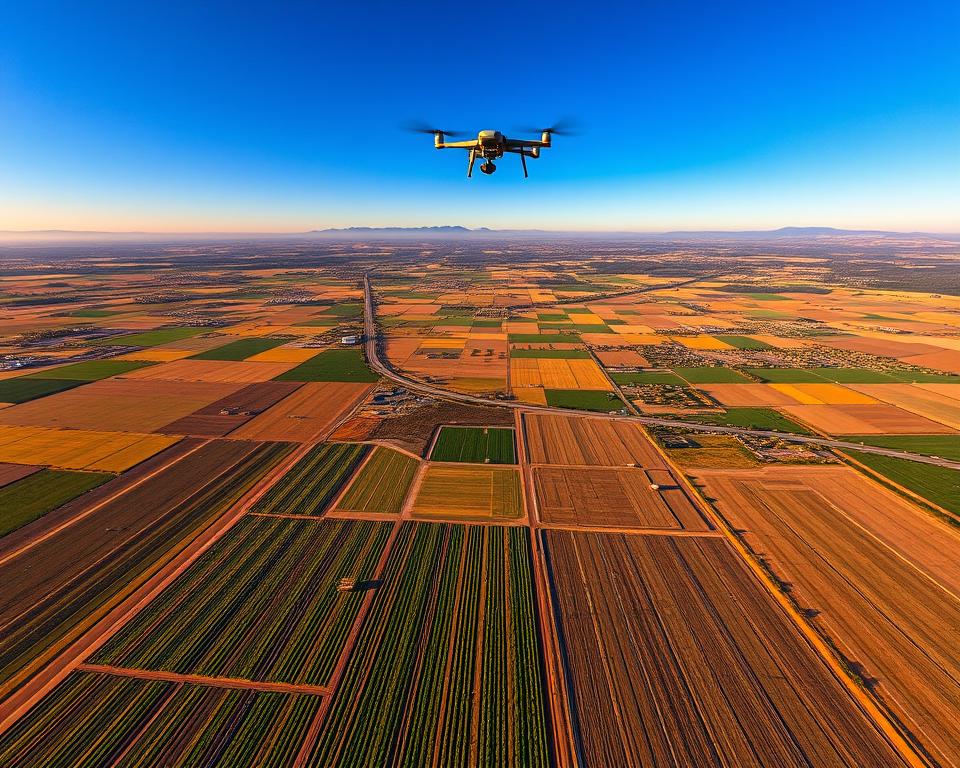
Remote sensing in agriculture has many benefits. It helps identify issues early, reduces the need for physical checks, and enhances crop yields. Here’s a table showing some of the main uses and advantages of remote sensing in farming.
| Technology | Application | Benefit |
|---|---|---|
| Satellite Imagery | Crop Health Monitoring | Early Detection of Issues |
| Drones | Pest and Disease Detection | Targeted Intervention |
| Ground-Based Sensors | Soil Moisture Monitoring | Optimized Water Usage |
Adding remote sensing to farming is a big step towards digital and smart farming. Farmers can now grow more, spend less, and help the planet. It’s a win-win for everyone.
Smart Farming Applications Transforming American Agriculture
Smart farming technologies are changing American agriculture for the better. They make farming more efficient and sustainable. IoT sensors and AI enable farmers to manage their soil and crops more effectively.
One big change is in irrigation. IoT sensors check soil moisture. This allows farmers to use water wisely, saving it and helping crops grow more effectively.
AI also helps with crop monitoring. Drones equipped with cameras can identify problems like pests and diseases early. This means farmers can act fast, saving crops and reducing pesticide use.
- Farmers across the United States are adopting precision agriculture techniques.
- Smart farming technologies are improving crop yields and reducing environmental impact.
- The use of data analytics is enabling farmers to make informed decisions.
“The future of agriculture is data-driven, and smart farming is at the forefront of this revolution.”
As smart farming grows, we’ll see more tech in farming. Expect innovations such as self-driving farm tools and improved crop models. The future of farming looks bright and tech-savvy.
Overcoming Barriers to Smart Farming Adoption
Smart farming is growing, but it faces numerous challenges to achieve widespread adoption. A significant issue is the high cost of implementing new technology. This includes devices such as IoT devices and precision agriculture tools.
Farmers often lack the necessary skills to utilise these technologies. To help, educational programs and workshops can be set up. These can teach farmers how to use and maintain smart farming tech.
Data privacy and security are also major concerns. To address this, strong data protection measures and clear policies are needed. For example, using secure IoT platforms can protect against data breaches.
Government support and subsidies can greatly help in promoting smart farming. Financial assistance and backing can encourage farmers to adopt new technologies. This includes precision agriculture and other smart farming tools.
In summary, while there are many hurdles to smart farming, education, government support, and strong data security can help. As agriculture transitions towards using IoT and precision agriculture, the future of smart farming appears promising.
Discussion about this post