

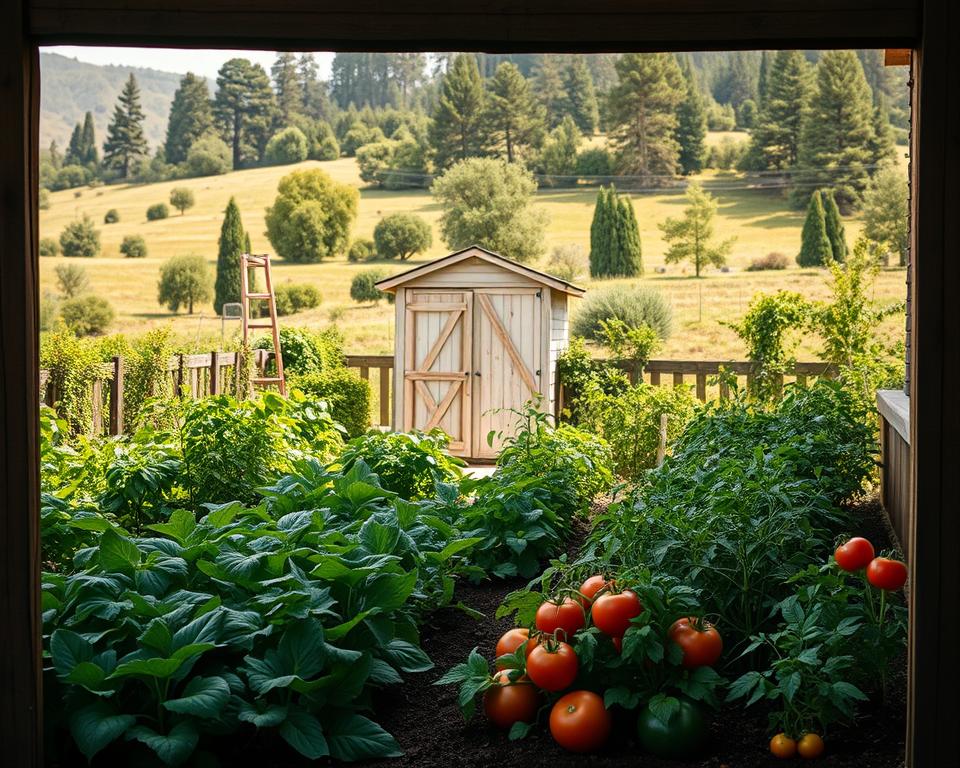

Imagine having fresh, organic produce right in your backyard, without spending a lot. By growing your own food, you can make this dream come true. It not only saves money but also leads to a greener lifestyle.
A small 600 sq. ft. garden can produce around $600 worth of food, costing just $70 to start. This shows how much you can save by growing your own food. It’s a smart move towards a healthier life.
Starting a garden is more than just saving money; it’s a rewarding experience. It’s about enjoying fresh food, living sustainably, and taking pride in your harvest.
The Financial Benefits of Growing Your Own Food
Growing your own food can save you a lot of money. Starting a home garden is simple. You can grow your own veggies and fruits without spending a lot.
Cost Comparison: Store-Bought vs. Homegrown Produce
Homegrown produce is often cheaper than buying it. A study by the National Gardening Association found that a 600-square-foot garden can yield approximately $600 worth of food. This can help you save a lot on your grocery bills.
| Produce | Store-Bought Price | Homegrown Cost | Savings |
|---|---|---|---|
| Lettuce (per pound) | $3.00 | $0.50 | $2.50 |
| Tomatoes (per pound) | $2.50 | $0.25 | $2.25 |
| Carrots (per pound) | $1.50 | $0.20 | $1.30 |
Long-Term Savings
Gardening at home can save you a lot of money over time. George Ball, Chairman of Burpee Seeds, says that for every $1 spent on seeds, you can save $25 on groceries. These savings can really add up and help your budget.
With a little time and effort, you can enjoy fresh fruits and veggies. And you’ll save money too.
Planning Your Money-Saving Garden
Before you start digging, it’s key to plan your garden to save money. Good planning means checking your space and resources, picking the best crops, and making a garden calendar.
Assessing Your Space and Resources
First, look at your yard or gardening space. Consider sunlight, soil, and access to water. This helps you figure out what and how much to grow.
For city gardens or backyard farms, use containers or vertical gardening. This makes the most of your space.
Choosing High-Value Crops
Picking the right crops is vital for a budget-friendly garden. Choose vegetables that are pricey in stores but easy to grow at home.
Vegetables with the Best ROI
Vegetables like salad greens, peppers, and tomatoes are great choices. They’re expensive to buy but easy to grow. Plus, they’re used in many recipes.
Herbs That Keep Giving
Don’t forget about herbs like basil, mint, and cilantro. They’re affordable and add flavor to your meals.
Creating a Budget-Friendly Garden Calendar
Plan your planting schedule by season for a steady harvest. This way, you enjoy fresh produce all year while saving money.
Essential Tools and Supplies on a Budget
Growing your own food doesn’t have to be expensive. You need to know where to find cheap tools and supplies. With a little creativity and smart spending, you can have a great garden without overspending.
Must-Have Garden Tools for Beginners
Beginners need the basics. You’ll want a trowel, garden fork, watering can, and pruning shears. These tools are key for any gardening job. You can find them at good prices at hardware stores or online.
| Tool | Average Cost | Usage |
|---|---|---|
| Trowel | $5-$10 | Planting and mixing soil |
| Garden Fork | $15-$25 | Turning over soil and compost |
| Watering Can | $10-$20 | Watering plants |
DIY Garden Solutions to Save Money
Repurposing items is a great way to save. Old containers can be repurposed as planters, and wooden pallets can be used to create garden beds. You can also make garden markers from stones or sticks.
Where to Find Affordable Seeds and Plants
To save on seeds and plants, look for small transplants or swap seeds with neighbours. Check online for deals and garage sale,s too. Local nurseries and gardening clubs are also good places to find cheap supplies.
How to Grow Your Own Food with Minimal Investment
You can grow your own food without spending a lot of money. Just follow a few simple steps. This way, you can have fresh produce right in your backyard or even on your balcony.
Starting Seeds vs. Buying Seedlings
Starting seeds indoors can save you money. You can use seeds saved from previous years or purchase them in bulk. This way, you control the growing conditions from the start.
Here’s a comparison of the costs:
| Method | Initial Cost | Long-term Savings |
|---|---|---|
| Starting Seeds | $2 per packet | High |
| Buying Seedlings | $3-$5 per seedling | Low |
Container Gardening for Small Spaces
Container gardening is great for small spaces. You can use old pots, tubs, or wooden crates. This way, you make the most of your space and save money.
No-Dig Garden Methods
No-dig gardening means you don’t till the soil. This method keeps the soil healthy and saves you money. It also requires less work and tools.
By using these methods, you can grow your own food affordably and sustainably. This way, you enjoy the benefits of gardening without spending too much.
Soil and Fertilizer: Affordable Approaches
Improving your garden’s soil doesn’t have to be expensive. You can make your soil better without spending a lot on expensive fertilizers and conditioners.
Creating Your Own Compost
Making your own compost is a smart way to save money. It turns kitchen scraps and yard waste into a rich soil amendment.
Kitchen Scraps Composting
Composting kitchen scraps is a great way to reuse waste. Just put your fruit and veg peels, tea bags, and coffee grounds in a bin.
Leaf Mold and Yard Waste
Adding leaf mould and yard waste to your compost is a good idea. They add carbon, balancing out the nitrogen from kitchen scraps.
Natural Fertilizers You Can Make at Home
You can make your own fertilizers from things you have at home. For example, steeping compost or manure in water makes a fertilizer tea.
Soil Testing and Amendment on a Budget
Testing your soil is key to knowing what it needs. You can conduct simple tests at home or send samples to a lab for more detailed information.
| Soil Test | DIY Method | Lab Test |
|---|---|---|
| pH Level | pH paper or DIY kit | Lab analysis |
| Nutrient Content | Simple test kits | Detailed nutrient analysis |
Using these budget-friendly methods for soil and fertilizer can make your garden healthier and more productive. Plus, it saves you money.
Water-Saving Techniques for Economical Gardening
Economical gardening is not just about starting up. It’s also about doing things efficiently, such as conserving water. Growing your own food can save you money on bills and help the planet too.
There are many ways to save water in your garden. One good idea is to collect rainwater. This can reduce the amount of water you use from the city.
Setting Up Rainwater Collection Systems
Setting up a rainwater collection system is easy. You can use barrels or tanks to catch rainwater from your roof. This water is free and great for watering your plants.
Efficient Irrigation Methods
Collecting rainwater is just the start. Utilising smart irrigation methods can also help conserve water. Drip irrigation, for example, sends water straight to the roots. This cuts down on evaporation and runoff.
Mulching to Retain Moisture
Mulching is another smart move. It keeps the soil moist. By adding organic mulch around your plants, you won’t need to water as often. This keeps your soil healthy too.
With these water-saving tips, your gardening can be both cheaper and better for the planet.
Harvesting and Preserving Your Bounty
The moment of truth arrives when it’s time to reap the rewards of your self-sufficient gardening efforts. Proper harvesting techniques can maximize your yield. Preserving your harvest through budget-friendly methods will allow you to enjoy your homegrown fruits and vegetables throughout the year.
When and How to Harvest for Maximum Yield
Harvesting at the right time is key for getting the most out of your garden. Check your crops regularly to determine the optimal time for harvest. For most vegetables, this means picking them when they’re ripe but tender.
Budget-Friendly Food Preservation Methods
To enjoy your harvest year-round, you’ll need to preserve it. There are several budget-friendly methods to choose from, including freezing, drying, and canning.
Freezing Techniques
Freezing is a simple and effective method for preserving vegetables like peas, carrots, and green beans. Blanch them first to inactivate enzymes that cause spoilage.
Drying and Canning Basics
Drying removes the water content from foods, preventing bacterial growth. Canning involves packing food into airtight jars and then heating them to kill bacteria. Both methods are effective for preserving a variety of foods.
Seed Saving for Next Season
Saving seeds from your harvest is a cost-effective way to maintain the productivity of your garden. Choose seeds from your healthiest, most vigorous plants to ensure a strong crop next season.
FAQ
Q: How much space do I need to start a garden?
A: You don’t need a lot of space to start a garden. Even a small balcony or a few square feet of backyard can be used. You can grow your own food using container gardening or vertical gardening methods.
Q: What are the most cost-effective vegetables to grow?
A: Vegetables like leafy greens, herbs, and root vegetables are often the most cost-effective. They are easy to cultivate, mature quickly, and can be harvested continuously.
Q: How do I start seeds indoors on a budget?
A: You can start seeds indoors using recycled materials like egg cartons, yoghurt cups, or old seed trays. Use a good-quality potting mix and provide adequate light. This can be from a sunny window or grow lights.
Q: Can I grow my own food in a small urban space?
A: Yes, you can grow your own food in a small urban space. Use container gardening, vertical gardening, or even a windowsill garden. Choose compact or dwarf varieties of plants that are suitable for small spaces.
Q: How do I make my own compost?
A: To make your own compost, collect kitchen scraps like vegetable peels, tea bags, and coffee grounds. Layer them with yard waste, such as leaves and grass clippings, in a compost bin. Keep the pile moist and turn it regularly.
Q: What are some budget-friendly methods for preserving food?
A: Some budget-friendly methods for preserving food include canning, freezing, and dehydrating. You can also use a root cellar or a cold storage to preserve food.
Q: How can I save water while gardening?
A: You can save water while gardening by using rainwater collection systems, drip irrigation, and mulching. These methods help reduce evaporation and runoff. They deliver water directly to the plant’s roots.
Q: What are the benefits of no-dig gardening?
A: No-dig gardening reduces soil disturbance, preserves soil structure, and promotes healthy soil biota. It also reduces the need for tilling. This can save time and energy.
Q: How do I choose the right seeds for my garden?
A: Choose seeds that are suitable for your climate, soil type, and the time of year you’re planting. Look for varieties that are disease-resistant and have a high yield.
Q: Can I grow organic produce without spending a lot of money?
A: Yes, you can grow organic produce without spending a lot of money. Use natural fertilizers, composting, and integrated pest management techniques. These methods can help you produce healthy, organic produce on a budget.
Discussion about this post