

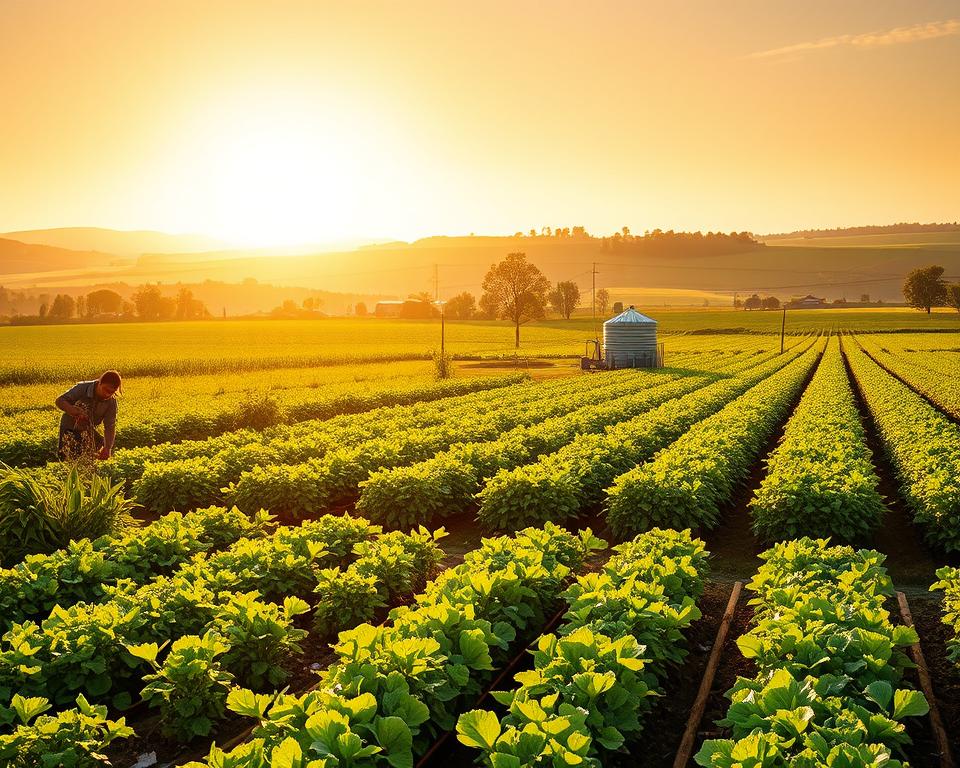

Turning agricultural by-products into valuable resources is becoming more popular. It’s a big change for farmers, showing them new ways to make money. What was once seen as waste can now be turned into profit.
Experts say using sustainable farming methods can really boost profits. By making energy, compost, and more from waste, farmers can earn more. They also help the environment by reducing waste.
This method is good for both farmers and the planet. As farming evolves, finding new ways to handle waste is key. By going green, farmers help make farming better for the environment and their wallets.
Farm Waste and Its Potential
Farm waste is often seen as a problem, but it can also be a source of profit and sustainability. It includes organic and inorganic materials left over after farming.
Crop Residues and Their Uses
Crop residues like corn stover and wheat straw can be used in many ways. They can be composted, used as mulch, or turned into bioenergy. Using these residues wisely can reduce waste and generate extra income for farmers.
| Crop Residue | Potential Use | Benefits |
|---|---|---|
| Corn Stover | Composting, Bioenergy | Soil enrichment, Renewable energy |
| Wheat Straw | Mulching, Animal Bedding | Soil conservation, Reduced erosion |
Animal Waste Management Opportunities
Animal waste can be managed through anaerobic digestion or composting. This process can produce energy and nutrient-rich fertilizers. Managing animal waste well is important for the environment and can also increase farmers’ income.
By exploring the uses of farm waste, farmers can adopt greener practices and boost their profits. Effective management of agricultural waste is essential to tap into these opportunities.
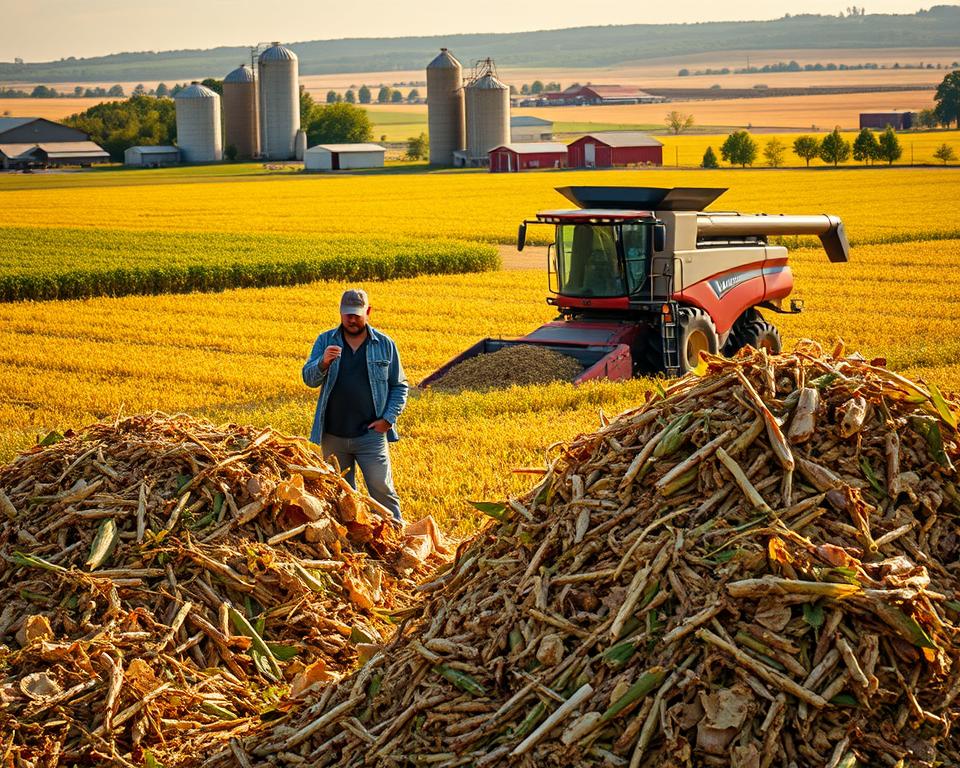
Farm Waste Recycling: A Sustainable Business Model
Farm waste recycling is a great way for farmers to reduce environmental harm. It also helps them earn more money. By recycling, farms can save on costs and find new ways to make money.
Reducing Input Costs Through Recycling
Recycling farm waste means using less outside help, like fertilizers and energy. For example, turning organic waste into compost makes the soil better. This means farmers need fewer synthetic fertilizers.
Recycling farm waste also leads to new income sources. Farmers can make money from biogas and compost. Selling extra energy to the grid is another way to earn.
By recycling, farmers can help the planet and their wallets. As farming changes, using green practices like recycling is key to success.
Composting: Converting Organic Waste into Premium Soil Amendments
Farms can greatly benefit from composting. It turns organic waste into valuable soil amendments. This method helps manage plant residues and manure, reducing waste and creating a useful resource.
Choosing the Right Composting Method for Your Farm
The first step is picking the right composting method. Farms have options like aerobic, vermicomposting, or anaerobic composting. The choice depends on their needs and resources.
Essential Equipment and Space Requirements
Composting requires specific tools, such as loaders and screens. It also requires enough space. The area needed depends on the farm’s size and waste amount.
Getting the right mix of materials is key. You need carbon-rich stuff like straw and nitrogen-rich materials like manure. This mix helps decomposition work well.
Accelerating Decomposition Safely
To speed up composting, farms can turn the pile regularly and add air. They can also use microbial helpers. But, safety is important to avoid problems.
Packaging and Pricing Strategies
After composting, farms must think about how to package and price it. They can sell it in bags or bulk. Prices should be competitive based on the market.
Finding Your Target Market
Finding the right market is essential. Farms can sell compost to other farms, garden centers, or directly to consumers.
Composting has big environmental benefits. It reduces greenhouse gas emissions and improves soil health. By composting, farms help make agriculture more sustainable.
Biogas Production: Transforming Waste into Energy
Biogas production is a great way to turn farm waste into energy. It helps manage waste and reduces carbon emissions on farms.
Designing Your Biogas System
Creating an effective biogas system needs careful thought. You must consider the type, amount, temperature, and energy requirements of the waste. A good design boosts biogas production efficiency.
Here’s what to think about when designing a biogas system:
| Factor | Description | Impact on Biogas Production |
|---|---|---|
| Type of Waste | Organic waste such as manure and crop residues | Different wastes produce varying amounts of biogas |
| Quantity of Waste | More waste generally leads to more biogas production | Increased energy output |
| Temperature | Optimal temperature ranges between 25°C to 35°C | Affects microbial activity and biogas yield |
It’s important to install and maintain your biogas system well. Make sure the digester is sealed, check pH levels, and watch for leaks or blockages.
On-Farm Energy Applications
Biogas can power many farm uses, such as electricity, heating, and cooking. This makes biogas a good choice for farmers wanting to use less outside energy.
Selling Excess Energy to the Grid
Farmer can sell extra energy to the grid for more money. This helps pay for the biogas system and encourages using green energy.
By using biogas, farmers can turn waste into energy. They also lessen their environmental impact and help make farming more sustainable.
Upcycling Agricultural By-products into Value-Added Products
Farmers can make money and help the planet by upcycling. This method turns waste into useful items. It makes farms more diverse and strong.
Upcycling changes old materials into new products. These can be sold or used on the farm. It’s great for making straw and fiber items, and wood and plant crafts.
Straw and Fiber Products
Straw and fibers can become many things, like:
- Animal bedding and crafts
- Erosion control mats and geotextiles
- Paper products and packaging materials
These items generate extra income for farmers. They also help the environment by reducing waste.
Wood and Plant-Based Crafts
Wood and plants can be turned into unique items, such as:
- Furniture and home decor
- Biofuels and other energy products
- Composts and soil amendments
Using upcycling on farms helps better manage waste. It makes farming more sustainable. Farmers can earn more and take better care of the environment.
Implementing a Comprehensive Waste Management Plan
Creating a solid waste management plan is all about finding a balance. It’s about assessing the types and amounts of waste on the farm. Then, finding ways to cut down and recycle, and using the right technologies.
Short-Term vs. Long-Term Investments
Farms need to consider both short- and long-term plans. Short-term might mean better waste sorting. Long-term could mean setting up biogas digesters or composting areas.
Tracking ROI on Waste Management Projects
It’s key to watch how much money waste management saves. Look at lower waste disposal costs, income from compost or biogas, and any government help for green practices.
| Waste Management Strategy | Short-Term Costs | Long-Term Benefits |
|---|---|---|
| Composting | $10,000 (equipment) | Reduced waste disposal costs, sale of compost |
| Biogas Production | $50,000 (digester installation) | Energy savings, revenue from electricity sale |
By planning well for waste management, farms can help the planet and their finances. Good waste management is vital for sustainable farming. It helps reduce the carbon footprint and supports organic waste disposal.
Discussion about this post