

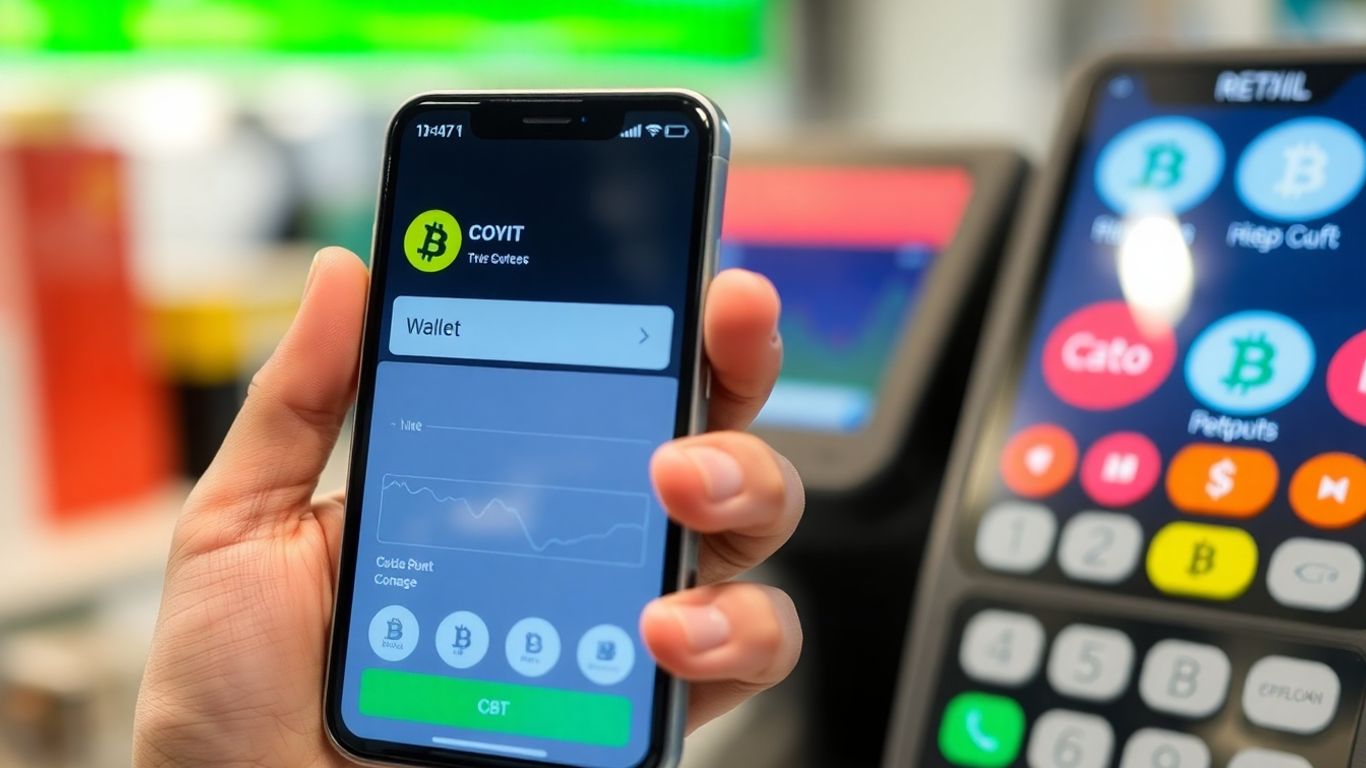

So, what exactly is cryptocurrency? Think of it as digital money. It exists only online and uses something called cryptography – basically, super-secure coding – to keep transactions safe and verified. Every transaction is recorded in a public digital ledger called a blockchain. It’s like a giant, shared spreadsheet that everyone can see but nobody can tamper with.
This technology is what makes crypto different from the dollars or euros you’re used to. While there are thousands of cryptocurrencies, like Bitcoin and Ethereum, some are designed to be more stable, such as stablecoins, which are pegged to traditional currencies. This digital currency is becoming more popular, with millions of people worldwide using it for transactions.
How Crypto Payments Work
Accepting crypto payments for your business might sound complicated, but the basic idea is pretty straightforward. When a customer pays you in crypto, that transaction is recorded on the blockchain. This process uses a network of computers to verify and secure the exchange. Unlike traditional payment methods, crypto transactions are generally final.
This means you don’t have to worry about chargebacks, which can be a real headache for businesses. You’ll need a digital wallet to receive and store your cryptocurrency, or you can use a payment processor that handles the conversion for you.
Many businesses are looking to integrate cryptocurrency into business transactions because it can expand customer bases and potentially lower fees compared to some traditional payment systems. It’s a new way to handle payment processing for digital currency, which is gaining steam.
Implementing Crypto Payments In Your Business
So, you’ve decided to jump into accepting cryptocurrency. That’s a big step, and honestly, it’s probably easier than you think. Let’s break down how you actually get this set up so you can start figuring out how to get paid in crypto.
Choosing A Crypto Payment Processor
Look, managing the blockchain yourself is a whole thing. Most businesses don’t do that. Instead, you’ll want to find a business crypto payment gateway. Think of these guys as the middleman.
They handle the tricky parts, like making sure the crypto actually arrives and, if you want, converting it straight into dollars or whatever currency you use. This way, you don’t have to worry as much about the price swings of Bitcoin or Ethereum.
When you’re picking one, check out a few things:
- Fees: What do they charge? Some have a small percentage, others might have a flat fee. Make sure it makes sense for your business volume.
- Supported Cryptocurrencies: Do they handle the coins your customers are likely to use? Bitcoin and Ethereum are common, but there are tons of others.
- Conversion Options: Do you want to hold the crypto, or have it automatically converted to fiat currency (like USD)? Most processors offer this auto-conversion, which is a big plus for avoiding volatility.
- Integration: How easy is it to connect with your existing website or point-of-sale system? Some offer simple plugins, others might need a bit more technical work.
- Customer Support: What happens if something goes wrong? Good support is key, especially when you’re new to this.
Setting Up Your Crypto Wallet
If you’re using a payment processor, they often handle the wallet side of things for you. They’ll generate addresses for you to receive payments. However, if you plan to hold crypto long-term or withdraw funds from the processor, you’ll need your own wallet.
For serious storage, a hardware wallet (like a USB drive for your crypto) is generally the most secure option. But for day-to-day transactions managed by a processor, you might not need to worry about this too much initially.
Integrating Crypto Into Your Checkout Process
This is where it all comes together. For most e-commerce platforms, like Shopify or WooCommerce, the payment processor will have a plugin or app you can install. It’s usually pretty straightforward: install, connect your account to the processor, and configure a few settings. Your checkout page will then show crypto as a payment option.
If you have a custom-built website, you’ll likely use an API (Application Programming Interface). Your processor will give you the tools to connect your site.
When a customer checks out, your site will request a unique payment address or QR code from the processor. The customer pays that address, and the processor notifies your system once the payment is confirmed on the blockchain. It’s a good idea to run a few test transactions yourself to ensure the entire customer journey runs smoothly before you announce it to the world.
Accepting Crypto Payment
So, you’re considering letting customers pay in crypto. That’s cool. But before you jump in, let’s talk about what you need to keep in mind. It’s not just about setting up a payment button; there are real-world considerations to keep in mind.
Regulatory Considerations For Crypto Payments
Governments are still figuring out how they feel about crypto. Rules can change, and they’re different depending on where you are. Some places are super friendly to crypto, while others are more cautious.
If you sell to people in different countries, you’ve got to check the rules in each country too. It might be worth talking to a lawyer or a tax person to make sure you’re following everything. This is especially important if you’re handling large transactions or not in the US, as regulations can vary widely by state and country.
Potential Risks And Benefits Of Accepting Crypto
Okay, let’s break down the pros and cons of accepting crypto.
Benefits:
- Attract New Customers: Many people want to use crypto. A survey found that over half of consumers would choose an online store that accepts bitcoin and other cryptocurrencies over one that doesn’t. So, you could get more business.
- Lower Fees (Sometimes): Depending on the processor and the crypto, transaction fees can be lower than those for traditional payment methods.
- No Chargebacks: Once a crypto transaction is confirmed on the blockchain, it’s pretty much final. This means you don’t have to worry about customers trying to reverse payments like with credit cards.
Risks:
- Price Swings: This is the big one. The value of cryptocurrencies like Bitcoin can go up and down really fast. A payment you receive today might be worth less tomorrow. To handle this, many businesses use payment processors that instantly convert crypto to your local currency (like USD) at checkout. You can also look into stablecoins, which are designed to maintain a stable value and are often pegged to the US dollar.
- Transaction Finality: While no chargebacks are a benefit, it also means if you make a mistake, like sending a refund to the wrong digital wallet, it’s permanent. Good payment processors can help manage refunds safely.
- Taxes and Accounting: Keeping track of crypto transactions for tax purposes can get complicated. If the value of your crypto changes between when you receive it and when you convert it to cash, you might have taxable gains or losses. Converting to fiat currency immediately can simplify this a lot. You’ll need to keep good records of every transaction.
Frequently Asked Questions
What’s the main difference between paying with crypto and using regular money?
When you use regular money, there are often rules and protections in place, like those from banks. Cryptocurrency is relatively new, so the rules are still evolving.
While some crypto is designed to be free from outside control, governments are looking into how to manage it. Because of this, crypto payments might not have the same safety nets as traditional money. However, some payment services can offer you protection when accepting crypto.
What are the risks involved in accepting cryptocurrency payments?
The biggest risk with crypto is that its value can change rapidly. Think of it like a stock that goes up and down. Most cryptocurrencies don’t have a solid backing, like gold or property, to support their value; their value depends mostly on how many people want to buy them.
However, some special types called stablecoins are backed by stable assets, so they don’t swing as much in value. Also, dealing with new technology can sometimes be tricky.
How can I get paid in Bitcoin using a service like PayPal?
Some payment services, such as PayPal, make it easy to accept crypto. When a customer pays you in crypto through their platform, PayPal can automatically convert it to U.S. dollars for you. This means you don’t have to worry about holding onto the cryptocurrency yourself or dealing with its changing value. You receive the equivalent amount in dollars directly into your account.
Discussion about this post