

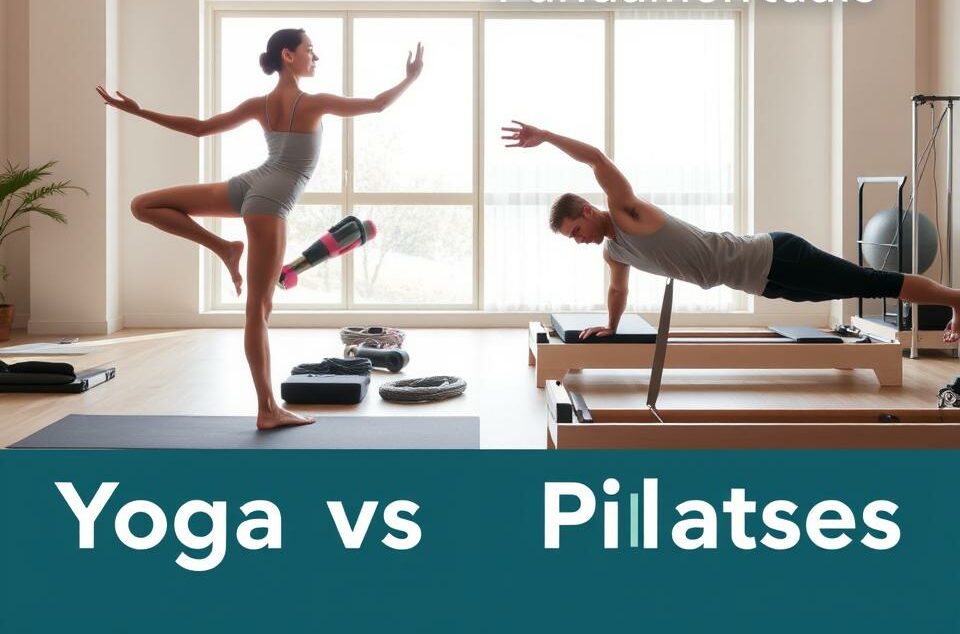

Yoga and Pilates are two top choices for low-impact workouts. They use your body weight as resistance to help you reach your fitness goals.
This article will compare and contrast these two exercises. You’ll learn which one is better for you. By looking at their benefits and differences, you can decide which practice best fits your fitness routine.
Looking to improve flexibility, build strength, or boost overall well-being? Knowing the unique aspects of yoga and Pilates will help you choose the right path.
Yoga and Pilates: The Fundamentals
Looking for a low-impact workout? Knowing the basics of yoga and Pilates is key. Both are popular for their unique benefits and fitness approaches.
Yoga started in India over 5,000 years ago. It’s based on five main beliefs: relaxation, exercise, breathing, diet, and positive thinking. There are many yoga styles, each with its own focus and benefits.
Common Styles of Yoga
- Hatha Yoga: Focuses on physical postures and breathing techniques.
- Vinyasa Yoga: Emphasizes flowing movements between postures.
- Ashtanga Yoga: A fast-paced, physically demanding style.
Basic Yoga Elements
Yoga includes several key elements:
- Asanas (postures): Designed to balance the body’s energy.
- Pranayama (breathing techniques): To control the life force.
- Meditation and relaxation: For mental calmness.
Joseph Pilates created Pilates in the early 1900s. It was first used for rehabilitation. It aims to strengthen the core, improve flexibility, and enhance posture.
Mat vs. Reformer Pilates
Pilates can be done on a mat or on a Reformer. Mat Pilates is done on the floor. Reformer Pilates uses a machine with springs for resistance.
Core Principles of Pilates
- Centering: Engaging the core muscles.
- Concentration: Focusing on precise movements.
- Control: Ensuring slow and deliberate movements.
- Precision: Performing exercises with accuracy.
Understanding these basics helps see the differences and benefits of yoga and Pilates. It makes choosing the right practice easier.
The Origins and Philosophy Behind Each Practice
Yoga and Pilates have deep roots in their philosophies and practices. Knowing these origins helps figure out which is best for you.
Evolution Through the Centuries
Yoga started in ancient Hindu scriptures and has grown over time. It has changed across cultures and spiritual beliefs, while retaining its core ideas.
Yoga Philosophy in Modern Practice
Today, yoga is more than poses. It also includes meditation and breath control. It aims for total well-being.
Pilates began in the early 1900s with Joseph Pilates, for soldiers’ rehab. It’s all about strengthening the core, controlling the body, and precise movements.
Modern Adaptations of Pilates
Now, Pilates has many exercises and uses different equipment. It keeps its main goals of physical fitness and mental sharpness.
| Aspect | Yoga | Pilates |
|---|---|---|
| Origin | Ancient Hindu scriptures | Early 20th century, Joseph Pilates |
| Philosophy | Holistic approach, including meditation and breath control | Focus on core strength, body control, and precise movements |
| Modern Practice | Includes various styles like Hatha, Vinyasa, and Ashtanga | Matwork and equipment-based exercises |
Yoga vs Pilates: Key Differences in Approach
It’s important to understand the key differences between yoga and Pilates to choose the right one for your fitness goals. Both are low-impact, but they use different methods, focus on different areas, and offer different benefits.
Yoga involves holding poses and moving through them. It boosts flexibility, balance, and strength. It also includes meditation and breathing, making it a holistic wellness practice.
Pilates, on the other hand, uses small, controlled movements to strengthen the core. This improves posture, core strength, and physical stability. It’s often done with equipment like the Reformer or on a mat.
Both yoga and Pilates can help with weight loss, but in different ways. Yoga, like Vinyasa Flow, can burn calories and build muscle. Pilates focuses on core strength and muscle toning, which can also lead to weight loss by increasing muscle mass and improving body composition.
| Practice | Focus | Techniques | Benefits for Weight Loss |
|---|---|---|---|
| Yoga | Holistic wellness, flexibility, strength | Holding poses, flowing movements, meditation, breathing techniques | Burns calories, builds muscle, enhances metabolism |
| Pilates | Core strength, posture, physical stability | Controlled movements, core engagement, equipment or mat work | Increases muscle mass, improves body composition |
In conclusion, both yoga and Pilates can aid in weight loss. But, their unique approaches mean you should choose what fits your personal preferences and fitness goals best.
Physical Benefits Comparison
Yoga and Pilates offer many physical benefits. They improve flexibility, strength, and posture. Each has its own way of helping you get fit.
Yoga is great for flexibility. It uses poses and stretches to increase your range of motion. Holding these poses can make you more flexible over time.
Pilates focuses on core strength and controlled movements. It strengthens your core muscles, improving your strength and stability. It also helps improve your posture by strengthening the muscles around your spine.
Both yoga and Pilates can help your posture. But they do it in different ways. Yoga strengthens and stretches muscles simultaneously, improving your alignment. Pilates builds core strength, which is key for good posture.
Pilates is often more intense, focusing on the core muscles. This improves your overall physical strength. Yoga can also build strength, but it depends on the type of yoga you do.
- Yoga tends to focus more on flexibility and holding poses.
- Pilates emphasizes core strength and controlled movements.
- Both practices can improve posture, but through different methods.
Choosing between yoga and Pilates depends on what you want to achieve. If you want to improve flexibility, yoga might be a better option. For core strength and stability, Pilates could be the way to go.
Mental and Emotional Benefits
Yoga and Pilates both offer many mental and emotional benefits. They help improve overall well-being. But, they have different ways to achieve these benefits.
Yoga uses meditation and mindfulness to reduce stress and boost mood. Regular meditation brings calm and clarity.
Emotional Regulation Benefits
Pilates focuses on body awareness, which helps with emotional control. This awareness helps manage stress and anxiety better.
Concentration Elements
Both practices need focus, which boosts mental function and discipline. Yoga, in particular, sharpens mental clarity through breath focus and postures.
Mind-Body Connection
Yoga and Pilates both stress the mind-body connection. This approach makes practitioners more aware of their thoughts, feelings, and body sensations. It leads to a balanced lifestyle.
For beginners, adding yoga or Pilates to their routine can greatly improve mental and emotional health. Knowing the unique benefits of each can help choose the best fit for their needs and goals.
Yoga vs Pilates for Weight Loss
Both yoga and Pilates are great for losing weight. They work well when you eat healthy too. Either one can help you lose a lot of weight.
Pilates might be better because it builds strong core muscles. This helps your body burn more calories.
Yoga comes in different styles, some better for weight loss than others. For example, Vinyasa Flow and Ashtanga yoga burn more calories than Hatha or Yin yoga.
- To lose weight with yoga, choose more active styles.
- For Pilates, focus on building core strength and increasing muscle endurance.
- Adding cardio to either practice can help you lose more weight.
Choosing between yoga and Pilates for weight loss depends on what you like and your goals. Both can work well if you stick with them and live a healthy lifestyle.
Yoga vs Pilates for Core Strength
Yoga and Pilates are often compared for their effectiveness in strengthening the core. They differ significantly in their methodologies.
Key Poses for Core Development
Yoga includes poses like Boat Pose and Crow Pose that engage the core. These poses require balance and strength. Pilates, on the other hand, focuses on movements that target the transverse abdominis muscle. This muscle is a key component of core strength.
Integration with Full-Body Movements
Both practices integrate core strength with full-body movements. This enhances overall stability and fitness. In yoga, this is seen in flowing sequences. Pilates uses controlled movements to engage the core throughout exercises.
Pilates is renowned for its core-centric exercises, such as the Hundred and Teaser. These exercises are designed to build deep abdominal strength. Yoga also offers core-strengthening poses like Plank and Side Plank.
Progressive Core Training
Both practices allow for progressive overload. This enables practitioners to increase core strength gradually. In Pilates, this can be achieved by modifying exercises to increase difficulty. In yoga it involves advancing to more challenging poses.
| Aspect | Yoga | Pilates |
|---|---|---|
| Core Focus | Engages core through various poses and flows | Targets deep abdominal muscles with specific exercises |
| Key Exercises/Poses | Boat Pose, Crow Pose, Plank | Hundred, Teaser, Leg Raises |
| Progression | Advancing to more challenging poses | Modifying exercises to increase difficulty |
Yoga vs Pilates for Flexibility
Yoga and Pilates are great for boosting flexibility. But, it’s important to know how each one works. Yoga is known for its poses and flows that stretch muscles and loosen joints.
Pilates also makes you more flexible, but it focuses on moving well and strengthening your core. Its controlled movements make muscles and tissues more elastic.
To get more flexible with yoga, pick poses that target big muscle groups like the hamstrings and hips. Adding dynamic flows between poses keeps muscles warm and active.
In Pilates, try exercises that stretch and open muscles, such as leg swings and back bends. Both yoga and Pilates can be tailored for anyone, from beginners to experts.
In summary, yoga and Pilates both help with flexibility, but in different ways. Yoga is all about holding poses and flowing movements. Pilates, on the other hand, focuses on controlled movements and improving range of motion. Knowing these differences helps you pick the best practice for your flexibility needs.
Yoga vs Pilates for Beginners
Starting yoga or Pilates requires some knowledge for a safe and beneficial experience. As a beginner, understanding the basics of both practices is key. This helps you make a well-informed decision about which path to choose.
For those new to both yoga and Pilates, starting with beginner classes is essential. These classes focus on foundational poses and exercises. They build a strong base for further practice.
Essential Beginner Poses
Yoga beginners can start with simple poses like Mountain Pose, Downward-Facing Dog, and Child’s Pose. These poses help build strength, flexibility, and balance.
Finding the Right Class
Finding a qualified instructor is vital. Look for classes labeled “beginner” or “introductory.” Consider private sessions if you’re unsure about joining a group class.
Fundamental Beginner Exercises
Pilates beginners can start with exercises like the Hundred, Teaser, and Roll-Up. These exercises focus on core strength, body control, and precise movements.
Class Options for Newcomers
Both yoga and Pilates offer a variety of class types. This includes Hatha, Vinyasa, and Restorative yoga, as well as Mat or Reformer Pilates. Researching these options can help you choose the best fit for your goals and preferences.
The choice between yoga and Pilates for beginners depends on personal preference and goals. Trying out introductory classes in both can provide valuable insight. It helps you see which practice resonates with you.
Special Considerations: Injuries, Age, and Fitness Level
It’s important to know how to adjust yoga or Pilates to fit your health and fitness. Both practices can be adjusted to meet different needs, such as age and fitness level. This makes them great for many people.
If you have an injury, talk to a doctor before starting or continuing with yoga or Pilates. Some poses can make injuries worse, but others can help. For example, gentle yoga can help with recovery by improving flexibility and strength. Pilates can also help strengthen the core, which is beneficial for back injuries.
Age is also a big factor. Older adults can really benefit from both practices. They can improve balance, lower the risk of falls, and boost physical function. But it’s important to find classes or instructors that match your age and fitness level.
For people with different fitness levels, both yoga and Pilates have adjustments. Beginners can start with simple poses and exercises. Then, as they get stronger, they can try more challenging ones.
In conclusion, yoga and Pilates can be great when tailored to your needs, such as injuries, age, and fitness level. Getting advice from healthcare professionals and qualified instructors is key. This way, you can enjoy the benefits of yoga vs Pilates safely and effectively.
Conclusion
Choosing between yoga and Pilates depends on your personal goals and needs. Both practices have unique benefits that can enhance your fitness routine.
It’s important to understand the differences between yoga and Pilates. They share some similarities but have distinct approaches. This helps you make a choice that fits your needs and goals.
If you want a practice that’s more spiritual and meditative, yoga might be a good fit. It focuses on breathwork and flexibility. On the other hand, Pilates is a physically demanding workout that targets core strength and body control.
Think about your fitness goals, current fitness level, and any physical limitations. This helps you choose the practice that best suits you. It ensures you have a more effective and enjoyable experience.
Discussion about this post