

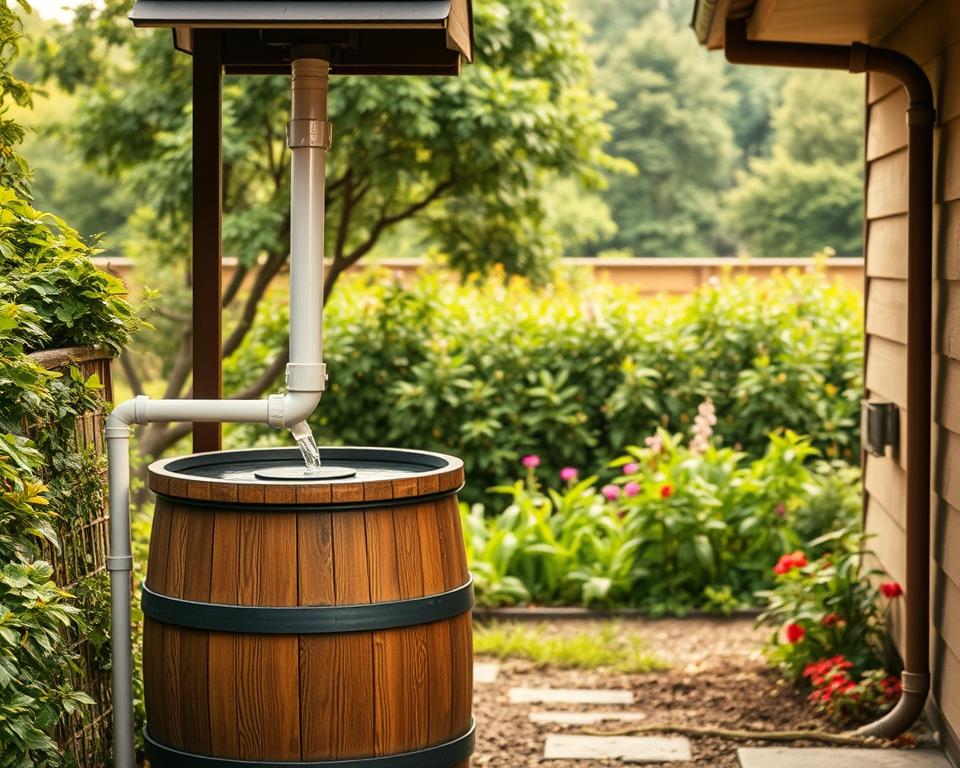

Building a rainwater harvesting system is a great way to save water and reduce utility bills. It helps collect and store rainwater, which is good for the environment. This method also reduces the need for groundwater and reduces stormwater runoff.
To make a simple rainwater harvesting system, connect your gutter to a big barrel with an S-bend aluminium downspout. This lets you gather and keep rainwater for things like watering plants or washing cars. It’s an easy diy rainwater collection project that you can do with simple materials.
The Benefits of Rainwater Harvesting
Rainwater harvesting has many benefits, like reducing soil erosion and providing a steady water source for gardens. It helps homeowners save money on water bills and supports sustainable water management. It also reduces stormwater runoff, which can lead to erosion and flooding in cities.
Collecting rainwater can be a free water source for gardening and other uses. This reduces the need for city water and reduces stormwater runoff into drainage systems. So, rainwater harvesting is great for home water harvesting, saving water and protecting homes from water damage.
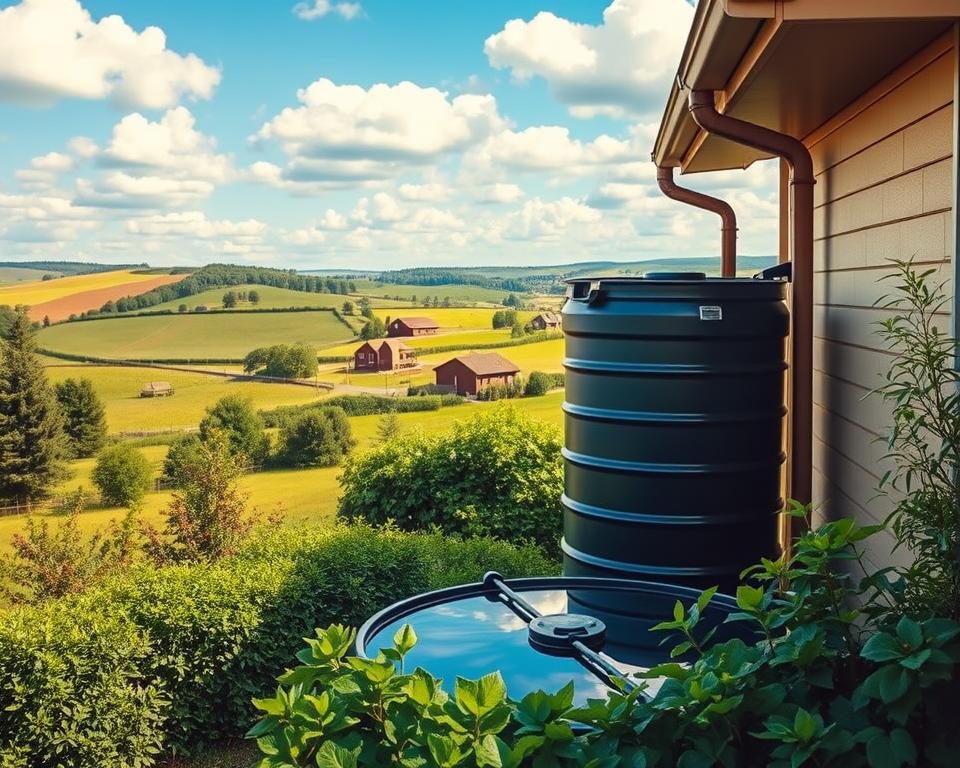
In summary, rainwater harvesting is a good choice for those wanting to live more sustainably. Using a rainwater system can help people reduce their impact on the environment.
Planning Your DIY Rainwater Collection System
Effective planning is key to a successful DIY rainwater harvesting system. First, figure out how much rainwater you need by looking at your monthly water use and local rainfall. This helps decide the size of your system.
Think about how you’ll use the rainwater, like for gardening or washing cars. Knowing your usage helps design a system that fits your needs.
Rainfall Measurement Methods
Measuring rainfall is vital for planning your DIY rainwater system. Use a rain gauge to track rainfall in your area. Manual and digital gauges are available. Keeping records helps you understand your area’s average rainfall.
Roof Surface Area Calculation
The size of your roof affects how much rainwater you can collect. Measure your roof’s length and width to find its area. For simple roofs, multiply length by width. More complex roofs might need section-by-section calculations.
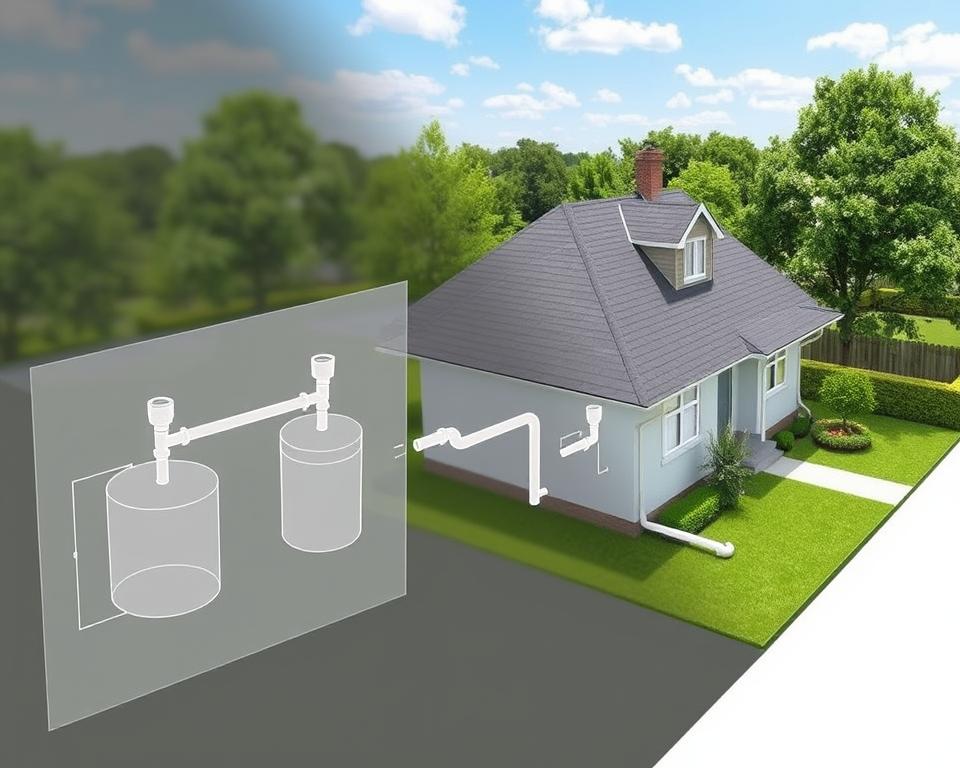
Knowing your rainfall and roof size lets you estimate how much rainwater you can harvest. This info is essential for designing a system that meets your needs. A well-planned DIY rainwater collection system saves water and reduces bills.
With good planning and the right math, you can create an efficient rain barrel. Whether you’re new to DIY or experienced, planning your rainwater system is a step towards a greener life.
Essential Materials and Tools for Your Project
Starting your DIY rainwater harvesting system means first getting the right parts. You need to pick materials and tools that work well together. This ensures your project is both successful and environmentally friendly.
For storing rainwater, 55-gallon food-grade drums or IBC totes are great. They’re made for liquids and are safe for water meant for different uses.
Food-Grade vs. Non-Food-Grade Options
It’s important to know the difference between food-grade and non-food-grade containers. Food-grade materials are okay for water used for irrigation, toilet flushing, and even drinking (with treatment). But non-food-grade containers might make the water unsafe and should be avoided.
| Component | Description | Importance |
|---|---|---|
| Gutters and Downspouts | Direct rainwater from the roof to the storage tank | High |
| First Flush Device | Allows the first flow of water from the roof to be diverted, taking debris and contaminants with it | Medium |
| Overflow Valve | Prevents the tank from overflowing and potentially causing damage | High |
Other key parts include gutters and downspouts, a first flush device, and an overflow valve. Together, they make a system that’s both efficient and eco-friendly.
Choosing the right materials and tools for your rainwater project is key. It helps you create a system that supports eco-friendly water conservation. Plus, it provides a reliable water source for many purposes.
Step-by-Step DIY Rainwater Collection Process
Building a rainwater collection system has several important steps. These steps ensure your system works well and safely. First, you need to get your downspouts ready for the rainwater system.
Start by attaching the downspout elbow to the downspout. This guides the water from the roof to the rain barrel. Make sure the connection is tight to avoid leaks.
It’s also key to install gutter guards and screens. These keep debris out of your system. This helps keep the water clean and reduces upkeep.
- Choose gutter guards that fit your gutter size.
- Install screens over the rain barrel inlet to filter out larger debris.
Sealing Connections Properly
Sealing all connections well is essential to stop leaks and keep the water clean. Use a waterproof sealant on all joints and connections.
- Apply sealant around the downspout elbow connection.
- Ensure the spigot is tightly attached to the barrel.
Attaching the spigot to the barrel makes it easy to get to the rainwater. Make sure it’s securely attached to avoid leaks.
By following these steps, you can make a working DIY rainwater collection system. It’s a green way to get water for many uses.
Some big pluses of a good rainwater harvesting system are:
- Lower water bills
- Less stormwater runoff
- A green water source for gardening and other non-drinking uses
Installing and Testing Your System
Installing your rainwater harvesting system correctly is key. It makes sure your system works well and saves water. This is important for sustainable water management in your home or garden.
First, place the tank on a level surface. This is important to avoid problems like structural issues or poor water collection. Use a spirit level to check if the tank is perfectly horizontal.
Then, securely connect the inlet pipe to the tank. Make sure it’s attached well to prevent leaks. Also, connect the overflow pipe and direct it to a garden or drainage area. This ensures water flows away from the tank properly.
After setting up the tank and pipes, test the system. Let water flow into it and check for leaks or blockages. Please make sure the water level in the tank rises and falls as it should. This confirms your home water harvesting system is working correctly.
Lastly, check the entire system to ensure it’s set up correctly for the rainwater system. Check that all connections are tight and that the system is ready to use. Regular checks will keep your system efficient and extend its life.
Discussion about this post