

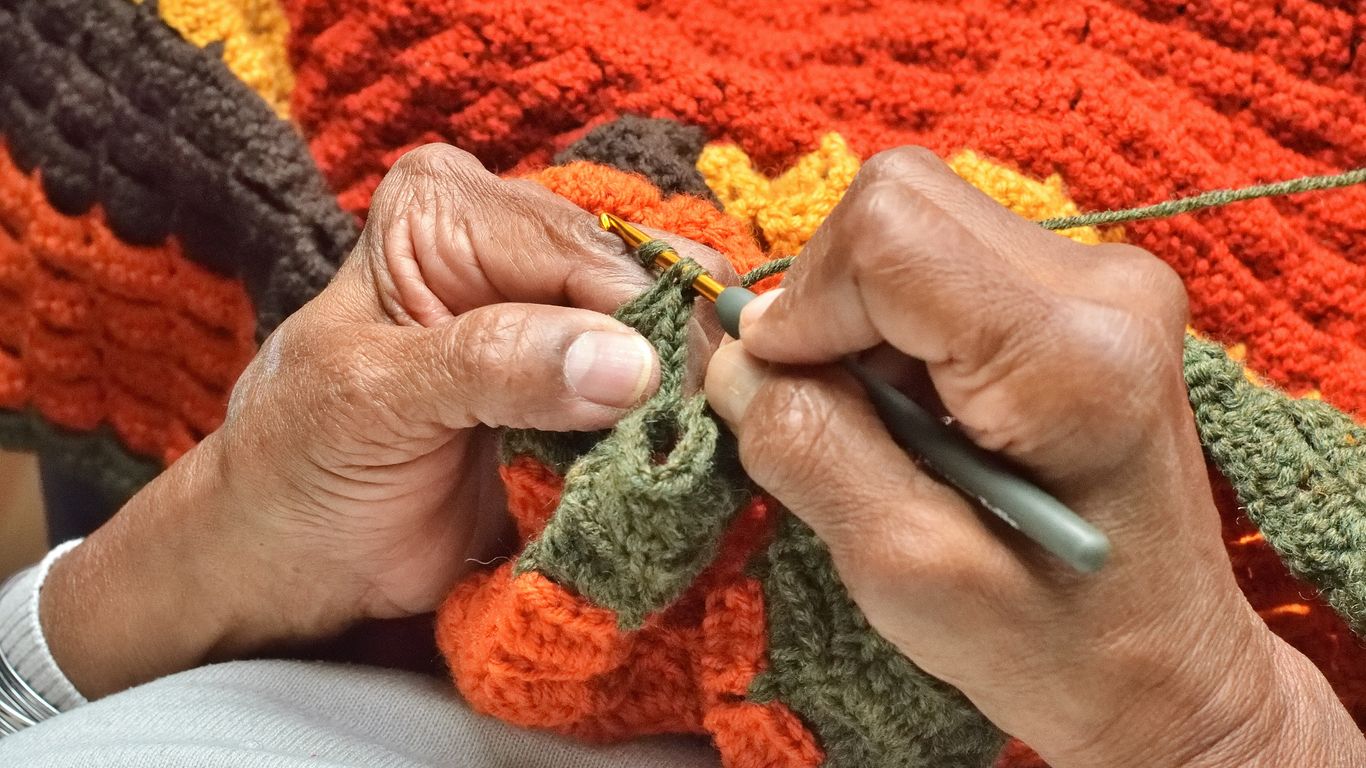

So, you’re wondering about knitting or sewing for beginners, and maybe you’re asking yourself which craft is quicker knitting or sewing? It’s a fair question when you’re thinking about the time to make clothes knitting vs sewing.
When we’re comparing knitting and sewing speed, it really comes down to the basics of how each craft works. Sewing is generally about taking pieces of fabric and joining them together, usually with thread and a needle.
You can do this by hand, or you can use a sewing machine, which can really speed things up. The focus is on creating seams to build a garment. Knitting, on the other hand, involves creating fabric from a single strand of yarn by making loops that interlock with each other.
You use knitting needles for this. It’s a different process entirely, building the fabric itself rather than joining pre-made fabric pieces. Both methods are great for making garments, but the way they go about it is quite distinct, which naturally affects how long things take.
Which Craft Finishes Faster?
So, you’re wondering which one gets the clothes done quicker, sewing or knitting? It’s a fair question, and honestly, it’s not always a straightforward answer. Generally speaking, sewing projects tend to wrap up faster.
When you sew, you’re essentially taking pre-made fabric and stitching pieces together.
Think of it like assembling a puzzle where the pieces are already cut out for you. You’re working with a material that’s already a fabric. Knitting, on the other hand, starts from scratch. You’re creating the fabric itself, loop by loop, with yarn and needles.
This process of building the material from the ground up naturally takes more time. You’re not just assembling; you’re constructing the very foundation of the garment. It’s like building a house versus putting furniture in it.
Plus, sewing often involves fewer decisions about the material itself once you’ve chosen your fabric, whereas with knitting, you’re constantly interacting with the yarn and the stitches, making choices as you go. This can lead to a quicker finish for sewing, especially for simpler items.
Practical Applications And Historical Context
Historical Overview Of Sewing And Knitting
Sewing is seriously old. Like, really old. People have been stitching things together for thousands of years, probably starting with animal skins to make clothes or shelters. Imagine using bone needles and plant fibers for thread – that’s some serious history! As time went on, things got fancier with materials like linen and silk. Knitting, though, doesn’t go back quite as far, but it’s still ancient. The earliest bits we’ve found suggest it started in Egypt around the 5th century AD, and it seemed to be more about making pretty patterns from the get-go, unlike sewing which was mostly about function.
Back in the Middle Ages, knitting was actually a big deal, and get this – mostly men were the professional knitters! Fast forward to the Industrial Revolution, and bam, machines changed everything for both sewing and knitting. But don’t think these are just old-fashioned hobbies. Today, tons of people are knitting scarves or sewing quilts just because they love it. It’s pretty cool how these old skills are still around and popular.
Modern Uses For Both Crafts
So, sewing isn’t just for fixing a ripped seam or making a simple tote bag. Think about your clothes – most of them are sewn. High fashion, everyday wear, even things like curtains, upholstery for your couch, and some shoes all rely on sewing. It’s a huge part of the fashion world and home decor.
Knitting is more than just cozy sweaters and hats for winter, though that’s a big part of it. Giant knitting machines are used in some industries now for things like car parts or even building materials. Seriously, the same technique that makes a warm blanket can be used for industrial stuff. NASA even used a type of knitting for parts of their spacesuits!
It just goes to show how these crafts, even the really old ones, keep finding new and surprising uses in our modern world, from the clothes we wear to the technology we use.
Discussion about this post