

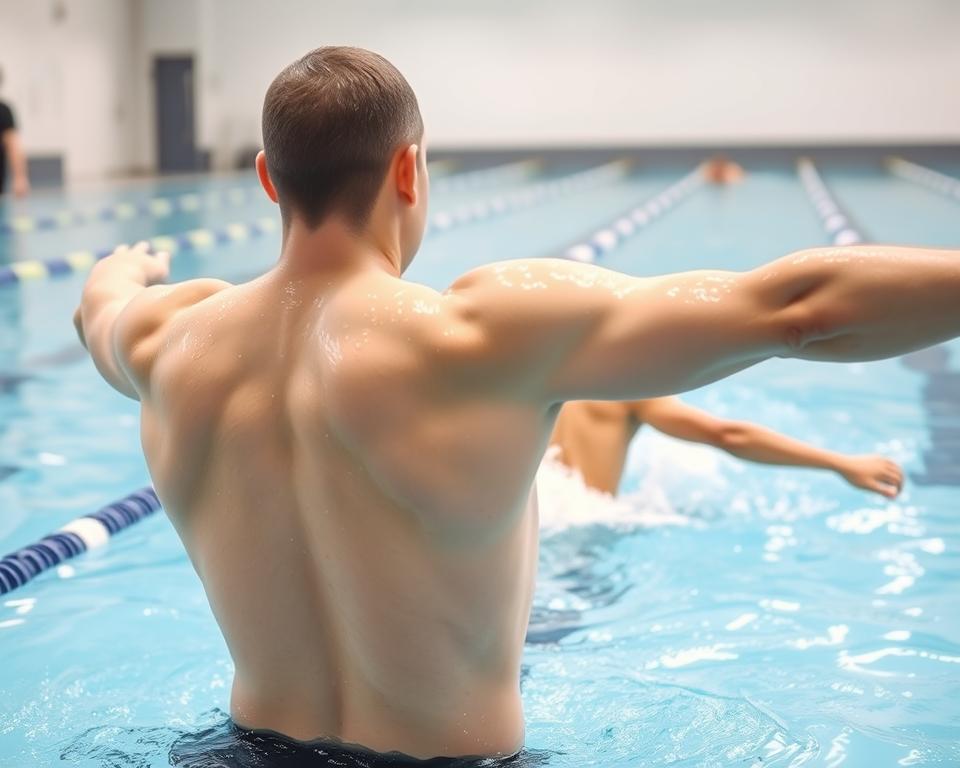

Improving your swimming form is key to swimming better. By focusing on fixing common errors, you can swim much faster.
Fixing these mistakes takes time and effort. You need to work on your body position, breathing, and kicking. This will help you overcome obstacles and reach your swimming goals.
By working on these areas, you can improve your swimming technique a lot. This article will show you the mistakes that slow you down. It also offers tips to fix them.
The Physics of Fast Swimming
To swim faster, you need to understand the physics of moving in water. Swimming well means less resistance and more push.
Good swimming mechanics help cut down drag and boost push. Drag is the force against your movement in water. A streamlined body position can reduce it.
Advanced stroke techniques are key to faster times. Better arm and leg movements mean more power and speed.
Fast swimming comes from knowing water resistance and push. Using hydrodynamics, swimmers can better their technique and swim more efficiently.
Good swimming is about less drag and more push. Mastering proper swimming mechanics and advanced stroke techniques can greatly improve performance.
Identifying Your Swimming Technique Flaws
Mastering swimming skills means finding and fixing technique flaws. One big mistake is bad body positioning. If your lower body is too low or your head is too high, it makes swimming harder efficiently.
To spot your swimming technique flaws, check your body position in the water. You can record yourself swimming or practice in front of a mirror. Look for any unevenness or oddities in your posture. For example, if your hips sink, it might be because of weak kicking or bad alignment.
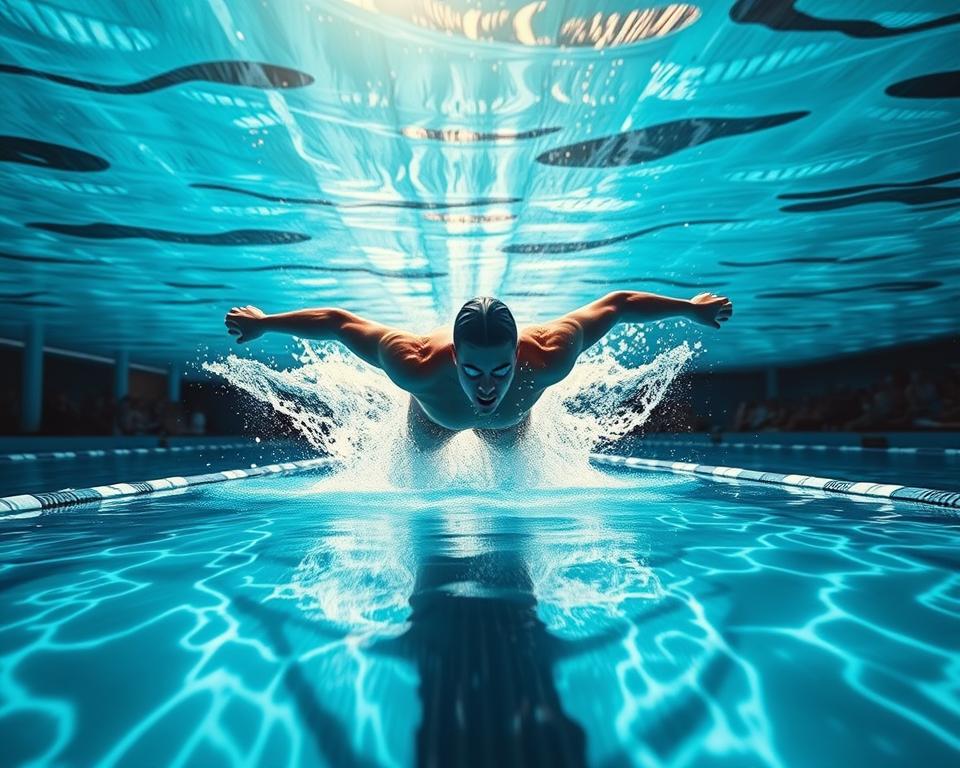
Then, look at your arm movements. Good swim strokes need the right technique. Make sure your hands go into the water with fingers first and palms down. Also, your arm pull should be strong and even, without crossing over your body’s middle.
Kicking is also key to swimming well. Check if your kicks are from your hips, creating power, or just a knee flutter. A strong kick from your hips helps keep you streamlined and moves you forward.
To get better at swimming, practice drills that focus on these areas. Kicking drills can strengthen your legs and improve your technique. Arm stroke drills can make your swimming more efficient. By working on these and practicing often, you can fix your swimming flaws and swim more efficiently.
Body Position: The Most Overlooked Swimming Technique Element
Body alignment is key to better swimming. Keeping your body straight reduces drag, making you swim faster. This means keeping your body flat, which cuts down on resistance.
Keeping your head straight is important. When your head is right, your body follows, becoming more streamlined. Your core muscles also need to be strong to keep your body straight. Core engagement is essential for staying stable while swimming.
Use a kickboard to work on your balance. Kick your legs while holding the board to strengthen your legs and improve alignment. Try to keep your body as flat as you can.
Try to get better at your streamline position. Practice this on your front, back, and sides. It helps cut down on drag and makes you swim better.
Streamline Position Refinements
To get better at your streamline, squeeze your ears between your biceps. Keep your head straight and engage your core. Practice this while gliding or doing kicking drills. Doing these drills often will make you swim faster.
Work on your body position and use these drills to swim better. Remember, practice often and keep your focus on staying aligned and engaging your core.
Breathing Mechanics: Oxygen Without Breaking Your Rhythm
Learning to breathe well in swimming can greatly improve your endurance and speed. It’s important to breathe right to keep a steady pace and avoid getting tired.
Not breathing enough can cause problems like less endurance and a broken rhythm. Taking deep breaths and not holding your breath too long is key. Expert swimming tips say using both sides to breathe can solve these issues.
Bilateral breathing means switching which side you breathe from every few strokes. This method balances your stroke and boosts your swimming skill. It prevents you from leaning to one side, which can throw off your swimming technique.
Another important part of breathing is exhaling slowly underwater. This makes room for new air when you turn to breathe. Slow exhaling keeps the air flowing smoothly and prevents quick breaths that can mess up your rhythm.
Practicing these techniques is essential. Try drills that focus on breathing with both sides and exhaling underwater. With regular practice, these skills will become natural, improving your swimming efficiency and endurance.
Arm Stroke Mechanics: Maximizing Propulsion
The arm stroke is key to swimming speed and efficiency. Many swimmers face issues like crossing over the centerline or overreaching. These problems waste energy and lower efficiency.
To improve swimming form, focus on arm stroke mechanics. Adjusting hand position for more surface area is important. Small changes in how hands enter and exit water can boost propulsion.

Hand Position Adjustments for Greater Surface Area
Changing hand position can greatly improve swimming efficiency. Keep hands flexed and fingers together when entering the water. This increases water pull with each stroke.
The high-elbow recovery technique is also vital. Keep your elbow higher than your hand during recovery. This reduces drag and boosts stroke efficiency.
Mastering these techniques takes practice and patience. Start with one aspect, like hand position or elbow recovery. As you get better, you’ll see your swimming get faster and more efficient.
Improving arm stroke mechanics leads to a more efficient and powerful stroke. This enhances your swimming form and cuts down swim time.
High-Elbow Recovery Technique
The high-elbow recovery is essential for efficient arm strokes. Focus on keeping your elbow high and hand relaxed during recovery. This reduces drag and boosts efficiency.
Using these advanced stroke techniques in your swimming will make you faster and more efficient. Practice regularly and focus on one technique at a time for the best results.
Kick Technique: Converting Leg Power Into Forward Motion
A good kick technique turns leg power into forward motion, boosting your swimming. A strong kick is key for moving through the water. But, it must be done right to avoid getting tired and stay fast.
In freestyle and backstroke, the kick is a fast, alternating motion. Proper swimming mechanics mean the kick starts from the hips. Keep your legs relaxed and your feet together.
Freestyle and Backstroke Kick Corrections
Common mistakes in freestyle and backstroke kicks are kicks that are too deep or wide. This causes drag and lowers efficiency. To fix this, aim for a narrow, surface-level kick. Use your core to control the kick and keep efficient swim strokes.
- Keep your knees slightly bent and your feet together.
- Avoid kicking from the knee; instead, let the hips drive the motion.
- Maintain a relaxed ankle to reduce drag.
Breaststroke and Butterfly Kick Timing
Breaststroke and butterfly kicks need precise timing for best results. In breaststroke, the kick is like a frog’s, with feet turning out and then together. Butterfly’s kick is a dolphin-like wave with the legs moving together.
To better your breaststroke kick, focus on the recovery phase. Bring your heels towards your bottom without breaking the surface. For butterfly, practice the dolphin kick on land first. Then, add it to your swim, focusing on rhythm and proper swimming mechanics.
Mastering each kick technique can greatly improve your swimming. Regular drills and practice will help you get efficient swim strokes and better performance.
Advanced Swimming Technique Drills for 30% Faster Times
Swimmers can cut their times by 30% with advanced drills. A regular training schedule boosts confidence and skills. It also improves swimming performance.
To master swimming skills, you need to try different swim technique drills. These drills work on various parts of your swimming, like body position, arm stroke, and kick.
Drills for Improving Body Position
A proper body position cuts down on drag and boosts efficiency. Drills like “kick on a board” and “streamline kick” strengthen your core. They also help align your body in the water.
- Kick on a board: Focuses on leg strength and technique.
- Streamline kick: Enhances body position and reduces drag.
Drills for Enhancing Arm Stroke
Good arm stroke mechanics are key for moving forward. Drills like “catch-up” and “fingertip drag” improve your arm technique. They make sure you’re using your arms well.
| Drill | Purpose | Benefit |
|---|---|---|
| Catch-up Drill | Improves arm timing | Enhances propulsion efficiency |
| Fingertip Drag Drill | Focuses on hand exit and entry | Reduces drag and improves stroke |
For swimmers aiming for 30% faster times, these drills are key. Regular practice and focus on technique lead to big improvements.
By adding these advanced drills to your training, you’re on the path to mastering swimming skills. You’ll see your swimming times get faster.
Technology Tools to Measure Your Swimming Improvement
Swimmers are now using technology to track their progress. These tools help them see how they’re doing and improve their technique. They offer insights into their performance.
Wearing the right swim gear is key to better performance. A good wetsuit, for example, helps you swim faster by reducing drag. But there’s more to it than just swimwear. Technology offers devices and software to enhance swimming performance.
Swimming watches and wristbands are very popular. They track your lap times, how many strokes you do, and your heart rate. They give a full picture of your swim. Some even offer expert swimming tips based on your data.
Underwater cameras and sensors are also new tools. They let you see how your strokes look. This helps you find what to work on and how to get better.
Software apps are also important for swimmers. They analyze data from devices and give you training plans. These apps help you set goals, track your progress, and share with others. This can really motivate you to do your best.
Using these technology tools can give swimmers an edge. They help with tracking, feedback, and expert swimming tips. Technology is changing the sport in big ways.
Discussion about this post