

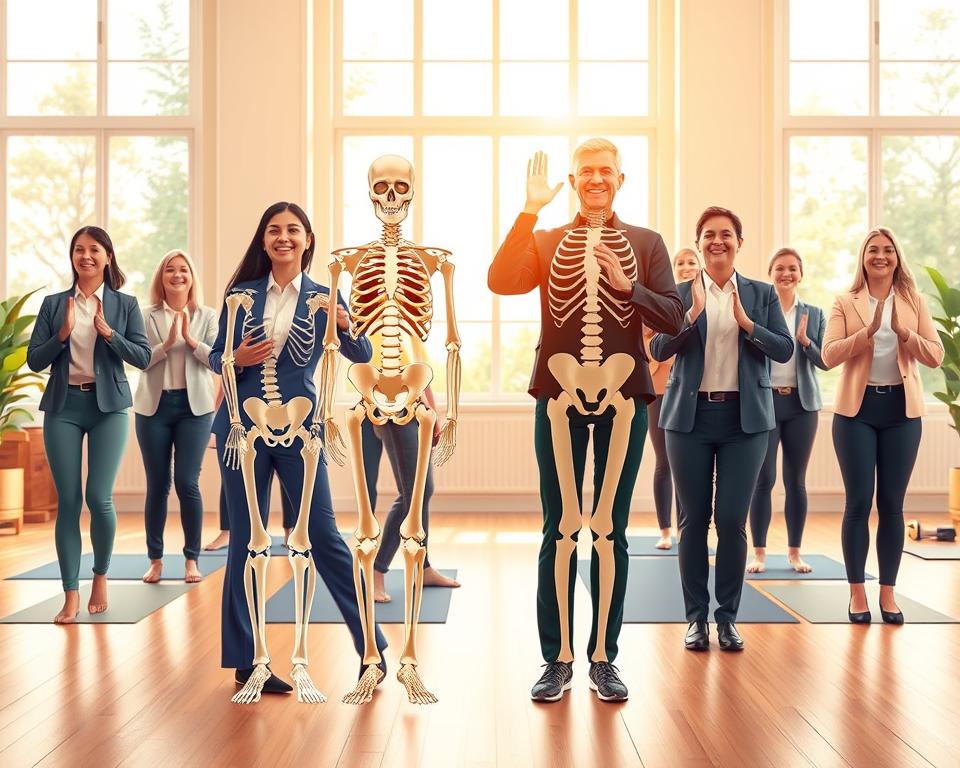

Keeping your bones strong is vital for your health. It’s important to start early and keep going. Bone health is essential for your overall well-being. Ignoring it can lead to osteoporosis.
Osteoporosis is called a “silent disease” because it often goes unnoticed until a bone breaks. This usually happens in the hip, spine, or wrist. It makes bones weak, leading to more fractures.
Knowing how to prevent osteoporosis is key to strong bones. By focusing on bone health, you can lower your risk of osteoporosis and fractures.
Bone Health and the Risk of Osteoporosis
Bone health is key to feeling good overall. Knowing who’s at risk for osteoporosis helps prevent it. Women over 50 and those with a family history are at higher risk.
Poor diet, not moving enough, smoking, and some meds can also raise your risk. For example, not getting enough calcium and vitamin D hurts your bones. Being inactive makes bones weaker too.
Knowing your risk factors is the first step to fight osteoporosis. By understanding your own risks, you can make better choices for your health.
Important risk factors include:
- Age and gender
- Family history of osteoporosis
- Dietary habits
- Physical activity level
- Smoking and alcohol consumption
By facing these risks, you can start to keep your bones strong. This helps lower your chance of getting osteoporosis.
The Science of Osteoporosis Prevention
Preventing osteoporosis means learning about bone density and health. It starts in childhood. A healthy diet and exercise help kids reach their highest bone mass.
Peak bone mass is the highest bone density a person can have. It usually happens in late 20s to early 30s. Having a high peak bone mass is key to avoiding osteoporosis later.
Measurable Goals for Bone Health
To better bone health, setting clear goals is important. These goals might include eating more calcium, getting enough vitamin D, and doing weight-bearing exercises.
For example, aiming for 1,000 mg of calcium daily is a goal. Another goal could be to do 30 minutes of walking or jogging three times a week.
By reaching these goals, people can greatly improve their bone health. Regular bone density tests help track progress and adjust goals as needed.
Knowing how to prevent osteoporosis helps people keep their bones strong for life.
Assessing Your Personal Risk Factors
To prevent osteoporosis, knowing your risk factors is key. Many things can make you more likely to get osteoporosis.
Your risk might be higher if you have a family history of osteoporosis or fractures. If your parents or grandparents had it, you might too. Previous fractures after 45 also raise your risk.
Some medical conditions can up your risk. These include rheumatoid arthritis, diabetes, and thyroid disorders. Also, smoking and excessive alcohol consumption harm your bones.
Knowing your risks early helps you prevent osteoporosis. By understanding your risks, you can choose better foods, exercise, and lifestyle choices.
- Review your family medical history.
- Discuss any previous fractures or medical conditions with your doctor.
- Avoid smoking and limit alcohol consumption.
By taking these steps, you can understand your risk better. Then, you can act to prevent osteoporosis.
Essential Nutrients for Building Strong Bones
Eating a balanced diet with enough calcium and vitamin D is key for strong bones at any age. These nutrients help build and keep bones dense, lowering osteoporosis risk.
Calcium is the most common mineral in our bodies and is vital for bones. It’s important to get enough calcium to keep bones strong. The amount needed changes with age, and knowing this helps avoid bone problems.
Age-Specific Calcium Needs
Calcium needs change as we grow. Kids and teens need more for growth. Adults, like postmenopausal women, need more to stop bone loss.
- Children ages 4-8: 1,000 mg/day
- Teenagers ages 9-18: 1,300 mg/day
- Adults ages 19-50: 1,000 mg/day
- Women over 50 and men over 70: 1,200 mg/day
Calcium Supplement Guidelines
Supplements can help if you can’t get enough from food. It’s important to pick the right supplement and follow intake guidelines. Vitamin D helps your body absorb calcium, so keeping vitamin D levels up is also key.
Eating foods rich in calcium and using supplements when needed helps keep bones healthy. Checking vitamin D levels and adjusting calcium intake can prevent osteoporosis.
Creating Your Bone-Building Nutrition Plan
Creating a personalized nutrition plan is key for strong bones and preventing osteoporosis. A good plan makes sure you get all the nutrients for healthy bones.
A diet for strong bones includes foods high in calcium and vitamin D. Think dairy, leafy greens, and fortified foods. Adding these to your meals can boost your bone density.
Sample Bone-Healthy Daily Menu
Here’s a daily menu with foods good for bones:
| Meal | Food | Calcium Content | Vitamin D Content |
|---|---|---|---|
| Breakfast | Fortified oatmeal with milk and banana | 300 mg | 2.5 mcg |
| Lunch | Grilled chicken salad with kale and almonds | 250 mg | 0 mcg |
| Dinner | Baked salmon with broccoli and fortified orange juice | 200 mg | 12 mcg |
Stick to this nutrition plan and add weight-bearing exercises. This will greatly improve your bone density and health.
Weight-Bearing Exercise: The Foundation of Bone Strength
Weight-bearing exercise is key for strong bones and preventing osteoporosis. It helps improve bone health, lowering the chance of fractures and osteoporosis.
These exercises make you work against gravity, using muscles and bones to support your body. Walking, running, dancing, and strength training are examples. They help bones grow and get denser, mainly in the hips, spine, and legs.
Best Exercises for Beginners
Beginners should start with low-impact activities. Brisk walking is great because it’s easy on the joints but works well. Other good options for beginners include:
- Low-impact aerobics
- Dancing
- Stair climbing
Advanced Weight-Bearing Routines
As you get fitter, try more challenging exercises to boost bone density. Advanced routines might include:
| Exercise | Description | Benefits |
|---|---|---|
| Running | High-impact activity that requires significant bone density | Improves cardiovascular health and bone density |
| Jumping Rope | High-intensity exercise that engages multiple muscle groups | Enhances bone density and improves coordination |
| High-Impact Aerobics | Classes or videos that include high-impact movements | Increases bone density and cardiovascular fitness |
Adding weight-bearing exercises to your routine can greatly benefit your bone health. Start with easy activities and move to harder ones. This way, you can greatly improve your bone density and lower osteoporosis risk.
Strength Training Techniques to Increase Bone Density
Adding strength training to your routine boosts bone density. These exercises make muscles stronger and bones denser. This is because they stimulate bone growth.
Good strength training methods include weightlifting, using resistance bands, and doing bodyweight exercises. For example, squats, lunges, and deadlifts are great. They work many muscles and help bones get stronger.
Safety Considerations and Proper Form
When you do strength training, safety and proper form are key. Start with weights you can handle and slowly add more. Always warm up and cool down.
Proper form is important to avoid injury. For instance, when squatting, keep your back straight. Lower down until your thighs are parallel to the ground.
| Exercise | Muscle Group | Benefit |
|---|---|---|
| Squats | Legs, Glutes | Improves lower body strength and bone density |
| Deadlifts | Back, Legs, Glutes | Enhances overall strength and bone density |
| Bench Press | Chest, Shoulders, Triceps | Boosts upper body strength |
By adding these strength training methods to your routine, you can boost bone density. Remember to focus on safety and proper form. This way, you’ll help your bones stay healthy.
Lifestyle Modifications for Better Bone Health
Lifestyle choices are key to keeping bones healthy. Making smart changes can help prevent osteoporosis. A healthy lifestyle includes eating right, avoiding bad habits, and adding good habits to your day.
Stopping smoking is a big step for better bone health. Smoking harms bone density and raises osteoporosis risk. Drinking too much alcohol is also bad, as it messes with calcium and bone growth.
Eating foods rich in calcium and vitamin D is vital. Dairy, leafy greens, and fortified cereals are good choices. Getting enough of these nutrients helps keep bones strong.
Other important changes include staying at a healthy weight and exercising regularly. Being too thin or heavy can hurt bone density. Exercise, like weight-bearing and resistance training, strengthens bones.
| Lifestyle Modification | Benefit to Bone Health |
|---|---|
| Avoiding Smoking | Reduces risk of osteoporosis |
| Limiting Alcohol Consumption | Improves calcium balance and bone formation |
| Healthy Diet | Provides essential nutrients for bone strength |
By making these lifestyle changes, you can help keep your bones healthy. This reduces the chance of getting osteoporosis.
Age-Specific Osteoporosis Prevention Strategies
Understanding the challenges at different ages is key to preventing osteoporosis. As we age, our bones change, affecting their strength and health.
Building Maximum Bone Mass
In childhood and teens, focus on building maximum bone mass. Make sure to eat enough calcium and vitamin D. Also, do weight-bearing exercises like running or jumping.
Maintaining Peak Bone Density
In early adulthood, aim to maintain peak bone density. Eat a balanced diet with plenty of calcium and vitamin D. Stay at a healthy weight and do strength training regularly.
During menopause and andropause, countering hormonal changes is vital. Hormonal shifts can quickly lower bone density. Use hormone replacement therapy (HRT) with a doctor’s guidance. Also, quit smoking and drink less alcohol.
Preserving Existing Bone Structure
In older age, the goal is to preserve existing bone structure. Prevent falls, manage medications, and keep exercising.
| Age Group | Osteoporosis Prevention Strategies |
|---|---|
| Childhood and Adolescence | Building maximum bone mass through diet and exercise |
| Early Adulthood | Maintaining peak bone density with balanced lifestyle |
| Menopause/Andropause | Countering hormonal changes with HRT and lifestyle adjustments |
| Older Age | Preserving existing bone structure through fall prevention and medication management |
By using age-specific strategies, you can lower your osteoporosis risk. This helps keep your bones strong for life.
Bone Density Testing and Monitoring Progress
Regular bone density tests are key to preventing osteoporosis. They help doctors check your bone health and see if you’re at risk.
Bone density tests, or dual-energy X-ray absorptiometry (DXA), are safe and easy. They measure how dense your bones are. This is important for spotting who might get osteoporosis or break bones.
Keeping an eye on your bone health through tests lets doctors tweak your treatment. How often you need a test depends on your risk and health history.
| Risk Category | Recommended Testing Frequency |
|---|---|
| Low Risk | Every 5 years |
| Moderate Risk | Every 2-3 years |
| High Risk | Annually |
Knowing about your bone density and watching it change helps you and your doctor. Together, you can make a plan to prevent and treat osteoporosis.
Special Considerations for High-Risk Groups
People with autoimmune disorders need extra care to prevent osteoporosis. Their health conditions or treatments can make it harder to keep bones strong.
Hormone Replacement Considerations
Hormone replacement therapy (HRT) helps with menopause symptoms. But, it can also affect bone density. It’s important to talk to a doctor about how HRT might impact bone health.
Autoimmune Disorders
Autoimmune diseases like rheumatoid arthritis or lupus raise osteoporosis risk. Chronic inflammation from these conditions can cause bone loss. Managing the disease with medicine and lifestyle changes can help.
Some digestive problems make it hard to absorb nutrients like calcium and vitamin D. This is true for conditions like celiac disease or Crohn’s disease. Proper management is key to getting enough nutrients.
| Condition | Impact on Bone Health | Management Strategy |
|---|---|---|
| Autoimmune Disorders | Increased risk of osteoporosis due to chronic inflammation | Medication and lifestyle changes to manage inflammation |
| Digestive Issues | Impaired nutrient absorption | Dietary adjustments and supplements to ensure adequate nutrient intake |
| Hormone Replacement Therapy | Variable effects on bone density | Monitoring bone density and adjusting HRT as necessary |
Knowing these special needs helps high-risk groups protect their bones. This can lower their chance of getting osteoporosis.
FAQ
What is osteoporosis and how does it affect bone health?
Osteoporosis makes bones weak, leading to more fractures. It lowers bone density and quality. This increases the risk of fractures.
What are the risk factors for osteoporosis?
Risk factors include age, genetics, and hormonal changes. Low calcium and vitamin D, and a sedentary lifestyle also play a part. Smoking and too much alcohol are harmful. Certain medical conditions and drugs can also raise your risk.
How can I assess my personal risk factors for osteoporosis?
Look at your medical history, lifestyle, and family background. Use online tools or talk to a doctor to find out your risk.
What are the essential nutrients for building strong bones?
Calcium and vitamin D are key for strong bones. Protein, magnesium, and vitamin K are also important. Eating a variety of whole foods helps meet these needs.
How much calcium do I need for optimal bone health?
Adults need 1,000-1,200 mg of calcium daily. You can get this from food and supplements.
What types of exercise are best for bone health?
Walking, running, and dancing are good for bones. So are exercises with weights or resistance bands. Choose what fits your fitness level.
How often should I get my bone density tested?
Testing frequency depends on your risk and medical history. Women over 65 and men over 70 should test every two years. Your doctor will suggest a schedule for you.
Can lifestyle modifications help prevent osteoporosis?
Yes, changes in lifestyle can help prevent osteoporosis. Eating well, not smoking, and exercising regularly support bone health.
Are there any specific osteoporosis prevention strategies for different age groups?
Prevention strategies vary by age. Kids and teens should eat well and exercise to build strong bones. Older adults should focus on keeping bones strong and preventing falls.
How can I create a lifelong bone health action plan?
Make a plan by setting goals and adding healthy habits to your daily life. Monitor your progress. Work with a doctor to create a plan that fits you.
Discussion about this post