



The idea of barefoot running has become more popular. People think it helps avoid running injuries and makes feet stronger.
More folks are choosing minimalist running shoes or running barefoot. This article will look at the good and bad sides of barefoot running. It will also guide those wanting to try it.
Knowing the pros and cons helps runners make smart choices. This can lower their chance of getting hurt.
The Evolution of Natural Running
The history of barefoot running is as old as running itself. Yet, its recent popularity surge is linked to several key publications and innovations. For decades, runners have been exploring the benefits of running without the constraints of traditional footwear.
The modern barefoot running movement gained significant momentum with the publication of books like “Born to Run” by Christopher McDougall. This book highlighted the benefits of adopting a more natural running style. It inspired a new generation of runners and spurred the development of minimalist footwear.
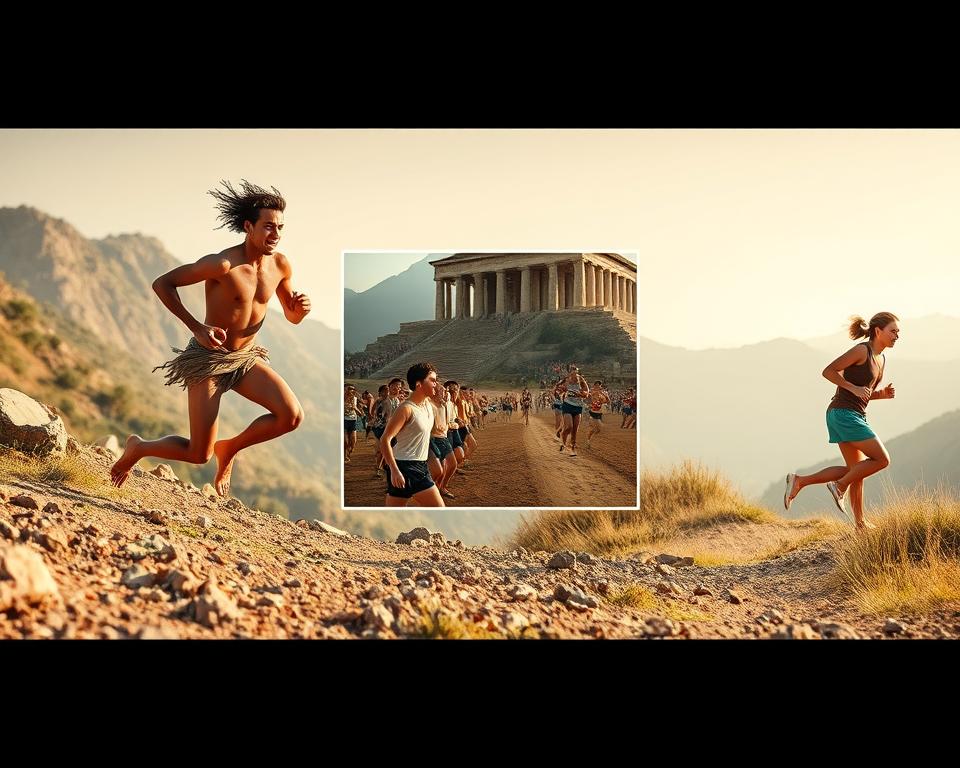
The rise of natural running has also been supported by a growing community of enthusiasts. They share their experiences and insights through online forums and social media platforms. This collective knowledge has helped drive the evolution of minimalist running practices.
As a result, natural running has transitioned from a fringe activity to a mainstream phenomenon. Many runners now incorporate elements of barefoot running into their training regimens.
The Science Behind Barefoot Running
The science of barefoot running is complex. It involves how our body moves and feels. Running barefoot makes us land on our forefoot or midfoot. This can make our stride feel more natural and reduce joint stress.
Our feet play a big role in barefoot running. They help us feel where we are in relation to our body. This feeling, called proprioception, helps us adjust to different surfaces and ways of running. It also strengthens our foot muscles over time.
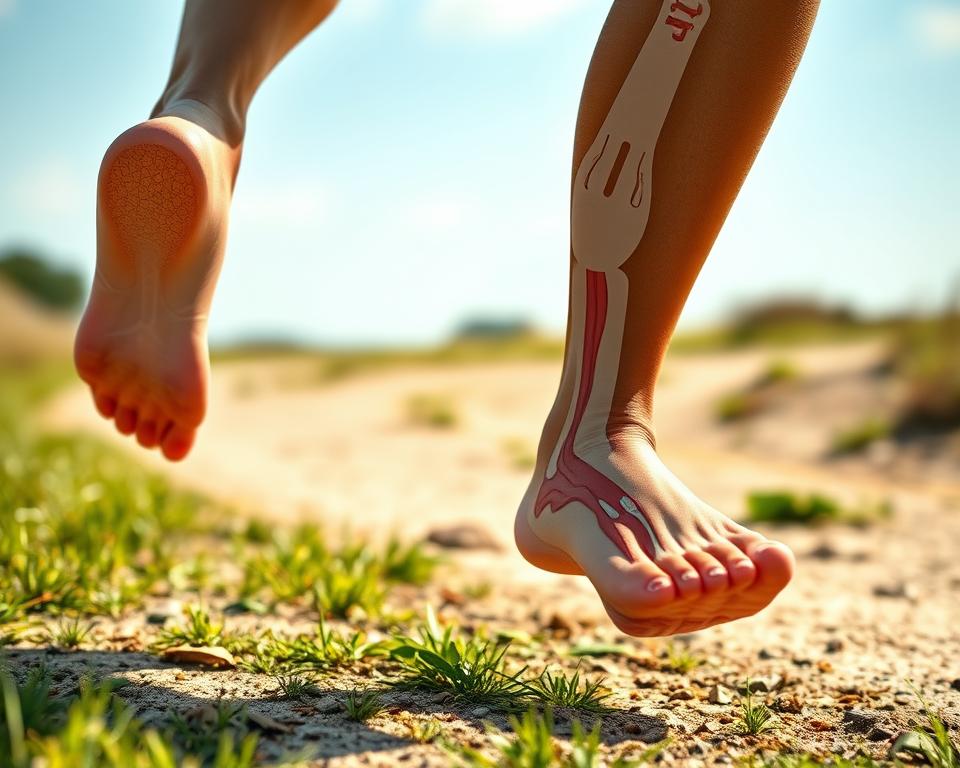
Barefoot running changes how we run. It affects our stride length, how fast we step, and where we land. Landing on our forefoot reduces the shock to our joints compared to landing on our heels.
| Running Style | Foot Strike Pattern | Impact on Joints |
|---|---|---|
| Barefoot Running | Forefoot or Midfoot | Reduced |
| Traditional Shod Running | Heel Strike | Higher |
Running barefoot can lower the risk of injury. The barefoot running form focuses on landing on our midfoot or forefoot. This can make our running more efficient.
In summary, knowing the science of barefoot running helps runners make better choices. By using barefoot running techniques, runners can run better and avoid injuries.
Benefits of Barefoot Running
Running barefoot or in minimalist shoes has many benefits. It improves proprioception and strengthens foot muscles. This natural running form can lower injury risks and boost running efficiency.
One key advantage is better running form. Without traditional shoes, the body naturally adopts a more efficient stride. This often means a midfoot or forefoot strike, reducing joint impact and lowering injury risks like shin splints and plantar fasciitis.
Another big plus is stronger foot muscles. Without shoe support, foot muscles work harder, getting stronger and more resilient. This can improve foot health and lower the chance of issues like flat feet or toe deformities.
| Benefit | Description | Potential Outcome |
|---|---|---|
| Improved Running Form | More natural stride, often with midfoot or forefoot strike | Reduced risk of injury, improved efficiency |
| Stronger Foot Muscles | Increased strength due to lack of shoe support | Improved foot health, reduced risk of foot conditions |
| Enhanced Proprioception | Better sense of body position and movement | Improved balance, reduced risk of falls |
To get these benefits, start with short barefoot runs and gradually increase the distance. Also, do strength and flexibility exercises to support your running muscles.
Understanding and using the benefits of barefoot running can make your running better. It can lower injury risks and improve your performance and foot health.
Potential Risks and Drawbacks
Barefoot running has many benefits, but it also comes with risks. The main concern is the higher chance of barefoot running injuries. This is because of the sudden change in how you run and the lack of shoes.
Some common risks of barefoot running include stress fractures, plantar fasciitis, and Achilles tendonitis. These injuries often happen when you don’t prepare well and transition too fast. Runners who switch too quickly might not let their muscles and bones get used to running without shoes.
- Stress fractures from repetitive impact on hard surfaces
- Plantar fasciitis due to strain on the plantar fascia
- Achilles tendonitis resulting from overuse and improper running form
To avoid these transition injuries, it’s important to start slowly. You should also do strength training and learn proper running techniques. Always listen to your body and stop if you feel any pain or discomfort.
By knowing the risks and taking steps to avoid them, runners can enjoy the benefits of barefoot running. This way, they can reduce their chance of getting hurt.
Barefoot Running vs. Traditional Running: A Comparative Look
Barefoot running and traditional running are two different ways to enjoy the sport. Each has its own benefits and drawbacks. The main differences are in how you land, your stride, and your pace.
Barefoot running encourages a natural running style. This means landing on your midfoot or forefoot, taking shorter steps, and moving your legs faster. On the other hand, traditional running, or shod running, involves landing on your heel. It has longer strides and a slower pace because of the support from shoes.
| Characteristics | Barefoot Running | Traditional Running |
|---|---|---|
| Foot Strike Pattern | Midfoot or Forefoot Strike | Heel Strike |
| Stride Length | Shorter | Longer |
| Cadence | Higher | Lower |
It’s important to know these differences if you’re thinking about switching to barefoot or minimalist running. Barefoot running might lower the risk of some injuries by encouraging a natural stride. Yet, it also needs a time to adapt to avoid other injuries.
Mastering Barefoot Running Technique
Learning the right way to run barefoot is key to enjoying its perks without getting hurt. Getting the technique right is vital for the most benefits.
One important part of barefoot running is to land on your forefoot or midfoot instead of your heel. This cuts down on joint impact and makes your running feel more natural. To do this, try to step faster, which helps avoid long strides and improves your running style.
It’s also important to strengthen your foot and ankle for barefoot running. You can do this with exercises like toe curls and heel raises. A strong foot and ankle can help prevent injuries that are common in barefoot running.
| Technique | Description | Benefits |
|---|---|---|
| Forefoot Strike | Striking the ground with the forefoot instead of the heel | Reduces impact on joints, promotes natural running form |
| Increased Cadence | Increasing step rate to reduce overstriding | Promotes efficient running technique, reduces injury risk |
| Foot and Ankle Strengthening | Exercises like toe curls and heel raises | Prevents common injuries, enhances running stability |
By working on these techniques, runners can become experts at barefoot running. They’ll enjoy its benefits while keeping their risk of injury low. It’s all about running naturally and building strong muscles for running.
Creating Your Barefoot Running Transition Plan
To avoid common pitfalls, creating a personalized barefoot running transition plan is essential. This plan will help you adapt to the new demands of running without the support of traditional shoes.
A well-structured transition plan involves several key components. This includes exercises to strengthen your feet and calves, and a gradual increase in running distance. Listening to your body and responding to its signals is critical during this period.
Toe Splaying and Dexterity Drills
Improving toe dexterity is a key part of preparing for barefoot running. Toe splaying exercises strengthen the muscles in your toes, improving your foot mechanics.
- Spread your toes as far apart as possible and then bring them together.
- Repeat this exercise 10-15 times to improve toe flexibility.
In addition to toe splaying, incorporating dexterity drills can further enhance your foot strength. Try picking up small objects like marbles or pencils with your toes to improve your overall foot function.
Calf and Achilles Tendon Preparation
Strengthening your calf and Achilles tendon is vital for a successful transition to barefoot running. Weakness in these areas can lead to injuries such as tendonitis.
- Perform calf raises on a step to stretch and strengthen your calf muscles.
- Incorporate eccentric exercises, such as slowly lowering yourself down from a calf raise, to target the Achilles tendon.
A gradual progression is key to a successful transition plan. Start by incorporating short barefoot running or minimalist shoe segments into your routine. Gradually increase the duration over time.
By following a structured transition plan and incorporating exercises to strengthen your feet and calves, you can minimize the risk of injury. This way, you can maximize the benefits of barefoot running.
Remember, patience and consistency are key. Allow your body the time it needs to adapt. Don’t hesitate to seek professional advice if you experience any persistent discomfort or pain.
Choosing the Right Minimalist Footwear
Minimalist shoes are a key step between regular running shoes and barefoot running. They offer protection while keeping your stride natural. It’s important to pick the right minimalist shoes when starting barefoot running.
Good minimalist shoes have a thin sole, a wide toe box, and little cushioning. These features help you run naturally and protect you from sharp things.
- Look for shoes with a low heel-to-toe drop to promote a midfoot or forefoot strike.
- Choose shoes made from breathable materials to enhance comfort during runs.
- Ensure the shoe is flexible and allows for a full range of motion.
Some popular barefoot running shoes come from brands known for minimalist designs. When trying on shoes, notice how they feel. See if they let you run naturally.
Choosing the right minimalist shoes helps runners smoothly move to barefoot running. It lowers injury risk and makes running better overall.
Troubleshooting Common Barefoot Running Issues
Starting barefoot running means knowing about possible problems and how to fix them. Runners might face pain, bruising, or strain as they get used to it.
Common issues include:
- Foot pain due to inadequate strengthening
- Bruising from improper landing techniques
- Strain resulting from sudden changes in running form
To solve these problems, runners can follow a few steps. Gradual transition is important, letting the feet and legs get stronger slowly. Also, using the right running form, like a midfoot or forefoot strike, can help avoid injuries.
| Issue | Cause | Solution |
|---|---|---|
| Foot Pain | Insufficient foot strengthening | Gradually increase running distance and intensity |
| Bruising | Improper landing technique | Practice midfoot or forefoot striking |
| Strain | Sudden change in running form | Gradually adjust running form and incorporate strengthening exercises |
By understanding and tackling these common problems, runners can enjoy the perks of barefoot running while keeping risks low.
Discussion about this post