

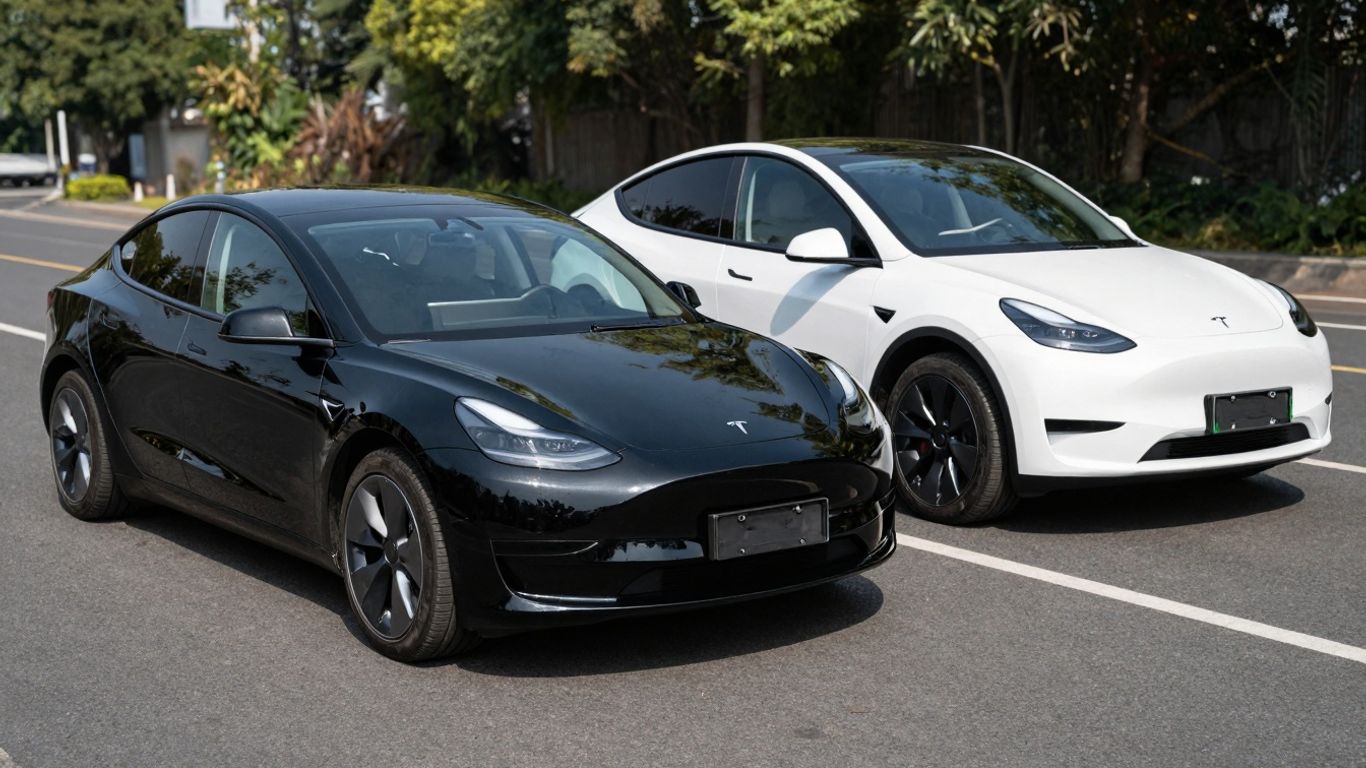

So, you’re thinking about getting a Tesla, huh? Maybe the sleek Model 3 or the roomier Model Y. It’s a common question: which one is really better for the long haul? We dug into what actual owners are saying after putting 50,000 miles on their cars.
It turns out, they’re pretty similar in a lot of ways, but those differences really start to matter when you’re living with them every day. Let’s break down what owners are experiencing with the Tesla Model 3 vs Model Y.
Key Takeaways
- After 50,000 miles, owners find the Tesla Model Y offers a more comfortable experience for taller people and those needing extra cargo space, thanks to its higher seating and larger interior.
- While both models benefit from Tesla’s over-the-air updates, owners report the Model Y’s driving dynamics, though slightly less nimble than the Model 3, remain impressive and practical for daily use.
- Charging costs are remarkably low for both models, with one owner reporting only $313 spent on charging after a year, significantly less than gasoline expenses.
- Tire wear can be a concern for both the Model 3 and Model Y, especially with aggressive driving, due to the instant torque and performance capabilities of electric vehicles.
- The Model Y provides a notable advantage in cargo capacity and interior flexibility with its folding and reclining rear seats, making it a more versatile option for families and those with active lifestyles.
Tesla Model 3 vs Model Y: Ownership Experience After 50,000 Miles
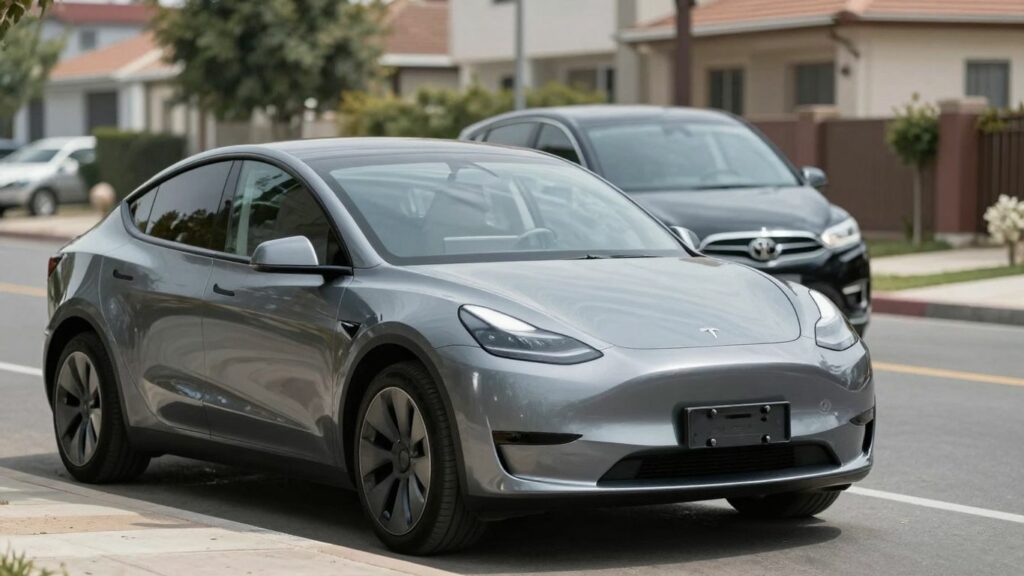
So, you’ve put about 50,000 miles on your Tesla, whether it’s the sleeker Model 3 or the more spacious Model Y.
What’s it really like? We’ve gathered some insights from owners who’ve lived with these electric vehicles for the long haul, looking at what holds up, what surprises them, and if they’d do it all again. This isn’t just about the shiny new car smell; it’s about the day-to-day reality after the initial excitement wears off.
John Gibbs’ Model Y Long Range: A Detailed Look
John Gibbs, a Model Y Long Range owner since December 2020, has put a significant number of miles on his electric SUV – around 30,000 of those were dedicated road trips. He’s found that unlike traditional cars that stay the same from purchase to sale, his Model Y actually gets better over time. This is largely thanks to Tesla’s over-the-air (OTA) updates.
He humorously notes that the Full-Self Driving (FSD) Beta, which initially made his wife nervous due to its early quirks, has improved dramatically. He even had a minor issue with a slow window, and Tesla service came to his garage to fix it. The savings are also notable; after a year of free Supercharging, his charging costs were a mere $313. The only real downside he points out? The instant torque from the dual motors means tires wear out faster than you might expect, especially with spirited driving.
Over-the-Air Updates: The Evolving Tesla Experience
This is a big one for Tesla owners. The idea that your car can improve while it sits in your driveway is pretty wild. OTA updates aren’t just about fixing bugs; they can add new features, refine existing ones (like the aforementioned FSD improvements), and generally make the car feel newer for longer. For owners who’ve experienced traditional car ownership, this constant evolution is a game-changer.
It means the car you bought today might have capabilities that weren’t even available at launch. It’s a dynamic ownership experience that few other car brands can match.
Real-World Savings: Charging Costs and Tire Wear
Let’s talk numbers. When you switch to an EV, the fuel savings are often a major draw. For John Gibbs, after his initial free charging period, his total charging cost for tens of thousands of miles was incredibly low. This is a stark contrast to gasoline costs.
However, it’s not all savings. As mentioned, tire wear can be a significant expense. The instant torque and performance nature of Teslas, especially with AWD, can lead to quicker tire degradation. Owners need to factor in more frequent tire replacements or consider more durable tire options. It’s a trade-off: lower energy costs versus potentially higher tire expenses, depending on your driving habits.
| Item | Estimated Cost (50,000 Miles) | Notes |
|---|---|---|
| Fuel (Gasoline) | $5,000 – $7,000+ | Based on average gas prices and MPG |
| Electricity | $300 – $600 | Varies by charging location and rates |
| Tire Replacement | $1,000 – $2,000 | Depends on tire quality and driving style |
| Maintenance | $200 – $500 | Primarily cabin filters, brake fluid |
Performance and Handling: Model 3 vs Model Y
When you’re looking at the Model 3 and Model Y, the performance feels pretty similar at first glance, especially since they share so many parts. But there are some noticeable differences once you get them out on the road, and it really comes down to their size and how they’re built.
Acceleration Differences: Quickness and Control
Both cars are quick, no doubt about it. The Model 3, being a bit smaller and lower, often feels a little more immediate when you hit the accelerator. It’s like it’s ready to go the second you ask. The Model Y is still super fast, don’t get me wrong, but that extra bit of weight and height means the acceleration, while impressive, isn’t quite as sharp as the Model 3’s.
For everyday driving, both are more than enough power, but if you’re really pushing it, the Model 3 has a slight edge in that pure get-up-and-go feeling.
Cornering Prowess: The Impact of Lower Center of Gravity
This is where the Model 3 really shines. Because it sits lower to the ground, its center of gravity is lower too. This makes a big difference when you’re taking corners. It feels more planted, more stable, and you can really feel connected to the road. The Model Y, being taller, has a higher center of gravity. It still handles corners well, especially for an SUV, but you might notice a bit more body lean compared to the Model 3. It’s not a bad thing, just a different feel. For spirited driving, the Model 3 is the more engaging car.
Model Y Performance: Still Impressive, But Different
Even though the Model Y isn’t quite as nimble as the Model 3 in the corners, the Performance version is still a blast to drive. It has plenty of power to get you moving quickly, and the higher driving position can be a plus for some people. It’s just a different kind of performance. Think of it as a sporty SUV rather than a sporty sedan. The Model Y vs Model 3 durability is generally considered comparable, as they share many components, but the Model Y’s larger size might mean slightly different wear patterns over time, especially on tires, depending on driving habits.
Here’s a quick look at some performance figures:
| Model | 0-60 mph (seconds) | Top Speed (mph) | Ground Clearance (inches) |
|---|---|---|---|
| Model 3 Perf | 3.1 | 162 | 5.5 |
| Model Y Perf | 3.5 | 155 | 6.6 |
Interior Comfort and Space: A Tale of Two Teslas
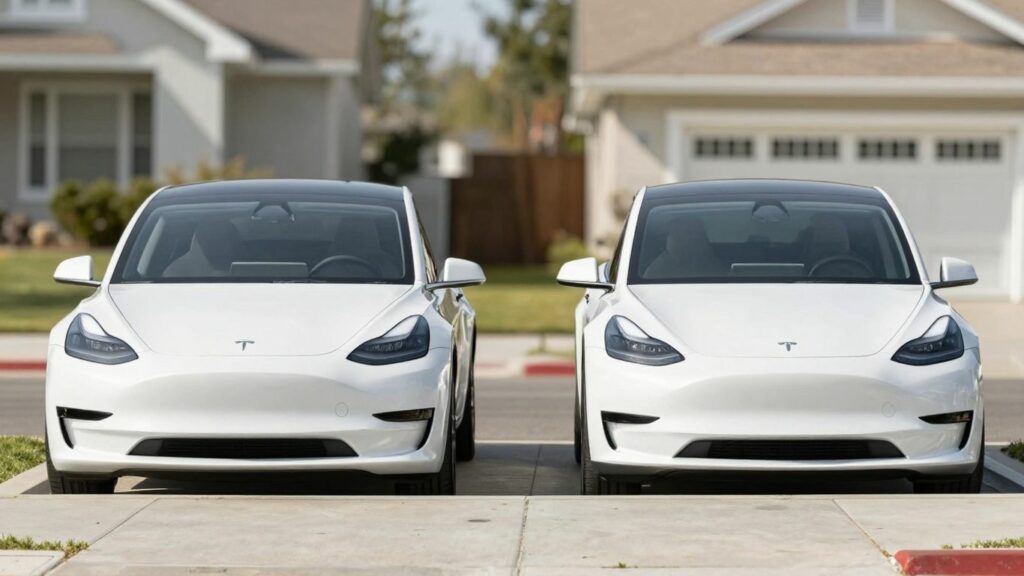
When you’re looking at the Model 3 and Model Y, the inside is where you really start to see the differences, especially if you’re thinking about which one is the best Tesla for families. They share a lot of the same tech and that minimalist dashboard, but how they feel to sit in and use day-to-day is quite distinct.
Seating Comfort and Recline Options
Both the Model 3 and Model Y come standard with heated seats in the front and back, which is a nice touch during colder months. However, the seats themselves have a key difference in how they’re positioned. The Model Y seats are mounted higher, giving you a more elevated driving position. This might feel more natural to some drivers. A notable upgrade in the Model Y is the ability to recline the rear seats. This simple feature can make a big difference on longer trips, allowing passengers to get more comfortable. The Model 3’s rear seats are fixed.
Headroom and Legroom for Taller Drivers
This is where the Model Y really pulls ahead for many. If you’re on the taller side, like myself at 6’3″, the Model 3 can feel a bit snug. While front headroom is usually fine, sitting upright in the back can mean your head is close to or touching the glass roof.
Rear legroom in the Model 3 can also be tight if the front seats are pushed all the way back. The Model Y, on the other hand, generally offers more headroom and legroom in both the front and rear. The larger glass roof in the Model Y also contributes to a more open feeling.
The Advantage of Model Y’s Elevated Seating
That higher seating position in the Model Y isn’t just about feeling like you’re in a bigger car. It makes getting in and out much easier, especially for those with mobility issues or when you’re wrangling kids. Think about installing a car seat or helping a child buckle up – the extra height makes these tasks less of a strain. The Model Y is also a bit wider and taller overall, which translates to more shoulder room and a generally less cramped cabin experience compared to the Model 3. For families, this extra bit of space can be a game-changer.
Cargo Capacity and Practicality: Model 3 vs Model Y
When you’re looking at the Tesla Model 3 and Model Y, cargo space is a pretty big difference. It’s not just about fitting groceries; it’s about how you can actually use the car for life’s bigger adventures.
Trunk Space: Fitting Everyday Essentials and More
The Model 3’s trunk is decent, no doubt. It’ll handle your weekly grocery run, and you can definitely fit those big packs of paper towels and toilet paper. But if you’re thinking about bringing along a larger storage tote, say a 26-gallon one, with the rear seats up, you’re going to be out of luck. There’s a handy storage well in the trunk floor, which is great for keeping smaller items out of sight, but the overall volume is just less.
The Model Y, on the other hand, feels much more accommodating. With the rear seats in place, you get a solid 34 cubic feet of space. That’s enough to easily swallow that 26-gallon tote, along with your paper towels and whatever else you need. And if you need even more room, well, that brings us to the next point.
The Versatility of Model Y’s Folding Rear Seats
This is where the Model Y really shines for practicality. Both cars have rear seats that fold down, but the Model Y offers a bit more flexibility. You can actually recline the rear seats in the Model Y, which is a nice touch for passengers on longer trips, making them a bit more comfortable. Plus, for those who need it, the Model Y has an option for a third row, turning it into a 7-seater. While those back seats are pretty small, mainly for kids or shorter adults, it’s still a big advantage if you often find yourself needing to haul extra people.
When you fold down the Model Y’s rear seats, you unlock a massive 76 cubic feet of cargo space. That’s a huge difference and opens up possibilities for hauling larger items, like furniture or camping gear, that just wouldn’t fit in the Model 3. The Model Y also has two storage wells in the rear trunk area, giving you even more organized space.
Front Trunk Storage: A Consistent Tesla Benefit
Both the Model 3 and Model Y come with a front trunk, or ‘frunk,’ which is a nice bonus. It’s not massive in either car, but it’s perfect for stashing things like charging cables, a small bag, or anything you want to keep separate from the main cargo area.
The Model 3’s frunk is a little smaller than the Model Y’s, but the fact that it exists at all is a win. Not all electric cars offer this, so it’s a consistent benefit across both Tesla models.
Safety and Technology Features
When it comes to safety and the tech packed into these cars, both the Model 3 and Model Y really hold their own. It’s not just about getting from point A to point B; it’s about doing it safely and with a bunch of cool features.
IIHS Safety Pick Awards for Both Models
Both the Model 3 and Model Y have earned top safety honors. For instance, the 2021 Model Y was a Top Safety Pick, and the 2022 Model 3 also snagged a Top Safety Pick award, scoring well across the board in crash tests. This means that, from a safety perspective, you’re getting a solid vehicle no matter which one you choose. They’ve both been put through the wringer and came out looking good.
Full-Self Driving Beta Evolution
One of the most talked-about tech features is Tesla’s Full-Self Driving (FSD) Beta. It’s been a journey, for sure. Early on, some owners, like John Gibbs with his Model Y, found it a bit rough around the edges. He humorously mentioned it didn’t pass the “spouse test” initially because it made mistakes that made his wife nervous. But here’s the thing with Tesla: they keep updating it.
Through over-the-air (OTA) updates, the FSD Beta has gotten significantly better. It’s a feature that genuinely evolves with your car, which is pretty wild when you think about it. It’s not static; it learns and improves over time, making the driving experience feel more advanced.
HEPA Filter: A Unique Model Y Advantage
A standout feature exclusive to the Model Y is its HEPA filter. This isn’t your standard cabin air filter. This thing is serious business, capable of filtering out a huge amount of particles, including pollen, bacteria, and even viruses. Tesla calls it “Bioweapon Defense Mode,” and while that sounds a bit dramatic, it really does make a difference in air quality inside the cabin.
If you have allergies, live in an area with poor air quality, or just want the cleanest air possible while you drive, the Model Y has a definite edge here. The Model 3 doesn’t offer this specific filtration system, so it’s a point in favor of the Y for those who prioritize cabin air purity.
Model Options, Range, and Pricing
Understanding Tesla Model 3 Trims and Range
The Model 3 comes in a few flavors, each with its own range and price point. The Rear-Wheel Drive (RWD) model is often the most budget-friendly, offering a solid range that’s perfectly fine for most daily commutes. What’s neat about this RWD version is that its battery chemistry allows for daily charging to 100% without much worry about long-term degradation, unlike many other EVs. However, you do trade off some charging speed at Superchargers, maxing out at 170kW compared to the higher-end models. Acceleration is also a bit more relaxed here.
Then there’s the Long Range Model 3. This one bumps up the estimated range significantly, giving you more breathing room for longer trips. Keep in mind, though, that for daily driving, you’ll likely want to stick to charging around 80-90% to preserve battery health, so the real-world daily range is less than the advertised maximum. The Performance Model 3 offers a sportier ride with a lower suspension and quicker acceleration, but typically has a slightly shorter range than the Long Range version.
Here’s a quick look at the typical ranges:
| Model 3 Trim | Estimated Range (Miles) | Notes |
|---|---|---|
| Rear-Wheel Drive | ~272 | Good for daily use, 100% charging okay |
| Long Range | ~358 | More for road trips, daily charge lower |
| Performance | ~315 | Sportier, lower suspension, quicker |
Tesla Model Y Range and Available Configurations
The Model Y, being the larger sibling, also has its own set of configurations. Currently, you’ll mostly find the Long Range and Performance versions readily available. The Long Range Model Y offers a very competitive range, making it a strong contender for families and those who need a bit more space and capability.
The Performance Model Y, while still offering a substantial range, prioritizes speed and handling, coming with sportier features like larger wheels and performance brakes.
| Model Y Trim | Estimated Range (Miles) | Notes |
|---|---|---|
| Long Range | ~330 | Good balance of space and range |
| Performance | ~303 | Faster acceleration, sportier feel |
There was talk of a Standard Range Model Y, but it hasn’t been widely available to the public yet.
Price Comparison: Model 3 vs. Model Y Investment
Let’s talk money. The Model Y is generally more expensive than the Model 3, and that makes sense given its larger size and increased utility. The price difference can be quite significant, especially when comparing base models. The Model 3 RWD often starts at a considerably lower price point than even the base Model Y Long Range.
This makes the Model 3 a more accessible entry into the Tesla ecosystem for many. However, if you need the extra space, the higher cost of the Model Y might be a worthwhile investment depending on your lifestyle and needs. It’s a classic trade-off between cost and capability.
Exterior Dimensions and Design Nuances
When you look at the Model 3 and Model Y side-by-side, they seem pretty similar, right? But when you start digging into the actual measurements and how they affect daily use, some differences pop up. It’s not just about looks; it’s about how they fit into your life, from parking in tight spots to just getting in and out.
Ground Clearance and Ease of Entry
The Model Y is noticeably taller than the Model 3. We’re talking about 6.6 inches of ground clearance for the Y, compared to the Model 3’s 5.5 inches. This might not sound like a huge deal, but that extra inch makes a difference.
Getting into the Model Y feels more like stepping into a traditional SUV, which is easier on the back and just generally more comfortable, especially if you’re on the taller side or have kids to wrangle into car seats. The Model 3 sits lower, which is great for handling, but it means you’re bending down a bit more to get in and out.
Headlight Technology: Matrix LED vs. Reflector
This is a bit of a mixed bag, and it depends on the specific trim. The Model 3 generally comes equipped with Matrix LED projector headlights. These are pretty advanced, offering better light distribution and potentially improving safety by allowing for more precise control of the light beam. However, on the Model Y, it’s not quite as straightforward.
While the Model Y Performance gets the same Matrix LED setup, the Long Range version often comes with reflector headlights instead. It’s a detail that might not matter to everyone, but for those who appreciate the latest tech, it’s something to note. Also, the turn signals in the rear are different: amber for the Model Y and red for the Model 3.
Wheel Options Across Model 3 and Model Y Trims
Both cars offer a few wheel choices, and they definitely change the look and feel. The Model 3 typically starts with 18-inch Aero wheels, with an option for 19-inch Sport wheels. If you go for the Model 3 Performance, you’ll get 20-inch Uberturbine wheels.
For the Model Y, the standard wheels are usually 19-inch Gemini, and the upgrade is to 20-inch Induction wheels. The Model Y Performance model steps it up to 21-inch Uberturbine wheels. Bigger wheels often mean a sportier look, but they can also affect ride comfort and tire wear, which is something owners have definitely noticed over time.
Discussion about this post