

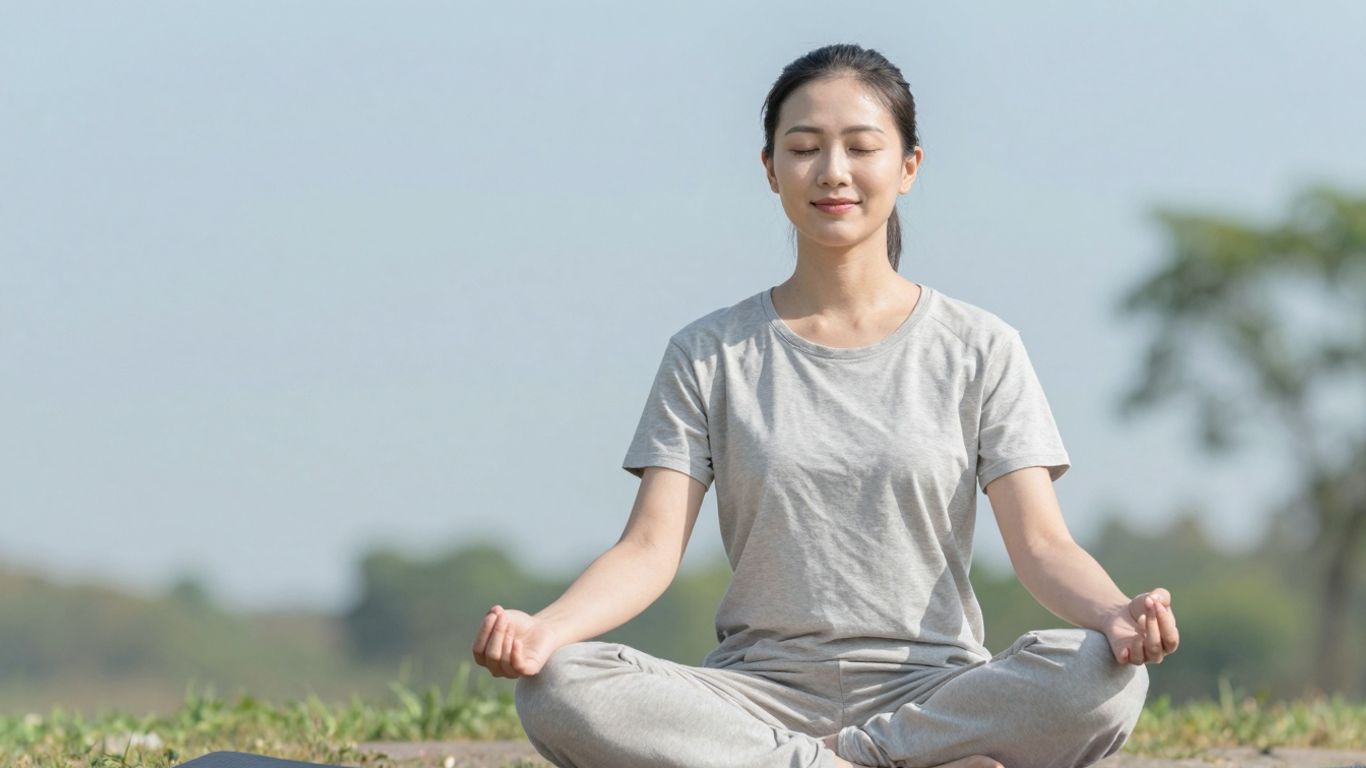

Thinking about trying meditation but not sure where to start? You’re in the right place. It’s not some mystical thing only gurus can do. Honestly, it’s pretty simple. You just need to learn how to meditate.
This guide breaks down how to get going today, even if your mind feels like a runaway train. We’ll cover the basics, how to actually do it, and how to keep it up. Let’s make it happen.
Key Takeaways
- Meditation is about paying attention to the present moment, often using your breath as a focus point. It’s not about emptying your mind, but noticing when it wanders and gently bringing it back.
- To start, find a quiet spot, a comfortable posture (sitting on a chair is fine!), and set a short timer, maybe just 2-5 minutes.
- Focus on your breath as it comes in and goes out. When thoughts pop up, just notice them without judgment and return your attention to your breath.
- Consistency is more important than length. Try to meditate daily, even for short periods, and use reminders to help build the habit.
- Be patient and kind to yourself. Your mind will wander, and that’s okay. The practice is in gently returning to your focus, not in achieving perfect stillness.
How to Meditate
What Meditation Truly Is
So, what exactly is meditation? It’s not about emptying your mind or achieving some mystical state. Think of it more like a workout for your brain. At its core, meditation is a practice where you intentionally focus your attention, often on something simple like your breath, to cultivate a sense of calm and awareness.
It’s about noticing what’s happening in the present moment without getting carried away by it. You’re not trying to stop thoughts; you’re learning to observe them without judgment, like watching clouds drift across the sky. It’s a way to step back from the constant chatter in our heads and just be for a little while.
Why You Should Learn to Meditate
We’re bombarded with information and demands, and it’s easy to feel overwhelmed. Learning to meditate can be a game-changer. It’s a tool that helps you manage stress, improve your ability to concentrate, and even get along better with yourself and others.
When you practice regularly, you might find you sleep better, feel less reactive to difficult situations, and generally have a clearer head. It’s like building a mental resilience that helps you handle life’s ups and downs with a bit more grace. Plus, it’s completely free and you can do it anywhere.
The Core Principles of Meditation
There are a few key ideas that guide the practice of meditation:
- Focus on an Anchor: You need something to bring your attention back to when your mind wanders. This is often your breath, but it could also be bodily sensations, a sound, or a word (mantra).
- Mindful Awareness: This is about paying attention to what’s happening right now, both internally and externally, without judging it. You notice your thoughts, feelings, and sensations as they arise.
- Non-Judgment: When your mind wanders (and it will!), the practice isn’t to get frustrated. It’s to gently notice that your attention has drifted and kindly guide it back to your anchor. There’s no ‘good’ or ‘bad’ meditation session.
- Consistency: Like any skill, meditation improves with regular practice. Even short, consistent sessions are more beneficial than infrequent long ones.
The simple act of sitting and paying attention, even for just a few minutes, can create significant shifts over time. It’s about showing up for yourself, day after day, with a gentle curiosity about your own experience.
Getting Started with Your Meditation Practice
So, you’re ready to give meditation a shot? Awesome. It’s not as complicated as some people make it out to be.
The key is just to start, and these next few steps will help you do just that. Think of this as your initial setup for mindfulness for new practitioners. We’re talking about the practical stuff here, the things you can do right now to begin your journey into starting a meditation practice.
Finding a Comfortable Posture
Forget the idea that you have to sit cross-legged on a fancy cushion. While that works for some, it’s not the only way, or even the best way for everyone, especially when you’re just starting. The main goal is to be comfortable enough that you can stay still for a few minutes without fidgeting too much, and to maintain a posture that’s alert but relaxed.
- Sitting on a chair: This is a great option. Sit with your feet flat on the floor, your back straight but not stiff, and your hands resting comfortably on your lap or thighs. Make sure the chair supports your back if needed, so you don’t slump.
- Sitting on the floor: If you prefer the floor, you can sit cross-legged. Use a cushion or folded blanket under your hips to lift them slightly. This helps keep your spine naturally aligned. If cross-legged is uncomfortable, try sitting with your legs extended or in a half-lotus position.
- Lying down: Some people find lying down more comfortable, especially if they have back issues. Just be aware that it’s easier to fall asleep this way. If you choose this, lie on your back with your arms at your sides, palms up, and legs uncrossed.
Whatever you choose, aim for a posture that feels stable and allows you to breathe easily. It’s about being present, not about achieving a pretzel-like pose.
Setting a Dedicated Space
Having a specific spot for your meditation can really help signal to your brain that it’s time to switch gears. It doesn’t need to be elaborate. It could be a corner of your bedroom, a specific chair in the living room, or even a quiet spot outdoors if the weather permits.
The important thing is that it’s a place where you feel relatively undisturbed and can associate with your practice. Try to keep it tidy and free from distractions. This space becomes your personal sanctuary for a few minutes each day.
Creating a consistent environment can make a big difference in your ability to settle into your practice. It’s like having a designated ‘calm zone’ that you can retreat to whenever you need it.
Choosing the Right Time of Day
When should you meditate? Honestly, the best time is whenever you can consistently make it happen. For many, this means first thing in the morning, before the day’s demands kick in. This can set a positive tone for the hours ahead. Others find that a midday break helps them reset, or an evening session helps them wind down.
Here’s a simple way to think about it:
- Morning: Good for setting intentions and starting the day with a clear mind.
- Midday: Useful for a mental reset, especially if you’re feeling overwhelmed.
- Evening: Can help release the day’s stress and prepare for sleep.
Experiment to see what fits best with your schedule and energy levels. The goal is to find a time that allows you to practice without feeling rushed. Consistency is more important than the specific hour. These beginner meditation techniques are all about building a habit, and a regular time slot is a big part of that. Remember, even just five minutes counts when you’re starting out.
The Mechanics of Meditation: A Step-by-Step Approach
So, you’ve found a comfy spot and set aside some time. Great! Now, let’s get down to the actual doing of meditation. It’s not as complicated as it might sound. Think of it like learning to ride a bike; there are a few basic things to get the hang of, and then you just practice.
Focusing on Your Breath
Your breath is your anchor. It’s always there, and it’s a simple, natural thing to pay attention to. When you first sit down, just notice your breath. Feel it coming in through your nose, filling your lungs, and then leaving your body.
You don’t need to change it or force it; just observe it as it is. Some people find it helpful to count their breaths. You can count “one” as you inhale, “two” as you exhale, and so on, up to ten. Then, you start over at one. This counting can give your mind something specific to do, making it a bit easier to stay present.
Acknowledging Wandering Thoughts
Here’s the big one: your mind will wander. It’s what minds do. You’ll start thinking about what you need to buy at the store, that awkward conversation you had yesterday, or what you’re going to have for dinner. This is totally normal.
The moment you realize your mind has drifted off is actually a key part of the practice. Don’t get annoyed with yourself. Just notice that your mind wandered, maybe give yourself a little mental nod, and then gently bring your attention back to your breath.
Returning to Your Anchor
This is where the real work happens. When you notice your thoughts have taken you on a detour, the practice is to gently guide your attention back to your breath. Think of it like training a puppy. You don’t yell at it when it wanders off; you just calmly lead it back. Each time you bring your attention back to your breath, you’re strengthening that mental muscle. It doesn’t matter if you have to do this a hundred times in a short session.
That’s the practice. You’re not aiming for a perfectly silent mind; you’re aiming to become aware of when your mind wanders and to practice returning to your chosen focus, like your breath.
The goal isn’t to stop thinking, but to stop being carried away by your thoughts. It’s about observing them without judgment and choosing where to place your attention.
Here’s a simple breakdown:
- Settle In: Find your posture and take a moment to just be.
- Notice Your Breath: Feel the sensation of breathing in and out.
- Count (Optional): Count breaths from 1 to 10 to help focus.
- Mind Wanders?: Notice it without judgment.
- Gently Return: Bring your attention back to your breath.
- Repeat: Keep returning to your breath whenever you notice your mind has wandered.
Cultivating a Consistent Meditation Habit
So, you’ve got the basics down – you know what meditation is, you’ve found your spot, and you’re ready to sit. That’s awesome! But here’s the thing: like any new skill, meditation really shines when you do it regularly. It’s not about having one perfect session; it’s about showing up, even when it feels a bit meh.
Starting with Short Sessions
Look, nobody expects you to sit for an hour straight on day one. That’s a recipe for feeling overwhelmed. Instead, think small. Really small. Like, two minutes small. Seriously, just two minutes. It sounds almost silly, right?
But here’s the magic: it’s so short, it’s hard to make an excuse not to do it. Try it for a week. Just two minutes a day. Once that feels like a breeze, maybe add another two minutes the next week. You’ll be surprised how quickly those little increments add up without feeling like a huge chore.
Committing to Daily Practice
Consistency is the name of the game here. It’s easy to say, “I’ll meditate every day,” and then, poof, life happens. You forget. Or you get busy. To really make it stick, try to link it to something you already do. Maybe it’s right after you brush your teeth in the morning, or before you have your first cup of coffee.
Setting a specific time and place helps your brain get into the routine. Think of it like charging your phone – you plug it in every night without thinking. You want your meditation practice to become that automatic.
Utilizing Reminders and Cues
Sometimes, we just need a little nudge. Don’t be afraid to use reminders! Set an alarm on your phone for your chosen meditation time. Or, put a sticky note on your bathroom mirror or your computer screen that just says “Meditate.”
It’s a simple visual cue that can make a big difference. If you’re feeling social, maybe buddy up with a friend. You can text each other after you’ve meditated, just a quick “Done!” to keep each other accountable. It’s like having a little accountability partner cheering you on.
The real work in meditation isn’t about stopping your thoughts; it’s about noticing when your mind has wandered and gently bringing it back. Each time you do this, you’re strengthening your mental ‘muscle.’ It’s okay if this happens a hundred times in a session. That’s not failure; that’s the practice itself.
Here’s a quick look at how you might build up your time:
- Week 1: 2 minutes daily
- Week 2: 4 minutes daily
- Week 3: 6 minutes daily
- Week 4: 8 minutes daily
By the end of the first month, you’ll be sitting for 8 minutes, which is fantastic! Remember, the goal isn’t to be perfect, it’s just to be present with yourself for a few minutes each day.
Navigating Common Meditation Challenges
It’s totally normal to run into a few bumps when you’re starting out with meditation. Don’t let them throw you off course! Most beginners hit similar roadblocks, and knowing what to expect can make a big difference.
Dealing with Restlessness and Discomfort
Feeling fidgety or uncomfortable is super common, especially at first. Your body might feel an urge to shift, scratch an itch, or just move. The key here isn’t to force yourself to be perfectly still, but to notice the sensation without immediately reacting.
Can you observe the feeling for a moment? See if it changes or passes on its own. If you absolutely need to adjust, do so mindfully, then return to your anchor, like your breath. It’s not about eliminating discomfort, but about changing your relationship to it.
Managing Expectations About Progress
This is a big one. Many people start meditating hoping for instant calm or a completely silent mind. When that doesn’t happen – and it won’t, not right away – frustration can set in. Remember, meditation isn’t about stopping thoughts; it’s about noticing them and gently bringing your attention back.
Each time you do this, you’re strengthening your focus, like doing a rep at the gym. Progress isn’t always a straight line. Some days will feel easier, others more challenging. That’s okay. Just showing up and practicing is the success.
The goal isn’t to achieve a perfect, thought-free state, but to develop a more aware and less reactive relationship with whatever arises in your experience. Every moment you notice your mind has wandered and gently guide it back is a moment of practice, a moment of success.
Developing a Friendly Attitude Towards Yourself
Be kind to yourself through this process. You’re learning a new skill, and it takes time. If your mind wanders a hundred times, just gently bring it back a hundred times. Don’t beat yourself up about it. Think of your wandering thoughts not as enemies, but as opportunities to practice returning.
A friendly, patient attitude makes the whole experience much more pleasant and sustainable. If you’re finding it tough, sometimes trying a guided meditation for anxiety relief can offer a gentle structure to follow.
Enhancing Your Meditation Journey
Exploring Guided Meditations
Sometimes, sitting with your own thoughts can feel a bit daunting, especially when you’re just starting out. That’s where guided meditations come in. Think of them as having a friendly voice gently leading you through the process.
These recordings often focus on specific themes, like stress relief, better sleep, or cultivating self-compassion. They can be super helpful for beginners because they provide structure and a clear direction, making it easier to stay present. You can find tons of these online, on apps, or even through podcasts. It’s a great way to experience different meditation styles without having to figure it all out yourself.
Finding a Meditation Community
While meditation is often seen as a solo activity, connecting with others who practice can make a big difference.
A community can offer support, accountability, and a shared space to learn and grow. This could be a local meditation center, an online forum, or even just a friend you meditate with regularly. Sharing experiences, challenges, and insights with others can help you feel less alone and more motivated. Plus, you might pick up new tips and tricks from more experienced practitioners.
Smiling and Practicing Gratitude
Adding a simple smile to your meditation practice can surprisingly shift your experience. It’s not about forcing happiness, but a gentle, soft smile can signal to your brain that it’s okay to relax. It creates a more welcoming atmosphere for whatever arises during your session.
Alongside this, intentionally bringing gratitude into your practice can be powerful. Before or after meditating, take a moment to think about things you’re thankful for.
This simple act can shift your focus from what’s lacking to what’s abundant, creating a more positive outlook that spills over into your daily life. It’s a gentle way to wrap up your practice with a feeling of contentment.
Discussion about this post