

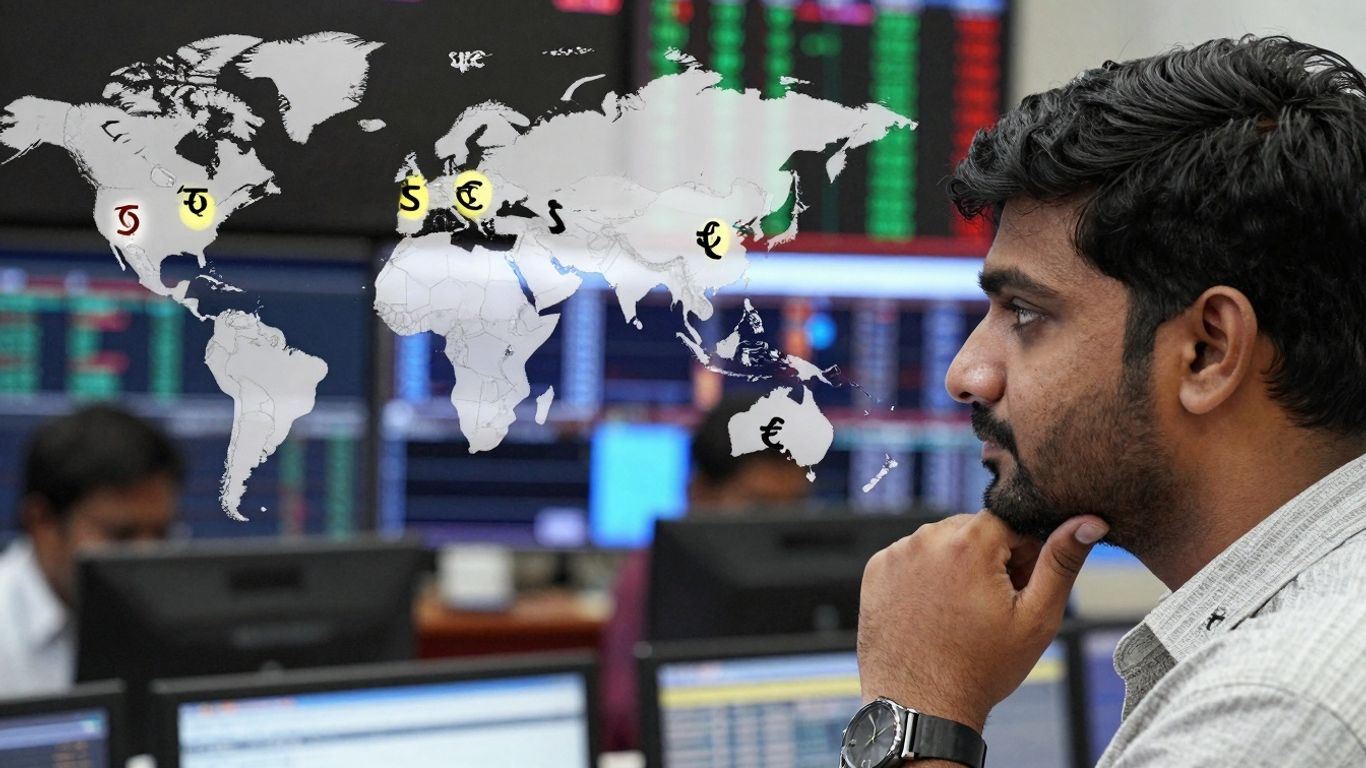

When you’re looking at the forex market, there are two main ways people try to figure out what might happen next: fundamental analysis and technical analysis. It’s like looking at a car – one person might check the engine and fuel levels (fundamentals), while another just looks at how fast it’s going and where the road is heading (technicals).
Both methods have their fans and their critics, and understanding the difference between Fundamental vs Technical Analysis is pretty important if you’re trading currencies.
Key Takeaways
- Fundamental analysis looks at economic factors like GDP, inflation, and interest rates to figure out a currency’s true worth, often for longer-term trades.
- Technical analysis studies past price charts and patterns to predict future movements, usually for shorter-term trading decisions.
- Economic news, central bank policies, and global events play a big role in fundamental analysis for forex.
- Chart patterns, price trends, and indicators are the main tools for technical analysis in forex trading.
- Many traders find success by combining both fundamental and technical analysis to get a clearer picture and better timing for their trades.
Fundamental vs Technical Analysis
When you’re looking at forex trading, there are two main ways people try to figure out what might happen next with currency prices. It’s kind of like deciding whether to buy a house based on its neighborhood and the local job market, or just looking at how much similar houses have sold for recently.
These two approaches are called fundamental analysis and technical analysis. They look at different things and are used for different reasons, and understanding them is a big part of choosing between fundamental and technical trading.
Defining Fundamental Analysis
So, what’s this fundamental analysis all about? Basically, it’s about trying to find the real value of a currency. Think of it like this: a country’s economy is like a big company. Fundamental analysts look at all sorts of economic data to see how strong that country’s economy is. This includes things like how much stuff the country is producing (GDP), how prices are changing (inflation), and what the central bank is doing with interest rates.
They believe that if the economic news is good, the country’s currency should be worth more. If the news is bad, it should be worth less. They compare this “real” value to what the currency is currently trading at on the market. If they think a currency is undervalued, they might buy it, hoping its price will go up to match its true worth. If they think it’s overvalued, they might sell it.
Defining Technical Analysis
Technical analysis is a bit different. Instead of looking at economic reports, technical traders focus entirely on price charts. They believe that all the information about a currency’s value is already reflected in its past price movements. It’s like saying the market has already figured out the economy and that’s shown up in the price.
Technical analysts study patterns on these charts – like how prices have moved up or down over time, how often they trade, and at what price levels. They use this historical data to try and predict where the price might go next. They’re looking for clues in the past to guess the future, hoping to spot good times to buy or sell.
Core Principles of Each Approach
Here’s a quick rundown of the main ideas behind each:
- Fundamental Analysis:
- Focuses on economic health, government policies, and global events.
- Aims to find a currency’s intrinsic, or true, value.
- Often used for longer-term trading decisions.
- Technical Analysis:
- Focuses on past price action and trading volume.
- Uses charts and patterns to predict future price movements.
- Often used for shorter-term trading decisions.
The Role of Fundamentals in Forex Trading
When you’re looking at the forex market, it’s easy to get caught up in the day-to-day price swings. But what’s really moving those currencies over the long haul? That’s where fundamental analysis comes in. It’s all about looking at the bigger economic picture to figure out why a currency’s value might change.
Economic Indicators and Currency Values
Think of economic indicators as the health report for a country’s economy. Things like Gross Domestic Product (GDP), which measures the total value of goods and services produced, or inflation rates, showing how fast prices are rising, give us clues. If a country’s economy is growing strong, with low inflation and lots of jobs, its currency usually looks pretty attractive to investors. This increased demand can push the currency’s value up.
Here’s a quick look at some key indicators:
- GDP Growth: A rising GDP often means a stronger economy and a potentially stronger currency.
- Inflation (CPI): High inflation can erode a currency’s purchasing power, but it can also lead to interest rate hikes, which might strengthen the currency.
- Employment Data (Non-Farm Payrolls): Strong job growth signals a healthy economy, usually boosting the currency.
- Purchasing Managers’ Index (PMI): This surveys businesses about their outlook; a reading above 50 generally indicates expansion.
Monetary Policy and Geopolitical Events
Central banks, like the Federal Reserve in the US or the European Central Bank, play a massive role. Their decisions on interest rates and how they manage the money supply directly impact currency values. If a central bank raises interest rates, it often makes holding that country’s currency more appealing because you can earn more on savings. Conversely, cutting rates can weaken a currency.
Then there are geopolitical events. Think trade wars, political instability, or major international agreements. These can create uncertainty or opportunity, causing currency values to shift quickly. A sudden conflict or a surprising election result can send shockwaves through the forex market.
Long-Term Investment Horizons
Fundamental analysis is particularly useful if you’re not looking to make trades every single day. It helps you identify currencies that are likely to perform well over months or even years.
By understanding the underlying economic strengths and weaknesses of countries, you can position yourself for more significant, longer-term gains. It’s about understanding the ‘why’ behind the price movements, not just the ‘what’ and ‘when’.
The Power of Technical Analysis in Forex
When you’re looking at forex trading, technical analysis is like having a map of where the market has been and where it might be headed. It’s all about looking at charts and price movements to figure out what’s going on. It’s one of the best forex analysis methods out there for short-term traders.
Chart Patterns and Price Movements
Technical analysis uses a bunch of tools to spot trends. Think of things like support and resistance levels – these are price points where a currency pair has historically had trouble moving past. When the price hits these levels, it might bounce back or break through, giving traders clues.
You’ll also see things like “higher highs” and “lower lows” that help define an uptrend or downtrend. Candlestick patterns are another big one; they’re like little visual cues on the chart that can suggest what might happen next. For example, a “doji” candle can signal indecision in the market.
Identifying Entry and Exit Points
This is where technical analysis really shines. By understanding chart patterns and using indicators, traders can pinpoint specific moments to get into a trade and when to get out. Indicators like the Moving Average Convergence Divergence (MACD) or the Relative Strength Index (RSI) can give signals about when a currency pair might be overbought or oversold, or when a trend is gaining momentum.
This helps in making more precise decisions, rather than just guessing. It’s about finding those high-probability setups.
Short-Term Trading Strategies
Because technical analysis focuses on price action and market psychology, it’s particularly useful for forex trading strategies explained that are shorter in duration. Traders might use breakouts, where a price moves decisively past a key level, or retests, where the price comes back to a broken level before continuing.
These strategies aim to capture smaller, quicker moves in the market. While understanding economic indicators for trading is important for the big picture, technicals help you time those entries and exits perfectly for these shorter trades. It’s a way to analyze forex markets that many find very practical for day trading or swing trading.
Pros and Cons of Each Analysis Type
So, we’ve talked about what fundamental and technical analysis are. Now, let’s get real about what works and what doesn’t for each. It’s not always black and white, and what’s great for one trader might be a headache for another.
Advantages of Fundamental Analysis
Fundamental analysis is really good at spotting the big picture. Think of it like understanding the health of a whole company or even a country’s economy. This approach is fantastic for finding those long-term trends. If you’re the type of person who likes to understand why a currency is moving, this is your jam. It helps build confidence because you’re basing your decisions on solid economic data and events, not just a hunch.
- Long-Term Vision: It’s excellent for identifying trends that could play out over months or even years. This is where you might find those undervalued currencies that have the potential to grow significantly.
- Understanding Value: You get a sense of a currency’s ‘true’ worth based on economic health, interest rates, and political stability. This can lead to more confident trades.
- Contextual Awareness: It helps you understand the broader economic and political landscape, which is pretty important when you’re dealing with something as global as currency.
Disadvantages of Fundamental Analysis
On the flip side, fundamental analysis can be a bit slow for the fast-paced forex world. If you’re looking to make trades quickly, waiting for economic reports or political news might mean you miss out on immediate opportunities.
It also requires a lot of research and interpretation, which isn’t everyone’s cup of tea. Sometimes, even with all the data, the market doesn’t behave as expected in the short term.
- Slow to React: Economic data is often released with a lag, and markets can move on news before the official reports are out.
- Data Overload: Interpreting economic indicators, central bank statements, and geopolitical news can be complex and time-consuming.
- Short-Term Inaccuracy: Market sentiment and unexpected events can cause short-term price swings that don’t align with the underlying economic fundamentals.
Advantages of Technical Analysis
Technical analysis is all about the charts. It looks at past price movements and trading volumes to predict future behavior. This is where traders who like quick decisions and clear signals often shine. It’s great for identifying specific entry and exit points, and it can be really useful for short-term trading strategies. Plus, it’s said to capture the psychology of the market, which can be a big factor in price movements.
- Speed and Responsiveness: Technical indicators can provide real-time signals, making them ideal for short-term trading.
- Clear Entry/Exit Points: Chart patterns and indicators often suggest specific price levels for entering or exiting trades.
- Market Psychology: It can help traders gauge market sentiment and potential turning points based on historical price action.
Disadvantages of Technical Analysis
The main knock against technical analysis is that it’s based on past performance, and past performance doesn’t always guarantee future results. Sometimes, patterns can be misleading, and relying solely on charts might mean you miss important economic news that could drastically change the market’s direction. It can also feel a bit like guesswork if you don’t fully understand the indicators you’re using.
- Lagging Indicators: Many technical tools are based on past data and may not predict sudden shifts caused by unexpected news.
- Subjectivity: Chart patterns can be interpreted differently by different traders, leading to conflicting signals.
- Ignoring Fundamentals: It can lead traders to ignore significant economic or political events that are driving the market.
Combining Fundamental vs Technical Analysis
Synergistic Trading Strategies
Look, nobody’s saying you have to pick a side and stick with it forever. Most traders, especially the ones who stick around, figure out pretty quickly that using both fundamental and technical analysis is the way to go. It’s like having two different sets of eyes – one looking at the big picture and the other focusing on the immediate details. When you put them together, you get a much clearer view of what’s happening in the forex market.
Fundamentals for Direction, Technicals for Timing
This is where the magic really happens. Think of fundamental analysis as your guide for the overall direction. It tells you which currency pairs are likely to move up or down based on economic health, interest rates, or political stability. For example, if a country’s central bank is signaling interest rate hikes, that currency might get stronger. That’s your fundamental clue.
But knowing a currency might get stronger is one thing; knowing when to actually buy it is another. That’s where technical analysis comes in. It’s your timing tool. You can look at charts, see if the price is hitting a support level, or if a certain pattern is forming, and decide that now is the best moment to jump in. So, fundamentals give you the ‘what’ and ‘why,’ and technicals give you the ‘when.’
Avoiding Blind Spots in Trading
If you only look at fundamentals, you might miss out on great short-term trading opportunities or get caught in a sudden price drop that technicals could have warned you about. On the flip side, if you only use technicals, you might be trading against a strong fundamental trend without even realizing it, which is a recipe for disaster. It’s easy to get tunnel vision.
Here’s a quick rundown of how they work together:
- Economic News: A strong GDP report (fundamental) might signal a currency will rise. You then look for a technical breakout above resistance to confirm your entry.
- Interest Rate Decisions: A hawkish stance from a central bank (fundamental) suggests a currency will strengthen. You might wait for a pullback to a moving average (technical) before buying.
- Geopolitical Events: Unexpected political news (fundamental) can cause sharp price swings. Technical indicators like volume spikes or rapid RSI changes can alert you to potential reversals or continuations.
By using both, you reduce the chances of making a trade based on incomplete information. It’s about building a more robust trading plan.
Choosing Your Analytical Path
So, you’ve been learning about fundamental and technical analysis, and maybe even sentiment analysis too. It’s a lot to take in, right? The big question now is, which one should you actually use? The truth is, there’s no single magic answer that works for everyone. It’s like picking a tool for a job – you wouldn’t use a hammer to screw in a bolt, would you? Your choice really boils down to a few personal things.
Aligning Analysis with Trading Style
Think about how you like to trade. Are you someone who likes to make quick decisions and react to what’s happening right now? If so, technical analysis might feel more natural. You’re looking at charts, spotting patterns, and making calls based on price action. It’s all about the immediate movements.
On the other hand, maybe you prefer to understand the ‘why’ behind market moves. You like digging into economic reports, understanding how interest rates might affect a currency, or how political news could shake things up. If that sounds like you, then fundamental analysis is probably more your speed. It’s about the bigger picture and the underlying reasons for currency value changes.
Here’s a quick way to think about it:
- Technical Trader: Likes fast-paced action, relies on charts and indicators, believes history repeats itself in patterns.
- Fundamental Trader: Prefers understanding the economic drivers, comfortable with research and news, focuses on long-term value.
- Combined Trader: Seeks to use both approaches, perhaps using fundamentals to set a general direction and technicals to pinpoint exact entry and exit times.
Considering Investment Goals
Your goals in trading also play a big part. Are you looking to make a quick profit on short-term price swings, or are you aiming to build wealth over many years? If you’re aiming for the long haul, understanding the economic health of countries and their monetary policies through fundamental analysis becomes much more important. It helps you identify currencies that are likely to strengthen over time.
If you’re more interested in day trading or swing trading, where you might hold a position for a few hours or a few days, technical analysis often takes center stage. You’re trying to catch those shorter-term trends and price movements. It’s about timing the market more precisely.
Risk Tolerance and Analysis Choice
Finally, how much risk are you comfortable taking? Some traders find that relying solely on technical analysis can feel a bit like gambling if they don’t understand the underlying economic forces. Others find that the broad strokes of fundamental analysis don’t give them the precise entry and exit points they need, leading to missed opportunities or larger-than-desired losses.
Many traders find that a balanced approach works best. They might use fundamental analysis to decide which currency pair to trade (e.g., “I think the Euro is likely to strengthen against the Dollar because of upcoming ECB policy changes”).
Then, they’ll switch to technical analysis to figure out the best time to enter that trade (e.g., “I’ll buy EUR/USD when it breaks above this resistance level and my indicators confirm upward momentum”). This way, you’re not just guessing; you’re using economic reasoning to guide your direction and chart patterns to refine your timing. It helps reduce the chances of making a trade based on conflicting signals, which can be a real pitfall.
Discussion about this post