

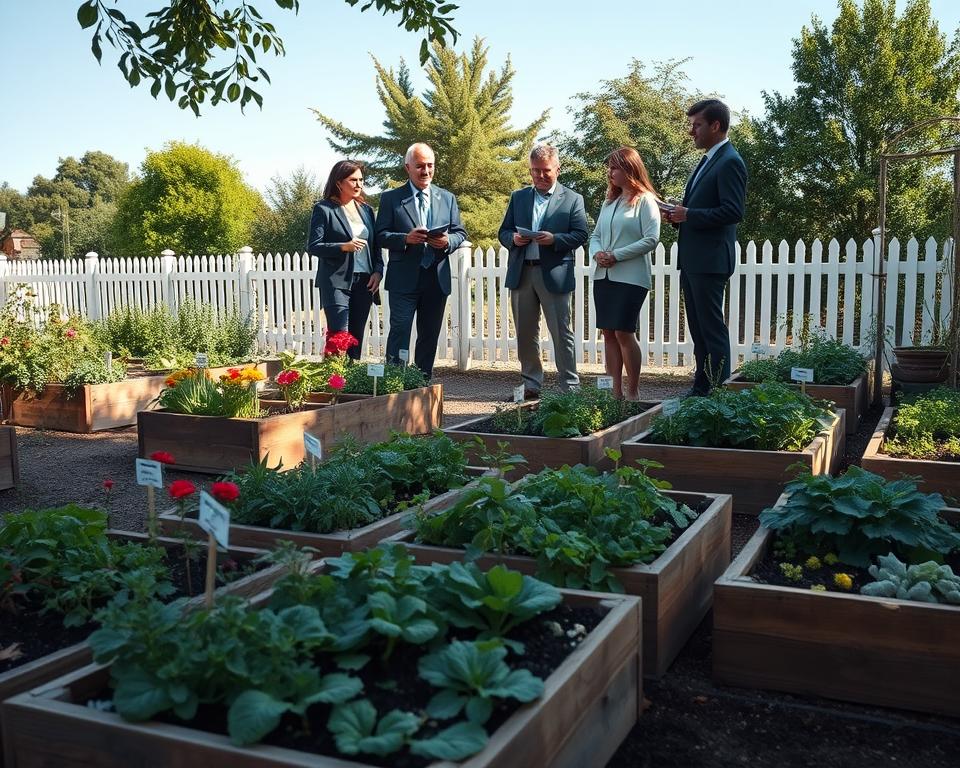

The trend of community gardens is growing fast. More people are joining together to create shared green spaces. It’s important to know the rules that guide these areas.
Knowing about insurance, zoning, and land use regulations is key. These rules help determine how a garden is set up and maintained.
Having clear rules is vital. They help community gardens run well. This way, everyone can enjoy the garden while following local laws.
The Legal Landscape of Community Gardens
Community gardens face a complex legal landscape. They must follow many rules and regulations. Gardeners need to understand these laws to keep their gardens legal.
Compliance Requirements
Community gardens must follow local urban gardening laws. They need to obtain the necessary permits and comply with health and safety rules.
| Regulatory Aspect | Description | Importance |
|---|---|---|
| Zoning Laws | Regulations governing land use | High |
| Health and Safety | Standards for safe gardening practices | High |
| Environmental Regulations | Laws protecting the environment | Medium |
Protecting Your Garden Investment
Knowing and following community garden regulations is key. It helps protect the garden’s investment. Gardeners should also watch out for regulatory hurdles that might affect the garden.
For community gardens to last, they must comply with the required regulations. They also need to keep up with changes in urban gardening laws. This way, gardens can keep growing and thriving.
Land Ownership and Access Options
Getting land is key to community gardens. Gardeners need to know the different ways to get land.
City-Owned Land Access Procedures
City land is a good choice for gardens. Access procedures mean applying to the city’s parks or recreation department.
Private Property Agreements
Private owners might let you use their land. It’s important to make clear agreements about how the land will be used and maintained.
| Land Ownership Type | Access Procedure | Benefits |
|---|---|---|
| City-Owned | Apply through city’s parks department | Potential for long-term lease |
| Private Property | Negotiate with landowner | Flexibility in land use |
| Land Trust | Work with land trust organization | Conservation benefits |
Long-term Land Security
Long-term leases or land ownership give gardens stability.
Working with Land Trust Organizations
Land trusts offer conservation and long-term security for gardens.
Easement Requirements and Benefits
Easements protect gardens forever. Knowing easement requirements is key for planning.
Navigating Zoning Laws for Community Gardens
Starting a community garden means first understanding local zoning laws. These laws can be tricky and vary widely from place to place. They decide how land can be used, what structures can be built, and what activities are allowed.
How to Research Local Zoning Codes
Looking up local zoning codes is the first step. You can find this information on the local government’s website or by calling their planning department. Knowing the zoning code for your garden’s area is very important.
Understanding Zoning Maps
Zoning maps show how different areas are zoned. They help determine whether your garden can be in an area suitable for farming or community use.
Height and setback rules are key in zoning laws. They say how tall buildings can be and how far they must be from property lines.
Structure Limitations
Some zoning laws restrict what can be built in certain areas. For gardens, this might cover tool sheds, greenhouses, or fences.
Preparing a Variance Application
If your garden doesn’t follow local laws, you might need a variance. This means you have to apply and explain your garden’s benefits to the zoning board.
Presenting to Zoning Boards
When you present to zoning boards, you need to be ready. Explain why your garden is good and how it fits with the zoning laws.
Key steps to deal with zoning laws include:
- Researching local zoning codes and maps
- Understanding height, setback, and structure rules
- Preparing a variance application if needed
- Presenting your case to the zoning board
By following these steps, community gardens can overcome zoning law challenges. This way, they can create successful green spaces.
Securing Proper Permits and Licenses
Before starting, community garden organizers must deal with permits and licenses. It’s key to follow local rules for the garden’s success.
Land Use Permits
Land use permits are vital. They show how the land can be used. Gardens must comply with zoning laws that allow or restrict certain activities.
Operational Permits
Operational permits cover daily garden activities. They make sure the garden meets health and safety standards.
For gardens using municipal water, getting the right water connections is important. You need to know the rules on water use and get the needed permits.
Rainwater Harvesting Regulations
Some gardens collect rainwater. It’s important to know the local rules on using rainwater to follow the law.
Sheds and Storage Buildings
Building sheds or other storage in the garden might require additional permits. These must meet local building codes.
Fencing and Accessibility Features
Fencing and accessibility must also comply with the rules. It’s important to make sure these parts of the garden are safe and welcoming for everyone.
Getting the right permits and licenses helps gardens run well and avoid legal problems.
Community Gardening Legalities: Insurance Requirements
Community gardens must deal with insurance to protect their work and volunteers. Insurance helps manage risks like accidents, property damage, and lost equipment.
Coverage Types and Limits
Community gardens should be aware of different insurance types. These include general liability, property damage, and workers’ compensation. The limits must be sufficient to cover potential risks and losses.
| Coverage Type | Description | Typical Limits |
|---|---|---|
| General Liability | Covers bodily injury and property damage to third parties | $1 million – $5 million |
| Property Damage | Covers damage to garden property, including buildings and equipment | $50,000 – $200,000 |
Finding Affordable Policies
Community gardens can find cheap insurance by comparing quotes. They should consider the garden’s size and the number of volunteers.
It’s key to have insurance for tools and equipment. This protects against theft, vandalism, and accidents.
Structure Protection
Community gardens with buildings, like greenhouses or sheds, need to protect them. This is against damage or loss.
Accident Coverage for Volunteers
Volunteers need accident insurance. It covers medical costs if they get hurt while helping out.
Supplemental Insurance Programs
Some gardens might want extra insurance. This could be crop insurance or umbrella policies for more protection.
In short, community gardens should consider their insurance needs. By knowing the different coverages and finding good deals, they can protect their work and grow.
Legal Structures for Garden Organizations
Community gardens must choose a legal structure to support their mission. This step helps them secure funding, follow the rules, and remain sustainable for years.
501(c)(3) Formation Process
Getting 501(c)(3) status is key for community gardens. It lets donors deduct their gifts, boosting fundraising. To get it, they must file Form 1023 with the IRS. This form asks for details on the garden’s structure, mission, and money plans.
Fiscal Sponsorship Alternatives
For those not ready for 501(c)(3) status, fiscal sponsorship is an option. A fiscal sponsor is a 501(c)(3) group that backs a project or organization. This lets it accept tax-deductible donations. It’s great for new or small gardens.
Bylaws are vital for any garden group. They outline rules and how the group will be run. Good bylaws cover who can join, leadership roles, meeting rules, and how to change things.
Leadership Structure Options
Community gardens can adopt different leadership models, such as a board of directors or a cooperative model. The choice depends on the garden’s size, complexity, and needs.
Tax-Exempt Status Requirements
To keep tax-exempt status, garden groups must follow IRS rules. This includes filing yearly reports and sticking to strict financial rules.
Annual Filing Obligations
Every year, tax-exempt groups must file with the IRS, usually using Form 990. These filings show how the group’s money is used and if it follows tax laws.
Creating Enforceable Garden Rules and Agreements
Setting clear garden rules is key to community gardens thriving. These rules keep things in order, make sure everyone is treated fairly, and protect the garden from legal issues.
Essential Contract Elements
A good garden agreement should cover key points such as how to use the garden, plot allocation, and gardener responsibilities. It should be clear about what each gardener must do to avoid confusion.
Liability Waiver Language
Including a liability waiver in garden agreements is important to protect the garden from lawsuits. This waiver should be easy to understand, clearly outlining the risks and gardeners’ duty to garden safely.
It’s important to share garden plots fairly to keep gardeners happy. The rules should explain how plots are given out, including the criteria and how to handle any disagreements.
Mediation Processes
Having a mediation process is key for solving any disputes that come up. This process should be fair, open, and make sure everyone gets a chance to be heard.
Rule Enforcement Mechanisms
To ensure garden rules are followed, you need effective ways to enforce them. This could include regular checks, penalties for rule-breaking, and a clear process for addressing any issues.
Land Use Regulations and Compliance
Community gardens must comply with land-use rules to remain legal. These rules change a lot depending on where you are. So, it’s key for garden leaders to know the local laws.
City-Specific Regulations
Community gardens need to follow city rules. This includes zoning laws, permits, and licenses. These rules tell you what you can do in the garden.
Permitted Activities
It’s important to know what activities are okay. This means figuring out whether you can hold workshops or events, or sell things on-site.
Composting is common in gardens, but it has rules. Gardeners need to know what can be composted and how to do it right.
Waste Disposal Requirements
Properly getting rid of waste is a must. Gardens must follow local waste rules to keep things clean and safe.
On-Site Sales Permissions
If you want to sell produce in the garden, you need the right permissions. You must know any sales restrictions and follow health and safety rules.
Farmers Market Participation Rules
For those selling at farmers’ markets, there are specific rules. You’ll need to obtain the required permits or licenses.
By following these rules, community gardens can run smoothly. This helps them avoid legal problems.
Environmental Compliance and Soil Testing
Community gardens must comply with environmental regulations and test their soil regularly. This ensures they meet various environmental standards.
Required Testing Protocols
Soil testing is key, using specific methods to check soil health and find contaminants. Regular testing catches problems early.
If contamination is found, gardens must find ways to fix the soil. This could mean using plants to clean the soil or other methods.
Stormwater Management Requirements
Managing stormwater well is important to avoid erosion and pollution. Gardens need plans for managing stormwater runoff.
Other important things include controlling erosion, getting organic certification, and reporting on applications. These steps help keep the garden sustainable and in line with the law.
Accessibility Requirements and Inclusive Design
Accessibility in community gardens is more than a law; it’s a moral duty to include everyone. Making these spaces accessible is key to fostering a strong sense of community among all members.
Pathway Width and Surface Requirements
Paths need to be wide and smooth for wheelchairs and strollers. A 4-foot width is a good start, with a surface that’s firm, stable, and won’t slip.
Raised Bed Specifications
Raised beds help gardeners with mobility problems. They should be easy to reach, between 24 and 30 inches high.
Using universal design makes the garden for everyone. It focuses on flexibility, ease of use, and the ability to forgive mistakes.
| Design Element | Accessibility Feature |
|---|---|
| Pathways | Wide, smooth, and slip-resistant |
| Raised Beds | Accessible height, wide enough for gardening |
Accommodation Planning
Good planning means knowing what users need and adjusting the garden to fit.
Public vs. Private Space Distinctions
It’s important to mark public and private areas clearly. This makes the garden more accessible and useful for everyone.
Reasonable Accommodation Standards
Meeting these standards means making the garden welcoming for all. It’s about making sure everyone can enjoy it.
By following these guidelines, community gardens can become lively, welcoming places for everyone.
Liability Issues and Risk Management
Managing risks is key to community gardens thriving. Good risk management keeps the garden safe and productive. It helps avoid problems.
Injury Prevention Strategies
Keeping people safe is a top priority. Community gardens need to have safety plans. This includes signs, well-maintained tools, and training for everyone.
- Conduct regular safety audits.
- Provide safety training for garden members
- Ensure proper signage for hazards
Property Damage Considerations
Property damage is a big worry. Gardens need plans for fixing damage to plots, tools, and more.
Tool Safety Programs
Safe tool use is important. Gardens should teach how to store, maintain, and use tools correctly.
Having an emergency plan is vital. It should cover injuries and natural disasters.
Incident Reporting Systems
A system for reporting incidents is helpful. It should be simple and open to all garden members.
Maintenance Logs and Schedules
Keeping up with maintenance is important. Logs and schedules help track garden care. This lowers the risk of problems.
FAQ
Q: What are the key regulations to consider when starting a community garden?
A: When starting a community garden, you need to know about zoning laws and land use rules. Also, you must understand what permits you need. This knowledge helps you follow the rules and avoid problems.
Q: How do I determine the land ownership and access options for my community garden?
A: To find land for your garden, look into city-owned land and private property deals. You can also explore land trusts. Each option has its own pros and cons, so it’s important to choose wisely.
Q: What is the process for navigating zoning laws for community gardens?
A: To deal with zoning laws, start by studying your local codes and maps. If needed, you might have to apply for a variance. You might also need to speak to zoning boards.
Q: What permits and licenses are required for community gardens?
A: Community gardens need permits for land use and operation. You might also need a permit for water connections. Following these rules is key to avoid fines or shutting down.
Q: What type of insurance is required for community gardens?
A: Community gardens need insurance for liability, property damage, and volunteer accidents. It’s important to know what’s covered and how much.
Q: What are the benefits of forming a 501(c)(3) organization for my community garden?
A: Being a 501(c)(3) lets donors deduct their gifts, which can help your garden. But, it also means you have to file yearly and follow certain rules.
Q: How do I create enforceable garden rules and agreements?
A: To make rules that stick, include important details and a liability waiver. Make sure everyone gets a fair say. Having a way to solve disputes and enforce rules is also key.
Q: What are the land use regulations and compliance requirements for community gardens?
A: Community gardens must follow local rules, like what activities are allowed and composting rules. Knowing these rules helps you avoid trouble.
Q: Why is environmental compliance and soil testing important for community gardens?
A: Testing the soil and following environmental rules makes your garden safe and green. You need to know how to test, fix problems, and manage water.
Q: What accessibility requirements and inclusive design principles should be considered for community gardens?
A: Community gardens should be easy for everyone to use. This means wide paths, raised beds, and designs that work for all. Planning for different needs is also important.
Q: How can community gardens manage liability issues and risk?
A: To handle risks, gardens should prevent injuries, protect property, and keep tools safe. Having a plan for emergencies and a way to report incidents is also vital.
Q: What is the future of community garden regulations?
A: Rules for community gardens are changing. It’s important to stay up to date. Knowing about urban farming laws and the challenges and chances they bring will help gardeners adapt.
Discussion about this post