

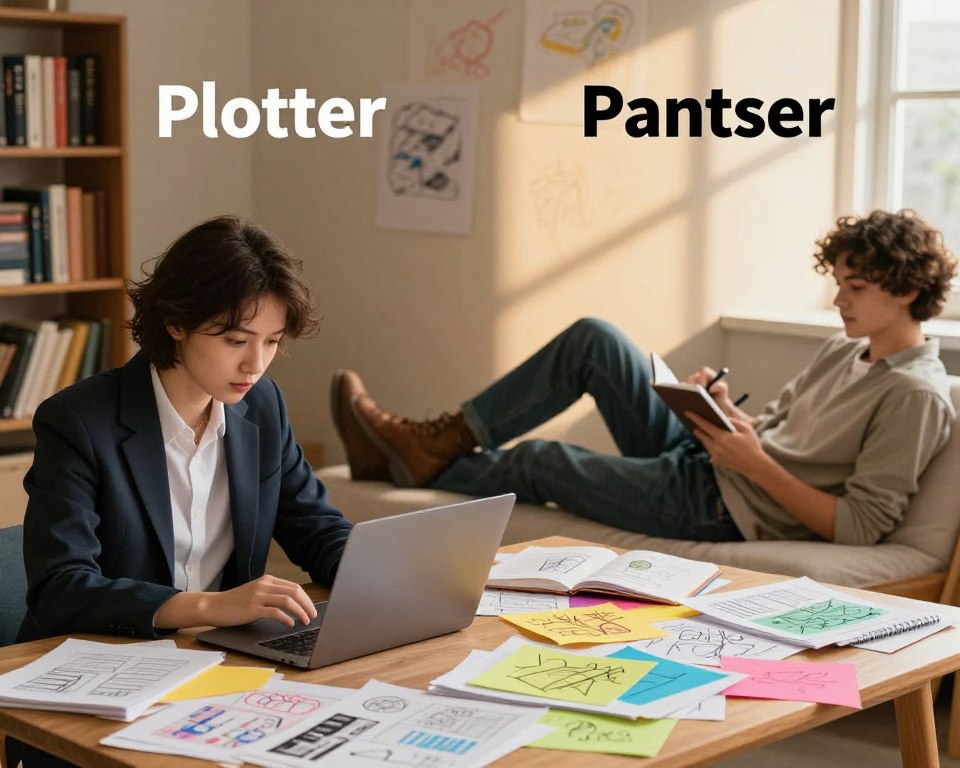

Authors often debate whether to be a plotter or a pantser when writing a novel. Plotters plan every detail, while pantsers let the story unfold naturally.
The choice between these writing methods affects the writing process. Knowing if you’re a plotter or pantser helps you understand your strengths and weaknesses. This knowledge lets you tailor your approach to fit your creative needs.
Exploring the traits of plotters and pantsers reveals the pros and cons of each. This helps writers find their unique style.
The Great Divide in Writing Approaches
Writers often split into two groups: those who plan everything and those who write without a plan. This split is key in the debate between plotters and pantsers. Each group has its own way of writing.
Jess Lourey says about half of published writers are plotters, and the other half are pantsers. This shows that there’s no single way to write. Discovery writing, linked to pantsers, is flexible and spontaneous. On the other hand, outlining is for plotters, giving a clear structure to their stories.
Choosing between plotting and pantsing affects a writer’s work. Here are some main differences:
- Plotters know where they’re going from the start, avoiding writer’s block.
- Pantsers love the freedom to see where their story goes, leading to new and exciting twists.
The debate on outlining vs freewriting is key to understanding the plotter vs pantser divide. Plotters use detailed outlines, while pantsers write freely without a plan. Both methods have their strengths, and the right choice depends on the writer’s style.
The Plotter’s Mindset: Planning Before Writing
The plotter’s way of writing is all about careful planning and a clear story vision. They make a detailed plan of the story, including character journeys, plot surprises, and the ending.
Plotters use different methods to organize their writing. These include:
- Outlining: Creating a detailed, hierarchical story structure.
- Beat Sheets: Breaking down the story into key events or “beats.”
- Story Mapping: Visualizing the story’s progression and connections.
Outlines, Beat Sheets, and Story Mapping
Each of these plot development methods helps organize the story in its own way. Outlining provides a comprehensive framework, while beat sheets focus on key moments. Story mapping visually shows the story’s flow and connections.
| Method | Description | Benefits |
|---|---|---|
| Outlining | Detailed, hierarchical structure | Comprehensive framework |
| Beat Sheets | Key events or “beats” | Pivotal moments highlighted |
| Story Mapping | Visual representation | Clear story flow and connections |
Case Study: J.K. Rowling’s Detailed Planning
J.K. Rowling is a great example of a plotter. She used structured writing to create the Harry Potter series. She planned everything, from character profiles to world-building notes. This helped her create a complex, engaging story across many books.
Understanding the plotter’s mindset and tools shows the importance of planning in writing. Whether through outlining, beat sheets, or story mapping, structured writing leads to a well-crafted story.
Embracing the Pantser Approach
The Pantser approach to writing is all about being spontaneous and letting the story lead. It lets writers explore their creativity freely. This often results in unique and captivating stories.
Following Characters and Storylines Organically
Authors who write as Pansers start with a basic idea or character. Then, they let the story unfold naturally. This organic process can bring unexpected plot twists and character growth.
Some benefits of the Pantser approach include:
- Enhanced creativity due to the lack of constraints
- The ability to make spontaneous decisions that can lead to innovative storytelling
- A more dynamic writing process that can keep the author engaged
Case Study: Stephen King’s Intuitive Process
Stephen King is a famous Pantser who writes without a detailed plan. He starts with a situation or character and then follows the story. This intuitive process has led to many bestselling novels.
| Author | Writing Style | Notable Works |
|---|---|---|
| Stephen King | Pantser | Carrie, The Shining |
| John Grisham | Plotter | The Firm, The Pelican Brief |
| George R.R. Martin | Hybrid | A Song of Ice and Fire series |
By embracing the Pantser approach, writers can unlock their creative power. This spontaneous writing style is not for everyone. But for those who love the freedom it offers, it can be incredibly powerful.
The Plotter vs Pantser Spectrum: Beyond the Binary
Many writers blend plotter and pantser styles to create their own unique approach. This mix is more common than you might think. It has led to the rise of “plantsers,” who use both the organized writing approach and the spontaneity of pantsers.
Plantsers find a balance between planning and creativity. This balance lets them use novel planning techniques while keeping room for new ideas. This way, they can craft more detailed and interesting stories.
Writers Who Have Shifted Their Methods Over Time
Many famous authors have changed their writing styles over time. Some started as strict plotters but needed more flexibility as their stories grew. Others were pantsers who found planning helped avoid writer’s block.
George R.R. Martin is a great example. He calls himself a “gardener” writer, meaning he has a general direction but lets details unfold naturally. This shows the plantsers’ spirit, who start with a plan but are open to changes as the story evolves.
Seeing the plotter vs pantser debate as a spectrum gives writers more freedom. Whether you’re a plotter, pantser, or plants-er, the goal is to find a process that boosts your creativity and productivity.
The Psychology Behind Your Writing Preference
Your writing style is tied to how you think and your personality. Studies show that how you write might reflect your cognitive style and information processing. This link between writing and psychology helps explain why some writers like plotting, while others prefer pantsing or discovery writing.
Organization vs. Psychology
Whether you prefer plotting or pantsing depends on how you organize and handle uncertainty. Plotters like a structured method, showing a need for control and order. Pantsers, on the other hand, enjoy spontaneity and flexibility, adapting quickly to changes.
The table below highlights some key psychological differences between plotters and pantsers:
| Characteristics | Plotters | Pantsers |
|---|---|---|
| Cognitive Style | Systematic, structured | Flexible, spontaneous |
| Approach to Uncertainty | Prefers planning to reduce uncertainty | Comfortable with ambiguity, adapts easily |
| Creative Process | Outlines and plans before writing | Starts writing with a general idea, develops as they go |
Knowing these psychological aspects can help writers understand their natural tendencies. It can also guide them in adjusting their approach for different projects or in enhancing their writing process.
When Plotting Shines: The Advantages of Structure
Having a solid plot is key in writing. It turns a story into a well-organized tale. Plotting acts as a guide, helping writers manage their story’s twists and turns.
Plotting gives writers a sense of control and security. It helps avoid writer’s block by outlining key events. This way, authors can keep their story flowing smoothly.
| Aspect | Plotting | Freewriting |
|---|---|---|
| Structure | Provides a clear outline | Lacks a predefined structure |
| Organization | Helps in organizing ideas | Can lead to disorganization |
| Writer’s Block | Reduces the likelihood | More prone to writer’s block |
In conclusion, plotting is a powerful tool for writers. It offers many benefits that improve the writing process. By using a structured approach, writers can craft engaging stories. Whether you’re new or experienced, plotting can elevate your writing.
The Magic of Pantsing: When Spontaneity Works Best
Pantsing, or writing by the seat of your pants, brings a fresh twist to your writing. It lets writers jump into their story without a plan, finding the plot as they write. This method is freeing, sparking creativity and leading to exciting plot turns.
This approach offers a lot of freedom. Writers can try out different paths and change things easily. This is great in the early stages when characters and stories are growing. The ability to adapt quickly can lead to more nuanced character development and a more engaging storyline.
Pantsing also helps discover new ideas and themes. As writers explore their story, they might discover subplots or character arcs they hadn’t considered. This makes the story richer and more complex. Plus, pantsing keeps the writing exciting, helping avoid writer’s block.
In terms of writing process strategies, pantsing means being flexible and open to change. It’s not for every writer or project. But for those who want to add creativity and spontaneity, pantsing is worth a try.
The key to success with pantsing is finding a balance between creativity and coherence. By embracing the unknown and making adjustments as needed, writers can create compelling stories.
Identifying Your Natural Writing Tendencies
To become a better writer, it’s key to know if you’re more of a spontaneous writing style or an organized writing approach. Many writers lean towards one or the other. But trying both can be beneficial.
Reflecting on your past writing can help you figure out your natural style. Think about how you start a project. Do you make detailed outlines, or do you write freely with a vague idea? Your starting point can show your natural writing tendency.
Testing Both Methods on a Single Project
Try using both plotting and pantsing on one project. Start with a detailed outline, then write freely without a plan. Or, begin with a spontaneous write, then make an outline to organize your thoughts.
By trying both, you can see which one you prefer. You might find you’re good at both or that one works better for certain projects. This way, you can use the best of both styles in your writing.
Accepting your natural writing style while being open to others can boost your writing. As you keep writing and trying new methods, you’ll find what works best for you. This will help you create your best work.
Adapting Your Approach for Different Writing Projects
The debate between plotter and pantser shifts when you consider different writing projects. Some writers like a plan for certain genres, while others prefer to go with the flow.
Every project is unique, and writers need to be flexible. For example, romance novels might do well with a more spontaneous approach. This lets characters and plot grow naturally. But science fiction novels need a structured plan to manage complex worlds and tech.
Some genres need more planning because they’re complex. Historical fiction, for instance, requires careful research to get the setting and events right. Creative non-fiction or personal essays, on the other hand, might be more free-flowing.
Knowing when to be a plotter or a pantser can really help your writing. By matching your approach to your project’s needs, you can write better and faster.
FAQ
What is the main difference between a plotter and a pantser?
A plotter makes a detailed plan before writing. A pantser writes without a plan, letting the story grow naturally.
Which writing approach is more effective: plotting or pantsing?
Whether plotting or pantsing is better depends on the writer and the project. Each has its own strengths and weaknesses.
Can a writer be both a plotter and a pantser?
Yes, many writers blend both methods. This hybrid approach can be very effective for them.
How do I know if I’m a plotter or a pantser?
Try both methods on a single project to see what feels right. Consider your writing style and the projects you enjoy.
What are the benefits of plotting?
Plotting gives a story structure and helps with organization. It can also prevent writer’s block. It lets writers see the story’s big picture and make changes before writing.
What are the benefits of pantsing?
Pantsing brings spontaneity and creativity to writing. It can lead to new ideas and surprises. It’s also less scary for those who struggle with outlines.
Can different genres require different writing approaches?
Yes, genres can influence writing styles. Romance might need more planning, while literary fiction might be more free-form.
How can I create a personalized writing process?
Experiment with different methods to find what works for you. Mix plotting and pantsing. Adapt to each project’s needs.
Is it necessary to stick to one writing approach?
No, you don’t have to choose just one. Many writers switch between methods or use a mix for different projects.
What role does organization play in the writing process?
Organization is key, more so for plotters. It keeps writers focused, avoids blockages, and ensures a smooth story.
How does spontaneity impact the writing process?
Spontaneity is great for pantsers, sparking new ideas and twists. It keeps writers fresh and engaged.
Discussion about this post