

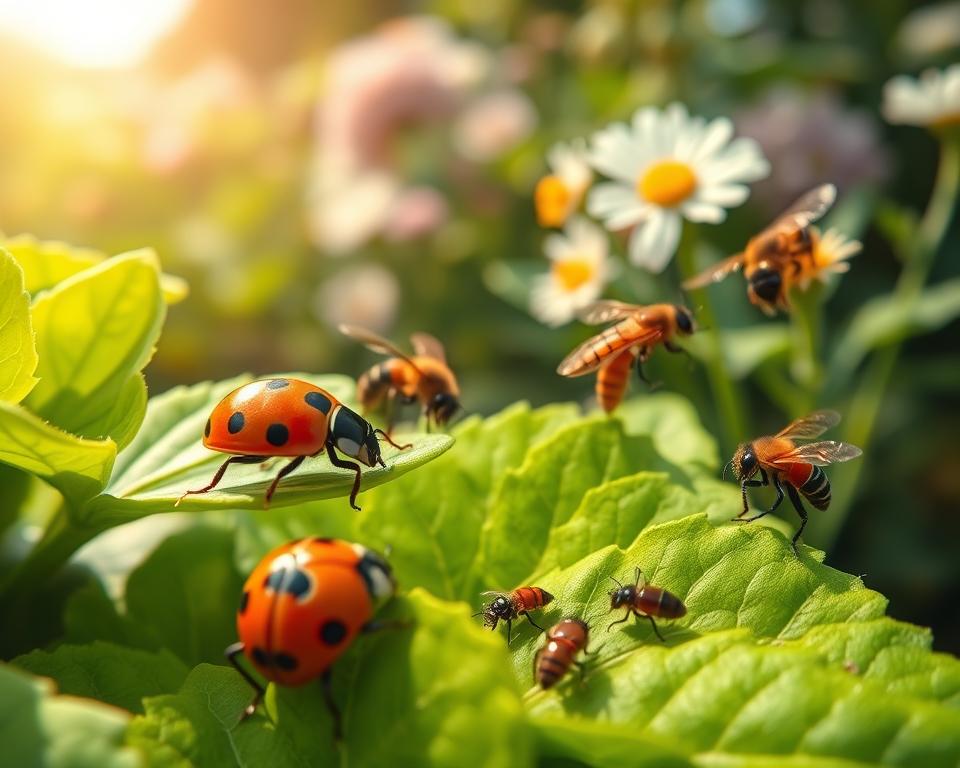

Gardeners are looking for green ways to fight pests. They’re turning to beneficial insects for pest management. This can cut down on the use of harmful chemicals.
Using nature’s pest fighters helps gardens stay healthy. It’s good for plants and beneficial insects alike. This approach is both effective and kind to the environment.
Beneficial insects are key to a balanced garden. Knowing their value helps gardeners adopt greener practices. It’s a step towards a more sustainable garden.
The Power of Natural Pest Control in Your Garden
Eco-friendly pest management keeps your garden balanced. It uses natural methods to control pests. This way, you avoid harmful chemicals and help plants grow well.
Natural predators are key in this balance. They keep pest numbers in check. This stops any one pest from harming your plants. It’s good for the environment and keeps your garden healthy.
Sustainable pest control means plants and good insects live together. This balance is vital for a healthy garden.
| Benefits | Eco-Friendly Methods | Chemical-Based Methods |
|---|---|---|
| Environmental Impact | Low | High |
| Long-Term Effectiveness | High | Low |
| Garden Ecosystem | Balanced | Disrupted |
Choosing eco-friendly pest management is a smart choice. It’s good for your garden and the planet.
1. Ladybugs (Coccinellidae): The Aphid Destroyers
Ladybugs are part of the Coccinellidae family. They love to eat aphids, making them great for gardens. As beneficial insects for pest management, they help keep aphids away from plants.
To attract ladybugs, plant a variety of flowers like marigolds, dill, and fennel. These plants give them the pollen and nectar they need. Also, keep water sources available and avoid using harmful pesticides.
If ladybugs leave your garden, it might be because of a lack of food or shelter. Make sure there’s always aphids or other prey around. Also, provide sheltered spots for them to hide.
| Reason for Leaving | Solution |
|---|---|
| Lack of Food | Plant aphid-infested plants or provide alternative prey |
| Insufficient Shelter | Create sheltered areas with dense foliage or rocks |
| Pesticide Use | Avoid broad-spectrum pesticides; opt for targeted biological pest control solutions |
By understanding what ladybugs need, gardeners can keep aphids under control. This helps maintain a balanced and healthy garden ecosystem.
2. Praying Mantis: The Garden’s Silent Predator
Praying mantis are great at hiding and waiting patiently. They are top natural predators for pest control. They help keep pest numbers down in gardens, which is good for gardeners who want to use organic methods.
These hunters are very good at catching insects. They eat many types of bugs, like aphids and flies. They wait a long time for the right moment to attack.
Protecting Mantids from Accidental Harm
To get the most out of mantis in your garden, you need to keep them safe. Don’t use broad-spectrum pesticides because they can hurt mantis and other helpful bugs. Use natural predators and targeted controls instead.
| Tips for Protecting Praying Mantis | Benefits |
|---|---|
| Avoid broad-spectrum pesticides | Prevents harm to mantis and other beneficial insects |
| Use targeted controls | Reduces risk to mantis while controlling pests |
| Maintain diverse garden ecosystems | Supports a balanced environment for mantis and other natural predators |
By understanding mantis and protecting them, gardeners can use these silent hunters to keep their gardens healthy. This method supports organic pest control and helps gardening be more sustainable.
3. Green Lacewings: Versatile Pest Controllers
Green lacewings are among the most versatile beneficial insects for pest management. They are known for their love of aphids and other soft-bodied pests. Their green color makes them easy to spot in gardens.
These insects are great at controlling many garden pests. Their larvae, called “aphid lions,” eat aphids, mites, and small insects. This makes them a powerful tool against pests.
Combining Lacewings with Other Beneficial Insects
For the best pest control, green lacewings work well with other beneficial insects. This mix makes eco-friendly pest management even more effective.
| Beneficial Insect | Primary Prey | Benefits |
|---|---|---|
| Green Lacewings | Aphids, Mites, Small Insects | Effective against a wide range of soft-bodied pests |
| Ladybugs | Aphids | Target specific aphid species, complementary to lacewings |
| Praying Mantis | Various Insects | Generalist predators that can control a broad spectrum of pests |
By mixing green lacewings with other beneficial insects, gardeners can build a strong ecosystem. This ecosystem is better at managing pests naturally.
4. Parasitic Wasps: Microscopic Garden Guardians
Parasitic wasps are tiny but very powerful. They help control pests by living inside them. This makes them a great tool for biological pest control solutions. Gardeners can use their knowledge of these wasps to keep their gardens healthy.
But, using parasitic wasps in your garden needs careful planning. Releasing them at the wrong time or place can be a mistake. It’s important to release them when pests are around and in the right stage of life.
Also, creating a good environment is key. Parasitic wasps need food like nectar to live. Planting different flowers that offer nectar can help keep them around. By avoiding common mistakes, gardeners can use these sustainable pest control methods to protect their gardens.
5. Hoverflies: Dual-Purpose Pollinators and Predators
Hoverflies, also known as flower flies, are important in gardens. They help pollinate flowers as they move from one to another. Their larvae, or “maggots,” eat aphids and other pests, helping control garden pests.
To help hoverflies, plant flowers like fennel, dill, and yarrow. These flowers attract hoverflies and other beneficial insects. This makes your garden a healthy and diverse place.
Year-Round Support for Hoverfly Populations
To support hoverflies all year, keep your garden full of nectar-rich flowers. Also, make sure there are aphids or other pests for their larvae to eat. This way, hoverflies will stay and help control pests all season.
| Plant | Benefits for Hoverflies | Seasonal Availability |
|---|---|---|
| Fennel | Nectar source, shelter | Summer |
| Dill | Nectar source, aphid host | Summer |
| Yarrow | Nectar source | Spring to Fall |
By adding these plants to your garden, you help hoverflies. This reduces the need for harmful pesticides.
6. Ground Beetles: Nocturnal Pest Hunters
Ground beetles are important at night. They help control pests. These beneficial insects for pest management are often ignored but are very good at keeping pests away.
They eat pests like slugs, snails, and insect larvae. This helps protect crops without using harmful pesticides. Their nighttime work is a big help when other insects are sleeping.
For big gardens, beetle banks are a great idea. Beetle banks are raised areas with grasses and flowers. They give ground beetles a place to live and hide.
To make a beetle bank, pick native grasses and flowers that attract ground beetles. Make sure it fits well in your garden and is easy to reach for upkeep.
Adding beetle banks to your garden helps ground beetles control pests. It makes your garden more sustainable and healthy.
7. Predatory Mites: Microscopic Allies Against Spider Mites
Predatory mites are tiny heroes in the fight against spider mites. These small arachnids are natural enemies of spider mites. They are found in gardens and farms. By using predatory mites, farmers can fight pests without harsh chemicals.
Predatory mites are great because they only go after spider mites. This means they don’t hurt other helpful bugs. Phytoseiulus persimilis is a top predator against spider mites.
Monitoring and Maintaining Predatory Mite Populations
It’s important to keep an eye on predatory mites and spider mites. This helps ensure the mites are controlling the spider mites well. A good balance helps keep pests away for good.
To keep predatory mites healthy, growers need to create the right environment. This includes the right humidity and temperature. Also, avoiding broad-spectrum pesticides is key. This way, growers can use more natural methods to control pests.
8. Beneficial Nematodes: Underground Pest Eliminators
Beneficial nematodes are tiny worms that fight underground pests. They are a green way to control pests. These worms attack many pests that live in the soil.
They target pests like beetle larvae, fly larvae, and moth larvae. These nematodes infect pests with deadly bacteria. This kills the pests.
To use beneficial nematodes well, you need to know how to apply and care for them. You can apply them through irrigation systems or mix with water and spray on the soil.
Storage and Handling to Maintain Viability
Keeping beneficial nematodes in good condition is key. Store them in a cool, dark spot. Use them before they expire. Here’s what you need to know:
| Storage Condition | Handling Tip | Benefit |
|---|---|---|
| Cool, dark place | Store in refrigerator | Maintains viability |
| Avoid direct sunlight | Use shaded containers | Prevents degradation |
| Use before expiration | Check packaging for date | Ensures effectiveness |
By following these tips, gardeners can use beneficial nematodes for organic pest control. This reduces the need for harmful chemicals. It helps create a healthier garden environment.
9. Insects That Can Replace Harmful Pesticides in Commercial Settings
Many commercial growers are now using beneficial insects for pest control. This change is to lessen environmental harm while keeping crop yields high.
Beneficial insects target pests, cutting down on the need for harmful pesticides. Some top insects for this job include:
- Ladybugs for aphid control
- Parasitic wasps for caterpillar and fly control
- Predatory mites for spider mite management
Case Studies: Successful Commercial Transitions
A big tomato farm in California cut its pesticide use by 50%. They used parasitic wasps to fight caterpillars.
In Florida, a flower farm cut down on pesticide use. They used predatory mites to control spider mites.
These examples show how beneficial insects can replace harmful pesticides. They help make farming more sustainable.
10. Building a Sustainable Ecosystem for Long-Term Pest Control
Creating a sustainable ecosystem is key to long-term pest control in your garden. By using eco-friendly pest management, you can use beneficial insects to keep your garden balanced.
Using sustainable pest control means encouraging beneficial insects like ladybugs and wasps. These insects help control pests. By planting a variety of plants that attract them, you create a welcoming space for them.
A holistic gardening approach that includes beneficial insects leads to lasting pest control. This method reduces the need for harmful pesticides. It also promotes a healthy ecosystem.
By following these strategies, you can have a thriving garden with less harm to the environment. Adopting eco-friendly pest management is a step towards a greener future for gardening.
FAQ
What are beneficial insects, and how do they help with pest control?
Beneficial insects help control pests without using harmful chemicals. They eat or parasitize pests, keeping gardens and farms balanced.
How do I attract ladybugs to my garden?
To attract ladybugs, grow a variety of flowers like marigolds and dill. These flowers offer nectar and pollen. Also, avoid harmful pesticides and include native plants for shelter.
Can praying mantis be used for pest control in greenhouses?
Yes, praying mantis can control pests in greenhouses. They eat many pests but might also eat good bugs. Watch their impact and adjust if needed.
How do green lacewings control pest populations?
Green lacewings, and their young, eat aphids and other soft bugs. They can be added to gardens or greenhouses to fight pests.
What are the benefits of using parasitic wasps for pest control?
Parasitic wasps target specific pests, protecting other insects. They help control aphids, caterpillars, and flies.
How can I support hoverfly populations in my garden?
Support hoverflies by planting nectar-rich flowers like fennel and sunflowers. Avoid pesticides that harm them and keep your garden diverse.
What are beetle banks, and how do they help with pest control?
Beetle banks are habitats for ground beetles and other beneficial insects. They offer shelter, food, and breeding sites, helping control pests.
How do predatory mites control spider mite populations?
Predatory mites eat spider mites, keeping their numbers down. They can be added to gardens or greenhouses, and a good environment helps them work better.
Can beneficial nematodes be used to control pests in soil?
Yes, beneficial nematodes attack pests like grubs in the soil. They can be applied to control pests in an eco-friendly way.
How can I integrate beneficial insects into my commercial pest management practices?
Start by choosing the right beneficial insects for your pests. Watch the pest numbers and adjust your plan as needed. Use beneficial insects with other green methods.
What are some common mistakes to avoid when introducing beneficial insects?
Avoid using the wrong beneficial insect for your pest. Don’t ignore pest numbers and steer clear of broad-spectrum pesticides. Learn about the beneficial insects you use.
How can I create a sustainable ecosystem for long-term pest control?
For a sustainable ecosystem, grow many different plants and avoid harmful pesticides. Support various beneficial insects. Watch pest numbers and adjust your plan to keep things balanced.
Discussion about this post