

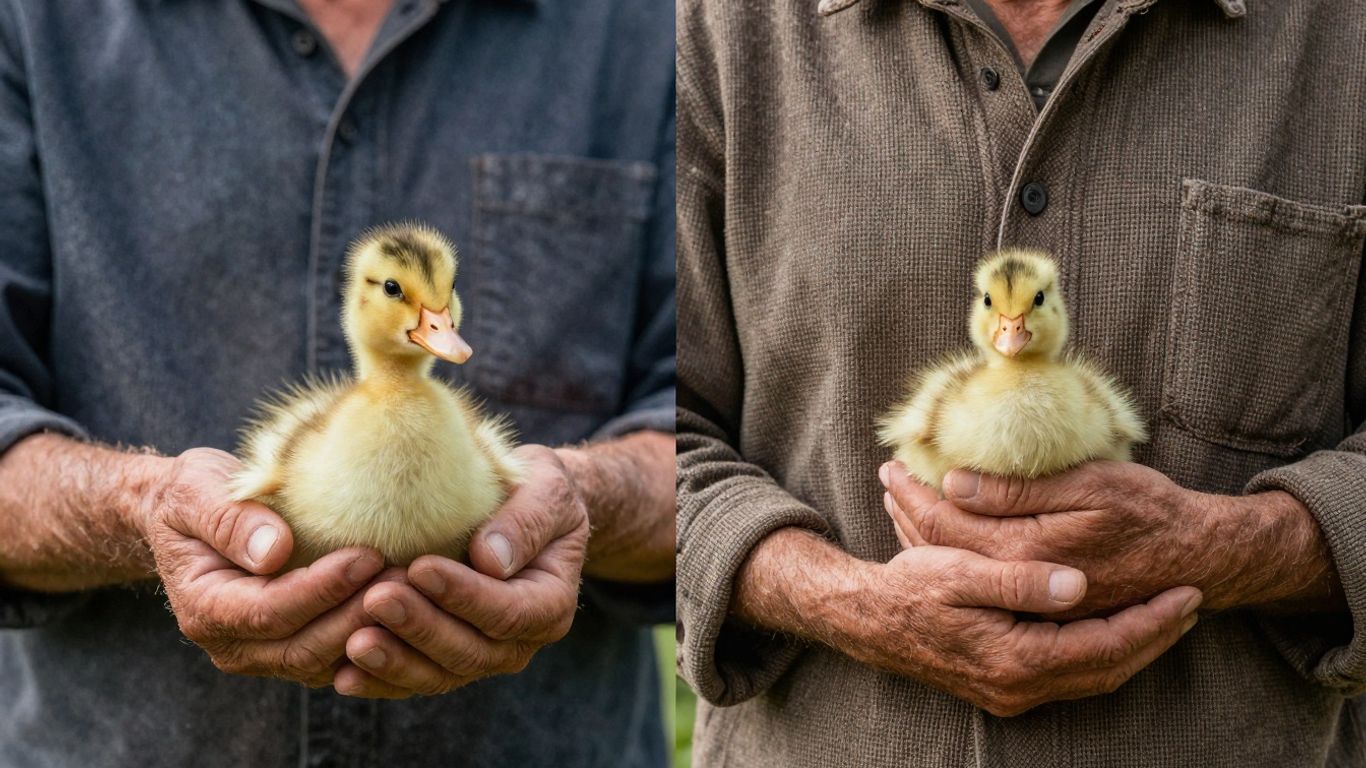

Thinking about getting some birds for your backyard? Maybe some feathered friends to provide fresh eggs or help with garden pests? You might be weighing the pros and cons of duck farming versus chicken farming. Both can be rewarding, but they definitely have their differences.
Let’s break down what you need to know to figure out which one is the better fit for you.
Key Takeaways
- Ducks need more water than chickens, not just for drinking but also for bathing, which makes keeping their water clean a bit more work.
- Generally, ducks are hardier and more resistant to diseases compared to chickens, which tend to be more susceptible to illnesses.
- Baby chicks are often easier to find and usually less expensive than ducklings, which are typically sold as unsexed ‘straight runs’.
- Chickens adapt better to confinement, making them a good choice for smaller backyards, while ducks thrive with more space and free-ranging opportunities.
- Both ducks and chickens lay eggs, but ducks often lay year-round and their eggs are larger and sometimes tolerated by people allergic to chicken eggs.
Water Requirements For Ducks Versus Chickens
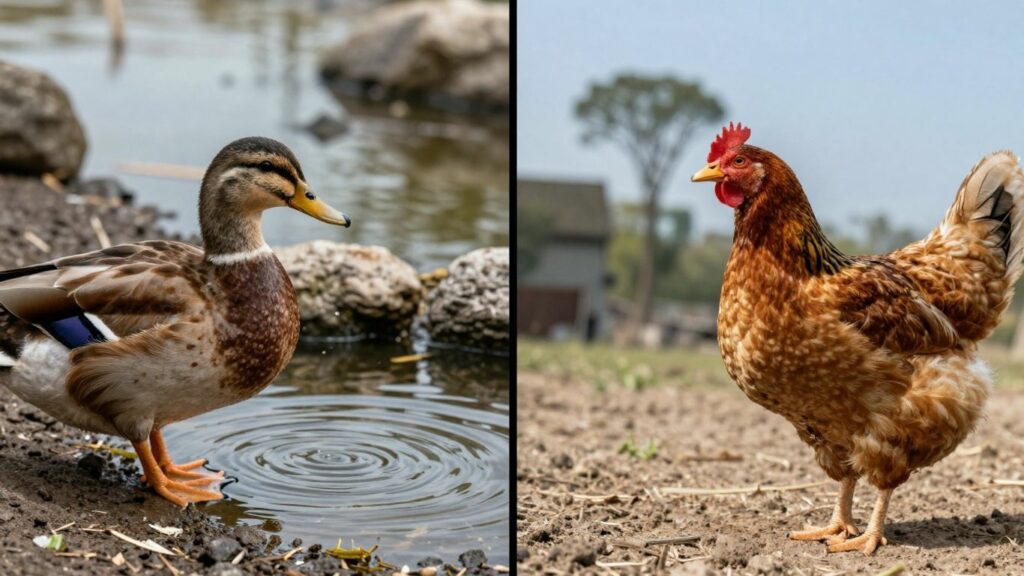
When you’re weighing up the pros and cons in a poultry farming comparison, water is a big one. It’s one of the most significant differences between raising ducks versus chickens, and it really impacts the setup you’ll need. If you’re trying to figure out the best backyard poultry choice for your situation, this is definitely something to think about.
Essential Drinking Water Needs
Both chickens and ducks absolutely need clean water to drink, no question. For chickens, this is pretty straightforward – a standard waterer that keeps the water clean is usually enough. They just need to be able to get their beaks in and drink. Ducks, however, have a slightly more involved requirement. They need to be able to dunk their entire heads into the water.
This isn’t just for drinking; it’s how they keep their nasal passages clear and their eyes clean. So, while chickens are fine with a simple drinker, ducks need something a bit more substantial, like a large bowl or tub, where they can fully submerge their heads.
Bathing And Recreational Water
This is where ducks really stand out. Unlike chickens, who are perfectly happy with just drinking water, ducks need water for more than just hydration. They love to splash around, preen their feathers, and generally just have a good time in the water.
This bathing isn’t just for fun; it’s vital for their feather health and overall well-being. Providing a pool, a large tub, or even access to a pond is a big part of raising ducks. Chickens, on the other hand, don’t need this. They prefer drier conditions and can actually get sick if they’re constantly wet.
Maintaining Water Cleanliness
Because ducks get in their water to bathe and play, keeping it clean is a whole different ballgame compared to chickens. Ducks tend to make their water muddy and messy pretty quickly. If you’re providing a bathing source, be prepared for daily cleaning or even multiple times a day if you want to keep it from becoming a stagnant mess.
Chicken waterers, while they still need regular cleaning, don’t usually get as fouled up because the birds aren’t swimming in them. This difference is a major factor when considering the advantages of duck farming versus chicken farming, especially if you’re not keen on constant water maintenance.
Health And Disease Resistance
When it comes to keeping your flock healthy, there are some pretty big differences between ducks and chickens. It’s not just about giving them food and water; their natural hardiness plays a huge role.
Chicken Susceptibility To Illness
Chickens, bless their little hearts, can be a bit fragile. They’re more prone to picking up illnesses and generally have weaker immune systems compared to ducks. This means you really have to baby them, especially when they’re young.
Chicks need a carefully managed environment to help their immune systems develop properly. If things get too damp or dirty, they can catch all sorts of things. It’s like they need a perfectly clean, dry bubble to thrive. You’ll find yourself watching them closely for any signs of trouble, like ruffled feathers or lethargy.
Duck Hardiness And Immunity
Now, ducks are a different story. They’re naturally tougher. Their immune systems seem to be a bit more robust, and they handle various environmental conditions better. This might have something to do with their love for water; they seem to build up resistance to things found in wet environments. Even ducklings are generally hardier than chicks.
While they still need care, they don’t seem to get sick as easily. This means less worry about them catching every little bug going around.
Brooding And Early Life Care
This is where the differences really show. Chicks need a very controlled brooding environment. Think a warm, dry brooder box with specific temperature settings that you have to monitor constantly. If it gets too cold or too hot, or if the bedding gets wet, they’re in trouble. Ducks, on the other hand, are a bit more forgiving.
While ducklings also need warmth and a dry place to start, they can often tolerate slightly cooler temperatures and don’t get as stressed by a bit of dampness, as long as they have a way to dry off. However, their need for water, even for cleaning their nostrils, means their brooding area can get messy faster, so you still need to stay on top of cleaning.
Acquisition And Availability
So, you’ve decided to get some birds, but where do you even start? When it comes to getting your flock, chickens and ducks have some pretty different starting points.
Sourcing Baby Chicks
Finding baby chicks is usually pretty straightforward these days. With backyard chickens becoming super popular, most feed stores and agricultural suppliers will have them. You can often buy them right off the shelf, especially during spring. A big plus is that many places sell sexed chicks, meaning you can choose if you want all pullets (females) or a mix. This is handy if you’re just after eggs and don’t want extra roosters.
- Availability: High, especially seasonally.
- Sexing: Often available as sexed chicks.
- Cost: Generally lower than ducklings.
Finding Ducklings For Your Flock
Ducklings can be a bit trickier to track down. While some larger farm stores might carry them, they’re not as common as chicks. You might have better luck with specialized waterfowl breeders or online hatcheries. A common thing with ducklings is that they’re often sold as ‘straight run,’ which means you get a mix of males and females, and you don’t get to choose. This can be a bit of a gamble if you have specific needs for your flock’s gender balance.
- Availability: Moderate, can require more searching.
- Sexing: Usually sold as straight-run (unsexed).
- Cost: Typically higher than chicks.
Cost Comparison Of Chicks And Ducklings
Generally speaking, baby chicks tend to be less expensive than ducklings. This price difference can add up, especially if you’re planning on getting a larger flock. While the initial cost is a factor, it’s worth thinking about the long-term benefits and needs of each bird when making your decision.
Sometimes, paying a little more upfront for ducklings might be offset by other advantages down the line, depending on your goals.
Housing And Living Arrangements
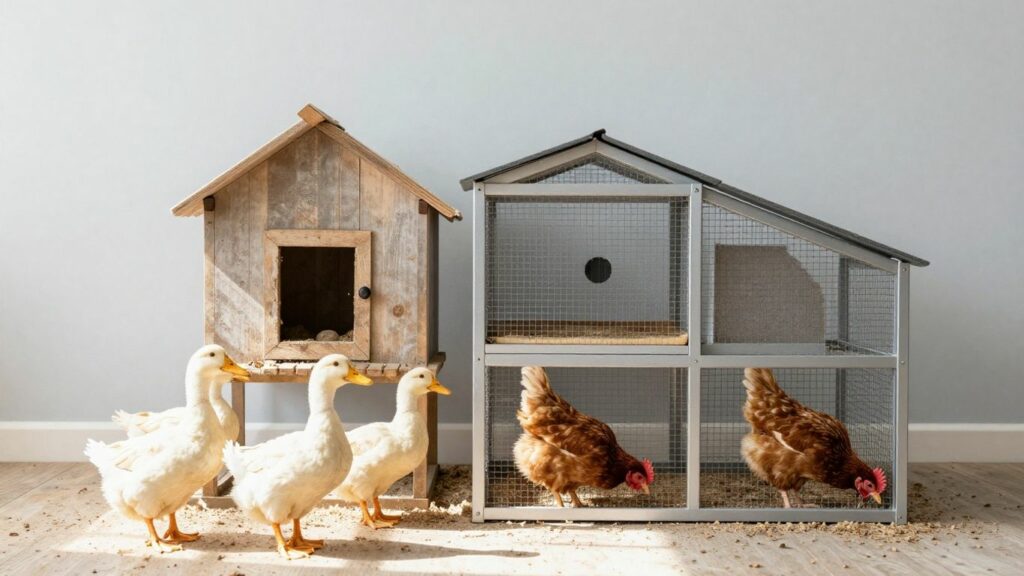
When you’re figuring out where your feathered friends will live, chickens and ducks have some pretty different needs. It’s not just a matter of tossing them into a shed together; you’ve got to think about their natural behaviors and what makes them comfortable.
Confinement Suitability For Chickens
Chickens are generally pretty adaptable when it comes to their living space. They’re happy to roost up high on bars, and they like having little cozy spots to lay their eggs. This means you can often get away with a more compact coop, especially if you utilize vertical space.
Many chicken keepers use what’s called a “chicken tractor,” which is a portable pen that you move around to give them fresh ground. This works because chickens don’t tend to wander too far from their food and water, and they’re content to sleep and lay eggs within this confined area. It’s a good way to manage their space and keep them safe from predators.
Challenges Of Confining Ducks
Ducks, on the other hand, are a whole different story. They don’t really have the same instinct to roost up off the ground, and they don’t need fancy nesting boxes. They’re perfectly happy making a nest right on the floor. The biggest issue, though, is water. Ducks love water, and they make a huge mess with it. If you try to keep their water source inside their house, you’ll end up with a perpetually soggy, muddy mess.
So, their water needs to be outside, which adds another layer to their housing setup. Also, they tend to use more floor space than chickens, and their droppings are wetter, meaning you’ll need more absorbent bedding and more frequent clean-outs.
Benefits Of Free-Range Duck Living
Because of their messiness with water and their need for space, ducks often do really well when they’re allowed to free-range. They can forage for a lot of their own food, and if they have access to a pond or a large pool, they can really let loose and enjoy themselves.
This also means less cleaning for you inside their actual shelter. When they’re free-ranging, they can spread out, explore, and engage in natural behaviors that are harder to accommodate in a confined space. It’s a more natural lifestyle for them, and honestly, watching them splash around is pretty entertaining.
Pasture Management Differences
Managing the land where your birds forage is also a bit different. Chickens, especially when kept in tractors, can be moved around to prevent overgrazing and to help with pest control in specific areas. They’ll peck at bugs and weeds.
Ducks, however, can be a bit more destructive to pasture if not managed carefully. They tend to trample vegetation more, especially around water sources. If you have a pond or a large water feature, you’ll want to think about how to manage the surrounding area to prevent it from becoming a muddy wasteland. Rotational grazing is key for both, but with ducks, you might need to give the pasture more time to recover, particularly in areas where they congregate.
Egg Production And Characteristics
When you think about fresh eggs, chickens probably pop into your head first. And that makes sense, right? Chickens are the big players globally when it comes to egg production, making up a huge chunk of the market. But ducks can hold their own, and sometimes even surprise you.
Egg Laying Ages And Lifespans
Generally, chickens start laying eggs when they’re about 4 to 5 months old. Ducks, on the other hand, usually take a bit longer, closer to 6 or 7 months. However, ducks tend to have a longer productive life overall compared to chickens. So, while you might get eggs from your chickens a little sooner, your ducks might keep laying for more years.
Year-Round Laying Capabilities
This is where ducks really shine, especially certain breeds. While not all ducks lay year-round, many breeds are less bothered by things like shorter daylight hours or cooler weather. They can often keep laying consistently, even through seasons when chickens might slow down or stop altogether.
This makes ducks a great option if you’re looking for a steady supply of eggs all year, particularly in climates with colder, wetter winters where chickens might struggle.
Duck Egg Nutritional Value
Duck eggs are noticeably larger than chicken eggs, and this size difference comes with some nutritional variations. They tend to be richer and creamier, which many people enjoy. Nutritionally, they pack more protein, fat, and cholesterol. They also have higher levels of omega-3 fatty acids. Here’s a quick look:
| Egg Type | Calories (approx.) | Protein (approx.) | Cholesterol (approx.) |
|---|---|---|---|
| Chicken | 65 | 6g | 190mg |
| Duck | 130 | 9g | 620mg |
Allergies And Egg Consumption
For folks who find they have a sensitivity or allergy to chicken eggs, duck eggs can sometimes be a welcome alternative. Many people who react to chicken eggs can eat duck eggs without any issues. It’s one of those interesting quirks of nature that makes exploring different poultry options worthwhile.
So, if you’re weighing the chicken farming pros and cons, the egg allergy factor might tip the scales for some.
Pest Control Capabilities
When you think about farm animals, you might not immediately picture them as your go-to pest control squad. But surprisingly, both ducks and chickens can lend a hand in keeping your property free of creepy crawlies. However, one definitely has an edge over the other.
Chicken Effectiveness Against Pests
Chickens are pretty good at scratching around and gobbling up bugs they find in the yard or garden. They’ll happily munch on grasshoppers, beetles, and other common insects. If you’ve got a problem with ants or grubs, chickens can definitely help reduce their numbers. They’re also known to eat small slugs and snails, though it’s not their favorite meal, and they might not tackle the really big ones.
One thing to watch out for with chickens, though, is their enthusiasm for scratching. They can be a bit destructive in gardens, digging up plants and scattering dirt everywhere. So, while they help with pests, you might need to keep them out of your prize-winning flower beds.
Duck Superiority In Pest Management
Now, ducks? They’re on a whole other level when it comes to pest control. Seriously, they are nature’s little exterminators. Ducks are particularly fond of slugs and snails, and they don’t just eat the small ones. They’ll happily take down slugs that are several inches long, swallowing them whole. If you live in an area where slugs are a major garden nuisance, ducks are an absolute game-changer.
Beyond slugs and snails, ducks will also eat a wide variety of other insects, larvae, and even small rodents if they can catch them. Their foraging style is less about destructive scratching and more about systematic searching, making them gentler on your landscape.
Specific Pests Targeted By Ducks
Ducks have a knack for finding and eating pests that chickens often ignore or can’t handle. Here’s a quick rundown of what they’re great at:
- Slugs and Snails: This is their specialty. They’ll clear out even the largest gastropods with gusto.
- Grubs and Larvae: Found in the soil, these are easy pickings for ducks.
- Insects: They’ll eat a wide range of beetles, grasshoppers, earwigs, and other ground-dwelling insects.
- Weeds: While not exactly pests, ducks can help manage certain types of weeds by eating them.
So, if your main goal is to get a handle on garden pests, especially those slimy slugs, ducks are definitely the easier and more effective choice.
Temperament And Manageability
When you’re thinking about getting poultry, one of the big questions is how easy they are to handle. It really makes a difference in your day-to-day life on the homestead.
Herding And Controlling Chickens
Chickens can be a bit of a handful. They’re not exactly known for their obedience. If you let them free-range, getting them back into their coop at night can be a real challenge. You might have to physically herd them, which is often more frustrating than effective. Some folks have success training their chickens to come when called, usually with the help of treats like dried mealworms. It takes patience, though. You have to be consistent and make it worth their while to listen.
- Training is key: Teaching chickens to return to the coop is a must if you free-range.
- Treats work wonders: Use favorite snacks to encourage them to come.
- Consistency pays off: Regular training sessions yield the best results.
Ease Of Herding Ducks
Ducks, on the other hand, are generally much easier to manage. They tend to be calmer and less flighty than chickens. You can often herd them with relative ease, and in some parts of the world, people routinely move flocks of ducks from one good foraging spot to another.
This makes getting them back to their shelter at night much simpler. They don’t have the same frantic energy that chickens sometimes do, making them less likely to scatter when you approach.
Fencing Requirements For Each Species
Your fencing needs will vary depending on whether you choose ducks or chickens, and how you plan to let them roam.
- Chickens: They can fly surprisingly well, especially smaller breeds. So, if you’re keeping them in an enclosed run, you’ll need fencing that’s at least 5-6 feet tall. If they’re free-ranging, you might need to clip their wings to keep them from flying over fences or wandering off. They also tend to scratch up the ground, so you might need to consider how that affects your pasture.
- Ducks: Ducks aren’t big climbers or fliers like chickens. They’re more ground-oriented. This means that a lower fence, maybe 2-3 feet high, is often sufficient to keep them contained in a run. However, they do love to explore and can be escape artists in their own way, especially if there’s water nearby they want to get to. So, while the height might be less of an issue, you still need to make sure there are no gaps they can squeeze through or dig under.
Frequently Asked Questions
Do ducks or chickens need more water?
Ducks need a lot more water than chickens. While both need clean water to drink, ducks also need water deep enough to dunk their heads in to keep their nostrils clear. Plus, they love to splash and bathe, so having a pool or pond is ideal for them. Chickens are fine with just a regular water dish.
Are ducks healthier than chickens?
Generally, ducks are hardier and get sick less often than chickens. They have stronger immune systems and handle wet environments better. Ducklings are also tougher than chicks and can often be outside earlier.
Which is easier to buy, ducklings or chicks?
It’s usually easier to find and buy baby chicks. They’re more popular, often cheaper, and you can sometimes choose if you want a male or female. Ducklings are a bit harder to find and are often sold as a mix of males and females, and they tend to cost more.
Can ducks and chickens live together in the same space?
While both can live in confinement or free-range, chickens do better in smaller, confined spaces. Ducks are messier and need more water access, making them harder to keep penned up. Ducks prefer to roam free and are less destructive to pastures than chickens, which tend to dig up plants.
Do ducks or chickens lay eggs more consistently?
Ducks tend to lay eggs more reliably throughout the year, even in winter, and for more years than chickens. Chickens usually start laying a bit earlier, but their egg-laying can slow down or stop in colder months. Duck eggs are also larger and have more nutrients, but might be tricky for some recipes.
Which animal is better at pest control?
Ducks are much better at getting rid of pests like slugs and snails, which they eat enthusiastically. Chickens can help with bugs, but they tend to be more destructive in gardens and aren’t as keen on eating larger pests.
Discussion about this post