

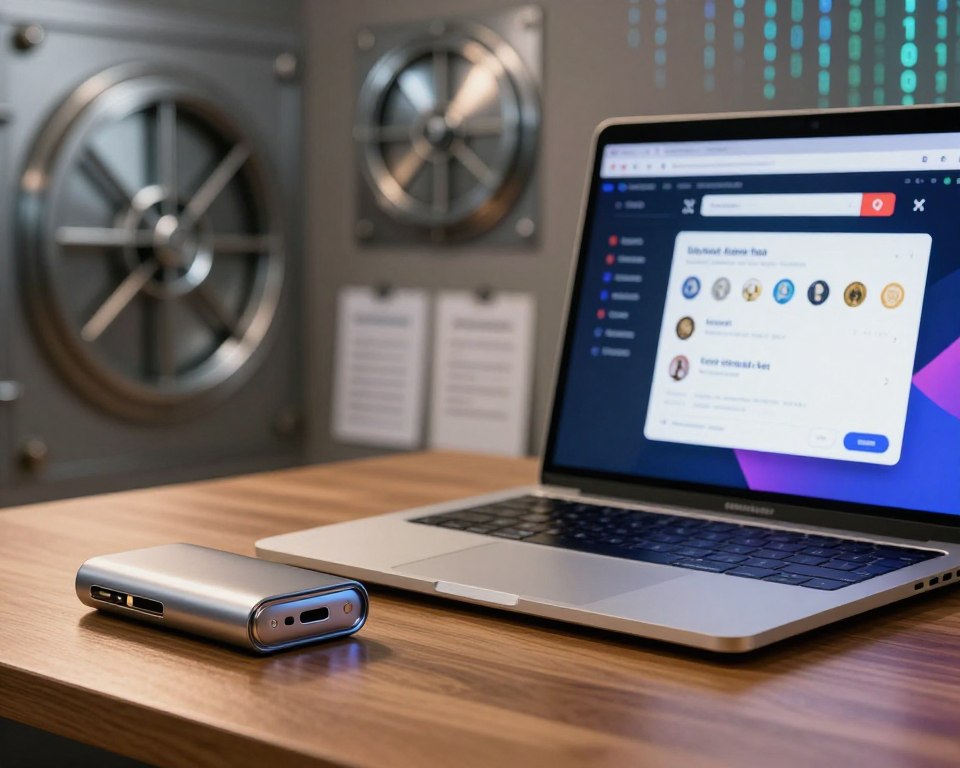

Securing digital assets is key in the world of cryptocurrency. Choosing between hot wallets and cold wallets is vital for protecting your investments.
Hot wallets are connected to the internet, making it easy to trade cryptocurrencies quickly. Cold wallets, on the other hand, are offline. They keep your assets safe from online threats. Knowing the difference between these cryptocurrency storage methods is important for protecting your digital assets.
This article will explore hot wallets and cold wallets. It aims to help you decide the best way to keep your digital assets safe.
Digital Asset Storage Fundamentals
Cryptocurrency is growing fast, and knowing how to store digital assets is key. These assets, like cryptocurrencies, need safe places to avoid theft and loss. The main difference in storage is whether it’s online or offline.
There are two main wallet types: hot wallets and cold wallets. The big difference is their connection to the internet. Hot wallets are online, making them easy for quick transactions. Cold wallets stay offline, keeping assets safe for longer periods.
Hot wallets are great for quick, small transactions. They’re easy to use but riskier due to online access. Cold wallets, being offline, are safer for storing more valuable assets over time.
| Wallet Type | Internet Connectivity | Security Level | Usage |
|---|---|---|---|
| Hot Wallet | Connected | Lower | Frequent Transactions |
| Cold Wallet | Offline | Higher | Long-term Storage |
Knowing these basics is vital for anyone into cryptocurrency. Choosing the right wallet ensures your digital assets are safe and handled well.
Hot Wallets vs Cold Wallets: Core Differences Explained
The debate between hot wallets and cold wallets is about convenience versus security. Hot wallets are great for quick transactions and are always online. But, they are also more at risk for cyber attacks.
Cold wallets focus on keeping your assets safe. They stay offline, which means they’re much safer from hackers.
The main differences between hot and cold wallets are their connection, security, and how you use them. Here’s a quick comparison:
| Feature | Hot Wallets | Cold Wallets |
|---|---|---|
| Connectivity | Internet-connected | Offline |
| Security | More vulnerable to hacking | Highly secure |
| Usage | Frequent transactions | Long-term storage |
Choosing between a hot wallet and a cold wallet depends on your needs and how much risk you’re willing to take. If you trade often, a hot wallet might be better, even with the cyber risks.
But, if you want to keep your digital assets safe for a long time, a cold wallet is the better choice.
In summary, knowing the core differences between hot and cold wallets helps you make a smart choice. Think about how important convenience is to you versus how much you value security. This will help you pick the right wallet for your digital assets.
Hot Wallets: Features and Functionality
Hot wallets are key in the digital asset world. They make managing transactions and assets easy. They are designed to be easy to use, helping users handle their cryptocurrencies well.
There are many types of hot wallets, each for different needs. You can find web-based, mobile, and desktop wallets. Each has its own special features and benefits.
Web-based wallets are easy to use from any web browser. They are great for managing assets from anywhere. Many are offered by cryptocurrency exchanges and work on any device with internet.
Mobile Wallets
Mobile wallets are for smartphones. They have apps that let you manage your digital assets anywhere. They also have features like QR code scanning for fast transactions.
Desktop Wallets
Desktop wallets are software for computers. They are safer than web-based wallets for storing cryptocurrencies. They offer a good mix of security and ease of use.
When picking a hot wallet, think about online wallet security and what cryptocurrency storage methods it supports. Hot wallets are handy but less secure than cold wallets because they’re online.
Even with security issues, hot wallets are vital for active traders and users. They need quick access to their digital assets. Knowing about different hot wallets helps users choose the best for their needs.
Cold Wallets: Enhanced Security Measures
Cold wallets add an extra layer of security for digital assets. They keep private keys offline, reducing hacking risks. This makes them a strong defense against online threats.
There are many types of cold wallets, each with its own security features. You can find hardware wallets, paper wallets, and air-gapped computers.
Hardware Wallets
Hardware wallets are physical devices that store private keys safely. They are hard to hack and often have extra security like PINs and encryption.
- Examples include Ledger and Trezor
- Support for multiple cryptocurrencies
- Portable and durable design
Paper wallets print out private keys and store them safely. They are cheap and easy to make but can get damaged or lost.
- Simple to generate and use
- No reliance on electronic devices
- Risk of being lost or damaged
Air-Gapped Computers
Air-gapped computers are offline, making them very secure for storing private keys. They are best for storing valuable assets for a long time.
- Highly secure due to lack of internet connectivity
- Can be used for generating and storing private keys
- Requires careful management to avoid physical security risks
In conclusion, cold wallets are a solid choice for keeping digital assets safe. Knowing about the different types helps you choose the right one for your needs.
Security Analysis: Comparing Vulnerability Profiles
Securing digital assets means knowing the risks of hot and cold wallets. Each wallet type has its own security strengths and weaknesses. This affects how well they can protect against different threats.
Hot wallets, being online, face more cyber threats like phishing and malware. These dangers can break the wallet’s security. This lets hackers get into your digital assets without permission.
Phishing and Social Engineering
Phishing tricks people into sharing sensitive info like passwords. Hot wallets are easy targets for these scams because they’re online. To stay safe, always check the source of emails or websites asking for your info.
Malware and Remote Exploits
Malware and remote exploits are big risks for hot wallets. They can let hackers into your wallet from afar. Cold wallets are safer because they’re offline. But, they can also be stolen or lost, which is a risk.
Hot and cold wallets each have their own set of risks and benefits. Hot wallets are handy but face more online threats. Cold wallets are safer but can be stolen or lost. Knowing these differences helps you pick the best wallet for your needs.
Using both hot and cold wallets might be the best way to protect your digital assets. Each type has its own security risks. By understanding these, you can make smart choices to keep your digital assets safe.
Backup and Recovery Methods
To keep your digital assets safe, it’s key to know and use good backup and recovery ways. Both hot and cold wallets need these steps to avoid losses from tech issues, mistakes, or bad actions.
Using a seed phrase is a common backup method. It’s a set of words that can get you back into your crypto. Make sure to keep this phrase safe from harm.
Private key backups are also very important. For cold wallets, you might keep encrypted keys on other devices or on paper in safe spots.
| Backup Method | Security Level | Ease of Use |
|---|---|---|
| Seed Phrase | High | Easy |
| Private Key Backup | Very High | Moderate |
| Wallet Encryption | High | Easy |
Using these backup and recovery methods well makes your digital assets safer. It gives you peace of mind and guards your investments.
Cost Considerations and Investment Factors
When it comes to storing digital assets, cost is as key as security. It’s important to look at both the cost and what you get for your money when choosing a wallet.
Hot wallets, found on exchanges or as software, can be free or very cheap. But, they might not be as safe. Cold wallets, like hardware ones, are safer but cost more. Prices for these can go from $50 to $200, based on the brand and what it does.
When thinking about investment factors, weigh the costs against the benefits. For example, if you trade a lot, a hot wallet might be worth it for its ease. But, if you hold onto assets for a long time, a cold wallet’s safety might be worth the upfront cost.
Doing a cost-benefit analysis is key to making a smart choice. This means looking at the wallet’s price, any ongoing fees, the value of what you’re storing, and the risks of losing your assets.
In short, knowing the cost considerations and investment factors for hot and cold wallets is essential. By carefully looking at these, you can choose a wallet that fits your investment plan and how much risk you’re willing to take.
Optimal Use Cases and Scenarios
Knowing when to use hot and cold wallets can really help your crypto storage plan. The right choice depends on what you need and want.
Hot wallets are great for frequent transactions. They’re perfect for traders who need quick access to their crypto. They’re online, making it easy to send and receive. But, they’re also at risk of cyber attacks.
Cold wallets, on the other hand, are offline storage solutions. They’re safe for long-term storage and big holdings. They stay offline, which means they’re less likely to get hacked.
When picking between hot and cold wallets, think about these scenarios:
- If you trade a lot, a hot wallet might be better. It’s easy to use and fast.
- For long-term investors, a cold wallet is safer. It keeps your assets secure.
- If you need both quick trades and safe storage, using both hot and cold wallets could be best.
Choosing between hot and cold wallets depends on your needs, how much risk you’re willing to take, and your investment goals. Knowing the good and bad of each helps you pick the right one for your crypto strategy.
Popular Wallet Solutions in 2026
In 2026, there are many wallet options to choose from. It’s important to know what each wallet offers. The digital world has many hot and cold wallets for different needs.
Coinbase Wallet
The Coinbase Wallet is easy to use and works well with Coinbase. It supports many cryptocurrencies and lets you use dApps.
MetaMask
MetaMask is great for Ethereum users. It makes using dApps easy and supports many tokens. You can use it on your computer or phone.
Trust Wallet
Trust Wallet supports over a million cryptocurrencies. It’s secure, with features like biometric login and private key storage.
Exodus
Exodus is known for its design and ease of use. It supports many cryptocurrencies and lets you swap assets within the wallet.
| Wallet | Type | Key Features |
|---|---|---|
| Ledger Nano Series | Cold | High-security hardware wallet, supports multiple cryptocurrencies |
| Trezor Models | Cold | Secure offline storage, passphrase protection, and transaction verification |
| KeepKey | Cold | User-friendly interface, supports multiple assets, and integrates with other services |
Ledger Nano Series
The Ledger Nano Series is known for its security. It stores your assets offline and uses advanced encryption.
Trezor Models
Trezor wallets are secure and easy to use. They protect your assets with passphrases and verify transactions on the device.
KeepKey
KeepKey is a cold wallet with a simple interface. It supports many assets and works well with other services.
ColdCard
ColdCard focuses on security and simplicity. Its air-gapped design keeps your private keys safe offline.
In 2023, choosing the right wallet depends on your needs. Whether you want ease of use, security, or support for many assets, there’s a wallet for you. Knowing what each wallet offers helps you make the best choice for your digital assets.
Discussion about this post