

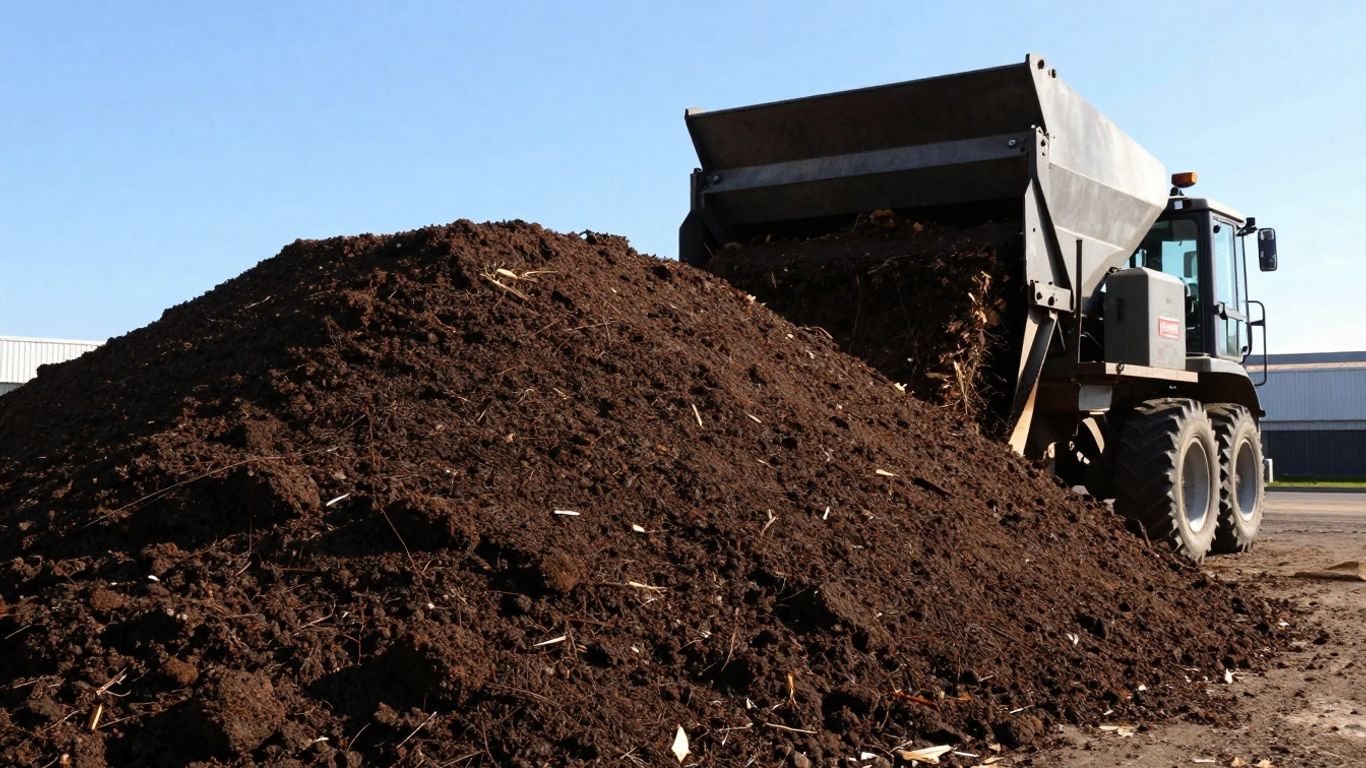

So, you’re thinking about tackling commercial composting? It sounds like a big job, and honestly, it can be. But it’s also a pretty neat way to turn a lot of waste into something really useful. We’re talking about turning stuff that would normally end up in a landfill into rich soil. This guide will walk you through the basics, from what you need to get started to how to keep the whole thing running smoothly.
Let’s figure out how to make this waste-to-gold thing work for you.
Key Takeaways
- Commercial composting is a big deal for managing waste and helps the environment by reducing landfill use and greenhouse gas emissions.
- Getting the right mix of ‘green’ (nitrogen-rich) and ‘brown’ (carbon-rich) materials is super important for making good compost.
- There are three main ways to compost on a large scale: in-vessel, windrow, and static pile, each with its own strengths and weaknesses.
- You’ll need specific gear, such as shredders and turners, to efficiently handle large amounts of organic material.
- Keeping an eye on your compost pile – checking moisture, temperature, and air – is key to avoiding problems and getting quality results.
Understanding Commercial Composting
So, you’re thinking about composting on a bigger scale? That’s awesome. Commercial composting is basically taking all that organic stuff businesses throw away – think food scraps from restaurants, yard trimmings from landscaping companies, or even farm waste – and turning it into something super useful: compost. It’s a big part of large-scale organic waste recycling and a smart move for anyone dealing with significant amounts of organic material.
The Role of Commercial Composting in Waste Management
When we talk about commercial composting, we’re really talking about a major shift in how we handle waste. Instead of sending tons of organic material to landfills, where it just sits and produces methane (a nasty greenhouse gas), we’re giving it a new life. This is especially important for business food waste management, which can account for a significant portion of what companies discard. It’s a key piece of the puzzle for farm waste management, too, turning what might be a disposal problem into a resource. It’s all about closing the loop and making things more sustainable.
Environmental and Economic Advantages of Commercial Composting
Let’s be real, doing good for the planet is great, but businesses also need to see the upside. Commercial composting offers both. Environmentally, it means less trash in landfills, lower greenhouse gas emissions, and healthier soil when the compost is used. Economically, it can actually save money. You cut down on landfill fees, and the finished compost? That’s a product you can sell. It’s a fantastic way to implement commercial organic recycling programs that pay for themselves. Plus, customers are increasingly looking for eco-friendly businesses, so it can be a real selling point.
Key Stages in the Commercial Composting Process
Getting compost made on a large scale isn’t just throwing stuff in a pile and hoping for the best. There are distinct steps involved:
- Collection and Preparation: This is where you gather all your organic materials. You might need to shred or chip larger items to speed up their breakdown. Removing any non-compostable stuff, like plastic packaging, is also super important here.
- Active Composting: This is the hot phase where the magic happens. Microbes get to work, breaking down the material. Keeping the right balance of moisture and air is key during this stage. This is where industrial composting solutions really shine, offering greater control.
- Curing: After the initial hot phase, the compost needs to cool down and mature. This allows the beneficial microbes to really finish their job and stabilizes the material.
- Screening and Finishing: Finally, the compost is screened to get a consistent texture and remove any remaining large bits. Then it’s ready to be bagged or sold in bulk. This is the process for effectively scaling up composting operations.
Essential Ingredients for Commercial Compost Production
So, you want to make compost on a big scale, huh? It’s not just about piling up whatever organic stuff you can find. To really get that good, rich compost, you need to think about what goes into it. It’s all about getting the right mix of materials, kind of like baking a cake. You can’t just throw in flour and expect a masterpiece.
Understanding Feedstocks: Nitrogen, Phosphorus, and Potassium
Think of nitrogen, phosphorus, and potassium (NPK) as the main building blocks for the tiny organisms that do all the hard work of breaking down your waste. These nutrients are super important for keeping those microbes happy and active. The organic materials you collect – things like food scraps, yard trimmings, or even manure – are called feedstocks. These feedstocks are where you get your carbon and nitrogen from, which are the key players in this whole decomposition game. Getting these elements in the right amounts is the first step towards successful organic fertilizer production.
Balancing Carbon-Rich and Nitrogen-Rich Materials
This is where the “recipe” part really comes in. You need a good balance between “greens” (nitrogen-rich) and “browns” (carbon-rich). Greens include fresh grass clippings, food scraps, and coffee grounds. They provide the nitrogen that microbes need to multiply and get going. Browns are things like dried leaves, straw, wood chips, and shredded cardboard. They provide the carbon, which serves as the microbes’ energy source and also helps create air pockets so the pile doesn’t get too soggy.
Here’s a general idea of what you’re looking for:
- Greens (Nitrogen-rich): Food scraps, grass clippings, plant trimmings, manure.
- Browns (Carbon-rich): Dried leaves, straw, wood chips, shredded paper or cardboard, sawdust.
A common starting point for a good mix is around 25-30 parts carbon to 1 part nitrogen by weight. It sounds complicated, but in practice, it often means mixing a good amount of yard waste and woody material with your food scraps and grass clippings. Too much green and your pile can get smelly and dense. Too much brown, and the decomposition process slows way down.
The Importance of Feedstock Preparation
Before you even start piling things up, you need to prepare your feedstocks. This means getting rid of any junk that shouldn’t be there, like plastic bags or metal. For larger items, such as branches or thick stalks, you’ll probably want to chop or shred them. Smaller pieces break down much faster because there’s more surface area for those microbes to work on. Think about it: a whole apple will take ages to decompose compared to apple peels and cores. So, a little bit of prep work upfront can save you a lot of time and hassle later, leading to a more efficient composting process and better-quality compost.
Choosing the Right Commercial Composting Methods
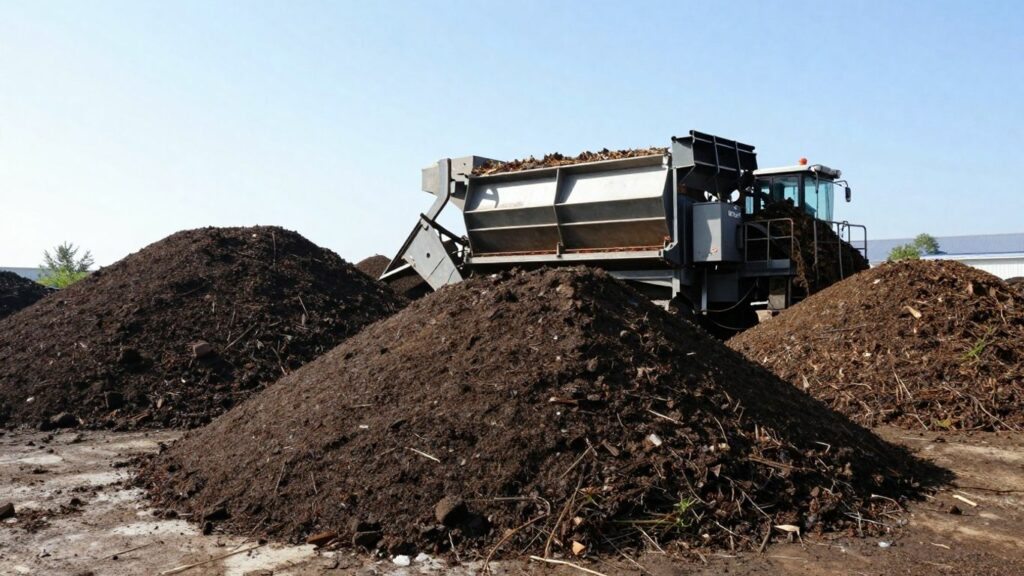
So, you’re looking to get into commercial composting, huh? That’s awesome. But before you start piling up food scraps and yard waste, you gotta figure out how you’re going to do it. There isn’t just one way to make compost on a large scale, and choosing the right method can make a huge difference in how much compost you produce, how quickly you make it, and even how much it costs you. Let’s break down a few of the main players.
In-Vessel Composting: Controlled Decomposition
Think of in-vessel composting like a high-tech greenhouse for your compost. Everything happens inside a closed container, which could be anything from a big drum to a large industrial bin. The cool thing about this setup is that you have a lot of control. You can really dial in the temperature, how wet or dry it is, and how much air gets in.
This means your organic waste breaks down pretty quickly. It’s a good option if you’re in a city or somewhere space is tight because it does a good job of keeping smells and pests under wraps. The downside? It usually costs more to set up and run than other methods, but you do get a faster turnaround.
Windrow Composting: Scalability and Aeration
This is probably the method you picture when you think of large-scale composting. You’re basically making long, narrow piles, or ‘windrows,’ of organic material. It’s super flexible and can handle all sorts of waste, which is why it’s popular for farms and towns. The key to making windrows work is turning them regularly.
This gets air into the pile, which the little microbes need to do their job. Turning also helps spread out the heat and moisture evenly. You’ll need a decent amount of space for these piles, and you’ll definitely want a specialized machine, like a windrow turner, to do the heavy lifting.
Static Pile Composting: Efficiency and Space Considerations
Static pile composting is another solid choice, especially if you’re looking for efficiency without needing a ton of fancy equipment. With this method, you build your piles, often with a system to blow air through them (either from the bottom or the sides), and then let them sit.
They don’t get turned like windrows. This can be a really space-efficient way to compost, and it can produce a good amount of compost in a relatively short time, often just a few months. It’s a good middle-ground option that balances cost, space, and processing time.
Here’s a quick look at how they stack up:
| Method | Control Level | Space Needed | Initial Cost | Speed of Decomposition |
|---|---|---|---|---|
| In-Vessel Composting | High | Low | High | Fast |
| Windrow Composting | Medium | High | Medium | Medium |
| Static Pile Composting | Medium | Medium | Medium | Medium to Fast |
Choosing the right method really depends on your specific situation – how much waste you have, how much space you’ve got, and what your budget looks like. It’s worth carefully considering each option.
Equipment for Commercial Composting Operations
Alright, so you’ve got your organic materials sorted, and you’re ready to turn them into that black gold. But doing it on a big scale means you’ll need some serious gear. Think of it like cooking a giant feast – you can’t just use your kitchen knives and a regular pot. You need the right tools to get the job done efficiently and effectively.
Size Reduction: Shredders and Grinders
Before anything can really start breaking down, you need to make those big chunks of waste smaller. This is where shredders and grinders come in. They’re not just about making things look neater; they actually help the composting process along. Smaller pieces mean more surface area for those helpful microbes to munch on. You’ve got a couple of main types:
- Low-Speed Shredders: These are great for tougher stuff, like wood chips or yard waste. They work slowly but powerfully, tearing through materials.
- High-Speed Grinders: These are more like pulverizers, good for things like food scraps or softer materials. They spin fast and break things down into smaller bits quickly.
Getting the particle size right is pretty important. Too big, and decomposition takes forever. Too small, and you might end up with a pile that’s too dense and doesn’t get enough air.
Aeration and Mixing: Windrow Turners
Once your compost pile is cooking, make sure it’s getting enough air. This is where windrow turners become your best friend, especially if you’re using the windrow method. These machines are basically big, powerful machines that drive over or alongside your compost piles and flip them over. Why bother? Well, several reasons:
- Oxygen Supply: Microbes need oxygen to perform aerobic metabolism. Turning the pile brings fresh air into the centre.
- Temperature Control: It helps spread out the heat, preventing hot spots and ensuring the whole pile composts evenly.
- Moisture Distribution: Turning can also help even out moisture levels, which is key for microbial activity.
There are different kinds of turners, some that straddle the windrow and others that work from the side. The goal is always the same: mix it up and keep it breathing.
Essential Machinery for Large-Scale Operations
Beyond shredders and turners, a commercial composting setup often needs a few other key pieces of equipment to really hum along:
- Screens: After composting is mostly complete, screen the material. This separates the finished compost from any larger, unfinished bits or contaminants. Trommel screens (big rotating drums) and star screens (which use rotating discs) are common. They help you get a uniform, high-quality product.
- Loaders and Excavators: You’ll need these to move large volumes of raw materials, build your compost piles, and load the finished product.
- Water Trucks: Keeping the compost at the right moisture level is critical. Water trucks are used to add water to piles as needed, especially during dry periods.
- Contaminant Separators: Sometimes, especially with mixed waste streams, you might get plastics or other non-compostable items. Machines like windsifters can help blow lighter contaminants away from the compost.
Choosing the right equipment really depends on the scale of your operation, the types of materials you’re processing, and the specific composting method you’ve chosen. It’s an investment, for sure, but the right gear makes all the difference between a struggling operation and a successful one.
Maintaining and Monitoring Your Compost System
Alright, so you’ve got your commercial composting operation up and running. That’s awesome! But just because you’ve got the big machines and the right mix of materials doesn’t mean you can just walk away.
Think of it like having a pet – it needs regular attention to stay healthy and happy. Your compost pile is no different. Keeping a close eye on things and doing a little routine maintenance is key to turning that waste into actual gold, not just a stinky mess.
Regular Checks for Moisture and Odor
This is probably the most basic, but super important, part of keeping your compost happy. You need to check the moisture level pretty regularly. It shouldn’t be soaking wet, as that can lead to nasty smells and slow decomposition. On the flip side, if it’s too dry, things just won’t break down. You’re aiming for something that feels like a wrung-out sponge – damp, but not dripping. A good rule of thumb is to grab a handful; if a little water squeezes out, you’re probably in a good spot.
And the smell? Well, compost is supposed to smell earthy, like a forest floor after rain. If you’re getting a strong ammonia smell or a rotten egg odor, that’s a red flag. It usually means your pile is too wet or doesn’t have enough air.
The Importance of Aeration and Turning
Speaking of air, that’s where turning comes in. Most commercial composting methods rely on aerobic decomposition, meaning the helpful microbes need oxygen to do their job. Turning the pile, whether with a windrow turner or by hand for smaller setups, mixes everything, introduces fresh air, and helps regulate the temperature. It also breaks up any clumps that may be forming and ensures that all the material has an equal chance to decompose.
How often you turn depends on your method and how quickly you want the compost to mature. For faster composting, more frequent turning is better. It’s a bit of a workout, but it’s what makes the magic happen.
Troubleshooting Common Composting Challenges
Even with the best intentions, you might run into a few snags. Here are some common issues and how to fix them:
- Too Wet and Smelly: This is usually a sign of too much nitrogen-rich material (like food scraps) and not enough carbon-rich “browns” (like wood chips or dry leaves). The fix? Add more browns! You might also need to turn the pile more often to let air in.
- Too Dry and Not Heating Up: If your pile feels dry and isn’t getting warm, it means decomposition is slowing down. Add some water – not too much, just enough to get it damp – and mix in more nitrogen-rich “greens” (like grass clippings or fresh kitchen waste). Turning it will help distribute the moisture and heat.
- Pests: Nobody wants unwanted visitors. To keep pests away, make sure you’re burying food scraps deep within the pile and avoid adding meat, dairy, or oily foods, as these are more attractive to pests and can cause odors.
- Slow Decomposition: If things are just taking forever, it could be a combination of factors. Check your moisture, aeration, and the balance of greens and browns. Sometimes, a pile just needs a bit more time and consistent attention to get going.
Keeping these things in mind will help you manage your compost system effectively, ensuring you consistently produce high-quality compost that’s ready for use.
Putting Your Commercial Compost to Work
So, you’ve gone through the whole process – collecting, mixing, turning, and waiting. Now you’ve got this rich, dark, earthy material that used to be food scraps and yard waste. What do you do with it? Well, this “black gold” is ready for its next act, and there are some pretty great ways to put it to use.
Utilizing Compost for Green Spaces and Agriculture
This is where your hard work really pays off. The compost you’ve made is fantastic for improving soil. Think about your own business’s landscaping or any green areas you manage. Spreading a layer of compost can help plants grow better, retain more water, and reduce the need for chemical fertilizers.
It’s like giving your soil a superfood boost. For farms, especially those looking to adopt more sustainable practices, your compost can be a game-changer. It helps build healthier soil structure, which means better crop yields and more resilient plants. It’s a win-win: you’re using your compost, and you’re helping grow healthier food.
Donating Compost to Community Gardens and Farms
If you’ve produced more compost than you can use yourself, or if you want to support local initiatives, donating is a wonderful option. Community gardens, urban farms, and even local schools with gardening programs often struggle to get enough good quality soil. Your compost can make a real difference to them. It helps them grow more food, beautify their spaces, and teach people about sustainable practices. Plus, it builds goodwill in your community. It’s a tangible way to show your business cares about local sustainability and food security. You might even be able to arrange for regular pickups or deliveries, making it a simple, ongoing partnership.
The Transformation from Waste to Valuable Soil
It’s pretty amazing when you think about it. What was once considered trash, destined for a landfill, has been transformed through a natural process into something incredibly useful. This isn’t just about getting rid of waste; it’s about creating a resource. The journey from a pile of organic matter to nutrient-rich compost highlights the power of decomposition and microbial activity.
This finished product improves soil health, supports plant life, and contributes to a more circular economy. It’s a clear example of how businesses can turn an environmental challenge into an economic and ecological opportunity, closing the loop on waste.
Frequently Asked Questions
What exactly is commercial composting?
Commercial composting is like a super-sized version of home composting. Instead of just your kitchen scraps, it involves collecting large amounts of organic waste from businesses, farms, or even entire towns. This waste, like food scraps and yard trimmings, is then carefully managed in special piles or containers to break down into a rich, healthy soil amendment. Think of it as turning trash into treasure for the earth!
Why should businesses bother with composting?
Composting is a win-win for businesses! It helps the environment by keeping tons of waste out of landfills, which reduces harmful gases. Plus, it can save money on trash disposal fees. And the best part? The finished compost is a valuable product that can be sold, creating a new income stream. It also makes a business look good to customers who care about the planet.
What are the main ways to compost on a large scale?
There are a few main methods. ‘In-vessel composting’ takes place in a closed container, allowing for greater control. ‘Windrow composting’ involves making long piles that get turned regularly to let air in. ‘Static pile composting’ uses large piles with pipes to help air flow through without much turning. Each method has its own benefits depending on the amount of waste and available space.
What kind of ‘ingredients’ do you need for commercial compost?
You need a good mix of ‘green’ and ‘brown’ materials. Greens are things like food scraps and grass clippings, which are rich in nitrogen. Browns are materials like dried leaves, wood chips, and paper that contain a lot of carbon. Getting the right balance is key, kind of like following a recipe, to help the tiny organisms that do the composting work their magic efficiently.
What happens if my compost starts smelling bad or looks wrong?
Don’t worry, these are common issues! A bad smell usually means there’s too much ‘green’ stuff and not enough air. Try adding more ‘brown’ materials like cardboard or leaves, and turn the pile to get air circulating. If it’s too dry, add a little water and more greens. Keeping an eye on moisture and turning the pile regularly helps prevent problems.
What can I do with all the compost once it’s ready?
Once the composting process is complete, you’ll have a nutrient-rich soil enhancer. This ‘black gold’ is highly effective at improving soil health in gardens, farms, and parks. You can use it yourself, sell it to landscapers or farmers, or even donate it to local community gardens and schools. It’s the perfect way to close the loop and give back to the earth.
Discussion about this post