

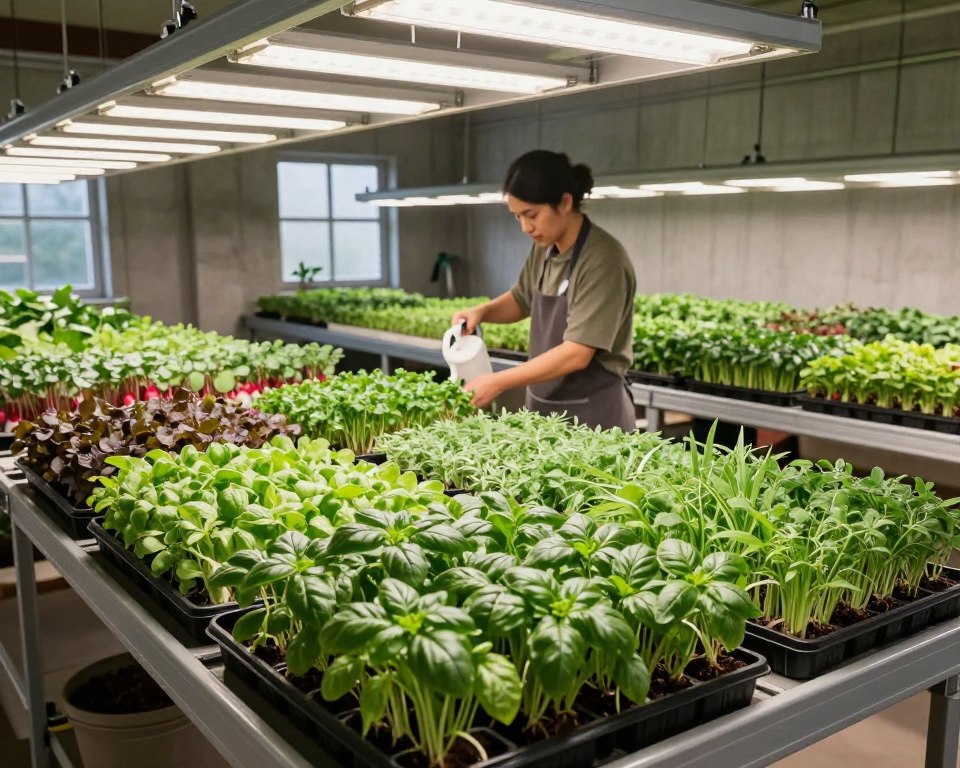

Microgreens are easy to grow and very nutritious. They are great for those who want to start an indoor microgreen business. This is because they are simple to cultivate.
These young greens are not only tasty but also full of nutrients. By starting a microgreens farm in your basement, you can earn a steady microgreens farming income. The steps are simple, and with some guidance, you can turn your basement into a profitable space.
Learn how to make money from the microgreens trend right from home.
The Microgreens Business Opportunity
The microgreens industry is a great chance for entrepreneurs to make money. These greens are packed with nutrients and are loved by chefs and home cooks. They’re becoming more popular everywhere.
High Profit Margins per Square Foot
One big plus of the microgreens business is its high profit margins. You can grow them in small spaces, like basements. This is perfect for city areas where space is tight.
Microgreens grow fast, taking only 7-21 days to be ready. This means you can have many harvests in a short time. It also lets you quickly respond to demand changes, making the market more lively.
| Crop | Days to Harvest | Revenue Potential per Square Foot |
|---|---|---|
| Pea Shoots | 10-14 days | $3-$5 |
| Radish Greens | 7-10 days | $2-$4 |
| Cilantro | 10-14 days | $3-$5 |
While the money in microgreens is great, it’s key to love growing and care about quality. Focus on making top-notch greens and building a loyal customer base. This way, you can build a successful, lasting microgreens business.
Essential Equipment and Supplies for Growing Microgreens
To start a successful indoor microgreen business, you need the right tools and supplies. The cost of your initial equipment is key to your microgreens farming income. You’ll need racks, lights, trays, and systems for climate control, such as heating, AC, fans, and a dehumidifier.
Lighting is crucial for successful microgreens cultivation. You have several options, but LED and fluorescent lights are the most common.
LED vs. Fluorescent Options
LED grow lights are a top choice for many growers. They use less energy and last longer. They also produce less heat, which helps protect your crops. Fluorescent lights, like T5s, work well too, but can get hotter and need to be replaced more often.
Light Positioning and Duration
Getting the light right is key to healthy microgreens. Place your lights to evenly cover your trays. The distance between the lights and your greens depends on the light’s strength and the type of microgreens. Most need 12-18 hours of light each day.
Choosing and setting up your equipment wisely can create the best growing space. This will help you grow more and better microgreens. It will also boost your income from microgreens farming.
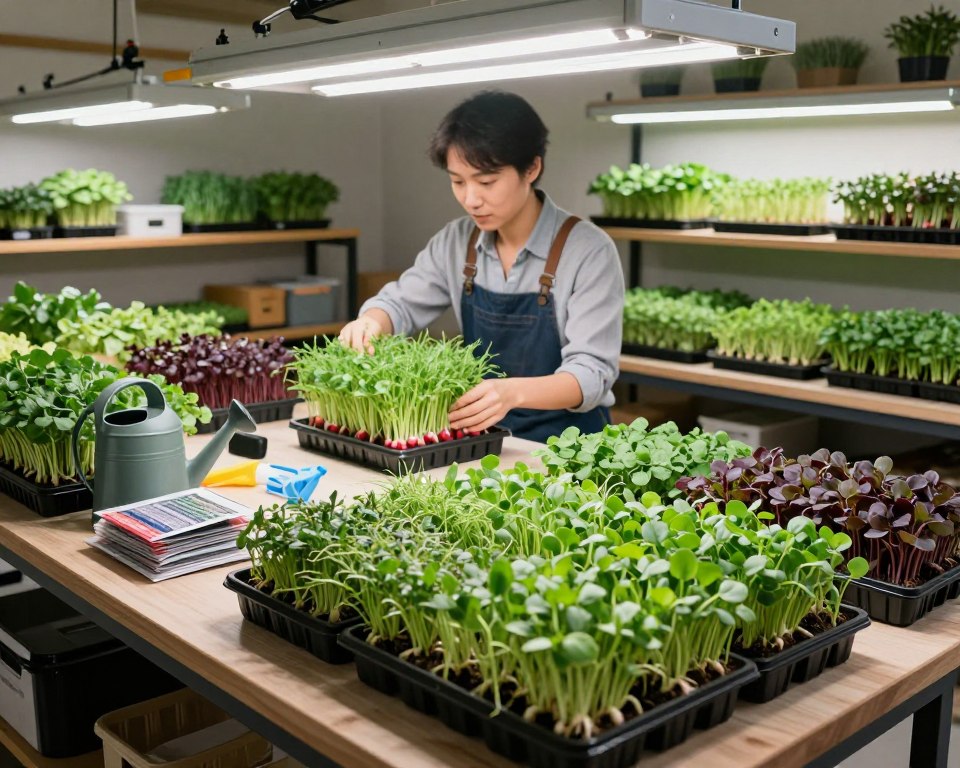
Setting Up Your Basement Growing Operation
Starting a microgreens business begins with a well-set-up basement growing space. It’s important to make your growing area as efficient as possible for high yield and quality.
Sanitation Protocols
Keeping your growing space clean is crucial when growing microgreens for profit. Make sure pets, kids, and visitors stay out. We’re growing food that must meet strict cleanliness standards.
Follow strict cleaning and disinfection rules for surfaces, tools, and equipment. This keeps your crop healthy and free from contamination.
Workflow Design
An efficient workflow is essential for optimizing microgreens sales. Plan your growing space for a smooth process, from planting seeds to harvesting. Think about your tray layout, watering station, and harvesting and packaging paths.
Using top microgreens market strategies and efficient operations increases your chances of success in a competitive market.
A well-designed growing space boosts productivity and quality. This makes your microgreens more attractive to customers, helping your business grow.
Selecting the Most Profitable Microgreen Varieties
Starting a profitable microgreens business means choosing the right varieties. Look for high-yield and in-demand crops to make more money.
Sunflower and Pea Shoots
Sunflower and pea shoots are top choices for profit. They’re loved for their nutritional value and their use in cooking. Sunflower shoots, for example, are rich in vitamins and have a nutty flavour, which chefs adore.
Specialty radishes and mustards are also great for profit. They bring a spicy flavor to food and are sought after for taste and texture. Growing these can boost your microgreens revenue potential.
| Microgreen Variety | Days to Harvest | Market Demand |
|---|---|---|
| Sunflower Shoots | 7-10 | High |
| Pea Shoots | 7-12 | High |
| Radish | 5-7 | Very High |
| Mustard | 5-7 | High |
By picking these popular varieties and improving your growing methods, you can build a profitable microgreens business. You’ll also do well selling microgreens online.
Growing Microgreens for Profit: Step-by-Step Process
To run a successful indoor microgreen business, knowing the steps is key. You need to get the timing, seed density, and water schedule right. It takes patience to find what works best.
Seeding density is very important. Too many seeds can cause poor air and mould.
Seeding Density Guidelines
- Spread seeds evenly across the tray.
- Keep enough space around each seedling for air.
- For most, 1-2 seed layers per tray is best.
It’s also important to spread seeds evenly for a uniform crop.
Even Distribution Techniques
Using dry sand or vermiculite with seeds helps spread them evenly. Gently tapping seeds off a spatula or using a small sifter works too.
Mould and fungus can ruin your crop. Keep air flowing, control humidity, and don’t overwater.
Addressing Nutrient Deficiencies
Microgreens need fewer nutrients than full-grown plants, but can still lack them. Watch for yellow leaves and adjust your nutrient mix if needed.
By following these tips and improving your methods, you can grow great microgreens. This will help boost your income from microgreens farming. It’s a step-by-step way to build a strong indoor microgreen business.
Harvesting, Packaging, and Storage Best Practices
Effective harvesting, packaging, and storage are key to top microgreens market strategies. To keep flavor and nutrients high, harvest microgreens at the perfect time.
Tools and Equipment
Getting the right tools and equipment is crucial. You’ll need sharp scissors or clippers, clean containers, and a scale for measuring.
Batch Processing Methods
Batch processing makes things easier. It means harvesting, packaging, and storing in batches for better quality and consistency.
For packaging, choose sustainable materials to boost your brand. Use recyclable or biodegradable containers to help the environment.
Branding Your Product
Branding is vital for optimizing microgreens sales. Create a strong brand with labels and marketing that show off your microgreens’ freshness and quality.
By following these best practices, growers can better their selling microgreens strategy. This will attract more customers and boost profits.
Building Your Microgreens Business Model
A successful microgreens business needs a strong model. It should be efficient and market-savvy. Focus on key areas to build a profitable microgreens business.
Tracking Production Metrics
Tracking production metrics is key. Watch crop yields, growth rates, and costs. This helps you improve and boost your microgreens revenue potential.
Managing Inventory and Supplies
Good inventory management is crucial. It means getting quality seeds and supplies. Also, having enough storage for your greens. This reduces waste and meets customer needs.
Following the rules is vital for any food business. You need permits and licenses to run a microgreens business. Check the rules in your area and follow them.
Food Safety Protocols
Food safety is essential for quality and safety. Follow proper handling, storage, and sanitation practices. This keeps your customers safe and builds your reputation, helping with selling microgreens online.
By focusing on these areas, you can build a solid business model. This supports the long-term success of your microgreens business.
Marketing and Selling Your Microgreens
A successful microgreens business needs good marketing and sales. You must have a strong plan to reach your customers. This is key to making money.
Selling to local restaurants is a great way to start. Chefs want fresh, quality ingredients for their meals. Microgreens are a top choice for them.
Building Relationships with Local Restaurants
To connect with restaurants, find out who might be interested. Go to food festivals and events to meet chefs and owners. This helps you show off your products.
Consistency is key when selling to restaurants. Make sure your greens are always fresh and on time. This keeps your reputation strong.
Meeting Chef Requirements
Chefs have specific needs for microgreens. Be ready to offer different types and packaging. This shows you care about their needs.
Also, think about selling at farmers’ markets and grocery stores. This way, you can reach more people. It’s a smart move to grow your business.
Using these strategies can boost your sales. Focus on great customer service and quality products. This will help your business grow.
Discussion about this post