

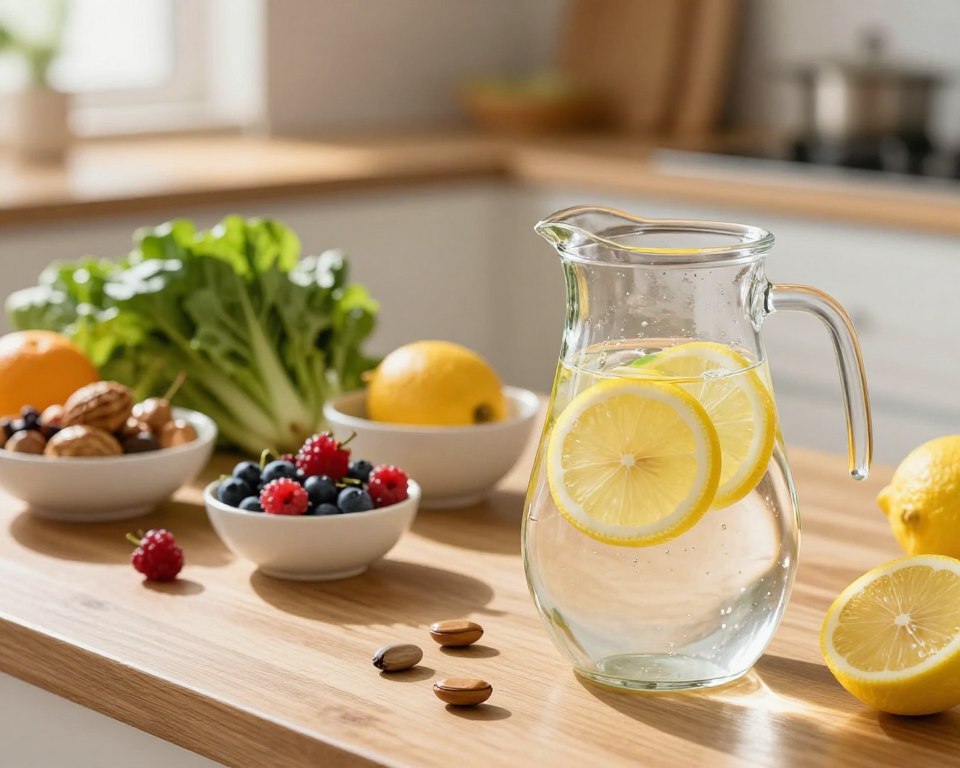

Drinking enough water is key to prevent painful kidney stones. Doctors often suggest drinking six to eight 8-ounce glasses a day. This is unless you have kidney failure.
But drinking water is just the start. Your diet also matters a lot in protecting your kidneys. Choosing the right foods and drinks can lower your risk of kidney stones.
Eating well and staying hydrated is good for your kidneys. In this article, we’ll look at the best ways to eat and drink. These tips can help prevent kidney stones and keep your kidneys healthy.
Kidney Stones and Their Causes
Kidney stones form due to diet, how much you drink, and your health. Knowing why they happen helps prevent them.
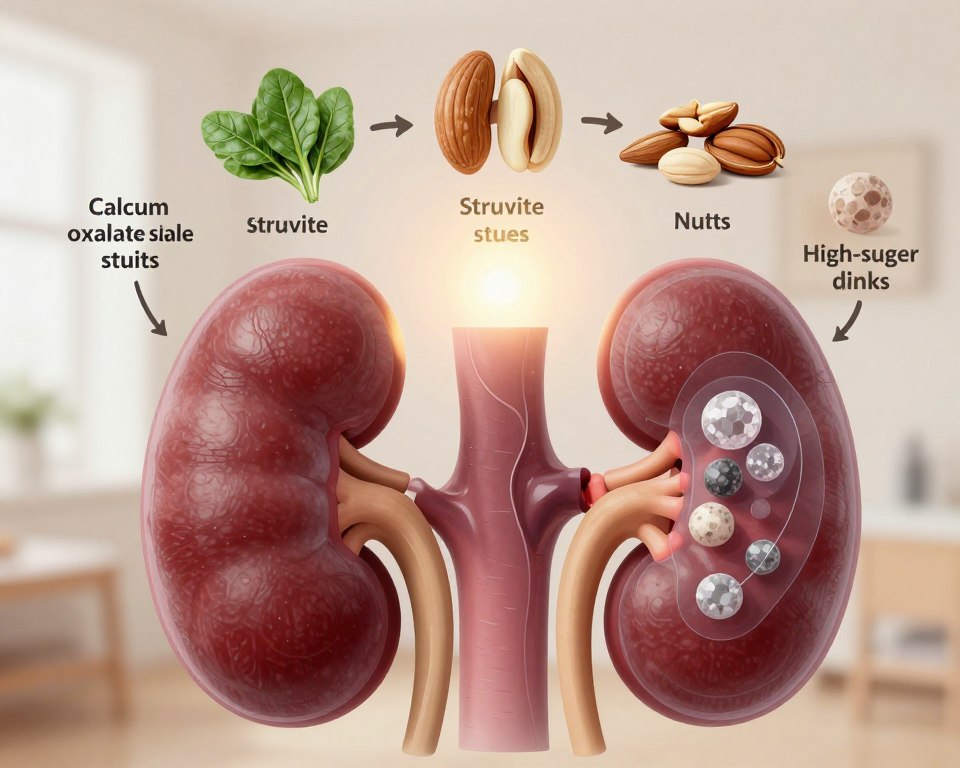
Calcium Stones
Most stones are calcium oxalate. Too much sodium in your diet can lead to more calcium in your urine, causing stones.
Uric Acid Stones
Uric acid stones happen when you have too much uric acid in your urine. This can be from eating too much animal protein or certain health issues.
Struvite stones grow fast, often because of urinary tract infections (UTIs). They can get very big.
Genetic Factors
Having a family history of kidney stones raises your risk. If your family has a history, you might get them too.
Medical Conditions
Some health issues, like hyperparathyroidism or cystic kidney diseases, make you more likely to get stones.
Environmental Influences
Drinking little water and eating a lot of salt and animal protein can lead to stones.
Learning about the types of kidney stones and why they form is key. It helps you prevent them by changing your diet and drinking habits.
The Science Behind Kidney Stone Prevention
To prevent kidney stones, knowing the science behind diet and hydration is key. Studies show that diet and how much we drink can greatly reduce the risk of stones.
Clinical Studies on Diet Effectiveness
Diet changes can greatly lower the risk of kidney stones. The DASH diet, for example, has been proven to help. It focuses on fruits, veggies, whole grains, and lean proteins, keeping the urinary system healthy.
Being overweight or obese raises the risk of stones. This is because it increases the concentration of substances that form stones in urine. So, it’s important to keep a healthy weight through a balanced diet and exercise.
Drinking enough water is also vital. It helps dilute substances that can form stones, lowering the risk. Aim to drink enough to make at least 2 liters of urine a day.
Increasing fluid intake is a top tip for preventing kidney stones. By following these research-backed tips, you can lower your risk of getting stones.
The Importance of Hydration in Preventing Stones
Drinking enough water is a simple and effective way to prevent kidney stones. It helps dilute substances that can form stones, lowering the risk.
Urine Concentration and Crystal Formation
Being dehydrated makes your urine more concentrated. This increases the chance of crystal formation. Crystals can then clump together to form stones. Drinking water dilutes these substances, making stone formation less likely.
Hydration helps flush out substances that can form stones. Drinking plenty of water helps your body get rid of these substances before they form stones.
Calculating Your Personal Hydration Needs
Drinking at least eight glasses of water a day is a good start. But, your needs can change based on your activity, climate, and health. A simple way to check if you’re hydrated is by looking at your urine color; it should be pale yellow.
Adjusting for Climate and Activity Level
If you live in a hot place or are very active, you’ll need to drink more water. Monitoring your urine output and color can help you determine if you need to adjust your hydration.
Understanding the importance of hydration and making it a habit can greatly reduce your risk of kidney stones.
Best Beverages for Kidney Stone Prevention
Drinking enough water is key to prevent kidney stones. The right drink can also help a lot. Water dilutes urine substances that might form stones, making them less likely to cause trouble.
Filtered vs. Tap Water Considerations
Tap water is usually safe and good for drinking. But, some like filtered water to avoid chemicals. Filtered water is okay, but pick a filter that keeps good minerals in.
Lemon Water and Citrus Drinks
Citrate in citrus fruits like lemons helps prevent stones. Drinking lemon or limeade can be beneficial. Studies show these drinks are good for preventing stones because of their citrate.
Sodas and sugary drinks can up your stone risk. They have fructose, which isn’t good. Try to drink less of these.
Alcohol Considerations
Alcohol can make you dehydrated if you don’t drink enough water. Drinking in moderation is best to avoid stone risk.
| Beverage | Kidney Stone Risk | Recommendation |
|---|---|---|
| Water | Low | Drink plenty |
| Lemon Water | Low | Beneficial |
| Sodas/Sugary Drinks | High | Limit/Avoid |
| Alcohol | Moderate | Consume in Moderation |
Creating a Hydration Schedule That Works for You
Creating a hydration plan that fits your life can help prevent kidney stones. It’s key to think about your daily habits and how much you drink.
Morning to Evening Hydration Plan
Begin by drinking a glass of water when you wake up. Try to drink at least eight ounces every hour or two. You can also add herbal teas or low-sugar sports drinks to your routine.
To stay on track, set reminders on your phone or put sticky notes in places you see often. Mobile apps can also track your water intake. These tools help you see how you’re doing and adjust your plan as needed.
Overcoming Common Hydration Challenges
Forgetting to drink water is a big challenge. Make drinking water a daily habit. Another issue is not having clean water. Carry a refillable water bottle with you.
By following these tips and making a hydration plan that’s yours, you can help prevent kidney stones. This also keeps your kidneys healthy.
Dietary Modifications for Effective Kidney Stone Prevention
To prevent kidney stones, making smart food choices is key. Changing what you eat can really help lower your risk.
How Foods Affect Urine Chemistry
Your diet shapes your urine’s chemistry. Some foods raise levels of oxalate, calcium, and uric acid. These are common in kidney stones.
Eating a lot of animal protein can up your risk for uric acid stones. Knowing how foods change your urine chemistry is important.
Balance and Moderation Approach
Eating a balanced diet is vital. The DASH diet, full of fruits, veggies, and whole grains, is good for preventing kidney stones.
Also, eating foods high in calcium is good. Calcium can lower oxalate absorption in your gut. A dietitian can help plan meals to keep kidney stones away, making sure you get the right nutrients.
Reading Food Labels for Hidden Ingredients
Many foods have hidden ingredients that can raise your risk for kidney stones. For example, some processed foods have a lot of sodium. This can increase calcium in your urine.
Checking food labels is a smart move. Being aware of what’s in your food is a big step in managing your diet to prevent kidney stones.
Foods to Include in Your Kidney Stone Prevention Diet
To prevent kidney stones, focus on eating foods that help stop them. A diet full of certain nutrients can greatly lower your risk of getting kidney stones.
Dairy and Non-Dairy Sources
Eating foods high in calcium like milk, yogurt, and cheese can help prevent stones. It’s good to eat these foods with foods high in oxalates at the same time. If you can’t have dairy, try almond milk and fortified plant-based yogurts instead.
Vegetables, Fruits, and Legumes
Vegetables, fruits, and legumes are full of fiber, vitamins, and minerals. They keep your urinary system healthy. Foods like spinach, beets, and rhubarb are high in oxalates but can be okay in balance. Citrus fruits like oranges and lemons are good because they have citrate, which helps prevent stones.
Whole grains and complex carbs like brown rice, quinoa, and whole-wheat bread are good for you. They’re full of fiber and magnesium, which help prevent stones. These foods improve digestion and lower oxalate absorption.
Adding these foods to your diet can help prevent kidney stones naturally. A balanced diet and enough water are essential for keeping your kidneys healthy.
Foods and Ingredients to Limit or Avoid
Knowing which foods to limit or avoid is important to lower kidney stone risk. Some foods can greatly increase your chance of getting stones.
Common High-Oxalate Foods in American Diets
Some foods have a lot of oxalate, which can raise your risk of kidney stones. Here are some examples:
- Peanuts
- Rhubarb
- Spinach
- Beets
- Swiss chard
- Chocolate
- Sweet potatoes
Reducing these foods in your diet can help, mainly if you’re at risk for calcium oxalate stones.
Low-Oxalate Substitutions
There are many low-oxalate options for your favorite foods. For example, you can use:
- Almonds or cashews instead of peanuts
- Canned or cooked fruits and vegetables instead of raw rhubarb
Sodium can also raise calcium in your urine, which can lead to stones. Watch out for hidden sodium in:
- Canned soups and vegetables
- Processed meats
- Restaurant meals
Choosing low-sodium options and cooking at home can help keep sodium levels down.
Portion Control and Frequency Guidelines
Even healthy foods can be bad if eaten too much. Control your portions and think about how often you eat foods that might increase stone risk.
If you love chocolate, try to limit it to a small amount (about 1 ounce) once a week. Being careful with how much you eat can really help lower your risk.
Tailoring Your Diet to Specific Types of Kidney Stones
Knowing what your kidney stone is made of can help you prevent more. If you’ve had a kidney stone, talk to your doctor. They can tell you about its type and how to avoid more.
Balancing Calcium and Oxalate Intake
For those with calcium oxalate stones, balancing calcium and oxalate intake is key. Eating foods high in calcium with meals can lower your risk. But, cut down on foods like spinach and beets that are high in oxalate.
If you have uric acid stones, watch what you eat. Avoid foods high in purines like organ meats and some fish. Also, drinking less alcohol, like beer, is a good idea.
Specialized Dietary Approaches
Different stones need different diets. For example, cystine stone sufferers might need to drink a lot more water. Knowing your needs can help you follow kidney stone prevention tips and lifestyle changes for kidney stone prevention.
By adjusting your diet based on your stone type, you can lower your risk of getting more. This tailored approach, with the help of your doctor, can keep you healthy and stone-free.
Lifestyle Changes That Support Kidney Stone Prevention
Changing your lifestyle is key to preventing kidney stones. This includes managing your weight and staying active. Being overweight or obese raises your risk, mainly for uric acid stones.
Healthy Weight Loss Approaches
For those who are overweight, losing weight is essential. Aim for a balanced diet and regular exercise. Crash diets are not good and can actually increase your risk of stones.
Activity Types and Duration
Staying active is vital for your health and can prevent kidney stones. Try to do at least 150 minutes of moderate exercise or 75 minutes of vigorous exercise weekly. Adding strength training and HIIT can also help.
Yoga and meditation are great for reducing stress and improving well-being. Stress can harm your health, including raising your risk of kidney stones. Adding these practices to your day can help lower this risk.
By making these lifestyle changes, you can greatly lower your risk of kidney stones. This promotes better kidney health overall.
Supplements and Medications for Recurrent Stone Formers
Preventing kidney stones is not just about diet and drinking water. Supplements and medications play a big role too. If you keep getting kidney stones, your doctor might suggest some supplements or meds to stop them.
Citrate, Vitamin B6, and Other Options
Citrate, found in citrus fruits like lemons, helps prevent stones. Citrate supplements can boost citrate in your urine, lowering stone risk. Vitamin B6 might also help lower the risk of some kidney stones.
It’s key to talk to your doctor about stopping kidney stones. They’ll pick the right supplements or meds for you, based on your health and history.
Regular Testing and Follow-up
Seeing your doctor regularly is important. They’ll check if your prevention plan is working and make changes if needed. This might include urine and blood tests to watch for stone-forming substances.
| Supplement/Medication | Purpose | Notes |
|---|---|---|
| Citrate | Prevents stone formation | Found in citrus fruits, available as supplements |
| Vitamin B6 | Reduces risk of certain stone types | Should be taken under medical supervision |
FAQ
Discussion about this post