

It started like any other day in the streets, social media feeds, and morning WhatsApp group chatter. But the air was thick with frustration, anger, and disbelief. Stories of schoolchildren snatched from classrooms in Kebbi state, terror strikes in Kwara, and the killing of Brigadier General Musa Uba in Borno were flooding timelines.
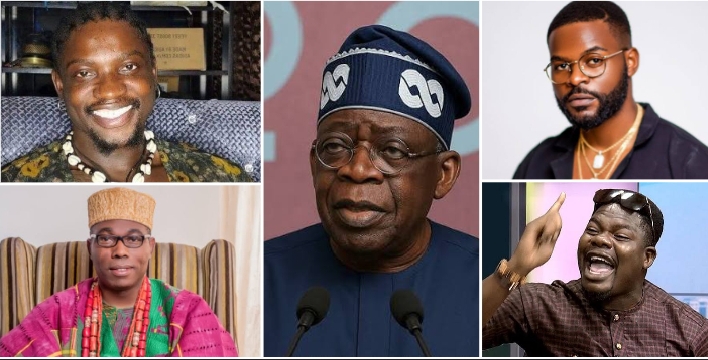
Nigerians were tired, everyone was talking about it, from taxi drivers to market traders to university students. In the middle of all this noise, some voices stood out not because they were politicians or analysts, but because they were celebrities with clout and a habit of speaking straight to power. Mr Macaroni, Falz, Prince Adewole Adebayo, and Verydarkman had all taken stances questioning the ability of President Bola Tinubu to protect the nation. And the message was clear. If you cannot secure Nigerians, resign.
Make Them Accountable Now
Prince Adewole Adebayo had been at the National Electoral Reforms Summit 2025 when he delivered his remarks. He did not mince words. He challenged the president to either step up against terrorists or step down. He reminded Nigerians of the basic contract between the people and those who govern them.
When schools are no longer safe, when military personnel are being killed in the line of duty, and when terror is normalized, then the moral authority of leadership is questioned. His words resonated across news outlets, online threads, and even radio call-ins. People were feeling the same frustration in their homes and neighborhoods, and hearing a familiar voice echo that frustration gave it a sharper edge.
Macaroni Speaks For The Streets
Debo Adedayo, known widely as Mr Macaroni, carried a brand that combined comedy and sharp social commentary. But in November 2025, he put jokes aside. He called the government useless and irresponsible, mentioning specific incidents like the school kidnappings and the killings of military officers. His videos spread fast, going viral across TikTok, Instagram reels, and WhatsApp status updates. Mr Macaroni spoke like the street itself was talking, full of impatience and disbelief. The tone was raw, it was messy, and that made it real. Nigerians who felt powerless found a reflection of their anger in his words.
Falz Reminds Tinubu Of His Own Past
Folarin Falana, a musician and lawyer, brought a different lens. He reminded the public of a 2014 tweet where Tinubu, as opposition leader, had called on former President Goodluck Jonathan to resign over rising insecurity. Falz pointed out that history had come full circle. Back then, Tinubu demanded accountability. Now, millions of Nigerians were asking the same question of him. Falz’s intervention added a layer of irony that resonated online. It was not just criticism; it was holding the president to a standard he himself had set over a decade earlier.
Verydarkman Adds His Voice
Martins Vincent Otse, widely known as Verydarkman, president of the Ratel brand, added another perspective. His comments came in the wake of the verdict for Nnamdi Kanu, leader of IPOB. While some may have dismissed celebrity commentary as shallow or fleeting, Verydarkman and others reminded Nigerians that these voices were part of a larger national discourse. Security, justice, and governance were no longer topics confined to politicians and analysts. They were street conversations amplified by public figures with reach and credibility.
Critical Issues
Kebbi State And The Kidnapped Children
Kebbi state became the focus of national outrage when reports emerged of schoolchildren being kidnapped from a local school in the early hours of the morning. Parents screamed, communities panicked, and social media exploded with pleas, outrage, and heartbreak. The news hit every WhatsApp group, every Twitter timeline, and every neighborhood conversation. Nigerians were asking the same question: how safe is a child in their own school?
Mr Macaroni’s videos on this incident were unfiltered, raw, and widely shared. He walked the streets of Lagos in one clip, holding his phone, telling the camera exactly how people felt. “How long will our children remain targets? How long will we watch and clap while they get taken?” His words struck a chord. For many, it was the first time they felt their outrage being articulated so directly in mainstream conversation. The streets were angry, parents were anxious, and the nation was watching.
Prince Adewole Adebayo joined the discussion from Abuja, highlighting the systemic failure that allowed such kidnappings to persist. He questioned whether leadership was focused on the people or simply on appearances. Falz took to his music platform to remind Nigerians of the promises leaders make during campaigns, promises that are forgotten when crises hit. Verydarkman weighed in, connecting the kidnapping to broader patterns of insecurity across the nation, making the argument that this was not an isolated failure but a structural one.
Kwara State Under Siege
While Kebbi captured hearts and headlines, Kwara state was burning in another way. Terrorist attacks in villages and towns shook the local communities. Traders closed shops early, students stayed home, and families barricaded themselves indoors. Roads became dangerous, rumors of attacks spread faster than official statements, and panic became a daily rhythm.
Social media once again became the frontlines. Citizens shared videos of destroyed buildings, burned markets, and terrified villagers. Mr Macaroni’s commentary on Kwara attacks highlighted the absurdity of government delays and statements devoid of action. “We are tired of press releases. We need action, or someone needs to step aside,” he said, his voice dripping with frustration and fatigue that millions felt across the country.
Falz and Verydarkman joined the conversation with sharp critiques. Falz reminded Nigerians that words without action were meaningless, invoking Tinubu’s past calls for Jonathan to resign over insecurity. Verydarkman focused on the emotional toll of these attacks, calling out the government for failing to protect not only lives but dignity and peace. Every post, video, and comment added fuel to the fire, creating a relentless national debate.
Borno State And The Killing Of Brigadier General Musa Uba
The loss of Brigadier General Musa Uba in Borno state was a wake-up call for the nation. Military families mourned, colleagues grieved, and the general public began questioning the effectiveness of government strategies. It was not just about one officer; it was about the larger question of national security.
Prince Adewole Adebayo’s commentary reminded Nigerians that leaders must be judged by results. If terror continues to thrive, if soldiers die without adequate response, then leadership is failing. Social media echoed his sentiments, with citizens posting tributes to Uba while simultaneously criticizing government inefficiency. Mr Macaroni’s take brought a different energy. He highlighted the absurdity of repeated promises, asking why nothing tangible had changed despite previous warnings and headlines.
Falz’s sharp reminders about Tinubu’s own previous tweets fueled the debate further. Nigerians saw a pattern: political leaders demand accountability when in opposition but hesitate to hold themselves to the same standard when in power. Verydarkman amplified this argument, adding context and tying the general’s death to the broader failures that affected ordinary citizens, markets, schools, and families across the north east.
The Social Media Firestorm
The week of November 2025 saw hashtags trending, videos circulating, and debates flaring across Twitter, Instagram, TikTok, and X. Calls for Tinubu’s resignation were paired with clips from press conferences, news stories, and live updates from affected states. The conversations were messy, emotional, and deeply human. Nigerians debated, laughed, cried, and cursed in equal measure. Social media became the town square, the courtroom, and the parliament chamber rolled into one. The celebrities were not just participants; they were amplifiers, messengers, and at times provocateurs.
When Inaction Becomes The Story
For months, Nigerians had watched and waited. They saw the government respond with press releases, promises, and occasional appearances, but the streets, schools, and military installations continued to bleed. In Kebbi, children remained at risk; in Kwara, attacks persisted; in Borno, the loss of officers like Brigadier General Musa Uba reminded the nation that terror had no mercy. When those who are supposed to act fail repeatedly, frustration grows. When familiar voices like Mr Macaroni, Falz, and Prince Adewole speak, that frustration finds words, rhythm, and visibility.
The Role Of Celebrity Activism
Nigerian celebrities have always had a complicated relationship with politics. From music stars to comedians to brand influencers, the expectation has been to entertain, not to challenge. But in 2025, that line is blurred. Citizens look to public figures for interpretation, amplification, and sometimes leadership in civic matters.
When Verydarkman reacts to the Nnamdi Kanu verdict, or when Falz recalls Tinubu’s old tweets, it is not just commentary; it is active participation in holding power to account. It is a reflection of citizens’ frustration through familiar faces.
Comparisons With The Past
Every Nigerian administration faces scrutiny, but what makes Tinubu’s situation striking is the mirror of his own past words. Falz’s reminder is more than irony; it is evidence of expectation and precedent. Citizens are comparing promises with performance, speeches with outcomes, and tweets with tangible action. In an age where social media archives never forget, public memory is immediate and relentless.
Tinubu’s inaction is not being measured only in weeks or months; it is being measured against years of expectation and accountability he once demanded of others.
The Human Toll Behind Headlines
Beyond tweets, Instagram reels, and viral videos, there are human stories that anchor these debates. Parents in Kebbi are fearful for their children. Military families mourn lost sons and daughters in Borno. Communities in Kwara remain on edge after repeated attacks.
The celebrities’ commentary gives these human stories visibility, translating statistics into narratives that Nigerians can see, feel, and respond to. The outrage is personal, communal, and national. It is grief made vocal through humor, music, and public pressure.
The Pressure Mounts
As November ended, the weight of public opinion continued to press on the presidency. Calls for resignation, accountability, and immediate action were no longer abstract. They were trending, viral, and unignorable. Newspapers, online portals, and radio shows dissected every statement from Mr Macaroni, Falz, Prince Adewole, and Verydarkman.
Each voice added layers to the narrative: frustration, impatience, irony, hope, and demand. Nigerians were learning that celebrity voices could shift discourse, spotlight inaction, and pressure leaders without holding office themselves.
Security As The Litmus Test
Ultimately, the debate centers on security. Leadership is judged not by speeches but by the tangible safety of citizens. Schools, neighborhoods, roads, and military posts are the frontline indicators. When the president’s policies fail to secure these spaces, legitimacy erodes.
Every kidnapping, every attack, every officer lost adds weight to the argument that if the leader cannot act, moral and civic responsibility demands reflection, and possibly resignation.
Closing Thoughts: A Country Watching And Waiting
Nigerians, weary yet vigilant, continue to watch developments unfold. The voices of celebrities, amplified on screens large and small, carry the frustrations of millions. Mr Macaroni, Falz, Prince Adewole, Verydarkman, and others have become conduits of civic sentiment.
What began as frustration on streets and social media has grown into a discourse questioning the very center of political authority. Whether the president acts, resigns, or doubles down on promises, the nation has spoken through multiple mediums. The call for accountability is no longer optional.