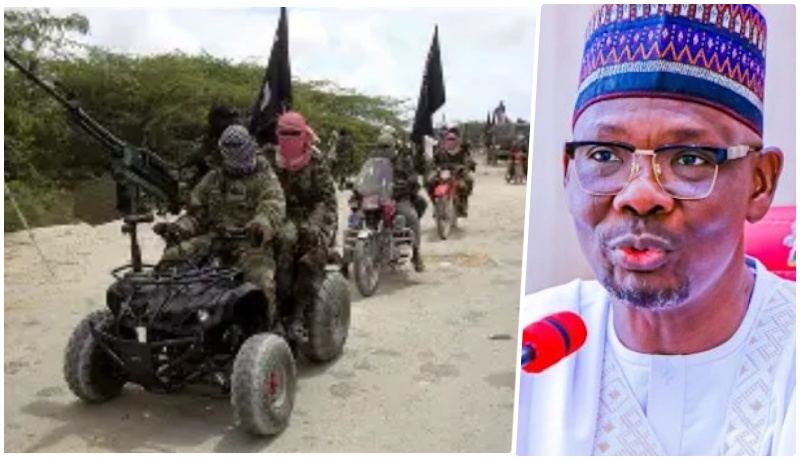
Recently, the governor of Nasarawa state, Mr. Abdullahi Sule alarmed the residents of the state of the emergence of another terrorist’s group in the North Central zone.
According to the governor, the new terror group has gradually begun to register its presence in some parts of the North-Central zone, particularly in Kwara state.
Explaining further, Gov. Sule said that the name of the new terrorist organization is Wulowulo.
WITHIN NIGERIA gathered that the Chief Executive of Nasarawa state gave the security alarm during an expanded security meeting in Lafia, the state capital, warning that intelligence reports had identified the group as a splinter faction of Boko Haram.
In his words, “One of the reasons why we invited you here is the fact that the situation of insecurity especially in other parts of the country is a big concern, and some of them are beginning to spread into our state. It is very important that we take steps to ensure that does not happen to us.
“As you are aware, this new group of Wulowulo, which is a splinter group of the Boko Haram, is beginning to surface in the North Central zone. We need to ensure that we take certain steps not to allow it at least to come into our state
“The Lakurawa group is now a big problem in Kwara. Originally, they were somewhere around Kebbi and Sokoto states, but now they have become prominent in Kwara. Kwara is one of the states in North Central. We should be concerned that it does not extend all the way to Nasarawa State.”
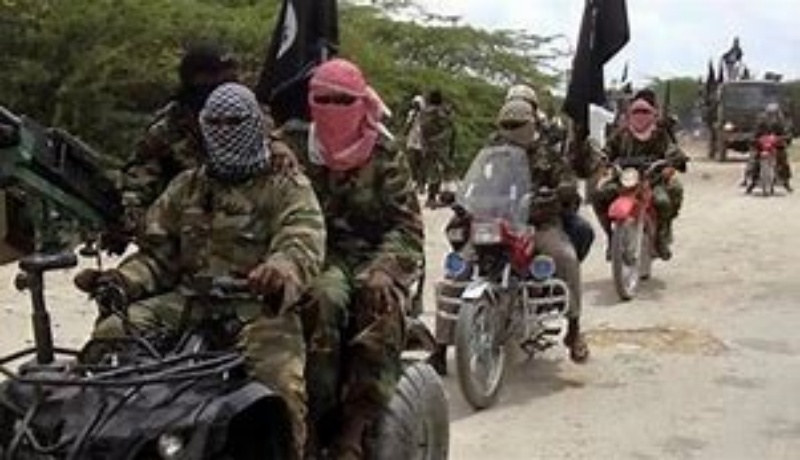
In response, the governor directed the Commissioner of Police and the State Director of the Department of State Services (DSS) to immediately launch a comprehensive investigation into the incident and bring the perpetrators to justice.
The emergence of the splinter Boko Haram group, Wulowulo is coming barely one year after the appearance of another group in the name of Lukarawas in the same region.
This, to say the least is gradually becoming a source of huge security concern to the country that is systematically climbing the ladder of global terror index.
Global Terror Index 2025
In 2025, Nigeria was ranked sixth in the 2025 Global Terrorism Index, with a score of 7.658, moving up from its previous position of eighth in 2023 and 2024. The report further explained that a total of 565 persons were reportedly killed in Nigeria in the 2024 as a result of terror attack.
The report, released on March 5, 2025, reveals that Burkina Faso holds the top spot with a score of 8.581, followed by Pakistan (8.374), Syria (8.006), Mali (7.907), and Niger (7.776) in the second to fifth positions.
Other countries that made the top 16 include Somalia (7.614), Israel (7.463), Afghanistan (7.262), Cameroon (6.944), Myanmar (6.929), the Democratic Republic of the Congo (6.768), Iraq (6.582), India (6.410), Colombia (6.381), and Russia (6.267).
In 2024, Nigeria recorded 565 deaths from terrorism, reflecting an increase in fatalities over the past two years. This marks a significant rise from 533 deaths in 2023, which was a 34 percent increase from the previous year. Deaths from terrorism in Nigeria had previously peaked at 2,101 in 2014 but had decreased significantly in the following years, reaching a low of 392 in 2022.
The report also highlighted the growing influence of IS-Sahel, which has extended its operations beyond the Liptako-Gourma region of Burkina Faso, Mali, and Niger to Algeria, Benin, and Nigeria. In 2024, IS-Sahel carried out 16 attacks in Nigeria, 12 in Niger, six in Mali, and one in Burkina Faso.
Nevertheless, with the emergence of new terror group in the country, there is no gainsaying the fact that the country will once again perform badly in the global terror index of this year.
Though the new terror group has not carried out any terror attack, their establishment has continued to be of security concern in both the zone and the country at large.
The country has been on the edge lately, as far as security is concerned giving the escalating issues of great concern in all the geopolitical zones of the country.
In the South East zone, the activities of the kidnappers and disbanded ESN/IPOB have become a source of great security concern.
In the South-South zone, there is also the issue of kidnappers, bandits and other security issues in the zone.
In the North East zone, Boko Haram has continued to be of great security threat to the area, while South west zone is grappling with activities of kidnappers.
It is a known fact that all the geopolitical zones in the country are currently under one security threat or the other.
Impacts of terrorism
In the face of the growing insecurity across the six geopolitical zones of the country, it is very pertinent to know the social and economic impacts of such ugly situation in the country.
Economic destruction
It has been said that nothing destroys economy like insecurity. It has also been proven that the most immediate and measurable impact of terrorism is physical destruction.
These terrorists who unleash mayhem on the existing economic infrastructure literally destroy existing buildings, machines, transportation systems, workers, and other economic resources.
However, it is also good to note that on smaller scales, acts of terrorism may blow up cafes, churches, or roads, school buildings, railway system and what have you.
On September 11, 2001, the world watched helplessly as the infamous World Trade Center bombings unfolded, destroying billions of dollars worth of property and senselessly kill hundreds or thousands.
In terms of the states that are on high security alert in the country, it is obvious that such states are always experience negative economic performance. This is because the terrorism impacts are invariably negative for the economy, and physical destruction is a large reason why.
In the same vein, the productive resources that might have generated valuable goods and services are destroyed, while other resources are almost invariably diverted from other productive uses to boost the military and defense. None of this creates wealth or adds to the standard of living. These resources would have been channeled towards other areas of need but for insecurity in the land.
High level of uncertainty in the economy and markets
Apart from the physical damage caused by terrorism, terror attacks have far-reaching negative impacts due to the market uncertainty created. Take for instance, after the discovery of the Lukarawas terror group and the recent Wulowulo terrorist group, many traders in the area became afraid of going to the area for their economic transaction.
It was also on record that even many residents of these are already looking for a way to relocate to other safer areas. This is one of the ways which terrorism can throw uncertainty in the environment.
Decline in tourism
There are two obvious industries especially vulnerable to the effects of terrorism: transportation and tourism.
Tourism is even more concerning. With the emergence of Wulowulo terrorist group, many tourism centres in the affected areas are affected. In the same vein, many transporters who ply the affected areas have literally stayed away from those areas until probably when the security situation improves.
This to say the least has robbed the transportation industry the revenue generation it could have got. It has also put more pressure on the other areas where the attention of these drivers has been diverted.
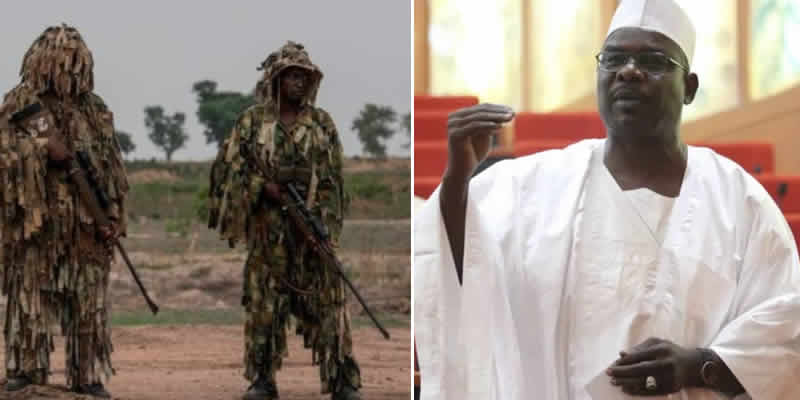
Defence Headquarters vows to annihilate the terror group
However, the Defence Headquarters has vowed to get rid of every terrorist group operating in the country regardless of the name it gives itself.
Reacting at a media briefing in Abuja on Thursday, the DHQ’s Director of Defence Media Operations, Maj. Gen. Markus Kangye, said the military would treat all armed outfits as criminal elements, not by the labels they choose but by the threat they pose.
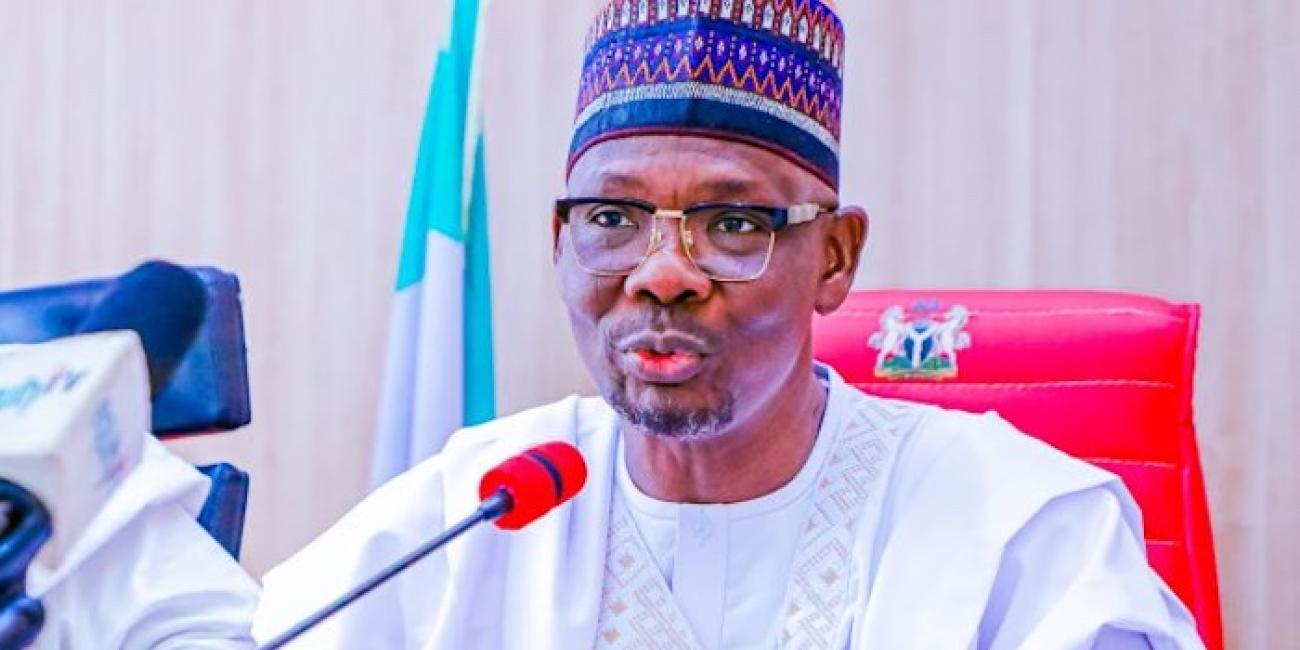
In his words, “anybody can just jump up and give himself a name or name his group and say he is a splinter from another terrorist organisation. We all know them as criminals, terrorists, and bandits,” Kangye said. “Call yourself whatever name you like — you are a terrorist, you are a bandit, and we will go after you. Our role as the armed forces with terrorists is twofold: it is either we fix an appointment with them and their maker, or we fix it between them and the judicial system.
“The police work is huge. Most of the incidents being reported as terrorism are sometimes just murder cases that can be handled by the police. But when it escalates beyond their scope, the military intervenes.”