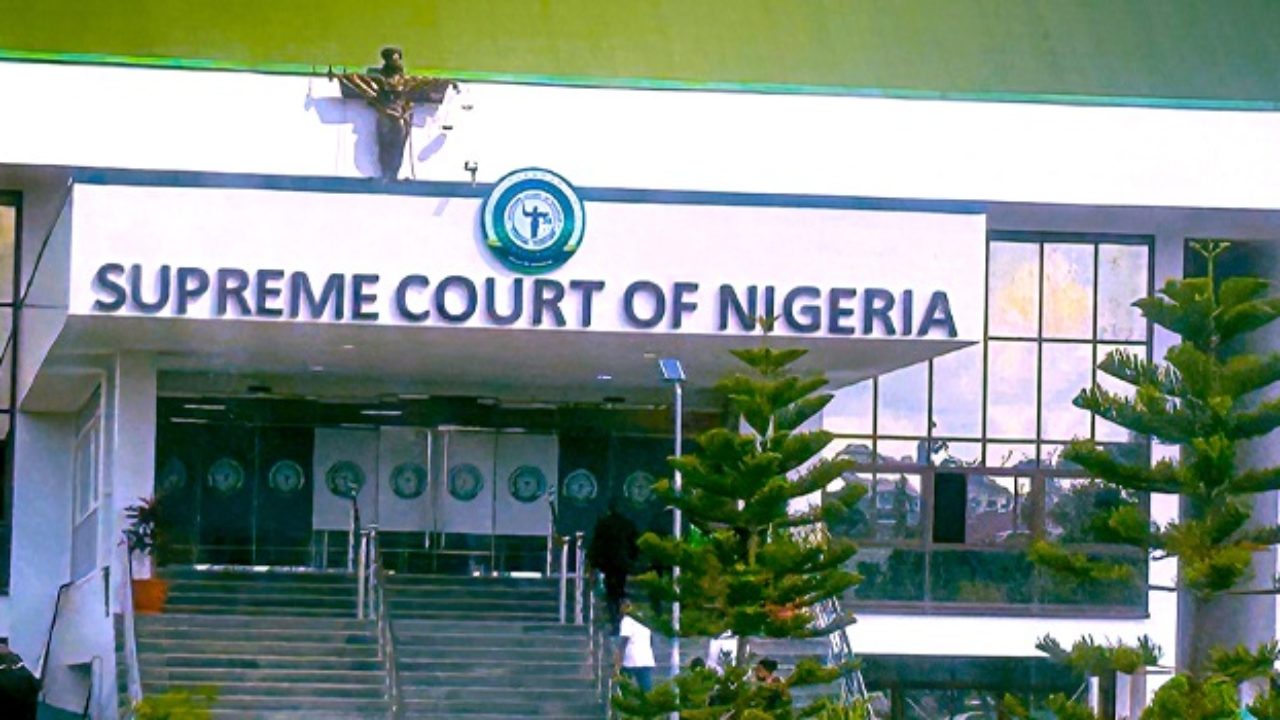
2025 has been a busy year for Nigerian courts as several high-profile cases moved through different stages of inquiry and prosecution.
These cases have drawn national interest because they involve former senior officials, regulatory agencies, and disputes between state and federal authorities.
Each matter has tested legal boundaries and has shown how the courts continue to shape accountability and governance in the country.
Many of these cases also raised questions about investigative standards, constitutional interpretation, and the pace of justice delivery.
EMEFIELE’S CORRUPTION TRIAL
The former governor of the Central Bank of Nigeria, Godwin Emefiele, has remained at the centre of one of the country’s most widely followed corruption trials.
His legal troubles began after his suspension on 9 June 2023 by President Bola Tinubu and his arrest a day later by the Department of State Services.
He later faced several charges brought by the Economic and Financial Crimes Commission, including allegations of procurement fraud, breach of trust, and illegal allocation of foreign exchange.
Court records show that the EFCC tendered documents, bank records, and digital materials that the agency described as evidence of irregular financial decisions.
The defence has repeatedly challenged the admissibility of the digital evidence, arguing that the data was not extracted using approved forensic procedures.
The courts have also handled multiple forfeiture cases linked to the former central bank governor, with rulings ordering the temporary and permanent forfeiture of money and property.
In 2025, the trial entered a mini-trial phase after defence lawyers queried the voluntariness of statements made by one of the co-defendants.
During a December 2025 sitting, EFCC operative Alvan Gurumnaan insisted that the statements were given freely and in the presence of a lawyer.
The trial continues, and Emefiele maintains that all decisions made during his tenure were lawful and approved by appropriate authorities.
BINANCE OFFICIAL’S RIGHTS CASE
The arrest of former Binance executive, Tigran Gambaryan, in February 2024 also generated significant attention.
Gambaryan travelled to Nigeria with a colleague to honour an invitation from the Office of the National Security Adviser and the EFCC.
He was detained and later charged with money-laundering offences linked to alleged foreign exchange infractions by the company.
His colleague, Nadeem Anjarwalla, escaped from custody, leaving Gambaryan to face the proceedings alone.
In late 2024, a Federal High Court struck out the criminal charges, citing diplomatic concerns and clarifying that the allegations were tied to the corporate entity rather than the individual.
Gambaryan later filed a suit alleging unlawful detention and seeking damages and an apology.
On 27 November 2025, Justice Umar Mohammed dismissed the suit, explaining that the court could not interfere with ongoing investigations by Nigerian authorities.
OSUN GOVERNMENT’S BATTLE OVER LOCAL GOVERNMENT FUNDS
A major constitutional dispute also played out in 2025 as the Osun State Government challenged the Federal Government’s decision to withhold allocations to its 30 local government areas.
The funds were stopped following a petition from the All Progressives Congress, which questioned the legality of the February 2025 local council elections.
The federal authorities argued that unresolved issues surrounding the removed officials elected in 2022 warrant caution.
Osun insisted that the 2025 elections were valid and that withholding the funds violated constitutional guarantees of local government autonomy.
The matter went before the Supreme Court, where the state sought an order compelling the Federal Government to release the funds.
On 5 December 2025, the apex court struck out the suit, holding that only the affected local governments could institute the action.
The court, however, urged the Federal Government to comply fully with earlier judgments on fiscal autonomy for local councils.
SIRIKA’S AVIATION-SECTOR FRAUD CASE
Former minister of aviation, Hadi Sirika, is also facing a corruption trial involving allegations of contract fraud amounting to ₦2.7 billion.
The EFCC claims that he awarded contracts linked to his daughter and son-in-law in breach of procurement rules.
Prosecution witnesses have told the court that payments were made for airport projects that were never executed.
The trial has entered a phase where the court is reviewing whether statements made by some of the accused persons were voluntary.
Sirika and his co-defendants have pleaded not guilty throughout the proceedings.
FAYOSE’S LONG-RUNNING MONEY-LAUNDERING CASE
A former Ekiti State governor, Ayodele Fayose, secured a major victory in July 2025 after the Federal High Court in Lagos discharged and acquitted him.
Fayose had faced allegations of laundering ₦6.9 billion said to have been linked to the former Office of the National Security Adviser.
Justice Chukwujekwu Aneke ruled that the EFCC failed to prove essential elements of the alleged offences.
The court also noted gaps in documentary evidence and inconsistencies in witness statements.
The acquittal brought an end to one of the longest corruption cases involving a former governor.
A DEFINING YEAR FOR THE JUDICIARY
Across these cases, the Nigerian courts have handled issues involving constitutional powers, asset forfeiture, digital evidence, procurement rules, and human rights claims.
The outcomes of these cases highlight the central role of the judiciary in managing complex disputes in a politically active year.
They also show how legal outcomes can influence public confidence in anti-corruption efforts and democratic governance.