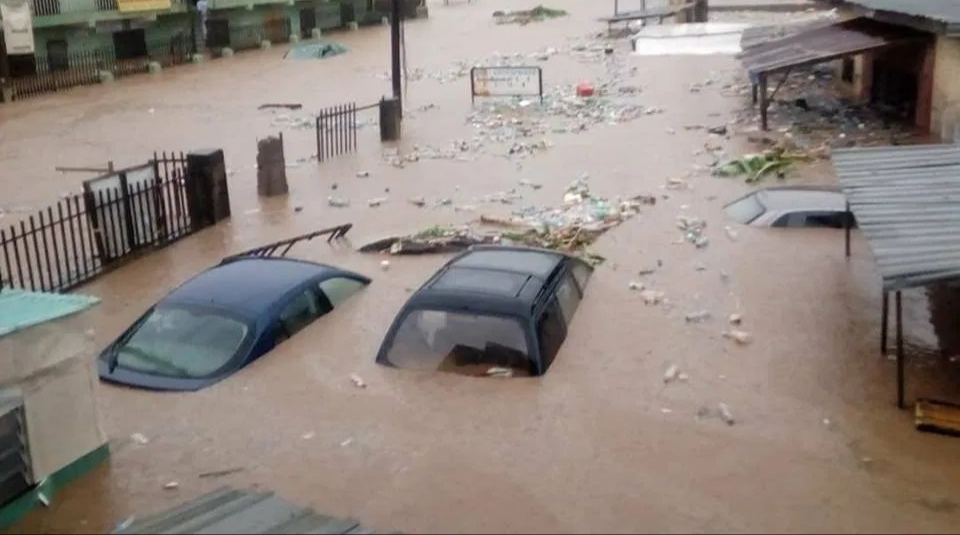
Nigeria in 2025 faced overlapping climate emergencies that combined flooding, coastal erosion, heatwaves and drought into one of its most challenging environmental years.
Official data show that flash floods inundated inland towns and river corridors, while ocean surges battered coastal settlements and extreme heat stressed northern communities.
Emergency agencies recorded hundreds of deaths, over 100,000 displaced persons, widespread housing destruction and severe damage to farmlands and livelihoods.
The National Emergency Management Agency reported that Lagos, Adamawa, Akwa Ibom, Imo, Taraba, Rivers, Delta, Abia, Borno and Kaduna were the worst-affected states.
By November, NEMA’s flood dashboard documented 241 deaths, 839 injuries and 433,578 affected persons across 123 local government areas in 27 states.
The same records showed that 144,790 people were displaced, 52,509 houses damaged and 74,767 farmlands destroyed nationwide.
Some of the most severe devastation occurred in Tiffin Maza and Unguwan Hausawa communities in Mokwa LGA, Niger state.
In April and May, overnight rainfall combined with a local dam failure triggered catastrophic floods across several communities in the area.
Initial assessments by the United Nations International Children’s Emergency Fund put the death toll at 161, but later confirmations raised the figure to at least 500.
Over 600 residents were reported missing and presumed dead as entire neighbourhoods were submerged.
The floods destroyed more than 4,000 houses, damaged 45 schools and 44 health centres, and submerged over 10,000 hectares of farmland.
Rice paddies and dry-season farms were swept away, with ripple effects felt by farmers in Kwara, Kebbi, Sokoto, Katsina and Kano states.
The director-general of NEMA, Zubaida Umar, described the incident as an “unprecedented flood” and warned of post-flood disease and water contamination risks.
The Niger State Emergency Management Agency attributed the flooding to climate change and deforestation, noting that previously safe areas are now vulnerable.
In Adamawa state, flash floods in Yola and surrounding communities displaced about 5,560 residents and claimed 25 lives.
NEMA reported that fish farms and smallholder crops were destroyed, undermining livelihoods dependent on seasonal production.
Yobe emerged as one of the hardest-hit north-eastern states after floods displaced more than 6,600 people in Potiskum LGA.
In Kogi state, communities in Ibaji LGA were submerged, forcing residents to relocate to higher ground or nearby towns instead of official camps.
NEMA data showed that children accounted for the largest share of affected persons nationwide.
Adamawa recorded the highest number of affected residents, followed by Lagos, Akwa Ibom, Imo and Rivers states.
Beyond flooding, extreme heat and delayed rainfall triggered severe drought conditions across northern and central Nigeria.
The Nigerian Meteorological Agency warned of temperatures reaching 40°C across 18 northern states.
Cities including Kebbi, Jalingo and Yola recorded temperatures as high as 42°C.
Delayed rainfall disrupted planting seasons in Plateau, Benue, Niger and Nasarawa states.
NiMet forecasted dry spells of up to 21 days during critical farming months.
Erratic rainfall reduced maize, millet and rice yields in Katsina, Zamfara, Kebbi and Sokoto.
The World Food Programme projected that nearly 35 million Nigerians could face severe food insecurity in the 2026 lean season.
Coastal states also suffered persistent ocean surges and erosion during the year.
In Lagos, shoreline retreat threatened communities such as Apakin, Okun-Alpha and Akodo-Ise.
The state government estimated that coastal defence projects could cost over N3 trillion.
Ondo state’s Ayetoro community faced repeated sea incursions that destroyed homes and infrastructure.
NEMA distributed relief materials and warned residents about further surge risks.
Across the Niger Delta, fishing families reported losses of boats, nets and landing sites.
These combined climate shocks underscored Nigeria’s growing vulnerability to environmental extremes.