
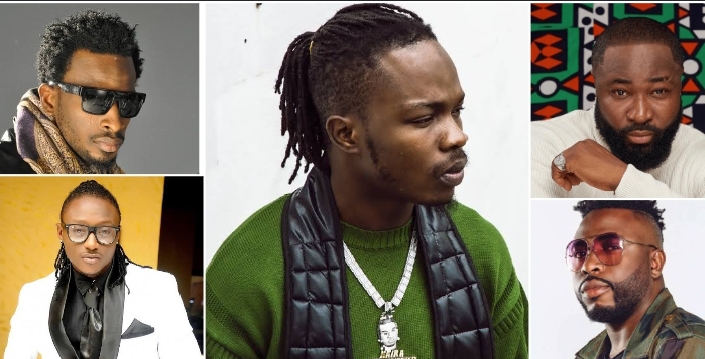
For years, the Nigerian music industry presented itself as spectacle and velocity, charts climbing, money flowing, rivalries playing out loudly in public. What remained carefully hidden was not competition but caution. Not the fear of irrelevance, but the unease that comes when influence feels guarded, when access appears conditional, when success seems tethered to forces that are never written into contracts. These tensions existed long before anyone said the word cultism out loud.
When artists finally began to speak, they did not arrive with exposés or confessions. They arrived with warnings. Carefully measured statements. Observations framed as concern rather than accusation. Each time an artist spoke, the language shifted slightly, but the direction remained the same. Something exists. Something shapes behaviour. Something thrives in silence.
The turning point came in early 2026, but it was not the beginning. It was the moment the industry could no longer pretend these were isolated anxieties. The statements, spread across years, genres, and generations, began to form a pattern.
This is not a hunt for names. It is an examination of moments. When artists spoke, why they spoke, and what their words reveal about power, pressure, and fear inside Nigerian music.
Naira Marley and the Statement That Reopened the Conversation
In January 2026, Naira Marley posted a statement on social media that instantly altered the temperature of the industry conversation. His claim was stark. According to him, fewer than five artists in the Nigerian music industry had not been touched by cultism. He did not specify what form that involvement took. He did not identify individuals. He simply described scale.
The power of the statement lay in its framing. It suggested structure rather than incident. It implied that cultism, rather than being a fringe issue, had become normalized within certain layers of the industry. By refusing to name names, Naira Marley forced attention away from personalities and toward systems.
In follow up posts the same month, he referenced power and protection, questioning why some artists who allegedly boast of underground affiliations still rely heavily on state security. The implication was not legal accusation but contradiction. The words carried the tone of someone pointing at an open secret rather than exposing a hidden crime.
Crucially, Naira Marley publicly distanced himself from cult membership in the same period. He stated that he was not part of any secret fraternity and rejected responsibility for violence. That distancing reframed his comments as warning rather than confession, and intensified the debate rather than settling it.
Terry G and the Veteran Warning From 2024
Nearly two years earlier, in June 2024, Terry G had already raised similar concerns during a media interview. Unlike Naira Marley’s viral post, Terry G’s comments arrived quietly, almost matter of fact. He stated plainly that cultism exists in the Nigerian music industry and that it damages unity among artists.
His framing was important. Terry G did not describe cultism as glamour or mystique. He described it as pressure. According to him, some artists feel compelled to align themselves with certain groups to survive, collaborate, or move freely. This shifted the issue from ideology to environment.
Coming from a veteran who has witnessed multiple industry eras, the statement carried historical weight. It suggested that the problem was not recent, not tied to a specific genre or generation, but embedded and evolving. What changes is not its existence, but how openly it is discussed.
Terry G’s comments did not trigger outrage at the time, but in retrospect, they read like an early warning. When placed alongside later statements, they reveal continuity rather than coincidence.
Harrysong and the Normalisation Concern in 2023
In mid 2023, Harrysong introduced a different dimension to the conversation. Speaking during a public discussion on industry culture, he expressed concern that some artists openly brag about being cultists. His worry was not framed around secrecy but visibility.
Harrysong pointed out that what was once whispered had begun to surface casually in conversations, jokes, and bravado. For him, the danger was not only in the existence of cultism, but in how lightly it was being referenced. When harmful affiliations become part of self branding, they lose their perceived consequences.
He also mentioned occult practices being discussed among musicians, not as doctrine, but as aesthetic. In an industry driven by imagery and symbolism, Harrysong warned that dangerous ideas could be repackaged as personality traits, especially for younger artists seeking identity.
His statement marked a shift. The issue was no longer just about hidden power, but about how that power is spoken about publicly, and what that does to boundaries inside the industry.
9ice and the Spiritual Framing of 2020
Recently, narrating his ordeal from 2020, long before cultism became a trending industry topic, 9ice offered a different vocabulary for the same anxiety. Speaking during a cautionary address to emerging artists, he warned about dark forces in the music industry and unseen battles that newcomers must prepare for.
He avoided the word cultism entirely. Instead, he leaned into spiritual language, a common Nigerian shorthand for power structures that are difficult or dangerous to describe directly. His message was less about exposure and more about survival.
By framing the industry as a spiritual battlefield, 9ice acknowledged struggle without pointing fingers. His words resonated because they mirrored stories young artists already heard off record. His warning did not accuse. It prepared.
In hindsight, his comments sit comfortably alongside later cultism claims. Different language, same unease.
Samklef and the Cultist Mindset Argument of 2024
In 2024, Samklef reframed the conversation yet again. During a public dispute about industry rivalry and toxicity, he accused the Nigerian music space of adopting a cultist mindset. His choice of words shifted focus from organised groups to behaviour.
By using mindset rather than membership, Samklef suggested that what people fear might not always be formal cultism, but a culture of unquestioned loyalty, aggression toward outsiders, and extreme tribalism. In his framing, competitiveness had crossed into something darker.
This perspective complicated the debate. If cultism is sometimes cultural rather than organisational, then exposure alone cannot fix it. It becomes a question of values, incentives, and how power is rewarded.
Samklef did not claim hidden societies. He claimed a way of thinking. That distinction broadened the scope of the problem.
Why Dates Matter in This Conversation
Placing these statements on a timeline changes their meaning. Spread across 2020, 2023, 2024, and 2026, they reveal persistence rather than panic. This is not a single moment of hysteria. It is a slow accumulation of concern.
Each artist spoke within the limits of safety. None named names. None presented evidence. Yet the consistency across years suggests shared experience rather than isolated imagination.
The silence from industry institutions across the same period becomes louder when viewed alongside these dates.
What These Statements Collectively Reveal
Together, these moments point less toward secret lists and more toward imbalance. Who controls access. Who feels protected. Who feels watched. Cultism, in this context, becomes shorthand for power operating outside transparent systems.
Artists are not saying the same thing. They are circling the same thing. Each from their own angle, vocabulary, and risk tolerance.
That convergence is the story.
Closing Reflection
Naira Marley’s 2026 statement did not begin the conversation. It crystallised it. Terry G contextualised it. Harrysong warned about its normalisation. 9ice spiritualised it. Samklef reframed it as culture. Each added a layer without tearing the veil completely.
This is not an accusation driven narrative. It is a documentation of discomfort. Until the industry creates safer ways to talk about power, these warnings will continue to surface, coded, cautious, unresolved.
Not because artists want controversy, but because silence has begun to feel more dangerous than speech.