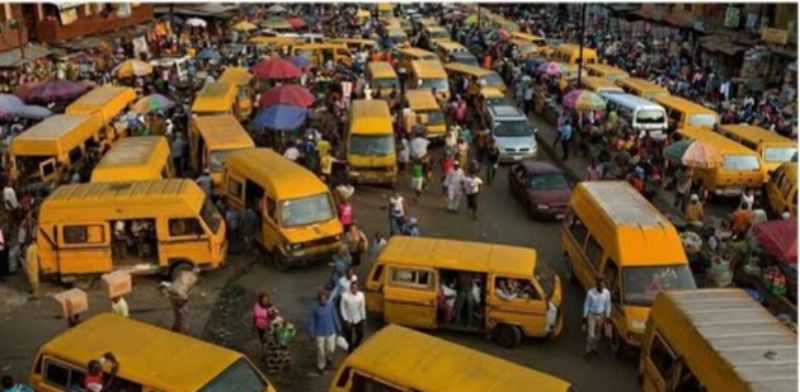

Nigerians, particularly transport workers and commuters, are complaining about soaring fuel prices, which have reached N950 to N1100 per litre in Ilesa, Osogbo, Ibadan, and other areas, WITHIN NIGERIA gathered.
On January 27, 2026, Dangote Petroleum Refinery and Petrochemicals increased the gantry price of petrol from N699 to N774 per litre, with MRS filling stations now selling petrol at N839 per liter.
Barely four weeks later, on Monday, March 2, the Dangote Refinery raised its gantry price for the second time in 2026, from N774 to N874, citing a spike in oil prices to $84 per barrel, up from below $70 days before the airstrikes by the United States, Iran, Israel, and other countries.
Some filling stations raised their pump rates on Tuesday, March 3, ranging from N920 to N950, causing indignation among Nigerians, particularly business drivers and commuters who are affected by service charges per transportation.
However, the Major Energies Marketers Association of Nigeria (MEMAN) accused Dangote Refineries of raising pump prices at the expense of Nigerians.
MEMAN stated that the landing cost of imported petrol was N809.37 per litre, whereas Dangote’s petrol gantry price was N874 per litre on Monday. It further claimed that Dangote’s diesel pricing was N1,169.42 per liter, while imported diesel cost N1,125.70 per litre.
As several petrol stations adjusted their pump prices to reflect #980 to #1150, Nigerians expressed anxiety and alarm about the potential escalation of the issue, which might exacerbate the country’s struggling economy.
A commercial motorist simply identified as Sanmi appeared surprised at a filling station visited by WITHIN NIGERIA when a fuel attendant informed him that a litre of petrol now costs #1100.
Sanmi, who bought petrol for $890 two days earlier, said he never expected the price to rise to #1,100.
“I carry N10,000 with me. It can’t even buy ten (10) litres of fuel, and I’m still heading to Efon-Alaaye tonight. It is extremely demanding and mentally exhausting. We cannot go on like this. “I just hope the price increase doesn’t lead to inflation,” he complained.
Laolu Aladejebi, a recent Biochemistry graduate who made a living in the laundry business, also expressed concern about the petrol price increase, noting that many businesses, particularly small-scale ones, will be severely impacted.
Laolu, who is not startled by the price increase, claims to have been watching developments shaping the ongoing conflict between Iran, Israel, and the United States.
He lectured that Iran, one of the world’s greatest oil producers and a founding member of the Organization of Petroleum Exporting Countries is in a war situation and would surely affect global oil price.
According to Laolu, Iran plays an important role in decision-making, particularly pricing and oil output, and it is difficult for such a country to be at war without affecting global oil prices.
Kayode Olatona, another commercial driver, was observed criticizing the price increase at a famous petrol station in Ilesa, asking how millions of Nigerians who had already been forced into abject poverty by the removal of fuel subsidy would cope with the current predicament.
Olatona noted that the country lacks consistent electricity and effective public transit, which have exacerbated Nigerians’ living conditions since the removal of gasoline subsidies.
According to Olatona, the price increase will further exacerbate the concerns, difficulties, and hardships of ordinary Nigerians who are barely surviving.
“The Dangote Refinery is expected to play a role in relieving Nigerians’ burdens through supply and pricing. After the fuel subsidies were removed, they informed us that the Dangote Refinery would assist in regulating fuel scarcity and pricing”.
“Now that we are producing locally, the price is expected to be lower than imported ones,” a perplexed Olatona stated.
Segun Owolabi, a petroleum specialist, told WITHIN NIGERIA over the phone that the Iran-Israel war has driven oil prices above $84 per barrel, which has had a severe influence on the local economy.
According to Owolabi, the government should prioritize steady crude oil supply to local or modulated refineries to mitigate the effects on ordinary Nigerians and the local economy.
He added that steady crude oil supply to local refineries will help to address the issues of scarcity and rising fuel prices.
He also encouraged the government to enact measures that protect consumers from undue price shocks, stating that regulatory bodies must be consciously awakened in order to protect Nigerians.