

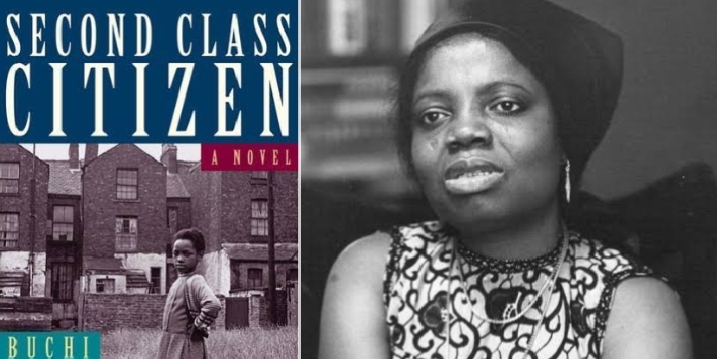
There are writers who tell stories, and there are those who become stories themselves. Buchi Emecheta belonged to the second kind. Long before the world would come to know her name, she was a young woman clutching a notebook in a London council flat, writing quietly between shifts, her children asleep beside her. The manuscript she nursed through exhaustion and loneliness would become Second-Class Citizen — a work that was less an invention and more an exhalation of truth.
The story of Emecheta is one of endurance that wore no armor. Her name did not arrive with the fanfare that often accompanies Nigerian literary giants, yet her words burned with something that could not be ignored. She did not just chronicle the immigrant experience — she embodied it. She carried it in her accent, her silence, her determination to turn pain into prose.
Before she ever became an author, she was an invisible presence in Britain’s postcolonial shadow — a young mother battling racism, betrayal, and cultural displacement. Her journey from that obscurity to literary immortality did not begin with ambition but with survival. She wrote to breathe. She wrote to stay alive.
This is not merely a recounting of her biography; it is a resurrection of the world she fought through — the Nigeria that shaped her, the London that tested her, and the legacy that continues to haunt readers decades after her death. To understand Second-Class Citizen is to understand the woman who refused to remain one.
A Childhood Shaped by Shadows and Dreams
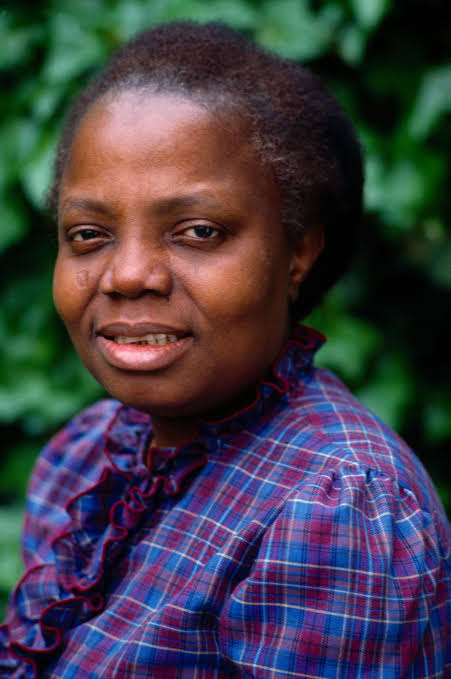
Buchi Emecheta’s story began on July 21, 1944, in Lagos, Nigeria, within a society steeped in colonial contradictions. She was born Florence Onyebuchi Emecheta, the daughter of Jeremy Nwabudinke and Alice Ogugua Emecheta — both Igbo from Ibusa in present-day Delta State. Her family lived modestly, balancing traditional values with the aspirations that education promised in colonial Nigeria.
As a young girl, she learned early that opportunity was a fragile privilege for the poor, and even more elusive for a girl. Her father worked as a railway worker — a respectable but demanding occupation that kept him away from home. Her mother was the quiet keeper of the household, teaching her daughter that dignity did not depend on wealth but on resilience. When her father died, Buchi was barely nine years old. The family slipped further into hardship, but even poverty could not extinguish her curiosity.
Education, for her, was both rebellion and salvation. She attended the Methodist Girls’ High School in Lagos, where she began to sense her difference. She read voraciously — from the Bible to British novels — and started keeping a diary that captured her earliest thoughts on identity and womanhood. In a society that prized obedience over ambition for girls, Buchi began to write her way out of confinement.
Her early years were steeped in contradictions — a Nigeria newly awakening to independence, yet still carrying the weight of patriarchal structures. Her writing instincts were born from that tension: a world changing too slowly for her mind, and a young woman realizing that her pen could be her loudest protest.
Marriage and the Making of a Silent Woman
By the age of sixteen, she was married to Sylvester Onwordi, a young student she met in Lagos. To the outside world, it seemed a promising match — two educated youths bound by aspiration. But beneath the veneer of respectability lay a marriage that would soon mirror the gendered inequality she later dissected in her novels.
When Sylvester received a scholarship to study in London, Buchi followed him with dreams of a new beginning. What awaited her, however, was not the London of opportunity but of isolation. The city was cold in both climate and heart. Racism was not a theory there; it was a daily humiliation — from landlords who refused to rent to Black families, to employers who dismissed foreign accents as inferiority.
As the years passed, her marriage began to suffocate her. She bore five children in quick succession, each birth deepening her sense of invisibility. Her husband forbade her from reading or writing, insisting that her duty lay solely in homemaking. The silence she endured became unbearable. Words, once her refuge, turned into contraband in her own home.
But Emecheta’s rebellion was quiet and deliberate. She began to write secretly while her children slept, documenting the ache of her displacement. The manuscripts she hid from her husband became her emotional escape route. When he discovered one of her early drafts and burned it, she did not scream. She simply resolved to start again — a decision that would define the rest of her life.
That act of destruction became her origin myth. From those ashes emerged Second-Class Citizen, a novel that transformed her private pain into a universal statement about womanhood and survival.
London: Between Survival and Selfhood
London in the 1960s was a city caught between postwar reconstruction and postcolonial reckoning. Immigrants from the Commonwealth arrived in waves, chasing the illusion of equality that Britain had promised. For Nigerian immigrants like Buchi, the illusion faded quickly. Jobs were scarce, housing discriminatory, and loneliness overwhelming.
She found work as a library assistant and later pursued a sociology degree at the University of London. Each day was a negotiation between survival and selfhood. She wrote on buses, at kitchen tables, and in the brief pauses between domestic chores. Writing became less of a career pursuit and more of an act of self-preservation — a reminder that she still existed beyond motherhood and exile.
Her characters — women trapped by tradition and circumstance — were extensions of herself. They did not seek pity; they sought recognition. Through their struggles, she dissected what it meant to be Black, female, and poor in a society built to silence all three.
London was cruel but clarifying. It stripped her of illusions and gave her raw material for truth. Her novels would later echo with that clarity — the knowledge that liberation was not given but fought for, word by word.
The Birth of Second-Class Citizen
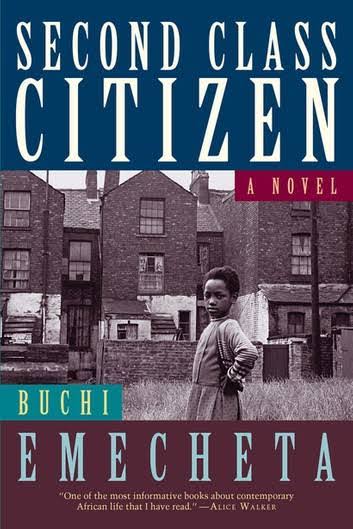
Published in 1974, Second-Class Citizen was the book that announced Buchi Emecheta to the world. It followed Adah Obi, a Nigerian woman navigating the trials of migration, marriage, and identity in Britain. Though fictionalized, its spine was Emecheta’s own life — the early marriage, the oppressive husband, the racist landlords, the yearning for dignity.
The novel’s brilliance lay in its honesty. It did not romanticize Africa or demonize Britain. Instead, it portrayed both societies as mirrors reflecting the same human flaws — patriarchy, prejudice, and hypocrisy. Adah’s struggle was not just geographical but existential. She wanted to belong in a world that continually told her she was “less.”
Critics were quick to note the autobiographical tone, yet Emecheta rejected the notion that her work was mere personal catharsis. She described it as a collective story — a chronicle of thousands of African women whose dreams were silenced by both culture and circumstance.
What set Second-Class Citizen apart was its emotional precision. Every sentence felt lived, every humiliation recalled with surgical clarity. It was not a cry for sympathy but a demand for recognition. And in writing it, Emecheta reclaimed her voice not only as a woman but as a Nigerian, as an African, and as a citizen of a world that had refused her equality.
Breaking Free: The Woman Behind the Words
By the mid-1970s, Buchi Emecheta had walked out of her marriage, determined never to be silenced again. She raised her five children alone while working full-time and writing at night. The act itself was revolutionary — a single Black mother in Britain, daring to imagine a career in literature.
Her resilience turned her into a symbol of defiance. Publishers who once doubted her now sought her out. But fame did not soften her. She remained uncompromising in her portrayal of women’s inner lives, exposing the quiet violences that rarely made headlines — forced marriages, economic dependency, cultural guilt.
Emecheta’s feminism was not imported from the West; it was carved from her lived experience as an African woman. She rejected the label “feminist” early in her career, only to later reclaim it on her own terms. For her, feminism was not ideology — it was survival. It was the courage to say no when tradition demanded silence.
Her voice carried an authenticity that resonated across continents. Nigerian women saw themselves in her struggles. Western readers found in her work an unfiltered look into a world rarely told from within. In bridging those worlds, Emecheta became a transcontinental storyteller — fluent in the languages of pain, migration, and endurance.
Beyond the Novel: Expanding Her Literary Empire
After Second-Class Citizen, Emecheta’s pen did not rest. She wrote In the Ditch (1972), The Bride Price (1976), The Slave Girl (1977), and The Joys of Motherhood (1979) — works that deepened her exploration of gender and identity. Each novel expanded on the central theme that life for women, whether in Lagos or London, was often a negotiation of self-worth.
Her prose was lean but evocative, avoiding ornamentation for the sake of emotional accuracy. She often said she wrote for the “ordinary African woman,” not for critics. Yet her works were studied in universities around the world, earning her respect as one of the foundational voices of postcolonial literature.
Through her narratives, she questioned the romanticized vision of motherhood that African societies revered. In The Joys of Motherhood, she exposed how societal expectations can turn motherhood into bondage. In The Slave Girl, she examined the continuity of oppression through generations.
Her themes were heavy, but her voice carried grace — a calm defiance that made her stories both painful and beautiful. Over time, she became not just a novelist but an institution — proof that literature could emerge from struggle and still carry warmth.
Legacy of Defiance: Redefining African Womanhood
Buchi Emecheta’s legacy cannot be measured merely by her bibliography. It lies in how she redefined the African woman’s narrative — shifting her from the margins to the center. Before her, the image of African women in literature was largely mediated through male authors. After her, that silence was broken.
Her novels offered a mirror that many women had never seen before — one that reflected not idealized motherhood, but complex individuality. She showed that women could be flawed, ambitious, angry, and still deserving of empathy. Her characters were not victims; they were survivors negotiating impossible worlds.
In Nigerian literary circles, she paved the path for future generations — from Chimamanda Ngozi Adichie to Lola Shoneyin — who would expand on the feminist themes she pioneered. Her name became shorthand for courage: the courage to write as a woman, to write about women, and to write without apology.
Even after her death in 2017, her words continue to echo across classrooms and literary festivals. Each reading of Second-Class Citizen feels like a rediscovery of what it means to own one’s story. In a world still haunted by inequality, her voice remains a compass pointing toward freedom.
The Enduring Relevance of Second-Class Citizen
Half a century after its publication, Second-Class Citizen remains startlingly relevant. Its themes of migration, prejudice, and female agency still resonate in an era where displacement has taken new forms — from economic migration to digital exile.
Adah Obi’s journey speaks not just to Nigerians abroad but to anyone who has ever been told they do not belong. The novel’s quiet power lies in its refusal to despair. Despite every setback, Adah — like Emecheta herself — keeps moving, keeps writing, keeps hoping.
Scholars now read the book as both literature and historical document — a rare firsthand chronicle of Black immigrant life in 1970s Britain. Yet beyond academia, it endures because it feels alive. Each page breathes the texture of real experience — the smells of cheap London flats, the rhythm of suppressed tears, the hunger for recognition.
Emecheta did not write to impress; she wrote to testify. And that testimony continues to resonate because it tells a truth too universal to fade: that dignity must be claimed, not granted.
Conclusion: A Name That Refused to Vanish
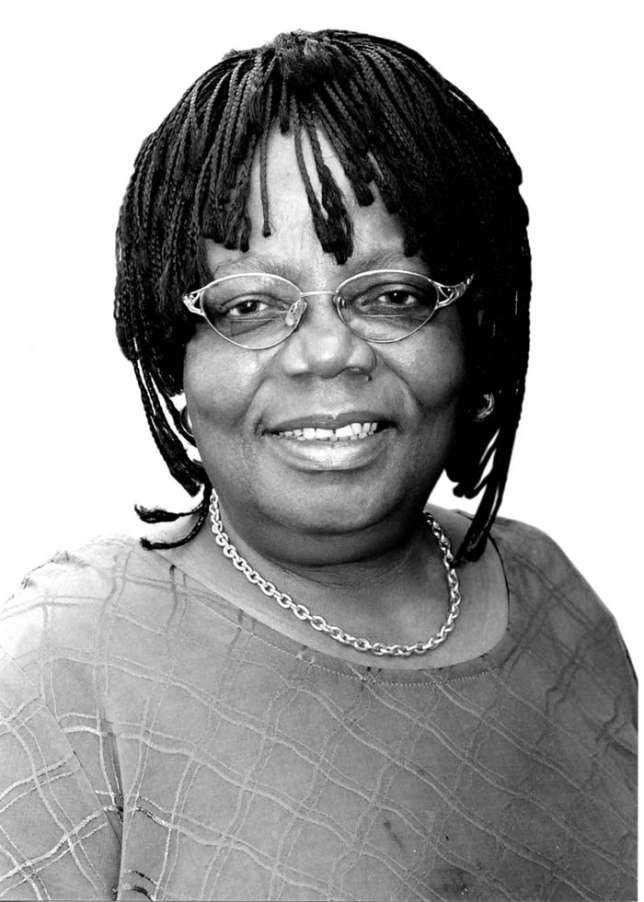
When Buchi Emecheta died in London on January 25, 2017, the tributes that followed came from across the world — from Nigeria’s universities to Britain’s literary institutions. Yet, what made her immortal was not the praise but the path she left behind.
Her life remains a testament to what it means to be both invisible and indomitable. She entered the literary world as an outsider — a single mother, an immigrant, a woman of color — and yet she left it as a pillar. Her journey from Lagos to London, from silence to recognition, stands as one of literature’s quiet revolutions.
In the end, Buchi Emecheta’s story is not about tragedy or triumph, but about transformation. She turned her scars into sentences, her loneliness into legacy. She taught generations that the word “citizen” cannot be defined by class, gender, or geography — only by courage.
Long after her pen has rested, the echo of her defiance remains. She was never a second-class citizen. She was, and remains, a first-class storyteller in every sense of the word.