
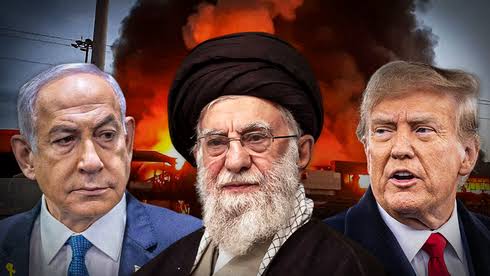
The conflict that intensified across the Middle East in early 2026 between Iran, the United States, and Israel has emerged as one of the most consequential geopolitical confrontations in recent years. What began as a chain of military strikes and retaliatory actions soon expanded into a wider regional crisis involving missile exchanges, strategic warnings, and heightened military readiness across several countries. The escalation captured global attention not only because of the direct military implications but also because of the economic shock tied to disruptions in global oil supply routes.
By February and March 2026, tensions had reached a point where diplomatic channels were quietly activated even as military operations continued. Governments across the world began urging restraint, recognizing that the conflict could spiral into a much larger confrontation if it remained unchecked. At the center of these discussions was Iran’s position regarding how the war could end and under what circumstances Tehran would agree to halt military actions.
Iran’s leadership signaled that it was open to ending the conflict but insisted that any agreement must address deeper security concerns that have shaped its foreign policy for decades. Instead of accepting a short pause in hostilities, Iranian officials laid out a set of demands that they described as necessary for lasting peace. These conditions were widely characterized as tough because they required long term commitments from both the United States and Israel and touched on issues of sovereignty, accountability, and regional stability.
Understanding these demands requires examining the events that led to the 2026 escalation and the strategic calculations behind Iran’s negotiating position. Each condition reflects a mixture of military planning, diplomatic signaling, and domestic political considerations. Together they form the framework through which Iran believes the war should end.
The Escalation That Led to the 2026 Conflict
The confrontation that unfolded in 2026 did not develop in isolation. It was the culmination of tensions that had been building for years between Iran, Israel, and the United States. Throughout 2024 and 2025 there were repeated incidents involving cyber operations, covert strikes, and accusations that Iran was expanding its missile capabilities and strengthening alliances with armed groups across the Middle East. Israel viewed these developments as a direct threat to its national security while the United States continued to apply economic pressure through sanctions designed to limit Iran’s strategic influence.
By late 2025 the situation had already become fragile. Several military incidents in Syria and Iraq involving armed groups aligned with different regional powers raised fears that a direct confrontation could occur. Naval encounters in the Persian Gulf also increased the level of tension as warships from multiple countries operated in close proximity. A ceasefire arrangement reached during late 2025 was intended to stabilize the situation but it quickly deteriorated after both sides accused each other of violating its terms.
The crisis escalated dramatically in January 2026 when strikes attributed to Israeli forces reportedly targeted locations inside Iran that were believed to be linked to military infrastructure. Iran responded by launching missiles toward targets connected to Israeli interests in the region. The exchange of attacks quickly expanded the conflict and brought the United States into a more direct role as American military assets stationed across the Middle East were placed on heightened alert.
By early February 2026 the confrontation had evolved into a regional standoff marked by missile launches, drone activity, and intense diplomatic maneuvering. Global markets reacted immediately to the possibility that energy supplies from the Persian Gulf could be disrupted. Against this backdrop Iran began communicating the conditions under which it would consider ending the conflict.
Iran Rejects the Idea of a Temporary Ceasefire
One of the most significant aspects of Iran’s position during the 2026 conflict was its rejection of the traditional ceasefire model often used in international diplomacy. Iranian leaders argued that temporary truces have historically failed to resolve underlying disputes and instead create short pauses before hostilities resume. This perspective was strongly influenced by the breakdown of the ceasefire agreement reached during late 2025 which collapsed amid mutual accusations of violations.
On February 21, 2026, Iran’s foreign minister publicly stated that Tehran would not halt its military operations simply for the sake of a temporary pause. According to his remarks the country was prepared to continue defending itself until there was a clear and credible guarantee that the war would end permanently. This declaration signaled a shift away from short term de escalation toward a demand for a comprehensive resolution.
The reasoning behind this position reflects Iran’s belief that ceasefires can be used strategically by stronger military powers to reorganize forces and prepare for renewed operations. From Tehran’s perspective a pause in fighting without long term commitments could allow its opponents to regroup while leaving Iran vulnerable to future attacks. By insisting on a permanent end to hostilities the Iranian leadership aims to prevent what it sees as a repeating cycle of temporary truces followed by renewed confrontation.
Domestic political considerations also influence this stance. Accepting a ceasefire without meaningful guarantees could be interpreted within Iran as yielding to external pressure. By demanding a definitive end to the conflict Iranian leaders seek to demonstrate resilience and reinforce the narrative that the country is defending its sovereignty rather than negotiating from a position of weakness.
Demand for Security Guarantees From the United States and Israel
Another central element of Iran’s negotiating position involves the demand for security guarantees from both the United States and Israel.. Iranian officials have repeatedly emphasized that the country cannot agree to end military operations unless there is a credible assurance that future attacks will not occur.
This demand is rooted in decades of mistrust shaped by historical confrontations, economic sanctions, and covert operations attributed to various actors. Iranian leaders believe that without binding commitments their adversaries could resume military action after a temporary lull in the conflict. For that reason Tehran has insisted that any peace arrangement must include mechanisms designed to prevent renewed strikes against Iranian territory.
On March 2, 2026, several Iranian officials speaking through state media reiterated that a long term guarantee would need to involve clear commitments supported by international monitoring or diplomatic frameworks. Although the exact structure of such guarantees remains uncertain the concept reflects Iran’s desire for assurances that go beyond verbal promises.
From a diplomatic standpoint this condition presents serious challenges. Security guarantees between hostile states often require complex legal agreements and the involvement of neutral intermediaries capable of monitoring compliance. Negotiating such arrangements could take extensive time and political effort. Despite these obstacles Iran’s leadership views the demand as essential for ensuring that the end of the war leads to lasting stability rather than another temporary pause.
Calls for Accountability and Explanation
Alongside security guarantees Iran has also insisted that the origins of the conflict must be addressed during negotiations. Iranian officials accuse their adversaries of carrying out attacks that damaged civilian infrastructure and critical economic facilities. According to statements issued during February and March 2026 these actions affected oil installations, transportation networks, and areas located near residential communities.
Tehran has argued that before meaningful negotiations can proceed there must be an explanation of why these attacks occurred and what strategic reasoning was used to justify them. Some Iranian political figures have gone further by suggesting that an official acknowledgment of responsibility should form part of any diplomatic settlement.
This demand carries significant political implications because it touches on the broader narrative of who initiated the conflict. In international disputes each side often presents a different interpretation of events leading to war. Accepting responsibility could create diplomatic consequences that extend far beyond the immediate negotiations and influence public opinion across multiple countries.
For Iran the issue has been framed as a matter of justice and recognition for the damage caused during the fighting. Officials argue that acknowledging the impact of military actions on civilian infrastructure is necessary for rebuilding trust and preventing similar events in the future. Whether such a demand can realistically be incorporated into a final agreement remains uncertain but it highlights the depth of grievances that have emerged during the conflict.
Iran Signals Readiness for a Prolonged Conflict
Another factor shaping Iran’s negotiating position is its long standing military doctrine known as mosaic defense. This strategy was developed with the expectation that any conflict involving technologically superior adversaries would likely become prolonged and complex rather than short and decisive.
The doctrine focuses on decentralizing military command so that regional units can operate independently if central command structures are disrupted. This approach allows Iran’s military to maintain operational capability even in the event of significant damage to major bases or communication networks. By spreading command authority across multiple levels the strategy aims to ensure continuity during periods of intense conflict.
Iranian military planners have spent years building systems that support this approach including missile capabilities, defensive infrastructure, and networks of allied groups operating across the region. These preparations reflect the assumption that endurance and adaptability could offset the technological advantages of larger military powers.
By highlighting its readiness for a prolonged confrontation Iran attempts to convey that it cannot easily be forced into accepting unfavorable terms through pressure alone. The message is intended both for international audiences and for domestic observers who expect their leadership to demonstrate strength in the face of external threats.
Retaliation Threats Against United States Bases in the Region
During the early months of the 2026 conflict Iran repeatedly warned that continued attacks would trigger retaliation against United States military bases located throughout the Middle East. Several countries host American forces including installations in Iraq, Qatar, Bahrain, and Kuwait. These bases play a central role in regional security operations and strategic coordination.
Iranian commanders stated that if hostilities continued these installations could become targets for missile or drone strikes. Even limited attacks could create serious consequences because they would risk drawing additional countries into the conflict. Governments across the region therefore watched developments closely while attempting to prevent their territories from becoming direct battlefields.
The possibility of strikes against foreign bases also increases the danger of miscalculation. Any incident that results in casualties could provoke a larger military response that might expand the confrontation further. As a result diplomatic communication between regional governments has remained active despite the ongoing tension.
This dimension of the crisis highlights how conflicts between major powers rarely remain confined to a single location. When military infrastructure is spread across multiple countries the consequences of escalation can quickly spread throughout the region.
Economic Leverage Through the Strait of Hormuz
One of the most significant global implications of the conflict involves the Strait of Hormuz which is one of the most important shipping routes for energy exports in the world. Approximately one fifth of global oil shipments pass through this narrow waterway connecting the Persian Gulf to international markets.
During the early weeks of the 2026 crisis concerns emerged that military activity near the strait could disrupt shipping traffic. Even the possibility of interference caused oil prices to rise as traders anticipated supply shortages. Insurance costs for tankers traveling through the region also increased significantly which placed additional pressure on global energy markets.
Iran has long recognized the strategic importance of its geographic position near the strait. Although the country has not completely blocked the route during the conflict the potential for disruption alone creates economic leverage. This influence increases international pressure for a diplomatic resolution because prolonged instability could affect fuel prices and economic stability worldwide.
For many observers the situation demonstrates how regional conflicts can quickly transform into global economic challenges. Energy markets respond rapidly to uncertainty and the interconnected nature of international trade means that disruptions in one region can ripple across economies thousands of miles away.
Closing Reflections
The conditions Iran has placed on ending the war with Israel and the United States reveal a negotiating strategy shaped by decades of geopolitical rivalry and strategic caution. Each demand reflects an effort to secure guarantees that would prevent the cycle of confrontation that has defined relations between these powers for many years.
At the same time the demands illustrate the complexity of reaching peace during periods of intense hostility. Agreements that address one side’s security concerns may appear politically unacceptable to the other. This dynamic explains why conflicts involving powerful states often require prolonged diplomacy before meaningful solutions emerge.
The events of early 2026 also demonstrate how regional confrontations can influence global systems ranging from energy markets to diplomatic alliances. Decisions made in the midst of this crisis will likely shape not only the future of the Middle East but also the broader stability of international relations. Whether negotiations ultimately succeed or fail the conditions set by Iran have already reshaped the conversation about how the war might end and what lasting peace would require.