
Some decisions announce themselves loudly. They arrive with speeches, emergency meetings, and political confrontation. Others arrive quietly, shaped not by urgency but by inevitability. These are the decisions that take longer to explain than to execute, because they force a reckoning with truths that have been avoided for years. Nigeria’s government owned refineries fall squarely into this second category.
For decades, the refineries have existed in a strange state of permanent anticipation. They are always close to revival but never quite there. They are undergoing rehabilitation, awaiting final inspections, preparing for phased restarts, or waiting for another round of approvals. Each phase is announced with optimism. Each delay is explained with technical language. Over time, the words lose meaning and the promises lose credibility.
Yet the question Nigerians keep asking remains stubbornly simple. Why can a country that produces crude oil at scale fail to refine it for domestic use?
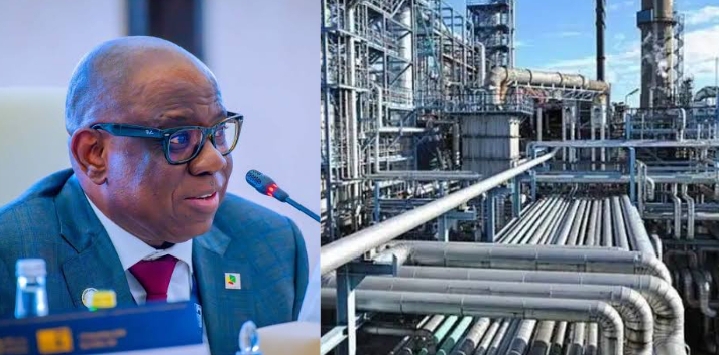
When Bayo Bashir Ojulari assumed office as Group Chief Executive Officer of NNPC Limited, he stepped into an institution burdened not only by infrastructure challenges but by emotional weight. The refineries were no longer just assets on a balance sheet. They had become symbols of national failure, political bargaining chips, and evidence of systemic dysfunction. Expectations surrounded them, frustration followed them, embarrassment clung to them.
Instead of continuing the familiar ritual of reassurance, Ojulari chose disruption through restraint. He shut the refineries down. Not because Nigeria no longer needed fuel. Not because crude oil had disappeared. Not because of sabotage or force majeure. He shut them down because they were bleeding money at a scale that could no longer be justified.
What he discovered inside Nigeria’s refineries, by his own account, was not a temporary setback but a system that had crossed the line from inefficiency into unsustainability.
The Meaning of Refineries in Nigeria
To understand the gravity of Ojulari’s discovery, it is necessary to understand what refineries represent in the Nigerian imagination. These facilities are not merely processing plants. They sit at the intersection of energy security, national pride, employment, and political legitimacy. A functioning refinery in Nigeria carries symbolic weight far beyond its output figures.
A working refinery signals self reliance. It suggests that Nigeria can add value to what it produces. It implies reduced dependence on imports, improved price stability, and stronger industrial capability. It promises skilled employment, technological competence, and institutional discipline. Every restart announcement therefore carries emotional resonance. Every failure feels personal.
By the time Ojulari arrived, the refineries were no longer evaluated on technical performance alone. They had become emotional liabilities. Their repeated failures reflected not just mechanical decay but institutional exhaustion. His first response was to strip away symbolism and order a thorough internal review focused on commercial reality.
This was not a public relations inspection or a ceremonial tour. It was an operational and financial assessment designed to answer one hard question. Do these refineries still make economic sense under their current structure? The answer was unsettling.
The Discovery Behind the Shutdown
Ojulari’s most consequential finding was not a single dramatic revelation but the confirmation of a pattern that had long been suspected but rarely acknowledged at the top. The refineries were operating at monumental losses. Not marginal losses that could be absorbed in the short term. Not transitional losses associated with start up phases. These were deep, persistent losses that worsened with continued operation.
Nigeria has heard about losses before. Underperformance has been explained away as a consequence of aging infrastructure. Maintenance challenges have been blamed on funding gaps. Technical faults have been cited as temporary setbacks. But the phrase monumental losses marked a shift in tone. It suggested that the problem was no longer technical but existential.
A refinery is meant to convert crude oil into value. It consumes input, incurs costs, produces products, and generates revenue. When properly run, the output justifies the expense. What Ojulari described was the inverse. The refineries were consuming crude oil and producing losses. They were turning a valuable national resource into a financial burden.
Even when the refineries operated, they did not behave like businesses. They behaved like obligations. Costs mounted regardless of output. Revenue lagged behind expenses. Each barrel processed widened the gap rather than closing it. In effect, the refineries were burning value in order to preserve appearances.
Low Utilisation and Structural Cost Pressure
One of the clearest indicators of this dysfunction was utilisation. Ojulari disclosed that refinery utilisation hovered between fifty and fifty five percent. In isolation, that figure might not sound catastrophic. In many markets, refineries operate below peak capacity while undergoing optimisation or responding to market conditions.
Nigeria’s case was different because its cost structure was unforgiving. Fixed costs remained high regardless of throughput. Staff salaries, security arrangements, utilities, insurance, maintenance contracts, logistics, and chemical supplies all had to be paid whether the refinery ran at full capacity or half capacity. When output was reduced, revenue fell but costs remained stubbornly intact.
This imbalance meant that the refineries were losing money on every barrel they processed. Instead of moving toward recovery, each operational cycle deepened financial losses. Under these conditions, continuing to operate was not an act of resilience. It was an act of denial.
The Contractor Driven System
Ojulari’s explanation also cast light on another chronic issue. Contractor dependency. For decades, Nigeria’s refineries have existed within a revolving door of shutdowns, rehabilitation contracts, partial restarts, breakdowns, and renewed interventions. Each phase created opportunities for contractors. Each failure justified another round of spending.
Over time, this cycle became self sustaining. The goal shifted subtly from restoring full operational capacity to maintaining a constant flow of contracts. Repairs replaced reform. Temporary fixes replaced structural change. Money continued to flow even as performance stagnated.
Ojulari’s review revealed that heavy spending on contractors and operations continued without a credible pathway to profitability. The system was no longer oriented toward long term value creation. It was oriented toward survival and continuity of expenditure. Under such conditions, the refineries were not being managed as commercial assets but as perpetual projects.
The Structural Admission
Perhaps the most consequential part of Ojulari’s public remarks was his acknowledgement that NNPC lacked the technical expertise, operational depth, and commercial framework required to run the refineries profitably on its own. This was not a personal failure. It was an institutional reality shaped by decades of policy choices.
Globally, many national oil companies partner with experienced operators to manage complex assets. Ownership does not always imply operational control. Nigeria resisted this model for years, often for political reasons. The result was a system where responsibility was diffuse, incentives were weak, and accountability was elusive.
The refineries did not fail because Nigerians lacked intelligence or capability. They failed because the governance model was unsustainable. Without specialised operators, clear incentives, and commercial discipline, the system could not correct itself.
Why Ojulari Pulled the Plug
Ojulari framed the shutdown as a necessary step to stop further decay. The longer the refineries continued to operate under the same structure, the deeper the losses became. Shutting them down was not an admission of defeat. It was an attempt to prevent further damage.
He acknowledged the political and public pressure to keep the refineries running. In Nigeria, refinery operations carry symbolic value. A restart is celebrated. A shutdown is criticised. Rehabilitation contracts are announced as achievements. Failures trigger blame.
Yet Ojulari chose economics over optics. He made it clear that the business model could not be sustained, regardless of political discomfort. Continuing to operate would only postpone reform and magnify losses.
The Pivot to Partner Led Operations
In place of the old model, Ojulari introduced a new strategy centered on partnership. Rather than relying on contractors or state managed operations, NNPC now plans to bring in experienced refinery operators as equity partners. These partners would acquire stakes in the refineries and assume responsibility for daily operations.
The refineries are not being sold outright. Instead, NNPC is prepared to reduce its equity and share control with operators who have proven track records. The logic is simple. Those who manage the assets must also bear the financial consequences of failure.
This approach introduces discipline. It aligns incentives. It shifts responsibility from diffuse bureaucracy to accountable operators. It also opens the door to rebuilding local capacity through exposure to global best practices.
The Dangote Effect and National Implications
Ojulari acknowledged that the emergence of the Dangote Refinery has eased pressure on Nigeria’s fuel supply. This breathing space made it possible to pause state refineries without triggering immediate shortages. It allowed reform to replace desperation.
For Nigerians, the implications are far reaching. Refinery failure affects fuel prices, foreign exchange reserves, inflation, industrial costs, and household budgets. When refineries lose money, the public pays through imports, subsidies, debt, and lost opportunities.
The shutdown also carries human consequences. Workers, host communities, and unions are directly affected. Any partner led model will need to address employment, retraining, and community relations if it is to succeed.
Risk Reward and the National Reckoning
Ojulari’s strategy is bold and risky. It could fail if partner selection lacks transparency, if political interference returns, if labour resistance escalates, or if pricing policies undermine commercial logic. Nigeria has seen reforms collapse before.
But if it succeeds, the rewards are substantial. Functional refineries could reduce imports, ease pressure on foreign exchange, stabilise supply, create skilled jobs, and support industrial growth. More importantly, success would restore public trust in the possibility of institutional reform.
Nigeria’s refining crisis has never been purely technical. It has always been symbolic. A country rich in crude oil importing fuel is a national contradiction. Ojulari’s decision forces a harder conversation. Not about when refineries will work, but about who can make them work and under what structure.
That question, long avoided, may finally determine whether Nigeria can turn its resources into results and its promises into performance.