

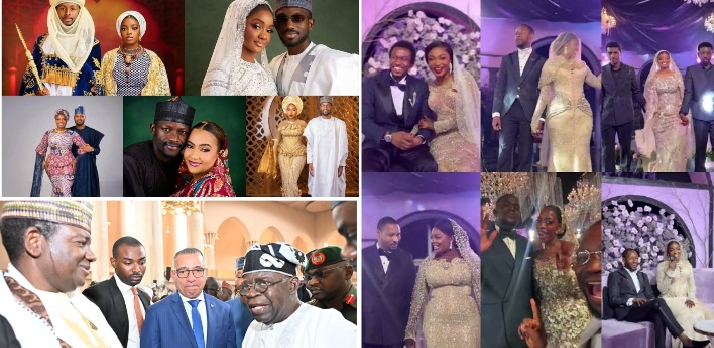
On Friday, February 6, 2026, the National Mosque in Abuja became the setting for one of the most unusual but carefully ordered family events in recent Nigerian public life. Ten children of Minister of Defence Bello Matawalle, five sons and five daughters, were married on the same day through a single Islamic wedding fatiha. There was no staggered timetable and no separate rites. One after the other, the marriages were solemnized within the same sacred space, witnessed by family elders, religious leaders, and some of the most powerful figures in the country.
The event immediately drew national attention, not because weddings are rare in political families, but because of the scale, timing, and restraint involved. Ten marriages are normally spread across many years, even in large households. Choosing to unite them into one day suggested deliberate intention rather than coincidence. Nigerians asked questions quietly and aloud. Why one day. Why one mosque. Why Abuja. Why a joint reception. Why such simplicity around such a massive family milestone?
To understand the decision, one must look beyond surface spectacle and into the layers of faith, family structure, public responsibility, and timing that shaped the moment.
The Event as It Happened
The ceremony took place at the National Mosque, Abuja, on a Friday, which is the most significant congregational prayer day in Islam. The choice of date aligned religious importance with family transition. Ten of Bello Matawalle’s children entered marriage on that day. The daughters were Maryam, Safiyya, Farida, Nana Firdausi, and Aisha. The sons were Ibrahim, Abdul Jalal, Surajo, Bello, and Fahad. Each was married to their respective partners through Islamic rites conducted by the officiating imam.
Following the mosque ceremony, a joint reception was held. Rather than ten separate celebrations, the family hosted one unified event, bringing together relatives, friends, political associates, and well wishers. The structure emphasized collective transition rather than individual display.
President Bola Tinubu attended the ceremony and acted as the Wali, formally receiving the brides on behalf of the family, which is a significant role within Islamic marriage rites. Also present was the President of São Tomé and Príncipe, Carlos Manuel Vila Nova, alongside governors, lawmakers, and senior public officials from across Nigeria. Despite the caliber of attendees, the ceremony itself remained religious in tone and restrained in execution.
Why the National Mosque Mattered
The National Mosque is not merely a large religious structure. It is a symbol of neutrality, national unity, and shared faith. By choosing this venue, Bello Matawalle removed the event from regional identity and local politics. Abuja does not belong to Zamfara or any other state. It belongs to the federation.
Holding the ceremony there ensured that no community felt sidelined and no local authority felt burdened with hosting expectations. It also allowed dignitaries to attend without transforming the event into a state occasion. The mosque provided dignity without excess and scale without spectacle.
The space itself reinforced equality. Each couple stood before the same altar, received the same prayers, and was bound by the same rite. No marriage appeared elevated above another.
One Day Instead of Ten Separate Weddings
In families of this size, weddings can easily become competitive, even unintentionally. Separate ceremonies invite comparison of guest lists, venues, attire, and attention. By choosing a single day, Bello Matawalle eliminated that risk entirely.
All ten children transitioned into married life together. None waited while others were celebrated. None stood alone in the spotlight. The collective structure reflected how the children were raised within a shared household environment rather than isolated units.
From a practical standpoint, the decision also condensed logistics, emotional investment, and resources into one focused period. Rather than stretching family attention over several years, the transition was completed decisively and deliberately.
Faith as the Central Anchor
Islamic marriage emphasizes intention, consent, witnesses, and prayer over elaborate ceremony. Conducting multiple marriages within one setting aligns with that spiritual framework. The fatiha allows for clarity and order, even when several unions are involved.
The officiating imam led prayers not only for the couples but also for national leadership, including President Tinubu. This moment reinforced the spiritual nature of the gathering. It was not a social showcase. It was a religious passage.
By keeping the mosque ceremony simple, the family placed faith above performance. The reception that followed was celebratory but did not overshadow the sacred rite that preceded it.
Timing Readiness and Responsibility
Marriage decisions within many northern Nigerian families are guided by readiness rather than arbitrary timelines. Education, maturity, and family agreement often align naturally. In this case, readiness appeared to converge across ten children within the same period.
Rather than delay some while advancing others, the family recognized the moment and acted on it. There is also a parental dimension to timing. Public life is uncertain and health is never guaranteed. Choosing one day ensured presence, witness, and closure.
For a father, it meant seeing each child step into a new phase under his watch rather than leaving milestones to chance.
The Role of Public Figures Without Political Theater
The presence of national and international figures elevated visibility but did not alter the ceremony’s purpose. No speeches disrupted the flow. No political messaging dominated the prayers.
President Tinubu’s role as Wali was religious rather than political. It symbolized trust and respect within the Islamic framework. Other dignitaries attended as witnesses, not performers.
This restraint distinguished the event from many high profile weddings where politics often overshadows purpose.
Family Legacy Over Public Display
At its core, the decision reflected a philosophy of legacy rooted in family stability rather than public admiration. Legacy here was not about influence or office but about order, continuity, and fairness among children.
By treating all ten marriages equally, Bello Matawalle reinforced unity within his household. Each spouse entered the family under the same conditions and blessings. That balance reduces resentment and strengthens long term cohesion.
Such choices are often invisible to outsiders but deeply felt within families.
Public Curiosity and Private Meaning
The event naturally attracted public curiosity. Ten weddings in one day are rare. Yet curiosity does not negate sincerity. The family did not explain itself extensively. The act itself carried its explanation.
The balance between openness and restraint allowed facts to be known without turning the moment into spectacle. The simplicity of the mosque ceremony contrasted with the magnitude of the occasion, and that contrast is what lingered in public memory.
Conclusion
Bello Matawalle chose a single day to wed ten of his children because faith, timing, readiness, and family structure aligned. The decision was not impulsive. It was measured.
Ten children transitioned together. One ceremony bound them. One father witnessed it fully. One mosque held the moment.
In a country accustomed to loud declarations, this was a quiet but deliberate statement about unity, responsibility, and faith. That is why the day continues to be discussed long after it passed.