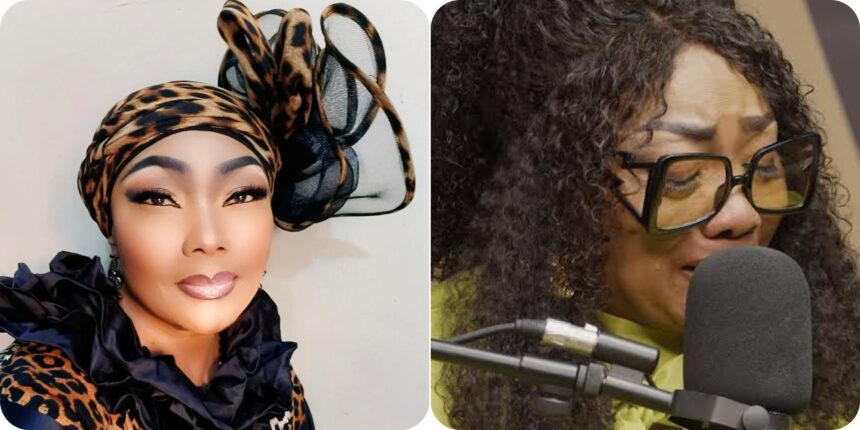
In a rare and deeply candid interview on The Honest Bunch Podcast, actress-turned-minister Eucharia Anunobi opens up about a life defined by brilliance, resilience, and heart-wrenching loss. From her early defiance of familial expectations to the highs of Nollywood stardom, and from single motherhood to the devastating death of her only son, Anunobi’s story is a testament to perseverance and faith.
Correcting the Record: Identity and Early Life
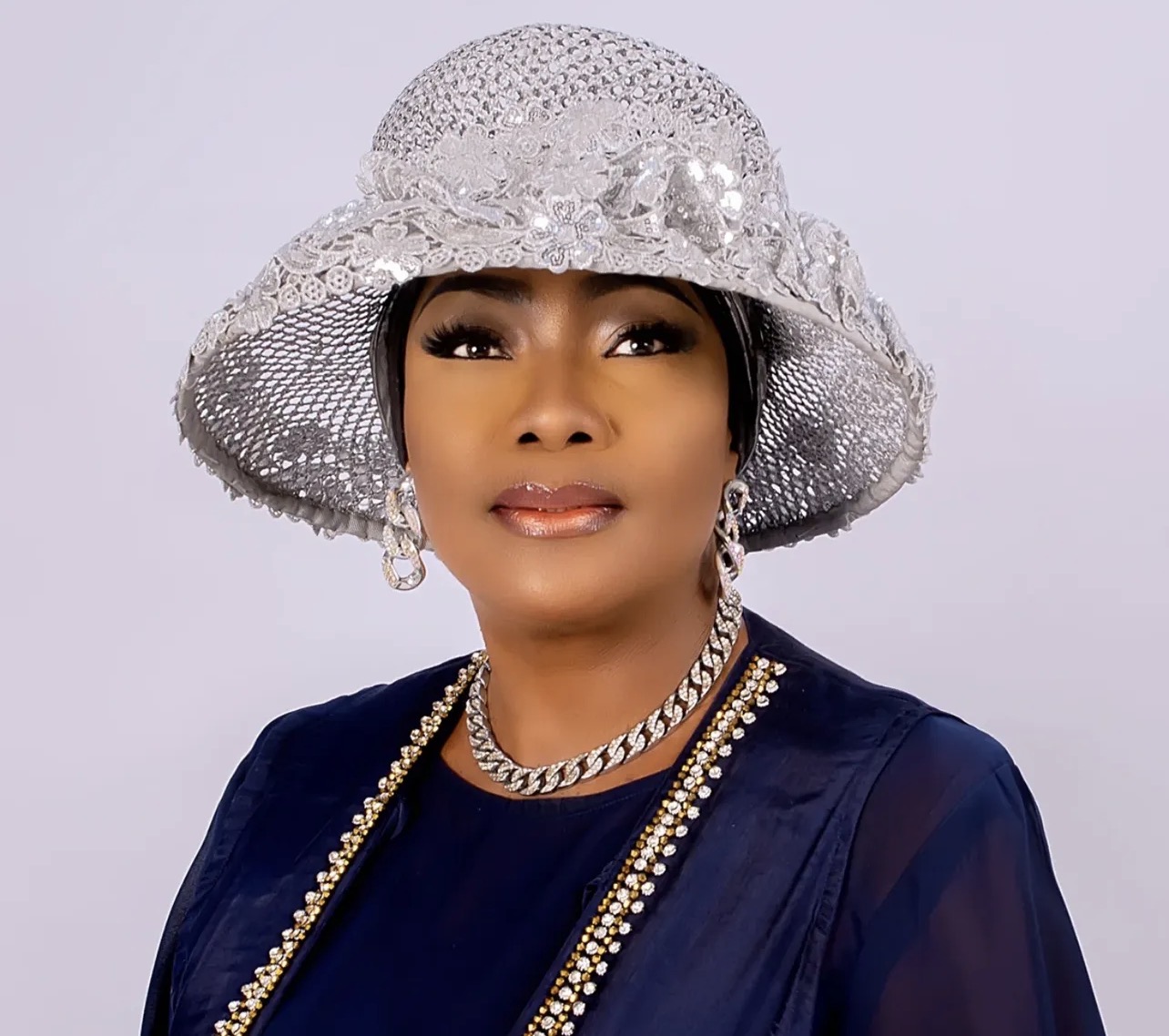
From the very beginning, Anunobi was keen on setting the record straight. “My name is Apostle Dr. Eucharia Anunobi… I’m not Ekwu,” she said emphatically, insisting that her academic and spiritual accomplishments receive proper acknowledgment. Her doctorate, she stressed, was earned through rigorous study, not honorarium.
Born and raised in Victoria Island, Lagos, she recalls her early education fondly: St. George’s Falomo, and finally the Federal School of Arts and Science in Victoria Island, before proceeding to university. “A lot of girls look like their daddy. My daddy was a very handsome man, and I look like my daddy,” she said, highlighting her pride in her roots. By origin, she is from Imo State, though she grew up as a Lagosian.
Her father had envisioned a legal career for her. But Anunobi knew early that law would not satisfy her. She loved books, dance, and the arts, often imagining herself as performers like Michael Jackson, Madonna, and Janet Jackson. Despite her father’s insistence on law, she ultimately applied to study English at University of Nigeria, Nsukka. She only discovered her admission months after other students had already resumed, thanks to a friend who checked the post office box where her letter had been sitting.
Defying Expectations: Choosing Her Own Path
Her father was displeased with both her course choice and her move to Nsukka. At one point, he withdrew financial support entirely. But Anunobi would not be deterred.
While studying English, she revealed how she began modelling in fashion and photography, just to finance her education. “I would say I was a rich student,” she recalled, laughing at the memory. She emphasized that from an early age, she had learned to persevere and make an impact, whether academically or socially. During her national service, she consistently took on leadership roles, refusing to be a backbencher.
From Modelling to Nollywood: The Audition That Changed Everything
Her entry into acting began unexpectedly in the mid-1990s. A letter arrived inviting her to audition for Glamour Girls 2, a sequel to a major Nollywood hit. Initially, she was hesitant. She believed a sequel would offer little opportunity for a newcomer.
But Anunobi decided to attend. She read the extensive script in under an hour and confidently told the producer, “Yes. I’m an actor. An actor is supposed to play any role.” She even agreed to the role’s demanding requirements, including wearing a swimsuit.
The film catapulted her to fame, both in Nigeria and abroad. She received her first major award in London, an accolade that would also pave the way for reconciliation with her father.
A Father’s Blessing: The Moment Everything Changed
For years, Anunobi had pursued her career without her father’s support, even sneaking out to auditions. But after her award in London, everything changed.
Her father asked her to kneel, placed sand in her hands, and told her that as no one could count the grains, so no one could measure her glory. “He hugged me,” she recalled. From that day, her father proudly introduced her as his daughter, finally endorsing her path.
Marriage, Genotype, and a Difficult Decision
Even with professional success, Anunobi’s personal life brought challenges. She entered a court wedding that lacked traditional or church ceremonies. The marriage eventually dissolved, complicated by genotype concerns. Both she and her partner were AS, a pairing that posed risks for any child.
Despite pleas from her partner, she prioritized her child’s wellbeing. She kept only court wedding photographs as a record for her son and proceeded with divorce, noting that her former partner never checked on their son, Raymond, nor attended court proceedings. Eucharia Anunobi narrated:
“I told him that my genotype is AS because I have always known from secondary school, because you know that’s part of what you do you know. So I’ve always known that my genotype is AS… so I did ask him to go and do his genotype and he did and then, it now happened to be AS. I said ah no we can’t continue this relationship.
Charles if you’re listening to me or if you see this video you know that I’m not lying against you.
He convinced me and said baby, he believes that things will turn around the other way and he will also try to check about how some people can get lucky and have a baby and it’ll be AA or AS and not SS… and please I should not leave him, that where is he going to start from, that he loved me so much, you know, blah blah blah, you know, that he’ll be there, you know, he’s never going to leave, you know, blah blah….”
“The only thing I did not burn was the court wedding pictures so I could show my son when he grows up that this is what your dad look like and some of the pictures that he took when my son did his first one year birthday and then had called my lawyer barista Michael, and that’s how he started the proceeding for the divorce. So from that time, he didn’t show up in court.
He never came. I know when I say these people think it’s a lie, but God Almighty knows that is the truth. And Charles, you know it’s the truth. He never called. He never asked. How’s my son? How is Raymond? He never bothered. I carried on. I went everywhere that I could go to try to save my son. I even went back to Ireland, where I had my baby. I had my son in Dublin in Ireland, Republic of Ireland. I started reading. I started studying. I started making research. I started looking for ways and anyhow to save my son. I wanted to do bone marrow transplants. I wanted to do stem cell, you know, replacement, you know, just anything.”
Motherhood Alone: Nurturing Raymond
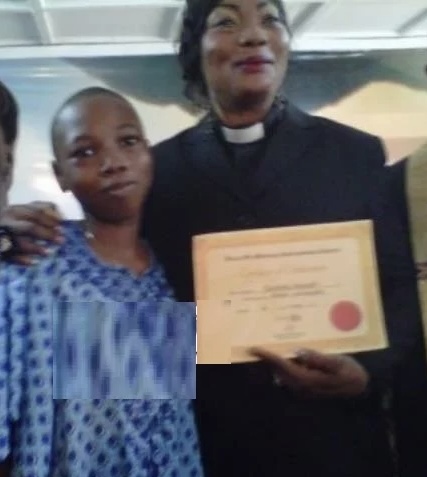
As a single mother, Anunobi became both mother and father, dedicating herself entirely to Raymond’s upbringing. She traveled internationally to ensure his health, researching bone marrow transplants and stem cell treatments, and navigating every possible avenue to secure his care.
“I have carried a baby, I have nurtured a child, I have gone through sleepless nights… I have gone to school, I have done school runs,” she said. Her philosophy was clear: parenting is about guidance, nurturing, and preparing a child for purpose, not just providing for basic needs.
Loss and Faith: The Death of Raymond
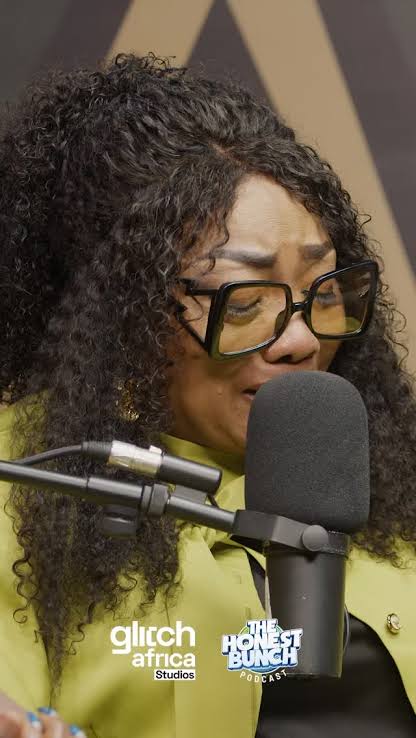
Tragedy struck when Raymond died at the age of 16 due to medical negligence. During what was supposed to be a routine blood transfusion, errors by medical staff led to his rapid decline and eventual death. Struggling to back tears, Eucharia Anunobi emotionally narrated:
“There was nothing wrong with him. I said okay let’s just do his normal regular checkup…”
“The doctor asked me if he [Raymond] had ever done blood transfusion. I said he only did it, you know that initial time when he was young, just before his father abandoned us. I said we did it when he was like three plus. He said, “Okay, now he’s 16, you know, plus. Let him do blood, you know, um transfusion just to, you know, boost his blood.” I said, “Fine.” So they said, “Okay, I needed to go and pay for the blood.” So I went to go and pay for the blood. She gave instruction to a student doctor. So instead of the student doctor to do blood transfusion, the student doctor did blood extraction. I removed three pints of my son’s blood. So by the time I came back with the blood, I saw that my son had turned yellow… and that’s how they said they want to carry my son to ICU. Long story short, the doctors came, they were bringing oxygen. Long story short, that’s how my son died. So my son died out of medical negligence.”
“It doesn’t matter how anybody dies… we all are going to die. And nobody’s going to live forever. The Word of God is my consolation,” she reflected, sharing her grief and faith with striking honesty. Despite the loss, she treasures the time she had with her son and the lessons of love and devotion he inspired.
Spirituality, Relevance, and Living a Purposeful Life
Anunobi has used her experiences to define her approach to spirituality. “Spirituality is your daily life,” she explained, differentiating it from religious ritualism. She believes relevance is earned through intellect, consistency, and the impact one leaves on their generation.
“Your social media handles are your CV. People see who you are by what you say and what you do. What are you leaving behind?” she asked, emphasizing the importance of meaningful contribution over fleeting fame.
Conclusion
Today, Eucharia Anunobi balances her ministry, creative work, and public life with wisdom and resilience. She has become a mentor and guide, using her platform to inspire, teach, and encourage.
“I’ve had the joy of being a mother, a teacher, and a mentor,” she said. “I’ve nurtured a child, guided a generation, and walked through experiences that have made me stronger, wiser, and more grateful.”
Her story, marked by personal loss, professional achievement, and spiritual growth is a testament to perseverance, intellect, and unwavering faith. Even amid the most profound sorrow, she continues to live purposefully, leaving a legacy that will inspire generations to come.