The morning sun spread slowly across Ogun State, painting the Lagos–Ibadan Expressway in pale gold light. The highway hummed with life, a river of vehicles carrying commuters, traders, and travelers between Nigeria’s commercial heart in Lagos and the towns of the southwest. Each driver knew the rhythm of the road, yet each journey carried its own unpredictable currents, a mixture of skill, caution, and chance.
Among the drivers and early travelers was Anthony Joshua, British-Nigerian heavyweight champion, returning to a land that had shaped him long before the roar of stadiums and the glare of global attention. For him, this was more than a drive; it was a passage through memory and heritage, a connection to family, to Sagamu, to the corridors of his childhood, and the boarding school that had instilled discipline and resilience.
The expressway stretches for miles, lined with patches of roadwork, sudden dips, and occasional parked trucks, each presenting a subtle challenge to even the most careful driver. To the untrained eye, it is just a road, but to those who travel it regularly, it is a space of calculated risk and constant vigilance. That morning, Joshua’s journey intersected with that rhythm, a journey that carried personal significance and professional reflection alike.
In the quiet of the early hours, the road held both promise and uncertainty. It is the kind of place where decisions, swift, deliberate, or instinctive, define outcomes that cannot always be foreseen. The story that follows emerges from this tension, exploring not only the events of that day but the larger patterns of movement, risk, and resilience on one of Nigeria’s busiest and most consequential highways.
Sequence of the Accident
By 11 a.m., the black Lexus SUV carrying Joshua and his companions was moving at a pace higher than that allowed by posted speed regulations. The vehicle was part of a multi-car convoy, a formation designed to offer protection and efficiency, yet at this speed, the convoy became a single point of vulnerability. The decision to overtake another vehicle on the expressway set in motion a chain of events that could not be reversed once initiated. Each fraction of a second mattered, each judgment tested by the dynamics of road, vehicle, and environment.
As the SUV maneuvered to pass a slower vehicle, the driver lost control, sending the vehicle toward the roadside stationary truck. Official statements from the Federal Road Safety Corps emphasized speed and overtaking as primary contributors to the collision. Eyewitness accounts also referenced a possible tire burst, suggesting that mechanical failure may have compounded the consequences of an already risky maneuver. Regardless of the precise trigger, the result was immediate and irreversible, a collision that would leave two lives behind while sparing the champion himself.
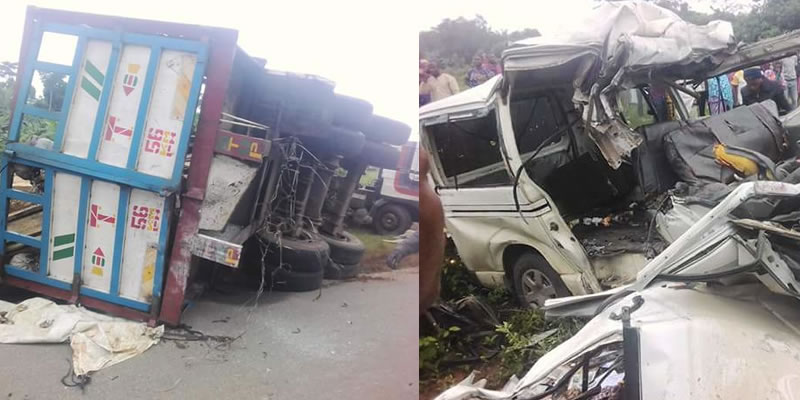
The impact itself was severe. The Lexus crumpled against the stationary truck, metal contorting with the force of momentum meeting immovable mass. The vehicle’s occupants experienced a violent dislocation of space and time, a sudden acceleration and halt that only those inside could understand. Emergency services were summoned swiftly, responding to the distress with urgency, yet the damage to human life had already been realized. Two members of Joshua’s team were pronounced dead at the scene, victims of an intersection between chance and circumstance that is all too familiar on this expressway.
Joshua himself sustained minor injuries, his consciousness intact, allowing for evacuation and transport to a Lagos hospital. He would later be described as in stable condition, a survivor amid loss. The other occupants, including members of his support team and security personnel, experienced varying degrees of injury, some escaping with minimal harm. The accident underscored the capriciousness of road travel, demonstrating how a brief lapse or combination of factors could yield outcomes as divergent as life and death within the same vehicle.
Casualties: Names and Profiles
The tragedy claimed the lives of two individuals close to Joshua, both integral to his professional and personal network. Sina Ghami, widely known as Evolv e, served as Joshua’s strength and conditioning coach. His role extended beyond physical preparation; he had spent years fostering the resilience and discipline necessary for the fighter’s success. His presence in the vehicle reflected the integration of trust and expertise that defined the relationships within Joshua’s circle. The loss of Ghami was not only personal for Joshua but represented a rupture in the team that had built the champion’s foundation.
Latif Ayodele, referred to as Latz, was a personal trainer and longtime friend of Joshua. Known for his Healthy Mindset brand, Ayodele had guided both Joshua and other athletes through rigorous routines, blending fitness strategy with motivational mentorship. His sudden death at the scene marked the disappearance of a guiding presence, someone whose influence had shaped preparation, performance, and personal growth. Together, Ghami and Ayodele embodied the convergence of skill, loyalty, and shared history that makes such losses profoundly felt.
Authorities, including police and the FRSC, confirmed that both men died at the scene. Their remains were transported to the Livewell Morgue in Sagamu for official processing and identification. Early reports simply referred to two male occupants, but subsequent investigations clarified their identities, revealing the depth of personal connection to the athlete and the broader implications for his team. Tributes poured in from the boxing community, reflecting on their professionalism, mentorship, and the relationships that extend beyond the sport itself.
The deaths also underscored the human cost of road travel in Nigeria, particularly on highways known for their risk profile. The Lagos–Ibadan Expressway, with its history of high-speed collisions and fatalities, became the setting for a convergence of fame, accident, and systemic infrastructure issues. These losses illuminated the fragility of life amid circumstances where human agency and environmental hazards intersect.
Investigation and Road Conditions
In the wake of the accident, Nigerian authorities launched a detailed investigation into the causes. Preliminary findings highlighted excessive speed, risky overtaking, and potential mechanical failure as contributing factors. Investigators focused on the interaction of driver behavior, vehicle maintenance, and environmental conditions, recognizing that each element played a critical role in determining the outcome. Eyewitness testimonies, vehicle telemetry, and physical evidence from the crash site formed the backbone of a comprehensive inquiry aimed at understanding both immediate and systemic contributors.
The Lagos–Ibadan Expressway has long been recognized as one of Nigeria’s most accident-prone highways. Over 11,000 vehicles were recorded as involved in collisions over a 27-month period leading up to 2025, with fatalities numbering in the dozens during short spans of months. Factors such as heavy traffic, insufficient enforcement of speed regulations, and the presence of roadside hazards combine to create a high-stakes environment for travelers. Construction work and lane closures further exacerbate the risk, making vigilance essential for every vehicle.
Authorities emphasized that the expressway requires both infrastructural improvements and behavioral adjustment from drivers. Enforcement of speed limits, proper vehicle maintenance, and cautious overtaking are critical measures to reduce accidents. The crash involving Joshua’s convoy became a case study for examining how these elements intersect in real-world scenarios. Analysts noted that the accident could have broader implications for safety policies, emergency response strategies, and public awareness campaigns.
The event also drew attention to the challenges of highway management in regions where economic activity, population density, and transportation needs collide. The Lagos–Ibadan corridor is more than a roadway; it is an artery of commerce, culture, and mobility. Accidents on this highway reverberate across local communities, impact national narratives, and, in cases involving high-profile figures, attract international scrutiny. Joshua’s accident, therefore, is situated within a larger framework of recurring infrastructure and safety challenges that demand sustained attention.
Anthony Joshua’s Ties to Ogun State
Joshua’s presence on the highway was rooted in deep personal and cultural connections to Ogun State. Born in Watford, United Kingdom, to British-Nigerian parents with family roots in Sagamu, he spent formative periods attending boarding school at Mayflower School in Ikenne. The discipline and exposure he experienced during this time influenced his later professional approach to training, competition, and public engagement. These connections extended beyond childhood, informing a pattern of homecoming visits and cultural reintegration that characterized his relationship with the region.
Over the years, Joshua maintained regular engagement with local communities and officials. Social media posts, video footage, and press reports document these visits, reflecting a deliberate effort to stay connected to family, heritage, and the environment of his roots. He was welcomed at multiple locations in Sagamu, reinforcing his personal ties and establishing a public presence that fused athletic accomplishment with cultural identity. His journey on December 29 was part of a continuum of such visits, underscoring the significance of Ogun State in his personal narrative.
Family members and extended relatives still reside in Sagamu and surrounding areas, providing context for Joshua’s travel patterns. The roads he took were familiar in part due to repeated use, yet familiarity does not negate risk. Infrastructure limitations, traffic density, and dynamic environmental conditions mean that even experienced travelers face hazards. This interplay between connection and danger heightened the significance of the events that unfolded on the Lagos–Ibadan Expressway.
Joshua’s identity as a British-Nigerian athlete visiting his homeland places the incident at a crossroads of personal history and public attention. His survival juxtaposed against the loss of his companions highlights both the randomness and fragility inherent in road travel. The accident reinforces the ongoing dialogue around safe transit, emergency preparedness, and the responsibilities of both drivers and authorities along critical national corridors.
Historical Context of the Lagos–Ibadan Expressway
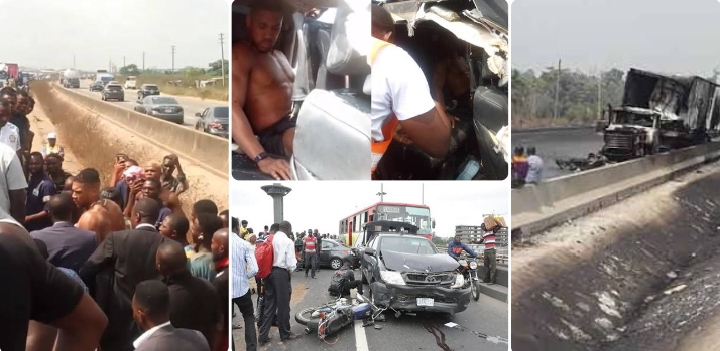
The expressway has a history marked by accidents, emergencies, and significant loss of life. Notable incidents include the Otedola Bridge petroleum tanker explosion in 2018, which destroyed over 50 vehicles and killed at least nine people. In 2025 alone, multiple fatal collisions occurred along the same corridor, emphasizing patterns of risk associated with speed, congestion, and human error. Other regions of Nigeria have experienced similar tragedies, such as fuel tanker explosions in Jigawa and Ibadan, highlighting systemic challenges across national highways.
Frequent travelers along this corridor are well aware of the potential dangers. The combination of commercial traffic, intercity commuters, and occasional celebrity convoys creates an unpredictable environment. Roadwork zones, parked trucks, and variable traffic enforcement exacerbate the inherent risk. Each incident adds to a cumulative understanding of hazards, but systemic change has often lagged behind the accumulation of data and anecdotal evidence.
Authorities have highlighted that infrastructure improvements, enforcement of traffic laws, and driver education are critical to reducing fatalities. Yet the expressway remains one of the busiest in Nigeria, linking economic centers and serving as a conduit for people, goods, and services. The accident involving Joshua represents both a singular event and a continuation of a documented pattern of risk, situating a personal tragedy within a broader societal challenge.
Public discussion following such accidents frequently centers on prevention, accountability, and emergency response. While high-profile incidents attract international media, the underlying causes are endemic and require sustained attention. The combination of human behavior, vehicle integrity, and road design forms a matrix in which accidents occur, and this matrix must be addressed comprehensively to reduce recurrence.
The Aftermath and Public Reaction
Following the accident, public figures and institutions expressed condolences and concern. The Ogun State Government issued statements of sympathy to the families of the deceased, while President Bola Ahmed Tinubu extended national recognition of the tragedy and wished recovery for Anthony Joshua. Social media campaigns highlighted the contributions of Sina Ghami and Latif Ayodele to the athlete’s career and the boxing community, reinforcing their roles as mentors and friends beyond professional capacities.
The boxing world responded with reflections on the unpredictability of life and the fragility of even the most controlled environments. Peers, trainers, and fans acknowledged the dedication of those who travel with athletes, often placing themselves at risk to ensure preparation, safety, and success. The incident also rekindled conversations about convoy security, safe travel protocols, and the responsibilities of both drivers and support teams on high-risk highways.
Emergency responders and medical personnel were praised for their swift action, ensuring that Anthony Joshua received immediate care and that the accident scene was secured. These efforts, while commendable, highlighted the challenges of response in high-traffic areas where congestion, onlookers, and environmental factors complicate intervention. Lessons drawn from the incident have implications for policy, training, and infrastructure planning.
The broader public discourse emphasized the human cost of accidents on Nigerian highways. While Joshua’s survival drew global headlines, the deaths of Ghami and Ayodele resonated locally and internationally as a reminder of the vulnerabilities inherent in road travel. Their passing underscored the need for systemic attention, enforcement, and cultural shifts in approach to speed, overtaking, and highway discipline.
Lessons and Reflections
The accident is a stark reminder of the interplay between personal agency and environmental risk. Even with careful planning, professional discipline, and experience, variables beyond control can produce tragic outcomes. Anthony Joshua’s survival juxtaposed against the loss of two key members of his team exemplifies the unpredictable nature of travel and the constant presence of danger on high-speed expressways.
Infrastructure improvement, driver training, and vehicle maintenance emerge as central themes in understanding risk. Policymakers and traffic authorities have long pointed to the Lagos–Ibadan Expressway as a corridor requiring intervention, yet systemic challenges persist. The accident adds urgency to conversations around regulation, enforcement, and the broader societal investment required to reduce casualties and prevent recurrence.
Cultural and personal connections also frame the incident. Joshua’s ties to Ogun State, his visits to Sagamu, and his engagement with family and local communities humanize the narrative. They place a globally recognized athlete in the same spaces occupied by everyday citizens who navigate the same roads, facing similar risks. This intersection of celebrity, heritage, and everyday hazard magnifies the impact and resonance of the event.
Finally, the incident serves as a reflection on mortality, planning, and contingency. The presence of close companions, the structure of a convoy, and the layered precautions taken could not prevent the ultimate outcome. Yet the survival of Joshua and others demonstrates both the fragility and resilience present in human experience, highlighting the thin line between tragedy and continuation that governs life on Nigeria’s highways.