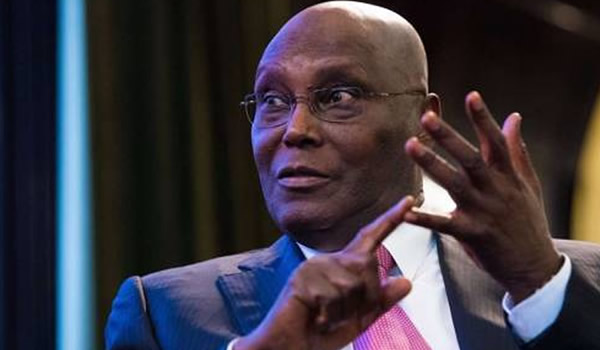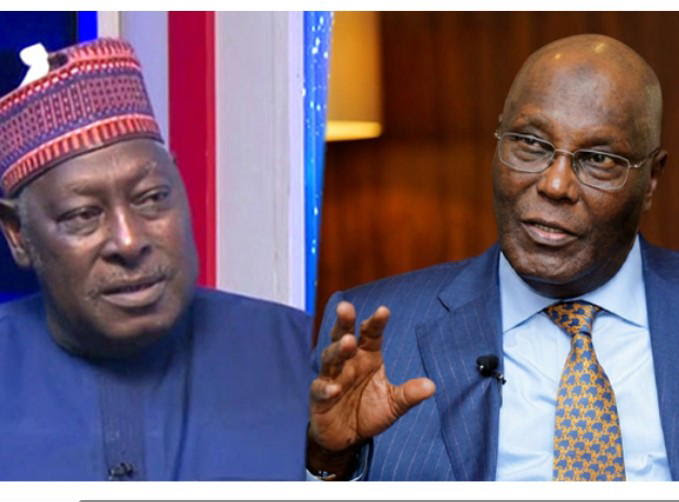
Lawal’s revulsion at Atiku’s emergence as ADC presidential candidate is not the first time he has shown explicit and strong repugnance at actions, decisions or events that are anathema to his creed, conviction, disposition and belief.
If the exit of Peter Obi from the Africa Democratic Congress (ADC) leaves it terribly weakened as his move away from the party undoubtedly robbed it of the only politician with a massive organic cult-like following Nigeria has seen in recent years, then the exit of Former Secretary to the Government of the Federation (SGF), Babachir Lawal, from the party has dealt a heavy blow to the president ambition of the party’s Presidential candidate, Atiku Abubakar.
However, it was not Lawal’s decision to leave ADC and ditch Atiku that surprised many but the manner in which he left, particularly the virulent and acerbic nature of the language he used in the statement announcing his decision to leave, stunned many. In a statement on his social media pages on Tuesday, he described Atiku and his ‘cabal’ as ‘irredentist Fulani and religious hegemonists’, noting that ADC’s primary that produced Atiku as the party’s presidential candidate was manipulated in his favour and called it a ‘disgraceful charade’.
He also labelled the former vice president “an incompetent octogenarian, tribal and religious bigot” and vowed to work with others to stop him ‘from coming close to the presidential office’. His resignation and scathing remark about Atiku came three days after ADC concluded its presidential primary and declared Atiku as its presidential candidate.
However, political observers noted that the exit of Lawal from the ADC and the lampooning of Atiku was a culmination of a chain of events in the ADC which led to pent-up disenchantment on the part of Lawal. One such event is the exit of Peter Obi from the party in early May. They believe Lawal became disillusioned with the idea that ADC represents hope and is the dependable vehicle through which the ruling All Progressives Congress (APC) could be ousted from power after Obi left the party for the Nigerian Democratic Congress but chose to wait until after the presidential primary before making his stance public.
His exit has shifted focus to the ADC, particularly in Adamawa State, where the party remains one of its strongest structures due to Atiku’s political influence and support base.
The rift
It is gathered that the battle for control of the ADC structure in Adamawa State had been ongoing long before Lawal’s resignation. Tension, insiders say, has been simmering for months before frustration boiled over on Tuesday.
The struggle involved key political figures within the party, including Atiku Abubakar, Babachir Lawal and Senator Aishatu Binani, with each camp seeking to assert control and exert their influence over the party’s leadership structure in the state.
Party insiders familiar with the internal wrangling disclosed that at the root of the power tussle is the choice and selection of the chairman of the Adamawa State branch of the party. Sources say Atiku favoured and backed Barrister Sadiq Dasin for the position of state chairman, while Binani threw her weight behind Sai’du Komsiri. Lawal, on the other hand, supported and insisted that Comrade Shehu Yohanna, leader of the legacy party structure, should remain in office.
The power struggle would later snowball into legal battles with the parties turning to the courts to solve the impasse. The Court of Appeal sitting in Yola reportedly recognised Dasin as the state chairman. According to Party insiders, an earlier agreement among the legacy group, the transition bloc and Binani’s camp, to share key positions in the party was reneged on, deepening mistrust among stakeholders.
It is gathered that in the early days of the adoption of the ADC as the opposition coalition party and the restructuring that followed, Atiku endorsed Lawal as the party’s North-East National Vice Chairman. Sources also alleged that attempts were made to replace Yohanna with a former state vice chairman, Mustapha Arabie. The leadership tussle again ended in court, where a High Court in Yola reportedly affirmed Yohanna’s position as chairman.
The party’s infighting and division worsened when Lawal set up a transition caretaker committee led by Dasin to oversee the affairs of the party in the state. In response, Umar Bello Jada – a member of the party’s National Working Committee (NWC) and a key ally of Senator Binani, reportedly backed a parallel structure led by Sai’du Komsiri.
The emergence of parallel leadership structures deepened the crisis and fractured in Adamawa, resulting in fresh litigation over the legitimate leadership of the state chapter. Although a court ruling later favoured Komsiri, disputes persisted until Atiku intervened in a bid to reconcile the factions and restore stability within the party.
Lawal’s revulsion at Atiku’s emergence as ADC presidential candidate is not the first time he has shown explicit and strong repugnance at actions, decisions or events that are anathema to his creed, conviction, disposition and belief. In the build-up to the 2023 presidential election, he voiced his discontent and railed against the decision of President Bola Tinubu to pick a Muslim running mate in the person of Kashim Shettima. He would later leave the APC for this reason.