
Every year, thousands of Nigerian candidates walk into WAEC examination halls carrying items they should not have. Some do it knowingly. Many do not. Either way, the outcome is the same: results withheld, results cancelled, and futures put on hold over items that could have simply been left at home.
The West African Examinations Council is not lenient on this. In 2025 alone, results from over 190,000 candidates were withheld following malpractice allegations, with banned mobile phones among the leading cited infractions. The numbers have been consistently high for years, and WAEC has made clear it intends to keep tightening enforcement.
If you are sitting WAEC this year or next, or if you have a child or sibling preparing for WASSCE, this article covers every category of item banned from WAEC examination halls in Nigeria and explains the reasoning behind each restriction.
List of Items Banned from WAEC Examination Halls in Nigeria

The rules governing what candidates can and cannot bring into a WAEC examination hall are not new, but they evolve as technology does. Items banned from WAEC examination halls in Nigeria now extend well beyond the obvious to include wearable technology, communication accessories, and even certain types of stationery that can be used to conceal written material. Understanding these prohibitions in full is the single most practical thing a candidate can do before exam day.
Electronic and Communication Devices
This is the category WAEC enforces most aggressively, and it accounts for the majority of malpractice infractions recorded each year. The following are prohibited without exception:
- Mobile phones (any type, including basic phones and smartphones)
- Smartwatches and smart fitness bands
- Bluetooth earphones and earbuds
- Wireless earpieces and microphones
- Tablets and iPads
- Laptops and portable computers
- Pagers and personal digital assistants (PDAs)
- Pen drives and USB storage devices
- Electronic pens and scanners
- Smart glasses
The instruction is unambiguous: possession of any of these items in the examination hall, even if the device is switched off and untouched, is treated as a malpractice offence. WAEC does not require proof of use. Presence alone is sufficient grounds for sanctions.
Ordinary, non-programmable scientific calculators are permitted for subjects that require them, such as Mathematics and Physics. However, programmable calculators and any calculator with wireless capability are banned.
Printed and Written Materials
Any text-based material that was not issued by WAEC in the examination hall itself falls under this prohibition. This includes:
- Textbooks, reference books, and exercise books
- Handwritten notes and study summaries
- Prepared answer sheets or pre-written responses
- Cribs, cheat sheets, or memoranda
- Loose paper or blank sheets not provided by WAEC
- Printed materials from external sources
Candidates are also specifically warned against tearing any portion of their question papers or attempting to remove answer booklets from the examination hall. These constitute separate offences.
Unauthorised Stationery and Writing Instruments
WAEC provides answer booklets, and candidates are expected to come with only the approved stationery. The following are either prohibited or subject to strict conditions:
- Correction fluid (Tipp-Ex) and correction tape
- Pencil boxes and pencil pouches
- Writing pads
- Erasable ink pens
For the objective (multiple choice) section, candidates are required to use HB pencils only. For essays and written responses, black or blue ballpoint pens are the accepted standard. Felt-tip pens and ink pens that smear or bleed through pages are generally discouraged by supervisors.
Geometry sets and mathematical sets are permitted for subjects that require them, but only the instruments inside. Candidates should not bring cases that contain concealed notes or foreign materials within the packaging.
Food, Drinks, and Personal Items
The examination hall is not a space for personal comfort items. WAEC prohibits:
- Food items in any form, packaged or otherwise
- Personal water bottles and drinks
- Handbags and backpacks
- Wallets and purses
- Caps, hats, and head coverings (except on religious grounds, subject to supervisor discretion)
- Sunglasses and tinted eyewear not prescribed medically
- Belts with metallic components that may contain concealed items
Candidates with medical conditions that require them to carry items such as water, food, or medication into the hall must obtain prior written clearance from the examination centre supervisor. Ad hoc requests on exam day are typically not accommodated.
Personal Accessories and Wearables
The expansion of wearable technology has prompted WAEC and examination bodies across the region to tighten rules on what candidates wear into the hall. The following are prohibited:
- Smartwatches of any brand or model
- Fitness trackers with data storage or wireless capability
- Jewellery or accessories that could conceal written text
- Metallic wristbands or bangles that could interfere with electronic detection
A standard, non-electronic wristwatch with no data storage capacity is generally permitted, as it cannot store or transmit information. However, any watch that connects to a phone, stores notes, or runs applications falls squarely in the prohibited category. When in doubt, leave it at home.
Online and Social Media Conduct During Exams
The ban on communication devices extends beyond the physical hall into online behaviour. WAEC has explicitly warned candidates against:
- Posting live exam questions or answers on social media platforms
- Receiving exam questions or answers via any online channel
- Accessing or patronising websites that claim to offer leaked questions

WAEC has confirmed it uses technological tools to identify candidates who interact with such platforms during examination periods. The consequence is immediate: results withheld pending investigation, and if culpability is established, full result cancellation. In serious cases, WAEC has stated that matters may be referred to the Nigeria Police Force for criminal investigation and prosecution.
What Candidates Are Required to Bring
Understanding what is banned is only useful alongside knowing what is permitted and required. Candidates must come to the examination hall with:
- Original printed photo card (admission notice)
- HB pencils for the objective paper
- Black or blue ballpoint pens for essay sections
- Eraser and pencil sharpener
- Mathematical set (for relevant subjects)
- Approved scientific calculator (for subjects that require it, non-programmable only)
Candidates should arrive at least 30 minutes before their scheduled paper time. WAEC supervisors are authorised to conduct physical searches at the entrance to the hall, and candidates are expected to submit to this without objection.
Consequences of Bringing Banned Items
The penalties are not minor administrative slaps. WAEC operates a graduated consequence system, and the outcomes are serious:
- Results withheld pending investigation for the subject(s) affected, or in some cases the entire WASSCE result
- Full cancellation of results if the candidate is found culpable
- Ban from sitting future WAEC examinations
- Referral to law enforcement for criminal investigation in severe cases
In 2025, nearly 192,000 candidates had their WASSCE results withheld over malpractice allegations, according to WAEC’s official announcement at its Lagos headquarters. The figure had been as high as 215,267 in 2024. WAEC’s Head of Nigeria National Office, Dr. Amos Dangut, described the persistence of malpractice as a structural problem and emphasised the council’s zero-tolerance position.
Schools whose supervisors or staff are implicated face their own consequences. Teachers can be reported to their State Ministries of Education, and supervisors who aid candidates may be permanently barred from serving WAEC functions.
Why WAEC Tightened Enforcement in Recent Years
Several shifts have driven WAEC’s intensified approach to examination security. Widespread smartphone ownership among secondary school students made mobile phone-assisted cheating far easier than it was a decade ago. The proliferation of social media platforms created channels for the rapid sharing of question papers, even as exams were in progress.
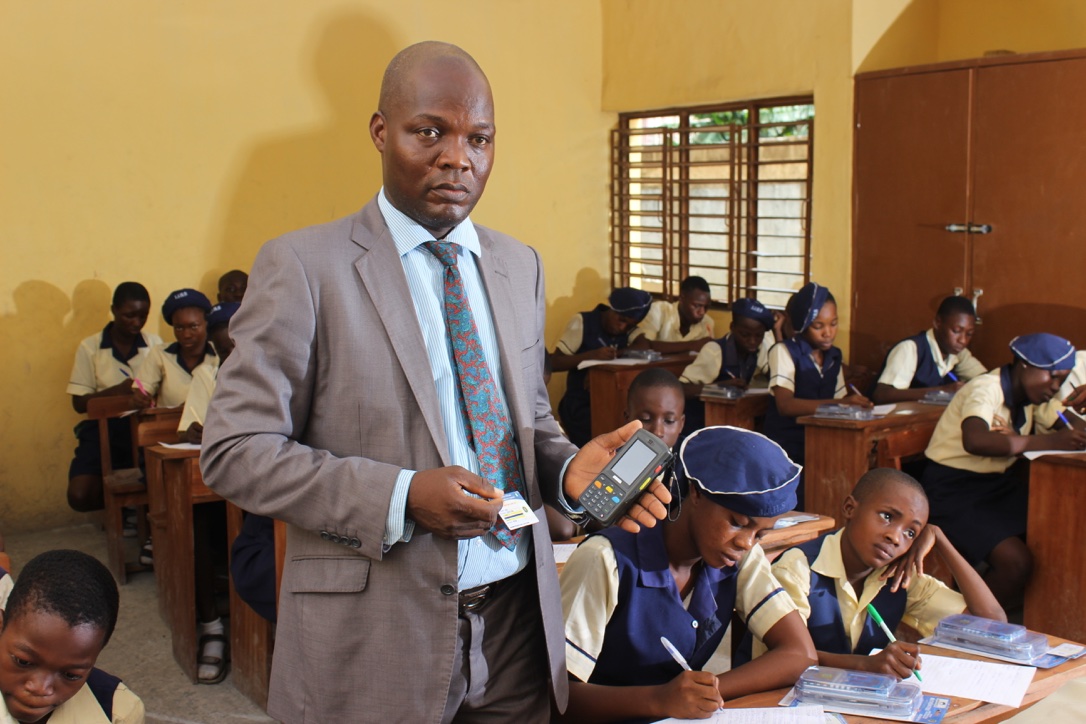
In response, WAEC introduced the Candidate Identity Verification, Attendance, Malpractice, and Post Examinations Management System, known as CIVAMPEMS, to verify candidate identities at the point of entry, capture attendance records digitally, and flag malpractice incidents for post-examination review. The council also introduced paper serialisation in 2025, meaning that candidates sitting the same subject at the same time receive slightly different versions of the objective questions, making coordinated cheating less effective.
The biometric verification system now used at most examination centres means impersonation is considerably harder than it was. Fingerprint data captured during registration is cross-checked at entry.
Practical Steps Before Your Exam Day
The simplest approach is one of removal rather than judgment. Before exam day:
- Empty your bag completely and repack only approved items
- Remove your SIM card from any phone you might accidentally carry into the hall, then leave the phone at home entirely
- Remove any smartwatch and replace it with an analogue watch if you need to track time
- Do not carry any handwritten materials, even if they are unrelated to your subjects
- Confirm with your school’s exam coordinator which calculators are permitted for your specific subjects
If you have any doubt about whether an item is permitted, the safest choice is to leave it outside. WAEC does not provide storage facilities at examination centres. Once you enter the hall with a prohibited item, regardless of your intent, you carry the risk.
The Stakes Are Real
What makes this worth taking seriously is that the consequences fall entirely on the candidate. A withheld result delays university admission, affects scholarship eligibility, and in some cases forces candidates to re-sit a full examination cycle. The WAEC certificate carries weight precisely because it is treated as a credible, independently administered qualification. That credibility depends on the integrity of the examination process.
Nearly two million candidates sat the 2025 WASSCE. Of those, roughly 38 percent obtained the five credits with English and Mathematics that most Nigerian universities require for admission. For anyone sitting WAEC, the exam itself is the challenge, and it is entirely manageable without the items on the banned list. There is no strategic advantage in the risk.
Bring what WAEC says to bring. Leave everything else at home.