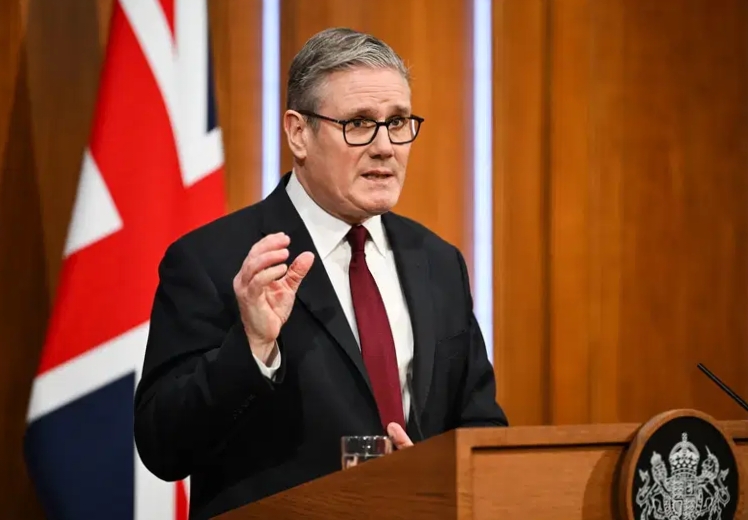
British Prime Minister Keir Starmer has stepped down after less than twenty-four months in office marked by a myriad of tumultuous events at home and abroad.
The prime minister announced his resignation on Monday in a moving and emotional speech outside 10 Downing Street.
“Every decision I have taken has been about putting the country I love first. That is why I will resign as leader of the Labour Party,” Starmer said.
Starmer disclosed that the process of selecting a new leader for the beleaguered party would begin next month but he would remain in office pending the emergence of a successor who is expected to be in place before parliament returns from the summer recess in September.
“I will also give my successor my full and unequivocal support, knowing that they will inherit a Britain that is far stronger and fairer than the one I inherited two years ago,” Starmer said in his resignation speech.
Veteran politician, Andy Burnham, is expected to take the mantle of leadership from Starmer having won a consequential special election on Thursday, allowing him to return to parliament and clearing his path to run for party leader.
He will be sworn in as a member of parliament on Monday.
“I will remain in post as prime minister until the contest is complete, and I will do everything I can to ensure an orderly handover of power,” Starmer added.
Until the weekend, Starmer had vowed not to relinquish his position as the prime minister as pressure on him to step down intensified. For months, he stood his ground amid many scandals and high-profile resignations that made it nearly impossible for him and his Labour Party to continue to stay in office.
But Britain is now set to get its seventh prime minister in a decade.
Starmer’s imminent exit as Labour leader comes a day before the 10th anniversary of the Brexit referendum, which engendered the UK’s exit from the European Union and an unprecedented wave of prime ministership.
Starmer has been hailed for reshaping Labour into an election-winning party which clinched a decisive victory in 2024, ending 14 years of Conservative rule.
But his premiership has also been characterised by miscalculations and policy missteps ranging from benefit cuts to criticism over defence spending plans.
He almost lost his position in March over his scandalous decision to appoint Peter Mandelson, a known associate of the late US sex offender Jeffrey Epstein, as the UK’s ambassador to Washington.
He has also been unable to stem the rising tide and popularity of the far-right, anti-immigration Reform UK party — which defeated Labour in local elections in May, further weakening Starmer’s position.