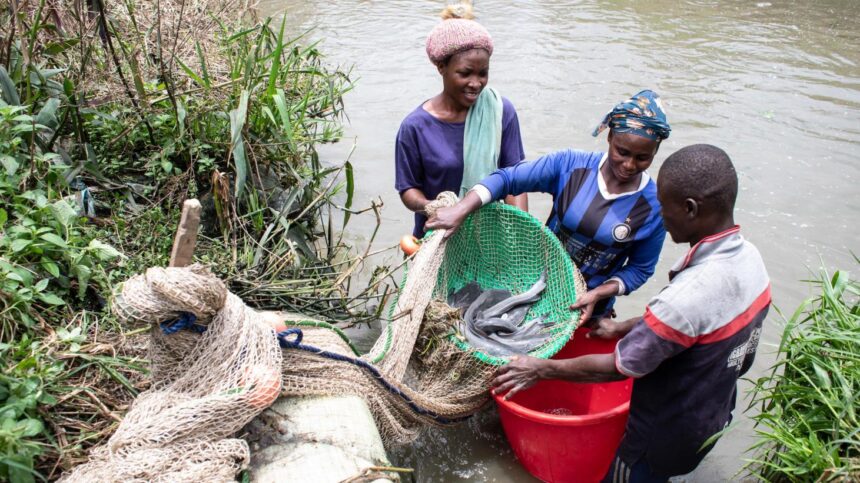
Nigeria consumes over 3.6 million metric tonnes of fish every year. Local production, despite years of policy promises, hit just 1.4 million metric tonnes in 2025. That gap is being filled, for now, by frozen imports from China, Norway, and other countries, imports that cost the country significant foreign exchange and keep protein expensive for ordinary Nigerians. Somewhere inside that gap is one of the most straightforward business opportunities available to anyone willing to learn and put in the work.
Catfish, specifically the African catfish, is the single most consumed farmed fish in Nigeria. It shows up in pepper soup, point-and-kill joints, supermarket freezers, and the smoky stalls of market women all the way from Kano to Calabar. Demand for it does not soften during recessions, it does not depend on fashion, and it does not require exportation to find buyers. The market is local, consistent, and enormous.
The question is not whether catfish farming in Nigeria is a viable business. The numbers already answer that. The real question is whether someone going into it in 2026 understands what the business actually demands, and where the failures usually come from.
Catfish Farming in Nigeria
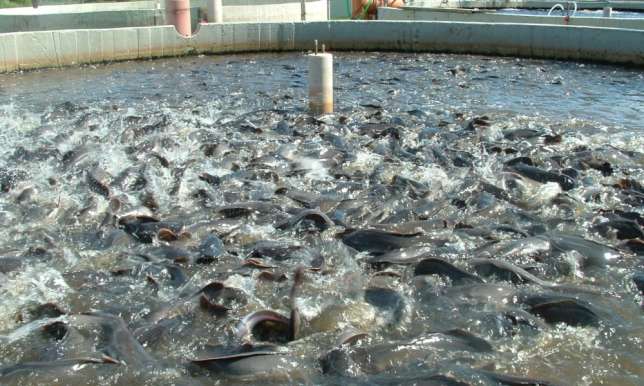
Catfish farming in Nigeria sits at an unusual intersection: a product that Nigerians eat daily, a supply that cannot keep up with demand, and a production cycle that takes as little as four months from stocking to harvest. What it rewards is preparation. What it punishes is the version of this business that people start after watching a YouTube video and thinking the rest will figure itself out.
Why Nigeria Still Cannot Feed Itself Fish
The production deficit is not a new problem, but its scale in 2026 is worth sitting with. Nigeria needs roughly 3.6 million metric tonnes of fish annually to meet local demand. At the end of 2025, the Minister of Marine and Blue Economy, Dr. Adegboyega Oyetola, disclosed that local fish output had grown to 1.4 million metric tonnes from 1.1 million the year before. Progress, but still far short of what the country consumes.
At a roundtable discussion on accelerating national fish production held in Lagos in October 2025, Oyetola stated plainly: “Current output meets only about 38.9 per cent of the 3.6 million metric tonnes of fish required annually. This leaves a deficit of over 2.2 million metric tonnes, forcing Nigeria to rely heavily on imports. This trend is unsustainable — economically, nutritionally, and environmentally.”
That 2.2 million metric tonne gap is not an abstraction. It is the reason catfish prices at the farm gate have climbed steadily, the reason point-and-kill restaurants rarely run out of buyers, and the reason well-managed catfish farms in Nigeria find a market before their fish are ready. Fish accounts for roughly 40 percent of the protein in the average Nigerian’s diet, according to industry data. When supply is chronically short, sellers are not the ones who struggle.
Per capita fish consumption in Nigeria sits at around 11.3 kg per person per year, nearly half the WHO global average of 21 kg. That figure partly reflects affordability constraints, but it also reflects supply unavailability. There is headroom in this market for years of growth, particularly as the population continues to expand and incomes in urban areas gradually rise.
What Catfish Farming Actually Involves Before You Start
There are three species of catfish that Nigerian farmers typically work with: Clarias gariepinus, Heterobranchus bidorsalis, and the hybrid of the two, commonly called Heteroclarias. Each behaves differently in terms of disease resistance, growth rate, and water management requirements.
Clarias is the most common species in the southwest and north. It is relatively tolerant of poor water conditions, does not require constant water inflow, and is less expensive to source. The downside is that it is more vulnerable to disease when management slips. Heterobranchus, more popular in the southeast, is hardier against disease but grows more slowly, often taking eight months or more before reaching table size. The hybrid sits between the two: faster than Heterobranchus, stronger than pure Clarias, and now the preferred choice for many commercial operations looking to shorten production cycles.
Before anyone builds or rents a pond, the basic operational decisions need to be made. What is your production goal: grow-out, breeding, or processing? Are you raising fish to table size, selling fingerlings to other farmers, or smoking the harvest for a premium market? These are not interchangeable businesses. A farmer optimizing for grow-out runs a very different operation from one running a hatchery, and the financial model for each is different.
The production cycle for table-size catfish typically runs four to six months. Fish stocked as juveniles at around 3 to 5 grams can reach 1 kg or more within that period, depending on feeding discipline, stocking density, water quality, and the strain of fish. The attraction of this timeline is real: it means multiple production cycles per year are possible, which compresses the time to recover capital.
Pond Types, Costs, and What Beginners Usually Get Wrong
There are four main pond systems Nigerian catfish farmers use: earthen ponds, concrete ponds, tarpaulin tanks, and Recirculating Aquaculture Systems (RAS). Each has a different upfront cost, water management requirement, and risk profile.
Earthen ponds are the cheapest to set up but require the most land, the most water management skill, and are the hardest to keep clean. They work well for large-scale operations in rural areas where land is cheap and water access is reliable. Concrete ponds are the standard for most serious urban and peri-urban catfish farmers in Nigeria. They are durable, easier to clean and manage, and allow tighter control of stocking density. Construction costs vary considerably by location and size, but a basic concrete pond setup for a small-scale operation typically runs from N200,000 to over N500,000 depending on the number and volume of tanks.
Tarpaulin tanks have become increasingly popular among farmers working with limited capital or limited space. They can be set up indoors or in a backyard, cost significantly less than concrete, and can be packed away if a business winds down. The trade-off is durability: tarpaulin tanks are prone to wear, leakage, and puncture, and need to be replaced more frequently. For someone starting small to learn the business before committing more capital, they serve a genuine purpose.
RAS systems are the most capital-intensive option and are currently used by a small fraction of Nigerian catfish farmers. They recirculate and filter water continuously, enabling very high stocking densities in small spaces with minimal water use. The efficiency gains are real, but the upfront equipment cost and technical knowledge required put them beyond the reach of most small-scale entrants.
The beginner mistake most commonly reported by experienced farmers is overstocking. Packing too many fish into a pond creates competition for oxygen, stress-induced disease vulnerability, and ultimately lower survival rates and smaller fish at harvest. A well-stocked pond that produces 800 healthy fish almost always outperforms an overstocked one where 500 out of 1,500 fish die and the survivors are stunted.
The Real Numbers: Startup Budget for Catfish Farming in Nigeria
The entry cost varies significantly based on scale, location, and pond type. For context, here is what verified figures from Nigerian industry sources show for 2025 and 2026.
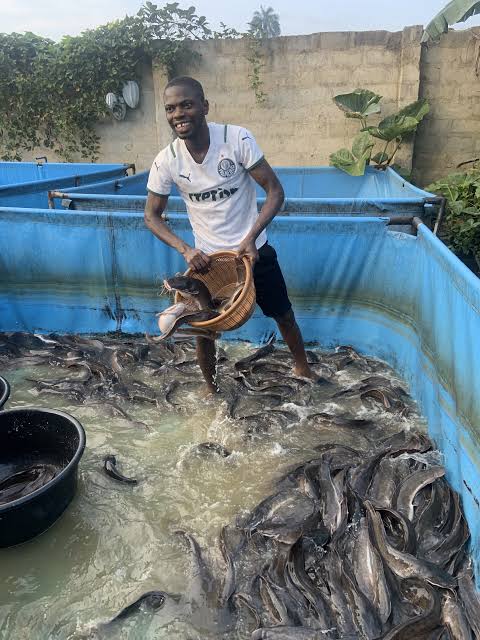
A basic operation starting with 500 catfish, using a concrete or tarpaulin pond system, with land already available, requires roughly N1.2 million in operational costs across one production cycle. According to industry stakeholder estimates published in BusinessDay in August 2025, that level of investment can yield profits of around N400,000 in five months when fish are raised to table size of at least 1 kg. That is a return on investment of roughly 33 percent in a single cycle, which is significantly better than what most conventional savings vehicles offer.
A 2024 study published in the Nigerian Journal of Agriculture and Agricultural Technology, analyzing catfish production in Odogbolu Local Government Area in Ogun State, found that an initial investment of N3 million in fish production yielded a profit of over N700,000 within six months. At that scale, the per-cycle margin is tighter on a percentage basis, but the absolute returns are higher and the operation is more resilient to input cost shocks.
For a mid-scale operation, figures from 2025 suggest that a farm with 10,000-capacity can yield between N2 million and N4.8 million annually, depending on survival rates, feed costs, and selling price. As of early 2026, catfish retail prices in Lagos and Abuja range from roughly N2,650 to N4,400 per kilogram. Farm-gate prices sit lower, with a working average cited by practitioners around N3,000 per kg.
Starting a farm with 5 earthen ponds and 10,000 juveniles, including setup, feed, and labour, is estimated to cost between N5.5 million and N6 million based on 2025 Nigerian market conditions. That is a different financial conversation from a 500-fish beginner setup, but both can be profitable if managed correctly. The key variable in both cases is feed.
Feed is Where Most Farms Die or Survive
This is the cost that determines everything. Feed accounts for over 70 percent of variable production costs on a well-managed Nigerian catfish farm. In some operations, it climbs higher. The rise in fish feed prices over the past few years has pushed many farmers out of business and forced surviving ones to completely rethink their feeding strategy.
In 2022, industry figures from TADAN showed feed that was previously sold at N3,500 to N4,000 per bag had jumped to between N11,000 and N13,000. By January 2026, Nigerian fish feed brands in 15 kg bags were selling across a wide range depending on type and supplier. Local Nigerian brands like Bluecrown, Ecofloat, Vital, and Topfeed remain more affordable than imported options from brands like Coppens and Skretting, which are rarely used beyond the early juvenile stage due to their cost.
The concept of Feed Conversion Ratio, or FCR, is the most important number a catfish farmer tracks. FCR measures how many kilograms of feed are needed to produce one kilogram of fish flesh. A realistic FCR in Nigerian conditions, accounting for mortality and environmental factors, sits between 1.2 and 1.3. That means to grow 1 kg of catfish, a farmer should budget to spend the cost of 1.2 to 1.3 kg of feed. At local feed prices of around N1,000 to N1,500 per kg, that places the feed cost per kilogram of fish produced at roughly N1,200 to N2,000, depending on the brand used.
The arithmetic matters. If it costs N1,500 to produce 1 kg of fish and market price is N3,000, there is a working margin. But if feed quality is poor, FCR climbs to 2:1 or worse, production cost jumps even when buying cheaper feed, and the margin disappears. Experienced farmers consistently advise that choosing feed based on price alone is a trap. The cheapest bag is not always the cheapest path to market-size fish.
One increasingly common solution is making farm-compounded feed using locally sourced ingredients like soybean meal, maize, fish meal, and cassava starch. Farmers running operations above 6,000 fish have more reason to explore this route, either through a local feed mill or their own pelleting equipment. Below that scale, commercially available Nigerian brands are generally the more practical option.
How to Sell Your Fish and Who Actually Buys
Market access is the other half of the profitability equation, and it is the half that new farmers consistently underestimate. David Yaji, the chief executive of DavYaj Farms in Abuja, was direct about this when speaking to BusinessDay in January 2026: “The easiest way to guarantee profits is to secure a ready market before completing a production cycle, in order to prevent losses.”
The buyers for catfish in Nigeria fall into several clear categories. Market women who buy in bulk and sell retail, either as live fish or smoked, are the most common buyers. They move large volumes, pay quickly, and return regularly. Restaurants, point-and-kill joints, hotels, and food vendors also buy consistently. Supermarkets represent a smaller segment but often pay better prices for cleaned, packaged, or smoked fish. Then there are individuals, particularly in urban areas, who buy directly from farms in bulk.
The value-added route, selling smoked catfish rather than live or fresh fish, offers a higher price point. Smoked catfish targets supermarkets, diaspora markets, and export buyers in the Nigerian communities in the UK, US, Canada, and other countries. The trade-off is the additional cost of smoking equipment or hiring out the processing, plus the working capital tied up between harvest and sale. For farms with consistent output and a reliable supply relationship with buyers, smoked fish can significantly improve margins.
Selling fingerlings and juveniles to other farmers is another income stream, particularly for operations that have set up a hatchery or breeding section. Fingerling demand in Nigeria is high and consistent, because the majority of catfish farmers buy rather than breed their own stock. Farmers who master the hatchery side often find it more reliably profitable than grow-out, because input costs are lower and the product is sold at a younger age.
The Risks That Have Quietly Killed Real Farms
A BusinessDay analysis confirmed a trend that practitioners have spoken about for years: many catfish farms in Nigeria have shut down due to high input costs. World Bank data tracking the same period recorded a 15 percent production decline in Nigerian fish output from 1.2 million tonnes in 2017 to 1.04 million in 2022, before the recent recovery. The farms that closed were not failing because there was no market. They were failing because costs outpaced revenue.
Feed price volatility is the most consistent threat. When the naira weakens against the dollar, imported feed ingredients become more expensive, and locally compounded feeds follow. Farmers on tight margins with no pricing power over their buyers, particularly those locked into informal supply agreements with market women at fixed prices, absorb those cost increases entirely.
Disease is the second major risk, and it is tightly linked to management quality. Water quality degradation, overcrowding, and poor feed management create conditions where disease spreads rapidly. A single disease outbreak can wipe out a significant portion of a stocked pond in days. Unlike poultry farming, where veterinary intervention is relatively routine, catfish disease management in Nigeria is largely self-directed, and many farmers learn what they know from other farmers, some of whom have bad habits of their own.
Insecurity affects catfish farms in the middle belt and north more acutely than in southern Nigeria, but fish theft is a problem across the country. A pond full of fish, unlike a locked storehouse, is difficult to protect overnight. Some farms have responded by installing cameras, employing live-in security, or moving operations to compounds that are already secured. The cost of this is real and needs to be factored into any honest business plan.
Post-harvest losses, particularly for farmers without cold storage or a guaranteed buyer at harvest time, are another consistent source of loss. Fish that cannot be sold within 24 to 48 hours of harvest and are not immediately smoked or processed begin to deteriorate. Farmers who enter a cycle without confirmed buyers sometimes end up selling at distressed prices simply to prevent total loss.
Government Support, Policy, and What It Means for You
The Federal Ministry of Marine and Blue Economy, created as a standalone ministry under President Tinubu’s administration, represents a significant structural shift in how the federal government approaches fisheries and aquaculture. Previously embedded in the broader agriculture ministry, the sector now has its own dedicated ministry, which in theory should mean more focused funding, policy attention, and institutional support.
In December 2025, Minister Oyetola announced that the government had begun discussions with financial institutions to facilitate single-digit interest loans for fish farmers across the country. The initiative is designed to expand access to affordable financing for both small-scale and industrial operators. This is a meaningful development if it materialises, given that most catfish farmers currently access capital through personal savings, informal credit, or cooperative arrangements, and rarely have access to bank loans at rates that make sense for a business with a five-month production cycle.
The Green Money Project is another active initiative, specifically targeting youth and women in aquaculture through input support and training. The ministry has also partnered with the World Bank’s PROBLUE Programme to build a Blue Data Bank, aimed at improving data quality across the fisheries sector. Separately, a National Fisheries and Aquaculture Policy and a Fisheries Bill are currently being developed.
For a farmer on the ground, policy announcements need to be received with some scepticism: Nigeria has a long history of agricultural programmes that are announced with fanfare and implemented with bureaucracy. The more immediately useful government-adjacent resources are the Anchor Borrowers’ Programme through the CBN, state-level agricultural extension services, and associations like the Lagos State Fish Farmers Association, which sometimes facilitate collective purchasing of feed and other inputs at better prices than individual farmers can negotiate.
Making the Business Work Long-Term
Okon Amah, the chief executive of ProDave Integrated Farms and Services Limited, put the opportunity clearly when speaking to BusinessDay at the start of 2026: “Protein is the new oil, as fish farming remains an agribusiness with high turnover. It continues to offer short production cycles, predictable cash flow, and scalable margins when feed efficiency and biosecurity are properly managed.”
The word ‘when’ in that statement is doing a lot of work. Feed efficiency and biosecurity are not automatic. They come from knowing how to read a pond, track FCR accurately, identify early signs of disease, maintain water quality, and make decisions based on records rather than feeling. Elizabeth Uloko, a catfish farmer based in Kaduna, noted the market logic simply: “Currently, a kilogram of catfish is cheaper than beef or chicken, and its affordability, coupled with strong demand for protein source, makes it a profitable venture for farmers in 2026.” The product almost sells itself. The farm management is what separates the profitable operations from the abandoned ones.
Record-keeping is the discipline that most small-scale Nigerian catfish farmers skip and that most successful ones credit as essential. Without accurate records on stocking numbers, feed consumption, mortality, and sales, it is impossible to know actual cost per kilogram produced, impossible to compare performance across cycles, and impossible to make informed decisions about scaling. A notebook with consistent daily entries accomplishes this at zero cost.
Starting small, in the range of 500 to 1,000 fish, is the path that allows a new farmer to learn the operational realities without betting large capital on skills that have not yet been tested. Adetunji Samuel, who runs one of Nigeria’s largest catfish operations, gave advice that applies whether someone is starting with N200,000 or N5 million: “Fish is a daily requirement in most Nigerian households, and that is why its demand cannot decline. However, you must have the right skill sets to be able to maximise profits.” The market does not punish catfish farmers. Poor management does.
The Gap Is the Opportunity
With Nigeria producing less than 40 percent of the fish it consumes, and domestic demand continuing to grow, catfish farming sits in a position that most businesses would envy: a massive, stable, local market that cannot currently be satisfied by local supply. The African Development Bank and other foreign investors have already taken note, and institutional capital is moving into the sector.
What that means for an individual farmer or entrepreneur is that the structural conditions in 2026 are genuinely favorable. Feed costs are high, yes, and the management demands are real. But a well-planned catfish farm, started at an appropriate scale, managed with discipline on feed and water quality, and built around confirmed buyers rather than optimistic assumptions, can return meaningful profits within a single production cycle.
The Nigerians who will do well from catfish farming in the years ahead are not necessarily the ones with the most land or the most capital. They are the ones who treat it as a business from day one, account for every bag of feed, refuse to overstock their ponds, and know who is buying their fish before the harvest date arrives.