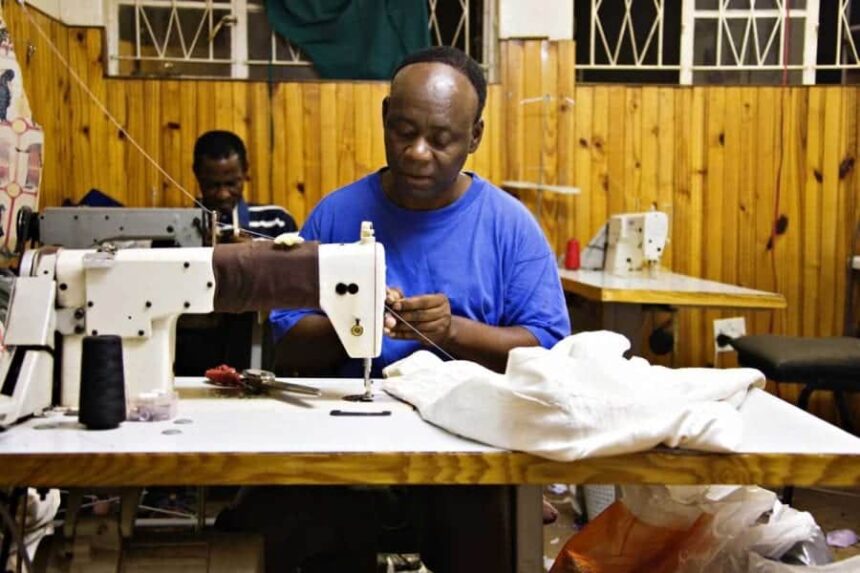
There is a tailor somewhere on your street right now who has not advertised a single day in their life and still cannot finish all the work on their table. That is not luck. That is demand. Nigeria has over 220 million people who need to get dressed every day, and a significant number of them would rather pay someone to sew their fabric than buy off the rack. The culture around tailored clothing here runs deep. Aso-ebi for weddings, uniforms for school runs, corporate attire for office workers, native wear for naming ceremonies. The occasions never stop, and neither does the need for someone who can hold a measuring tape.
What stops most people from starting is the assumption that you need a lot of money before you can be taken seriously in this trade. That assumption is wrong. Starting a tailoring business in Nigeria with N50,000 is possible, not comfortable and not ideal, but possible. The key is knowing exactly what that money can and cannot buy, and making very deliberate choices at every step. This article lays all of that out plainly.
How to Start a Tailoring Business in Nigeria with N50,000
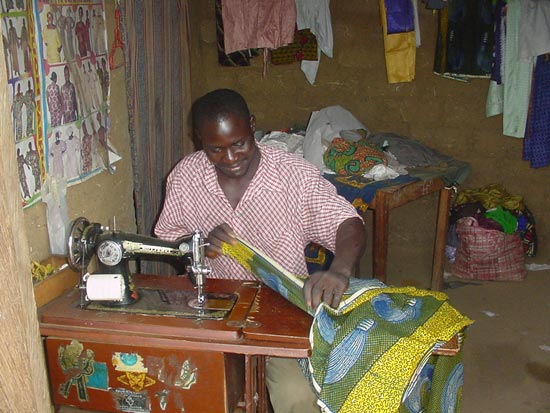
Starting a tailoring business in Nigeria with this budget means starting lean and smart, not flashy. The N50,000 is enough to get a machine, a few tools, and your first customers, provided you already have the skill or are willing to acquire it first. The sections below walk through every practical decision you will face, from training to pricing to when it makes sense to finally rent a space.
Why Tailoring Remains One of Nigeria’s Most Recession-Proof Businesses
Fashion never takes a recession year off in Nigeria. Even when the economy is squeezing people from every direction, Nigerians still show up to owambe parties dressed like they have somewhere important to be. School resumption comes with uniform orders. Ramadan brings a rush of kaftan and agbada requests. December alone can keep a competent tailor busy for two solid months. The demand for custom clothing is baked into how Nigerians celebrate, worship, work, and grieve.
Nigeria’s fashion industry is valued at approximately $4.7 billion, making it responsible for 15 percent of Sub-Saharan Africa’s total fashion market, according to industry analysis. The apparel segment has been on a growth path projected to reach $10 billion in revenue, driven by a compound annual growth rate of over 7 percent. What this means practically is that the market receiving tailors is not shrinking. The middle class in cities like Lagos, Abuja, Port Harcourt, and Kano continues to grow, and that middle class has opinions about how their clothes fit.
Beyond the numbers, there is something cultural driving the market that statistics do not fully capture. Locally tailored designs have gained serious ground over the past decade. Contemporary Nigerian tailors have pushed the craft far beyond kaftans and ankara wrappers. They are interpreting international silhouettes, reinterpreting traditional fabrics in modern cuts, and building personal brands that clients follow on Instagram. A tailor who understands this cultural moment, who can sew a well-fitted English suit and an equally sharp agbada, is not competing in a shrinking market. They are standing in the middle of a growing one.
This is also one of the few trades where skill genuinely protects you. A good tailor does not lose customers to NEPA or to dollar exchange rates. Clients come back when you deliver on quality. They refer their friends. Some become customers for life. The retention dynamic in tailoring is strong, which is why so many tailors who started with almost nothing have built solid, stable incomes over time.
The N50,000 Reality: What You Can and Cannot Do With This Budget
Before anything else, be honest with yourself about what N50,000 actually covers in today’s market. New sewing machines have gone up significantly in price. A brand new Butterfly domestic sewing machine, which is the standard entry-level option for most small Nigerian tailors, was selling for between N140,000 and N196,000 on platforms like Konga and Jumia as of late 2025. A new industrial-grade machine runs far higher. This means N50,000 alone will not buy you a new machine.
What N50,000 can do is get you started if you work the budget correctly. Here is how the money breaks down in a realistic scenario. A fairly used Butterfly domestic machine on Jiji Lagos was listed from around N48,000 at various points, and street-level market deals in places like Oshodi, Ladipo, and Onitsha main market can bring that figure lower for a functioning second-hand machine. That leaves you between N2,000 and N10,000 depending on what you paid. That small remainder covers your starter kit: measuring tape, scissors, tailor’s chalk, needles, thread in basic colors, pins, and a pressing iron if you do not already own one. None of these individually are expensive, but together they matter.
What the N50,000 budget cannot comfortably cover is a shop. Rent in any busy commercial area in Lagos will start at N50,000 to N200,000 annually for the smallest roadside space, and that is before the landlord asks for two years in advance. Abuja is worse. Even smaller cities have seen rent costs rise with inflation. Starting from home is not a compromise in this situation. It is the only financially sensible decision at this stage.
You also cannot afford to be without skill. If you are planning to spend N50,000, buy a machine, and hire someone to sew while you manage the business, that model requires significantly more capital to work. At this budget, you are the tailor, at least to start. The investment in training comes before the investment in equipment.
Skill First, Shop Later: The Training Path That Actually Works
The most durable tailoring businesses in Nigeria were built on genuine skill. Not on equipment, not on a well-designed shop, but on a tailor whose customers kept coming back because the clothes actually fit. That skill takes time to develop, and trying to shortcut it is where most aspiring tailors run into trouble.
The traditional apprenticeship model is still the most practical training path for someone starting out in Nigeria. You attach yourself to an experienced tailor, usually for six months to two years depending on your pace of learning, pay a training fee, and spend that time learning everything from measurement taking to pattern drafting to finishing. The apprenticeship fee varies significantly based on the master tailor and location, but ranges from N30,000 to N100,000 in most cities. The advantage is that you are learning in a working environment with real clients, real fabrics, and real deadlines.
For those who prefer a more structured classroom setting, fashion schools are widely available across Nigeria’s major cities. Short-term programs at institutions like Sewing and Fashion Academy are typically priced between N50,000 and N150,000, while the better-known Lagos academies like GMYT Fashion Academy in Lekki and Martwayne on Sholeye Crescent run cohort-based programs at varying price points. The schooling route tends to be better for foundational knowledge and pattern systems, while the apprenticeship route tends to be better for speed, commercial instincts, and understanding what Nigerian clients actually want.
There is no shame in taking a hybrid path: a short structured course for the basics, followed by working under someone experienced for a few months before striking out on your own. What matters is that when you start your business, you can cut accurately, sew cleanly, and deliver work that does not embarrass you. Everything else can be figured out as you go.
Essential Equipment and Where to Buy It Without Getting Robbed
Your sewing machine is the foundation of the business, so choosing it carefully matters. For someone starting with N50,000 or thereabouts, the realistic options are a fairly used domestic machine or, if you stretch the budget slightly, a fairly used industrial straight-stitch machine. Both options are available through Jiji.ng, where listings for fairly used machines in Lagos start from around N48,000, and through physical markets in Oshodi, Lagos Island (around Idumagbo Avenue where dealers like Phreesew Enterprises operate), and Onitsha main market.
Butterfly remains the most trusted brand among small-scale Nigerian tailors for good reason. The machines are durable, spare parts are easy to find, and mechanics across Nigeria know how to repair them. If you are buying used, insist on testing the machine with actual fabric before handing over money. Check that the timing is correct, the tension is consistent, and the motor (if it has one) runs smoothly. A machine that skips stitches or keeps breaking thread will cost you more in repairs and lost jobs than you saved buying it cheap.
Beyond the machine, your starter kit needs to cover the basics. A good tailor’s measuring tape goes for around N500 to N1,000. A pair of quality fabric scissors should cost between N2,000 and N5,000, and do not let anyone talk you into using cheap scissors because they will frustrate you. Tailor’s chalk, pins, a pin cushion, a variety of needles, and thread in black, white, and a few neutral tones round out the basics. A pressing iron and a flat pressing surface are essential because no garment looks finished without proper pressing. If your home already has an iron, you are covered. Altogether, the starter kit without the machine runs around N10,000 to N15,000.
Consider buying in Aba or sourcing from Alaba International Market in Lagos if you want to reduce costs on materials over time. Aba in Abia State is well known as a hub for tailoring supplies, fabrics, and sewing accessories at wholesale prices. Building relationships with fabric and accessories dealers there, even if you only place orders once in a while, will bring your material costs down as your business grows.
Starting From Home vs. Renting a Shop: The Honest Comparison
Most Lagos tailors you see with thriving shops today started from a corner of their house or a rented room in their compound. The home-based start is not a weakness, it is a strategy, especially in the first six to twelve months when you are building your customer base, developing your speed, and working out what types of garments you sew best.
Starting from home with N50,000 means the bulk of your capital goes into your equipment rather than overhead. You avoid rent, electricity bills that come with a commercial space, and the pressure to keep a shop looking presentable even when business is slow. You can take on a few orders, deliver quality work, collect referrals, and slowly build demand before you ever sign a tenancy agreement.
The drawbacks of home-based tailoring are real but manageable. Walk-in customers are difficult to get because you have no signboard and no street-level visibility. Keeping a professional boundary between your living space and your work space requires discipline. If you have children or a household that is generally noisy, meeting clients at home for fittings can sometimes feel awkward. These are problems that grow more manageable with time and planning.
Renting a shop makes sense when two things align: you have enough recurring customers that your income can comfortably cover rent, and you have identified a location where walk-in traffic can actually help your business grow. A shop near a market, a school, or a church corridor that fills up every Sunday with well-dressed people is a viable location for a tailor. A shop tucked into an estate where people rarely walk past it offers visibility without the accompanying customer flow. Before you sign any lease, observe the foot traffic at that location yourself, ideally on different days of the week.
Choosing Your Niche: School Uniforms, Native Wear, or Something Else?
General tailoring, meaning you sew everything for everybody, is how most people start. It makes sense at the beginning because you need volume to build skill and income at the same time. But the most profitable tailors in Nigeria are usually the ones who become known for something specific. A tailor who is the go-to person for aso-ebi coordination orders does not compete with the tailor two streets away who mainly does school uniforms. They are serving different customers with different needs.
School uniform production is one of the most consistent income streams a tailor can target. Schools place bulk orders at the start of each academic term, the styles are usually simple (which means faster production), and payment for bulk orders tends to come in advance. The competition exists, but if you can build a relationship with even two or three school administrators in your area, the recurring business alone can keep you busy through the school year.
Native wear and asoebi coordination is a higher-value niche that rewards tailors who can work with ankara, aso-oke, and lace fabrics, and who understand current trends in Nigerian event fashion. Brides and their wedding planners are constantly looking for tailors who can handle the asoebi for a bridal train of fifteen to twenty people. If you can deliver consistent quality across multiple outfits in the same style, word of that spreads fast in wedding WhatsApp groups and event planner networks.
Corporate wear is another option worth considering, particularly in cities like Lagos and Abuja where offices are full of people who prefer custom-fitted shirts and trousers over whatever is available in mall shops. The clients in this niche tend to pay more and return regularly, especially once they have found someone who understands how they like their clothes to fit. Children’s clothing and baby wear round out the common niches. Parents frequently underestimate how quickly children outgrow clothes, and a tailor who makes quality, affordable children’s outfits in an area with families with young children will never lack for work.
How to Price Your Work and Start Making Real Income
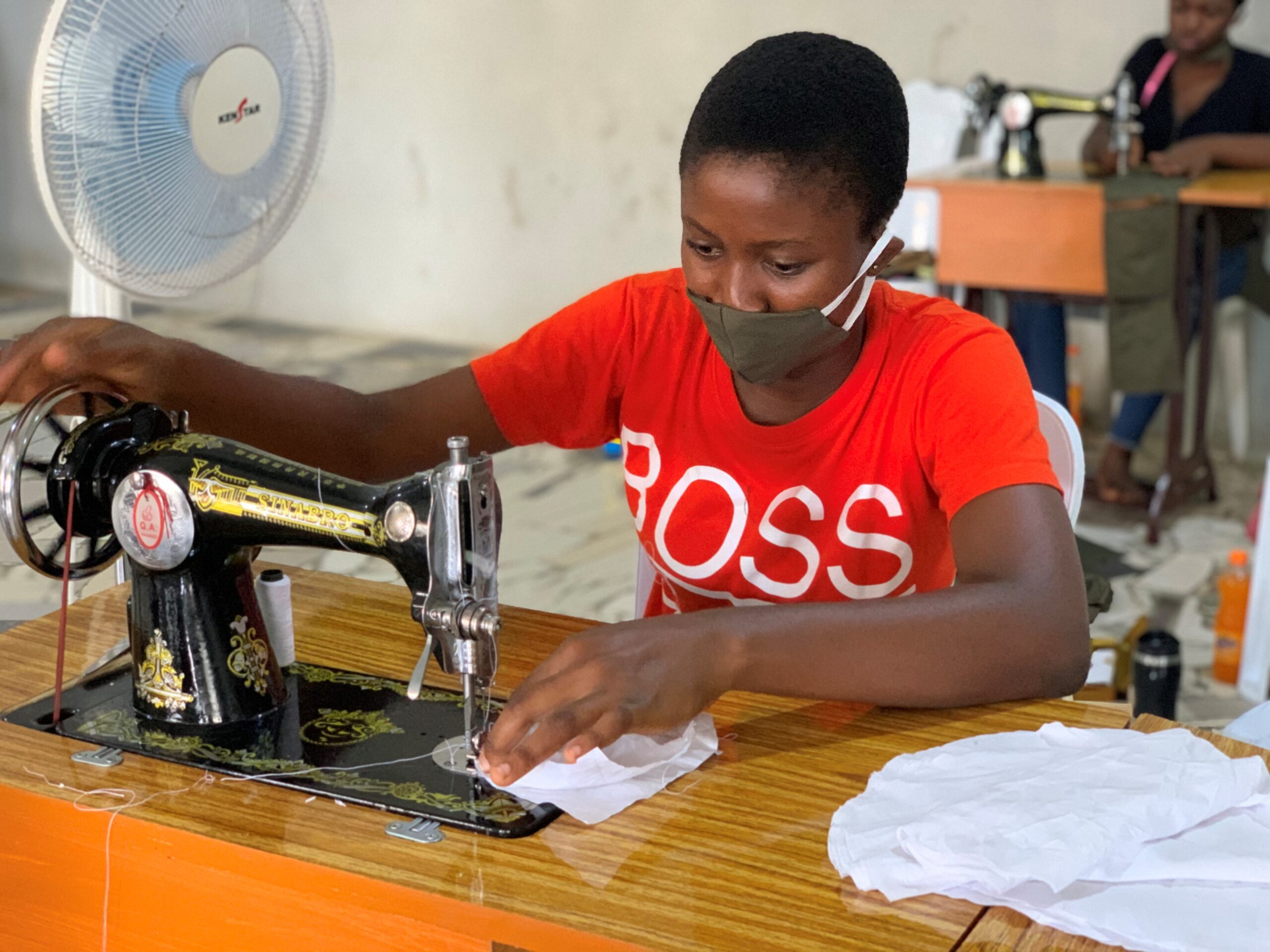
Pricing is where many new tailors in Nigeria make their most damaging mistake. They underprice to attract customers, then discover that the volume of work required to stay profitable at those low prices leaves them exhausted and earning less per hour than they would at a regular job. The goal of pricing is not to be the cheapest option in your area. The goal is to be fairly priced, professional, and worth coming back to.
A practical way to think about pricing is to start with your cost of production, add in the value of your time, and then benchmark against what other tailors in your area are charging for similar work. For a straightforward ankara dress sewn to a customer’s measurements, Lagos tailors charge anywhere from N5,000 to N20,000 and above depending on their reputation, the complexity of the style, and how much their customers are willing to pay. A well-executed agbada can command N15,000 to N50,000. School uniform pieces are usually priced lower per item but make up for it in volume.
Never quote a price before you have seen the fabric, the style reference, and understood the deadline. Unusual fabrics, intricate embroidery, multiple pieces, or a rush delivery all justify a higher price. Many tailors lose money not because they priced themselves too high but because they agreed to a price and then discovered mid-production that the job was far more complicated than they assumed. Asking the right questions before committing to a price is part of the job.
Collect deposits as standard practice. Asking for 50 to 70 percent of your fee upfront before you start work protects you from customers who delay pickup indefinitely and from situations where you buy fabric on behalf of a client and they change their mind. Most experienced Nigerian tailors collect deposits without explanation; it is expected in the trade. If a new customer refuses to pay a deposit, that is a signal worth taking seriously.
Building Your First Customers Without Spending Money on Ads
The first ten customers for a new tailor are almost always people from the tailor’s personal network. Family members, neighbors, people from church or mosque, colleagues from a former job. This is not a limitation. It is a foundation. One customer who is happy with what you made them will tell three people without being asked. In a country where personal referrals drive more purchasing decisions than most other marketing channels, that word-of-mouth chain is worth more than any ad spend.
Make your work visible. When you complete a particularly nice outfit, ask the customer if they mind you taking a photo for your records. Most will agree. These photos, shared consistently on WhatsApp status and Instagram, do not need a large following to be effective. Tailors have won steady clients from a WhatsApp status post that a single contact shared in their own group. The key is posting regularly and letting the quality of the work speak.
Joining the local tailors union or artisan association in your area is worth doing early. The National Union of Tailors operates at branch, state, and zonal levels across Nigeria, and membership gives you access to a network of other craftspeople, sometimes referrals from more established members who are overwhelmed with orders, and a degree of credibility with customers who want to verify they are dealing with a legitimate business. The entry fee and ID card costs are typically modest.
As you grow, collaborating with makeup artists, event planners, and photographers in your area opens the door to a different category of clients. Event vendors in Nigeria refer each other constantly. A photographer who has shot beautiful work on outfits you made will mention your name. A makeup artist who styled a client wearing your dress will send people your way. Building even two or three of these referral relationships in your first year can change the trajectory of your business significantly.
When to Register, Scale, and Hire Your First Apprentice
Business registration with the Corporate Affairs Commission is not something you need to rush into when you are just starting out. CAC business name registration costs around N10,000 for sole proprietorships and is worth doing once you have settled on your business name and have a clear sense that the business is sustainable. Registration opens the door to formal bank accounts, grant applications (including government programs like the Bank of Industry’s fund for women in the garment industry), and the professional credibility that comes with operating a named business rather than just accepting orders under your personal name.
Scaling the business beyond what one person can handle does not have to mean hiring salaried employees right away. The apprenticeship model that exists across Nigeria’s tailoring trade serves this purpose well. Taking on one or two apprentices means you have help with basic production tasks, you are contributing to the training pipeline that the trade depends on, and your overhead stays low because apprentices are typically paid in training rather than salary during the learning period. As your order volume grows, the more skilled apprentices can handle simpler jobs while you focus on complex work and client management.
Investing in an industrial straight-stitch machine once your income allows it is the most meaningful upgrade you can make to your production capacity. Industrial machines are faster, more durable for high-volume work, and they make the quality of finishes significantly better. This is the natural next step after your business has stabilized on a domestic machine and you are regularly turning away work because you cannot sew fast enough.
Starting Small Is Not the Same as Staying Small
The tailors who built lasting businesses in Nigeria’s cities mostly started with very little. A rented room, a borrowed machine, a handful of customers who took a chance on them before they were established. What separated them from the many who tried and stopped was not superior equipment or a better location. It was the consistency of their output, the quality of their relationships with clients, and the patience to grow at the pace the business allowed.
N50,000 is a lean budget for starting a tailoring business in Nigeria. It is not a hopeless one. The market for skilled, reliable tailors in this country is real and persistent, and a tailor who commits to their craft, builds their reputation one outfit at a time, and manages their money sensibly has a genuine path to a stable income. The fashion industry here is growing. The cultural attachment to custom clothing runs deep. There is room in this trade for the person who decides today to take it seriously.